REVIEW · TOKYO
Shibuya and Shinjuku Photography Experience
Book on Viator →Operated by Kenji · Bookable on Viator
Neon Tokyo needs a camera plan. This 2-hour Shibuya and Shinjuku photography experience turns you loose after dark, from Hachiko’s statue to Shibuya Scramble and the neon layers of Kabukicho, with an English-speaking guide/photographer, Kenji, helping you shoot and pose. You’ll also leave with 25–50 color-graded photos per person, so you’re not stuck with blurry souvenirs.
I like that it’s built for real photo-making, not just sightseeing. The stops are fast and specific, and Kenji does a great job helping you feel comfortable—especially if you’re solo and worried about getting your own picture.
One thing to plan around: the tour starts on time at 8:00 pm, and if you’re more than 5 minutes late you can’t join (and there’s no refund or reschedule). Also, the ¥170 Shibuya-to-Shinjuku train fee is on you.
In This Review
- Key things to know before you go
- Meeting at Hachiko: the night-walk rhythm you’ll actually want
- Shibuya’s main hits: Scramble Crossing, Center-gai, and Miyashita Park
- A small alley detour near Shibuya Station: old Tokyo texture
- Omoide Yokocho and Yakitori Alley mood: Memory Lane photos
- Godzilla Road and Kabukicho’s neon finale
- Price and value: what $62 really covers
- Who should book this Shibuya–Shinjuku night shoot
- Before you go: simple prep for better night photos
- Should you book this Shibuya and Shinjuku Photography Experience?
- FAQ
- How long is the Shibuya and Shinjuku photography experience?
- What is included in the tour price?
- What’s the meeting point and where does it end?
- Is the train fee from Shibuya to Shinjuku included?
- What’s the start time, and do I need to arrive early?
- What happens if the weather is bad or I need to cancel?
Key things to know before you go
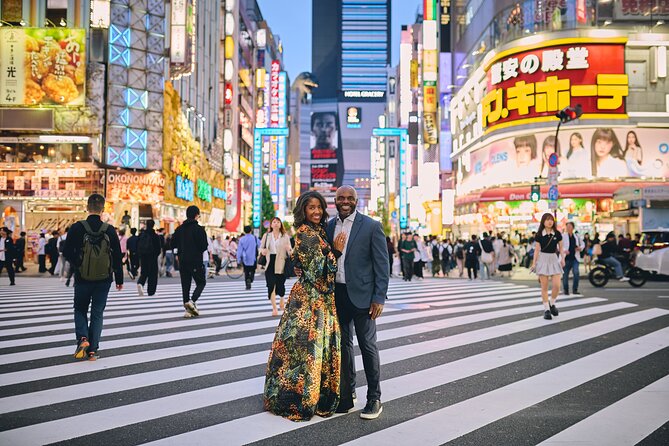
- Kenji helps you relax and pose, which is a big deal when you’re traveling alone.
- 25–50 color-graded photos per person mean you don’t have to master night photography to get results.
- A tight 2-hour route covers Shibuya classics and Shinjuku’s Kabukicho glow, with set time windows at each stop.
- You’ll walk through different Tokyo moods: loyal-canine nostalgia, street energy, old-school alleys, and red-light district neon.
- Small group size (max 4) keeps the pace manageable and photo help more personal.
- A couple of spots are free to enter, including Hachiko and the major street locations, so you pay mainly for the guide and final photos.
Meeting at Hachiko: the night-walk rhythm you’ll actually want
This tour starts at Hachiko Statue near Shibuya Station, with a prompt 8:00 pm start. You get a mobile ticket, bottled water is provided, and the group is limited to four people, which helps if you like your photos planned instead of rushed by a crowd.
From the get-go, the goal is simple: get you moving through the right places at the right time. Shibuya after dark changes fast—lights shift, pedestrians surge, and the streets look completely different depending on when you’re there. A guide who knows that timing (Kenji) makes the difference between random night shots and images that actually feel like Tokyo.
The other practical benefit is confidence. If you’re solo, standing around with your camera can feel awkward fast. Kenji’s style, based on his track record with first-time solo visitors, is about putting you at ease and giving you just enough direction to get natural-looking photos without making you feel like you’re performing.
You can also read our reviews of more tours and experiences in Tokyo.
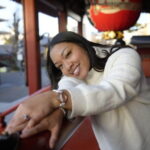
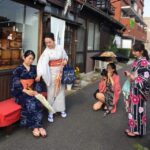
Shibuya’s main hits: Scramble Crossing, Center-gai, and Miyashita Park
You kick things off with Hachiko, the loyal-dog symbol of Shibuya. The statue is free and the stop is short, but it’s a great first anchor point because it tells you what Shibuya values—loyalty, memory, and local pride. It also gives you an easy warm-up moment to frame a classic landmark before the lights and crowds get intense.
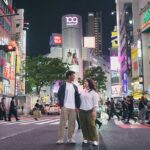
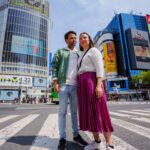
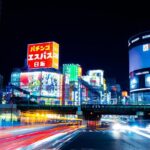
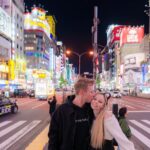
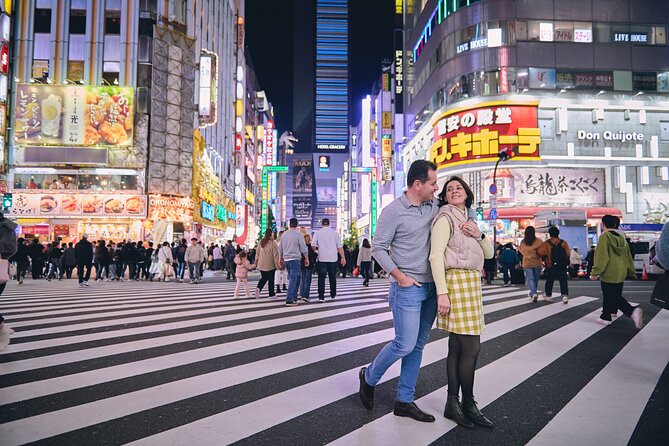
Next comes Shibuya Scramble Crossing, one of the world’s most recognizable pedestrian crossings. You’ll get time to photograph the moment when people spill across in every direction. This is where night photography skills matter less than positioning: you want to be in the right spot to capture movement and layered neon without losing the human scale.
After that, you head to Shibuya Center-gai, a narrow street packed with shops, restaurants, arcades, and late-night hangout energy. The photos here tend to look great because they combine signage, storefront lighting, and people moving close to the camera. The drawback is that this area can feel visually loud—so if you like calm scenes, take a breath and let Kenji guide your framing rather than trying to photograph everything at once.
Then it’s Miyashita Park, a modern spot with green space, a skate park, and cafés wrapped into a larger shopping complex. This stop adds contrast to the neon chaos: you can find calmer compositions, lines and reflections, and a sense of Tokyo that’s not just traffic and crowds. It’s also a good place for a few “between-district” photos when you want your set to feel varied.
A small alley detour near Shibuya Station: old Tokyo texture
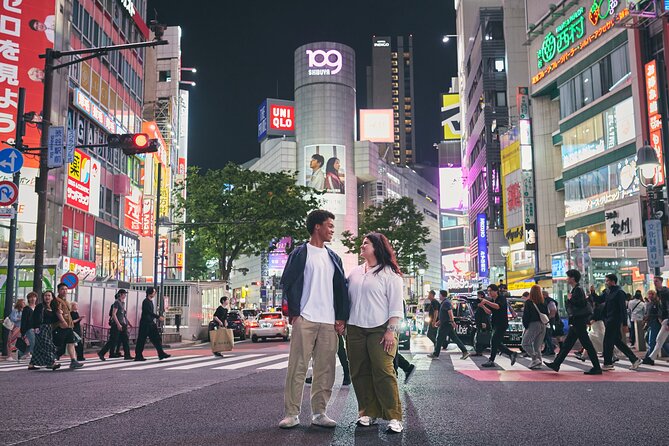
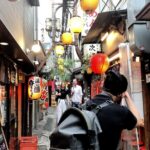
There’s a quick stop in a narrow alley beside Shibuya Station lined with tiny, old-fashioned bars and izakayas. The time window is short, but this is the kind of Tokyo detail that’s easy to miss if you’re only scanning the big attractions.
Why this matters for your photos: big landmarks are great, but your Tokyo story needs texture. Tiny entrances, warm interior lights, and cramped streets create a mood that feels lived-in. If you want your photo set to feel more like a travel diary than a checklist, these smaller alleys are where that happens.
Also, this is a useful moment to practice how you’ll shoot night scenes with your own body. Kenji can help you with posing and angles so you’re not just holding your camera out at arm’s length. The result is more variety: street shots plus your presence in the frame.
Omoide Yokocho and Yakitori Alley mood: Memory Lane photos
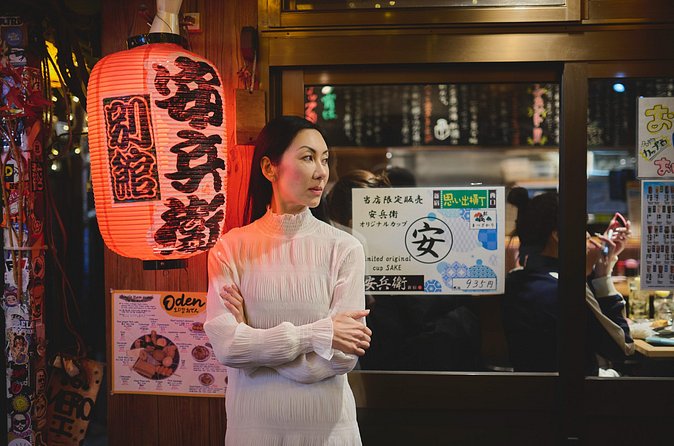
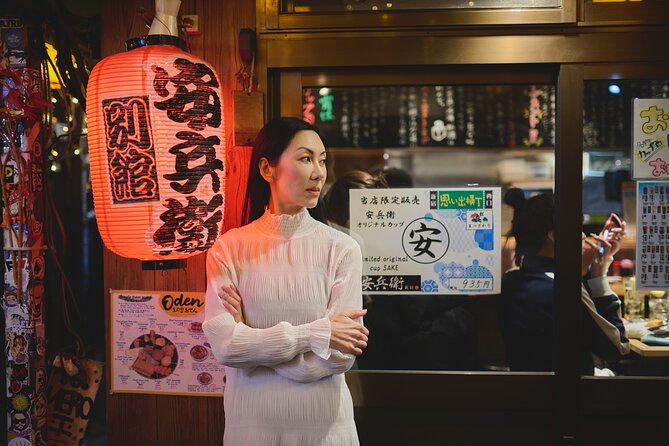
Then you’ll walk into Omoide Yokocho, also known as Memory Lane. It’s described as gritty yet nostalgic, with smoky yakitori stalls and cramped bars. If you’ve ever wanted your photos to show Tokyo’s “older night life” side, this is one of the best places on the route for atmosphere.
This stop is also a smart break in the photo schedule. You can slow down slightly, take in the lighting, and let the scene do the work. The tight spaces mean you’ll often get strong compositions: signage close to the lens, warm lights bouncing off walls, and a clear sense of place.
One consideration: the alley is described as cramped, and that usually means you’ll be shooting with other people nearby. If you’re the type who hates sharing space, you might feel impatient. If you can roll with the busy feel, you’ll get a shot style that looks authentic and unforgettable—yakitori alley lighting is hard to fake anywhere else.
Godzilla Road and Kabukicho’s neon finale
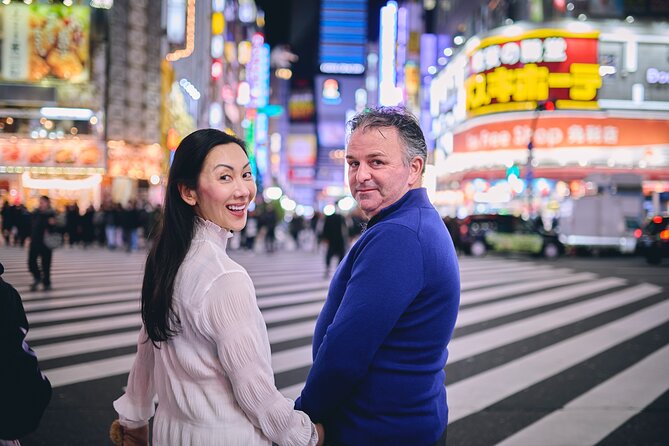
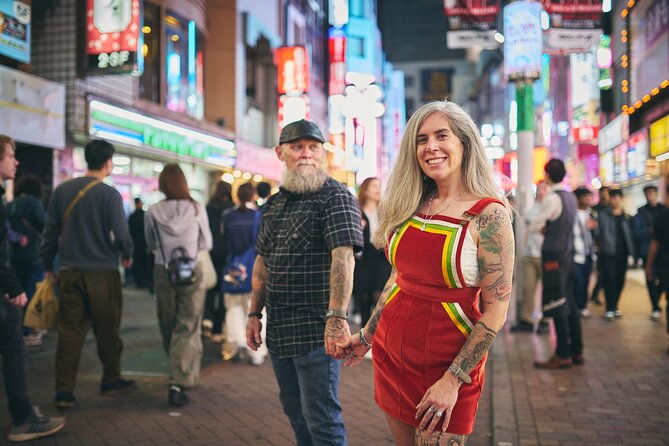
The last stop is Godzilla Road in Kabukicho, the entertainment district in Shinjuku. It’s often called the sleepless town, and the description doesn’t hold back: expect neon lights and a loud, high-energy nighttime atmosphere.
Kabukicho is perfect for dramatic night photos. You get bright signage, layered perspectives, and that “Tokyo at full volume” feeling. You also get an obvious visual ending to your set—your images stop being charming landmarks and become pure city energy.
You’ll end at the entrance of Kabukicho on Central Road. That matters because it’s a natural jumping-off point for more exploring after the tour. If you want to keep walking, grab a drink nearby, or simply ride the night wave a bit longer, the tour ends where the action is.
Price and value: what $62 really covers
At $62.13 per person for about 2 hours, you’re paying for much more than standing in front of famous spots. You’re paying for (1) an English-speaking guide/photographer, Kenji, who helps with timing and positioning, and (2) the 25–50 color-graded photos you’ll receive afterward. For night photography, that second part is huge—color grading and consistent exposure help your photos look like a coordinated story rather than random frames.
Let’s talk about the main “gotcha”: the ¥170 train fee from Shibuya to Shinjuku isn’t included. If you already plan to use trains after the tour, you may not care. But if you’re trying to keep costs tight, factor that in. Even with that added cost, you’re still getting a guided route with final edited photos, bottled water, and a small group size.
What makes the value feel real is the balance: the itinerary includes top-name icons (Hachiko, Scramble) but also the places that make your photos feel like Tokyo’s lived-in personality (Memory Lane, narrow alleys, Kabukicho neon). That mix is what makes your final photo set worth sharing.
Who should book this Shibuya–Shinjuku night shoot
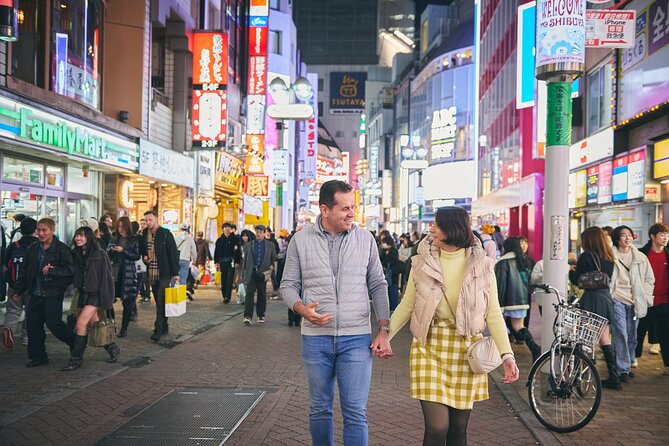
This tour fits best if you’re:
- Traveling solo and want help getting photos of yourself without awkwardness.
- Interested in street photography where the subject is Tokyo itself—people, signage, motion, and light.
- A night owl who likes districts with strong character: Shibuya energy, Memory Lane atmosphere, and Kabukicho neon intensity.
- Someone who wants a guided plan so you’re not guessing where to stand or when to shoot.
It’s less ideal if you:
- Hate crowds or close quarters, especially around Memory Lane.
- Need lots of downtime to wander at your own pace. The time windows at each stop are defined, so the tour is more structured than free-roam.
- Are extremely sensitive to starting right on schedule. The tour starts at 8:00 pm and late arrivals over 5 minutes can’t join.
Before you go: simple prep for better night photos
Night photography can be intimidating, but you don’t need to become a technical expert for this tour to work. Still, a little prep helps you get the most out of the time Kenji gives you.
Wear shoes you can stand in. The itinerary moves through multiple neighborhoods and includes alley-style streets. Bring a fully charged phone or camera battery, and consider a way to keep your gear safe and dry in case weather shifts.
If you’re unsure how to pose, that’s where Kenji’s guidance is valuable. The whole point is to help you feel comfortable and get photos that look natural. Your job is basically to show up, listen for directions, and be willing to adjust your angle when Kenji points out what’s working in the light.
Should you book this Shibuya and Shinjuku Photography Experience?
I think it’s worth booking if you want a night photo story that covers multiple Tokyo moods without planning every step. The best reason is the combination of guided shooting help plus 25–50 color-graded photos—it solves two problems at once: where to stand and how your final pictures will look.
Also, if you’re a first-time solo visitor, this tour has a track record of helping people feel at ease quickly. That matters more than it sounds. A camera is only half the job; the other half is comfort and direction.
Skip it if you want a slow, unstructured stroll or you’re strict about extra costs from the Shibuya-to-Shinjuku train. And if you’re traveling during uncertain weather, keep an eye on the conditions because the experience requires good weather.
If your goal is simple—see Tokyo after dark and leave with photos that actually look like Tokyo at night—this is a practical way to do it.
FAQ
How long is the Shibuya and Shinjuku photography experience?
It runs for about 2 hours.
What is included in the tour price?
You get an English-speaking guide/photographer, bottled water, and 25–50 color-graded photos per person.
What’s the meeting point and where does it end?
You start at the Hachiko Statue (2 Chome-1 Dogenzaka, Shibuya) and end at the entrance of Kabukicho near Godzilla Road (Central Road, 1-chōme 17, Shinjuku City).
Is the train fee from Shibuya to Shinjuku included?
No. The ¥170 train fee from Shibuya to Shinjuku is not included.
What’s the start time, and do I need to arrive early?
The tour starts at 8:00 pm. If you’re more than 5 minutes late, you won’t be able to join, and you won’t get refunds or rescheduling.
What happens if the weather is bad or I need to cancel?
The experience requires good weather. If it’s canceled due to poor weather, you’ll be offered a different date or a full refund. You can cancel for free up to 24 hours in advance for a full refund.