REVIEW · TOKYO
Tokyo: Sumo Practice Tour with Ring-Side Seat and Photoshoot
Book on GetYourGuide →Operated by MagicalTrip · Bookable on GetYourGuide
You’ll smell the discipline before you see it. This 2-hour Tokyo experience takes you inside a normally closed sumo stable so you can watch a morning practice up close, ringside, while your guide explains what you’re seeing and why it matters. It’s one of those rare chances to trade the big-show spectacle for the daily grind.
I really like the authentic morning training angle. Sumo is not just a single match moment; it’s routines, repetition, and technique-work done under strict stable rules. I love that this tour focuses on that real process.
I also like the human side you get from the guide and the end photoshoot. Guides such as Marie (and other English-speaking guides) are praised for turning complex sumo basics—rules, culture, and what to watch—into clear, practical context. And at the end, you may be able to do a photoshoot with the wrestlers if they agree.
One consideration: inside the stable you’ll usually sit on tatami (straw mats), and chairs are not guaranteed since most stables don’t provide them. Plan for the possibility of standing for parts of the session or sitting on the floor for a couple of hours.
In This Review
- Key things you’ll notice during the practice
- Why a real sumo stable morning is the best “first taste”
- Getting there: Kiyosumi Shirakawa meeting point and the short route inside the neighborhood
- Your viewing setup: ringside perspective, tatami rules, and chairs you can’t count on
- The morning practice itself: drills, intensity, and the feeling of real effort
- Guide explanations that actually help you watch (Marie, Sho, and more examples)
- The end photoshoot: up close, but respectful of the rules
- Price and value: what $96 includes and how to judge it fairly
- Who should book this sumo practice tour, and who should skip it
- The decision: should you book this sumo tour?
- FAQ
- How long is the Tokyo sumo practice tour?
- Where do I meet my guide?
- Do I get an English-speaking guide?
- Is a photoshoot included?
- What’s included in the ticket price?
- Is food or drink included?
- Is this tour suitable for kids?
- Are chairs and wheelchair access available?
Key things you’ll notice during the practice
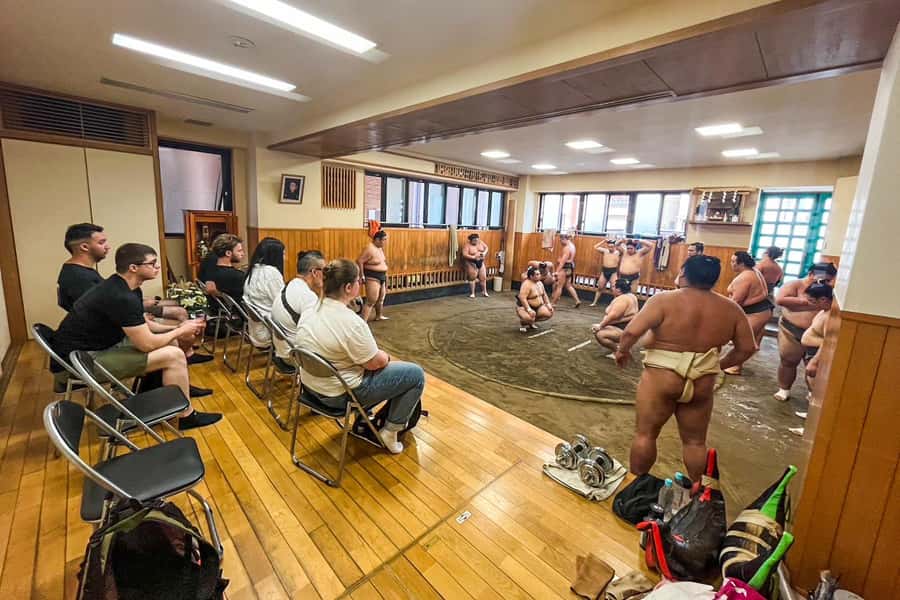
- Ringside-level closeness to the wrestlers while they work drills and maneuvers
- A real morning schedule at a sumo stable, not a staged performance
- Small group size (up to 10), which makes it easier to ask questions and stay focused
- English guide explanations before you watch, so you understand the moves faster
- Tatami-only viewing areas, with off-limits zones inside the stable
- Optional end photoshoot, dependent on the wrestler’s discretion
Why a real sumo stable morning is the best “first taste”
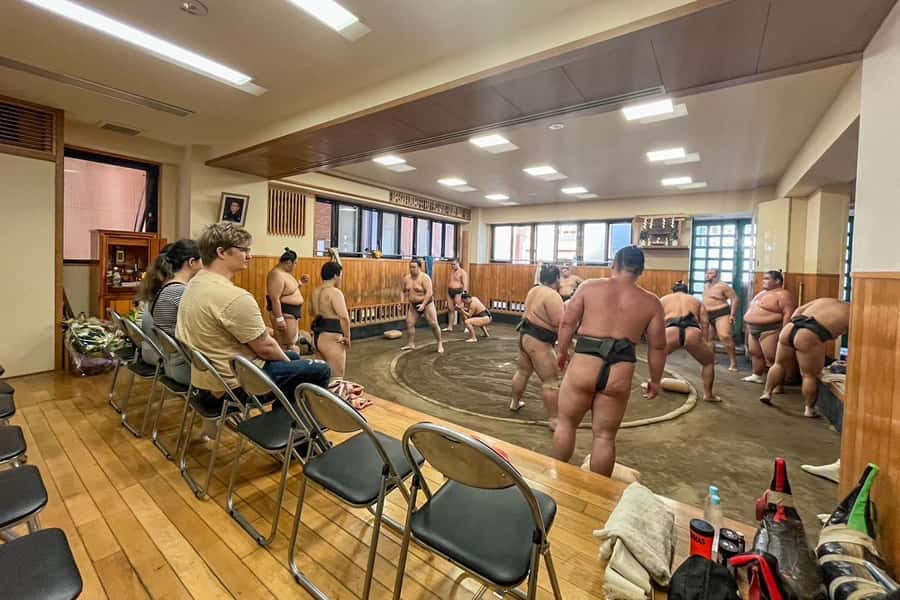
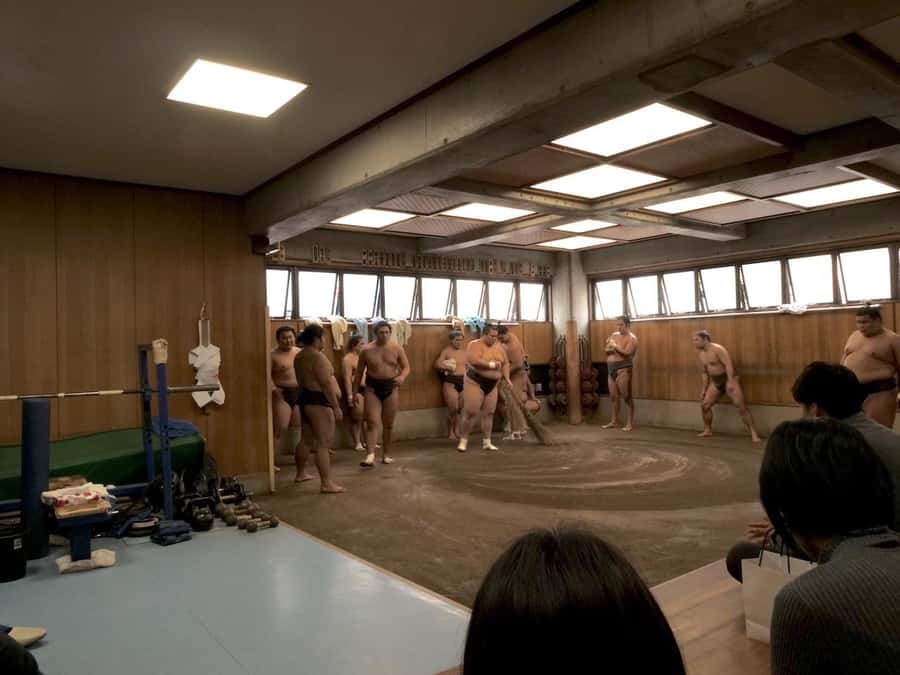
If you’ve only seen sumo on TV or in a tournament arena, this tour gives you the missing piece: the training that builds the spectacle. You get to watch how wrestlers practice fundamentals and how the stable runs like a disciplined workplace. Morning practice has its own mood—quiet intensity, then sudden bursts of power as drills turn into full-on bouts.
The biggest value is perspective. When you’re sitting close and the training gets physical in front of you, you start understanding why sumo looks the way it does. The throwing, the pressure, the timing—it all shows up because they’re repeating what they need, day after day.
And because it’s a stable, not a public venue, the atmosphere feels more serious. You’re not meant to treat it like a casual show. That seriousness is part of the charm, and your guide helps set the tone so you can watch with the right mindset.
You can also read our reviews of more tours and experiences in Tokyo.
Getting there: Kiyosumi Shirakawa meeting point and the short route inside the neighborhood
This experience is designed to be easy to find and easy to reach. You meet at the A1 exit of Kiyosumi Shirakawa Station, where your guide holds a red/orange sign with the Magical Trip name. In other words: you’re not wandering around with ten other tours trying to match vague descriptions.
Timing matters here. The tour starts promptly, and late arrivals can lose their spot with no entry. So I’d treat the meeting time like it’s an appointment, not a suggestion.
One more thing to check when you book: the tour description also references Shin-Kawasaki Station as a meeting location in some materials. Your confirmation message should clarify which station applies to your departure time. Don’t risk being at the wrong stop—this kind of access depends on punctuality.
Your viewing setup: ringside perspective, tatami rules, and chairs you can’t count on
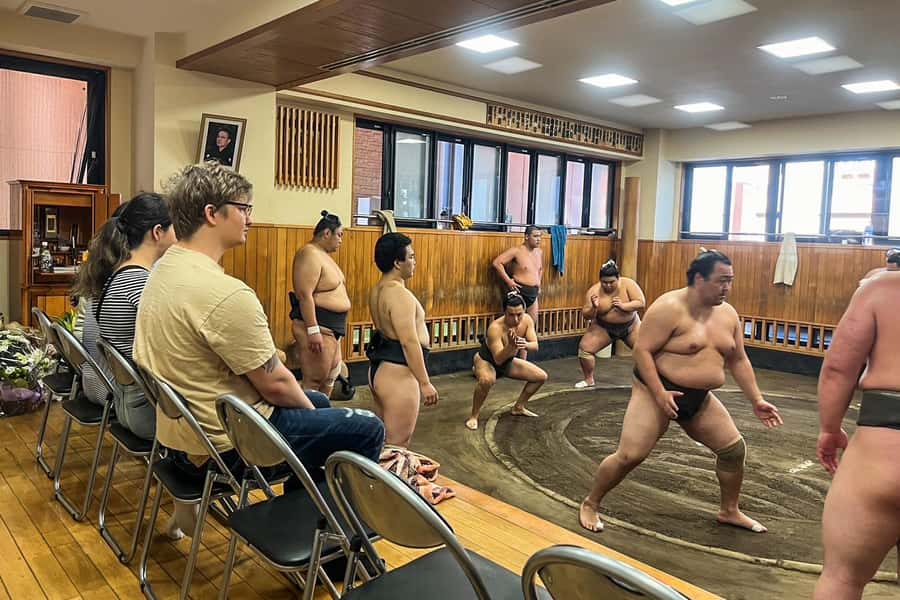
Inside sumo stables, the seating situation varies. The clear rule is that you must follow the stable’s layout, and you’ll access only tatami areas—other zones are off-limits. Most stables don’t provide chairs, which means you should be ready to sit on the floor.
That said, some groups mention there are seats in at least some stables. For example, one comment notes three rows of chairs, with several seats available in the front rows. Another note says it’s often a mostly standing-and-sitting scenario over the full 2 hours.
Here’s the practical way to plan for it:
- If you know you struggle with floor seating, arrive early enough to choose the best spot you can.
- Keep your expectations flexible: you might sit for stretches and stand for others as the practice intensifies.
- Bring a positive attitude toward discomfort. The payback is the proximity: you can watch footwork and breathing in a way you simply can’t from a distance.
If you’re sensitive about sitting posture for long stretches, this is the one part of the tour you should take seriously—because the rest of the experience is very, very worth it.
The morning practice itself: drills, intensity, and the feeling of real effort
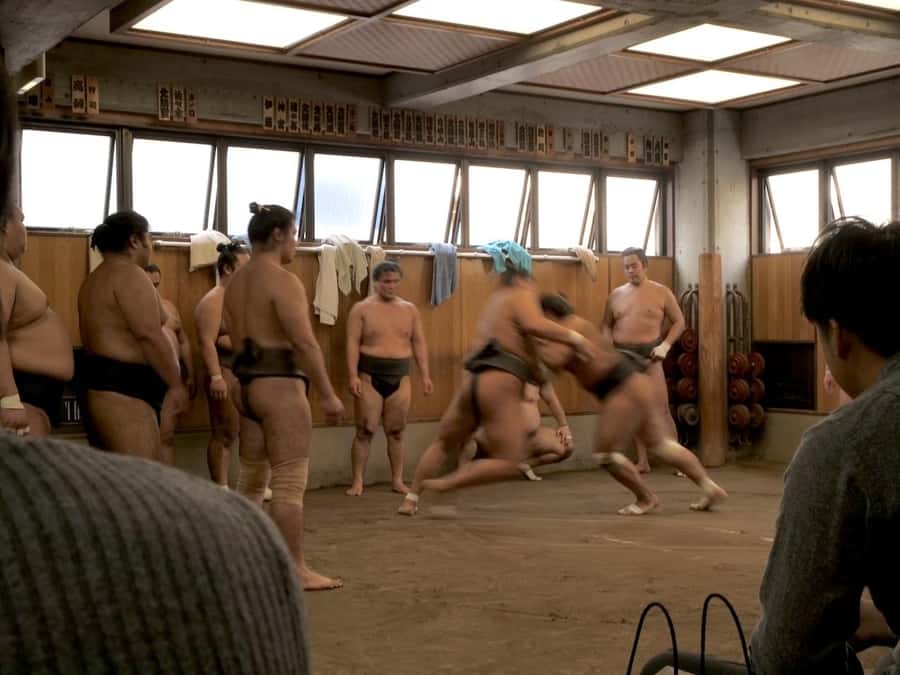
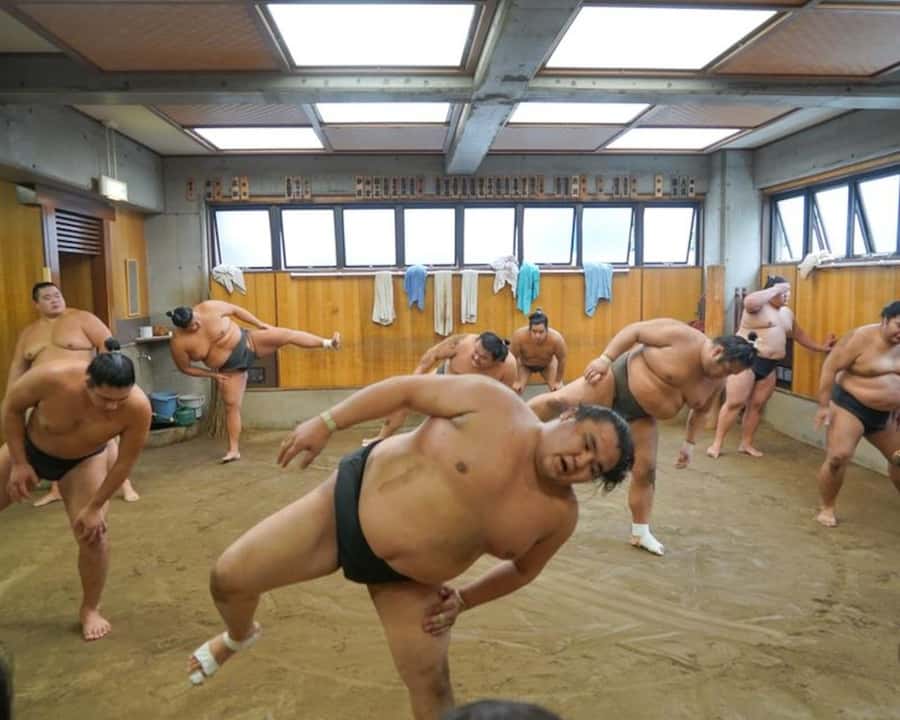
What you’re going to see is not just a slow warm-up. It’s a full training session with technique work and bouts that can get intense. You’ll watch the wrestlers practice maneuvers, and the session builds momentum as it goes.
One thing I’d underline: close-range sumo is physical in a way that surprises people. When you’re near the ring area, you get the sense of effort—sweat, breath, and force—without any screen between you and the action. It turns sumo from a sport you watch into a sport you can almost feel.
Also, it’s not random. There’s a structure to stable practice: discipline, repetition, and coaching-like guidance. Your guide gives you the context so you’re not just watching bodies push. They explain what’s happening and what the wrestlers are working on, so your eyes know what to look for.
And because the stable environment is real, schedules can shift. The tour notes that stables may adjust practice timing last minute based on condition or tournament commitments. If that happens, you should assume you’ll follow the guide’s direction on-site.
Guide explanations that actually help you watch (Marie, Sho, and more examples)
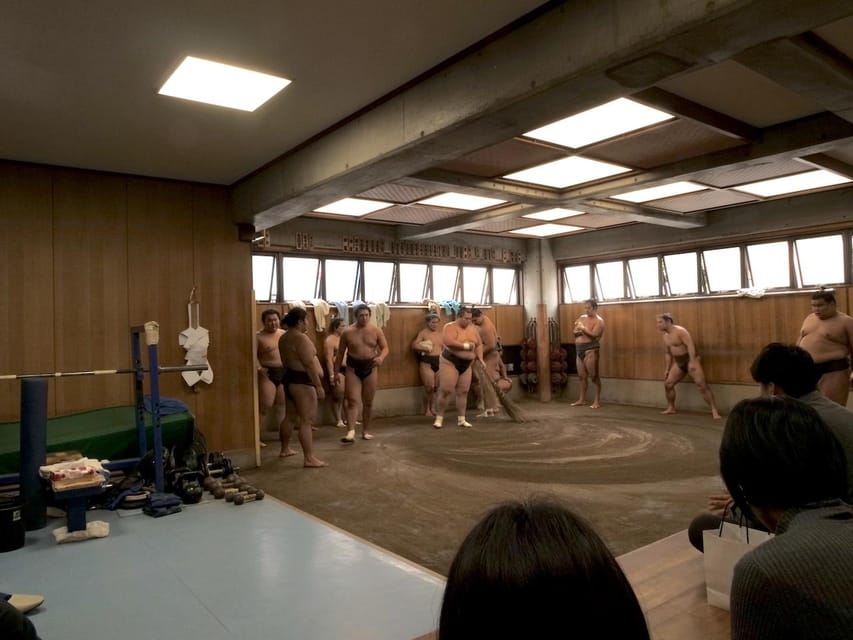
The guide is a big reason this tour earns strong marks. When someone genuinely loves sumo, it shows in how they pace the explanation and how patiently they answer questions.
Guides mentioned in past groups include Marie and Sho, and another guide named Mr. Masao Hiramatsu is also cited as helpful and knowledgeable about Japan and sumo. You don’t need to memorize rankings before you arrive, but you’ll benefit from hearing the basic rules and culture in plain English before you step into the stable area.
In practical terms, here’s what that pre-practice talk does for you:
- It gives you a framework for understanding the techniques you’ll see
- It helps you recognize the difference between training drills and more intense bout moments
- It makes the ritual and stable lifestyle feel less mysterious and more meaningful
If you’re coming in curious but not sure where to start, this guide-led context is what keeps the experience from feeling like a long sit. It turns the 2 hours into something you can follow.




The end photoshoot: up close, but respectful of the rules
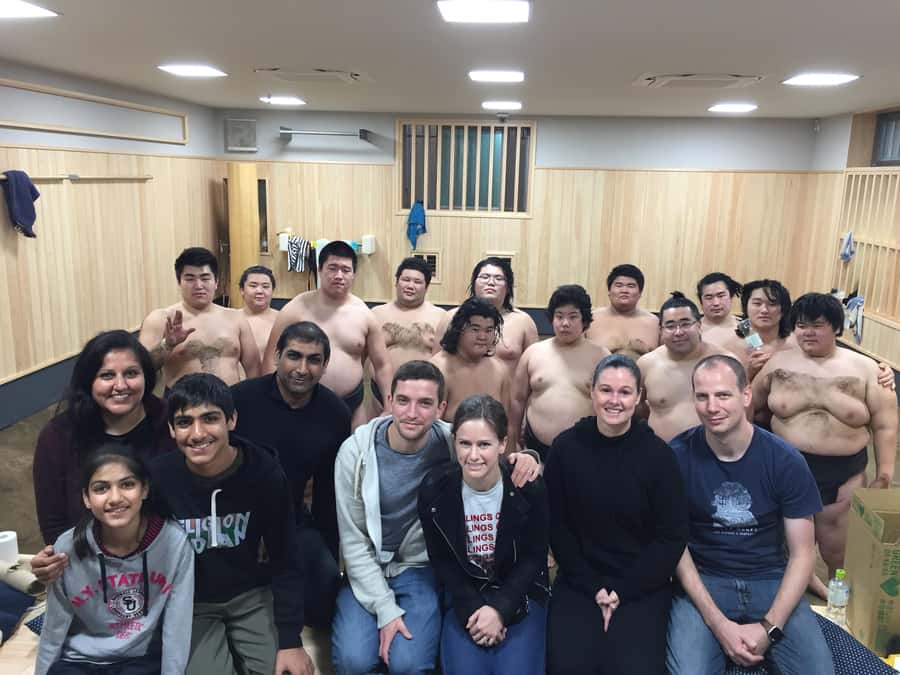
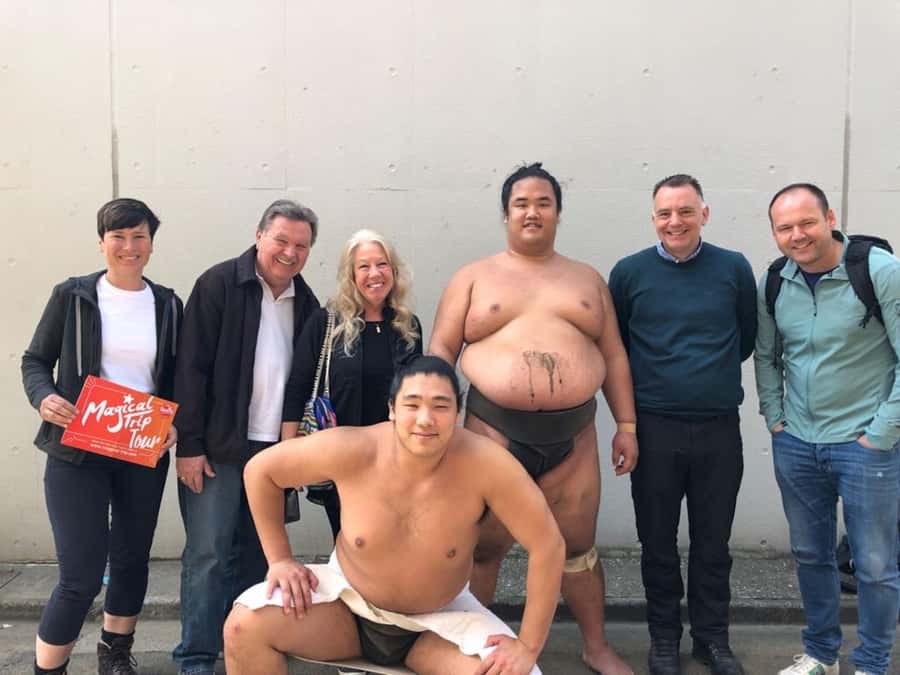
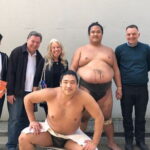
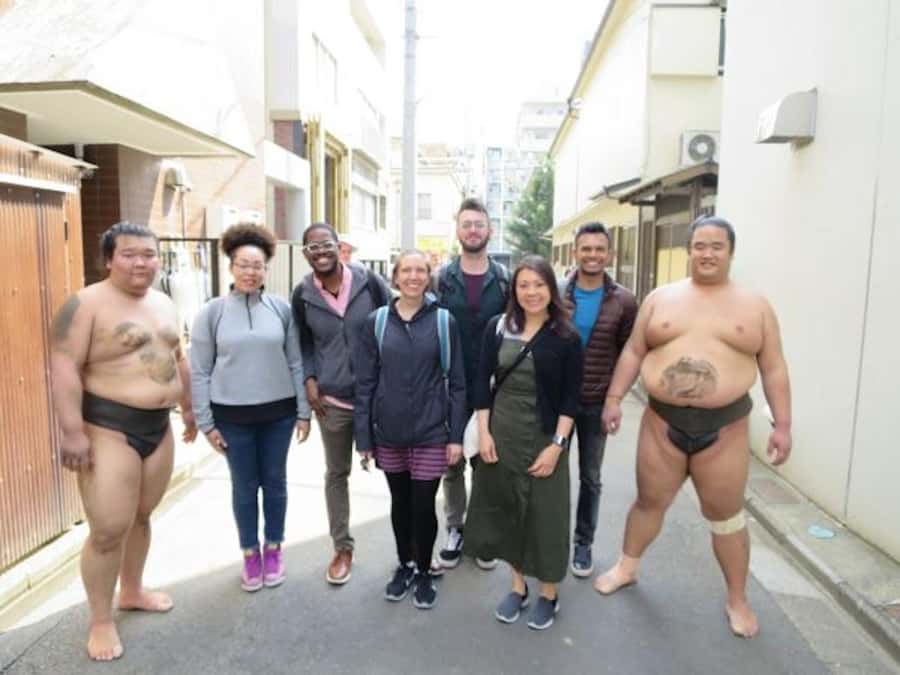
At the end of the practice, there’s an opportunity for a photoshoot with the sumo wrestlers. The key word is discretion: the wrestler’s agreement matters. So you should treat it as a bonus, not a guarantee.
Even when photos happen, remember the stable is working. Your guide will keep the flow respectful. That matters because stable rules are strict, and disruptive behavior can lead to refusal of entry or participation.
If photos are a big part of why you booked, I’d suggest focusing on the main goal too: the training you see up close. The photo is the icing, not the cake.
Price and value: what $96 includes and how to judge it fairly
At $96 per person for a 2-hour small-group experience, the value is mostly about access. You’re paying for two things that are hard to DIY:
1) Entry to a real sumo stable practice session, where normal visitors don’t just wander in
2) An English-speaking guide who helps you understand what you’re watching so you get more out of the time
This price also includes an entry ticket, an English guide, and a small sumo guide sheet/booklet titled Magical Trip Original Sumo Guidebook with rules, traditions, and history basics. There’s also the photoshoot component at the end (again, dependent on wrestler discretion).
What’s not included is simple: food and drinks. So plan to grab something before you go, or at least budget time to get water nearby after. If you tend to get tired during seated floor time, having a snack earlier can make the whole session feel easier.
Who should book this sumo practice tour, and who should skip it
This is a great fit if you like close-up cultural experiences with real rules and real people behind the scenes. You’ll probably enjoy it most if you:
- Care about seeing how the sport is made, not just how it ends
- Want a guided explanation you can use while you watch
- Are comfortable with a structured experience where you follow stable instructions
This tour is not a fit if you:
- Need wheelchair access, since the experience notes limited accessibility and tatami-only access zones
- Are traveling with children under 12, since children under 12 can’t go inside the stable and entry may be denied without refund
- Rely on baby strollers, since baby strollers are not allowed
The decision: should you book this sumo tour?
If you want the sumo experience to feel like a behind-the-scenes morning, I say book it. The ringside access to a real stable practice, paired with an English guide and the chance for an end photoshoot, makes it good value for the time. The $96 price isn’t cheap, but it’s pricing based on access you can’t easily recreate on your own.
Just go in with the right expectations: sit on the floor or stand as needed, don’t treat it like a casual show, and be punctual. If you handle those basics, you’ll come away with a much deeper understanding of sumo than another arena seat ever will.
FAQ
How long is the Tokyo sumo practice tour?
The tour duration is 2 hours.
Where do I meet my guide?
Meet at the A1 exit of Kiyosumi Shirakawa Station. Your guide will be holding a red/orange sign saying Magical Trip.
Do I get an English-speaking guide?
Yes. The tour includes an English-speaking guide.
Is a photoshoot included?
Yes. A photoshoot with the sumo wrestlers is included at the end of the practice, but it depends on the wrestler’s discretion.
What’s included in the ticket price?
It includes attraction entry, an English-speaking guide, a photoshoot at the end, and a Magical Trip Original Sumo Guidebook.
Is food or drink included?
No. Food and drinks are not included.
Is this tour suitable for kids?
The tour is for guests aged 12 and over. Children under 12 are not allowed inside the sumo stable.
Are chairs and wheelchair access available?
Most stables do not provide chairs, and guests are expected to sit on tatami. Some seating may be available depending on the stable. The tour is not suitable for wheelchair users.