REVIEW · TOKYO
Asakusa Kimono Photography Tour
Book on GetYourGuide →Operated by MagicalTrip · Bookable on GetYourGuide
Kimono photos in Asakusa without the crowds. I love the kimono (or yukata) styling support and the 1:30 PM timing that keeps your shots cleaner. One drawback to keep in mind: you’re committing to a 150-minute walk in a traditional outfit, so it’s best if you don’t mind moving a bit slower.
You’ll meet at a Seven-Eleven right by Asakusa Station, then a local English-speaking guide guides you through streets, photo stops, and stories about the area. You also get both raw and edited photos, plus practical tips on kimono etiquette—handy if it’s your first time.
In This Review
- Quick reasons to book this Asakusa photo tour
- Why the 1:30 PM start makes your photos easier
- Meeting at Seven-Eleven: easy to find, low-stress start
- The kimono choice: more than just a costume
- The photo walk and viewpoint stop: guided poses, real street scenes
- What the viewpoint stop adds
- Learning Asakusa while you shoot
- Photos you actually want: raw plus edited
- Comfort and etiquette tips that will save your photos (and your mood)
- Who this tour is best for
- Value check: is $122 worth 150 minutes?
- Small-group feel and guide attention
- Should you book this Asakusa kimono photography tour?
- FAQ
- How long is the Asakusa Kimono Photography Tour?
- What time does the tour start?
- Where do we meet?
- Is an English-speaking guide provided?
- What’s included in the price?
- Are food and drinks included?
- What photo deliverables do I get?
- Can children join, and is there a kid kimono option?
- What’s the cancellation policy and booking flexibility?
- Should you book this Asakusa kimono photography tour?
Quick reasons to book this Asakusa photo tour
- Start at 1:30 PM for photos before the area gets more crowded later in the day
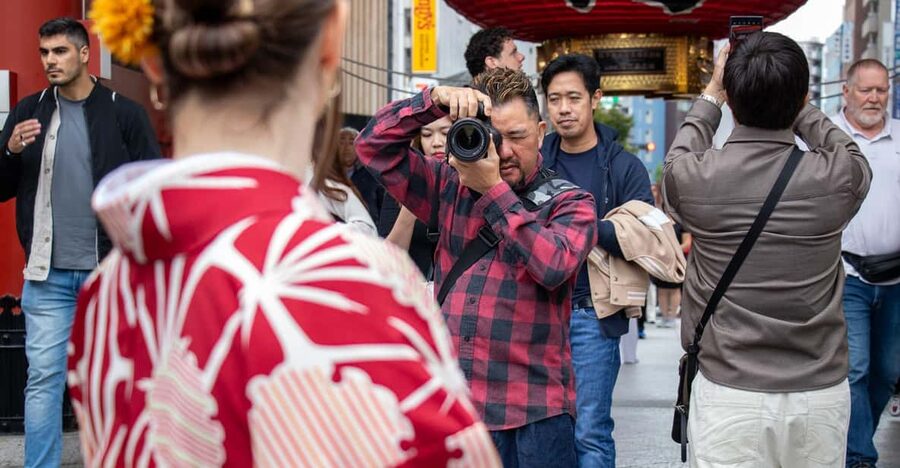
- Kimono or yukata rental included, plus assistance with getting dressed
- English-speaking local guide who photographs, so you’re not figuring poses out alone
- Raw and edited photos provided, which saves you from “camera chaos” after
- History + etiquette, so your pictures come with context (not just outfits)
Why the 1:30 PM start makes your photos easier
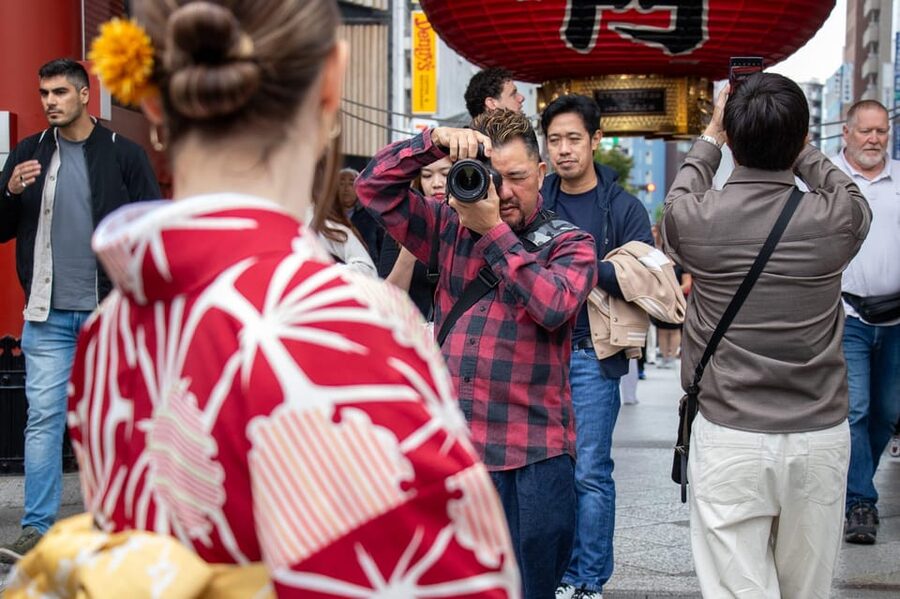
Asakusa looks great all day. But for photos, timing is everything. This tour starts at 1:30 PM, when you can catch a calmer feel in the areas you’ll visit and still be done before the late-day crush builds.
That matters because crowded streets can ruin more than your shot. You’ll spend less time waiting for people to move and more time enjoying the moment. It also means you’re more likely to get those clean street scenes where your kimono is the star, not someone’s backpack photobombing your angle.
You’ll also be out long enough to get variety—walk time plus a main viewpoint stop—without feeling like you rushed through Asakusa in two camera clicks.
You can also read our reviews of more tours and experiences in Tokyo.

Meeting at Seven-Eleven: easy to find, low-stress start
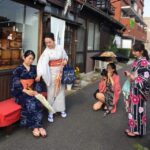
Your meeting point is simple: in front of the Seven-Eleven next to Tobu Asakusa Station (East side), the Tobu Asakusa Station-mae store. It’s about a 1 minute walk from Tobu Line Asakusa Station Main Ticket Gate and about 2 minutes from Ginza Line Asakusa Station Exit A5.
Your guide will be holding a red/orange MagicalTrip sign, so you’re not wandering around trying to match faces. If you’ve ever arrived in Japan a little too early and stared at station maps for 20 minutes, you’ll appreciate this kind of clear, human meeting spot.
The kimono choice: more than just a costume
The best part of a kimono tour is obvious: you look instantly “in the scene.” What’s less obvious (but just as important) is how much the tour helps you wear it comfortably and correctly.
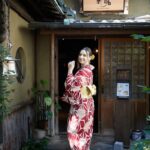
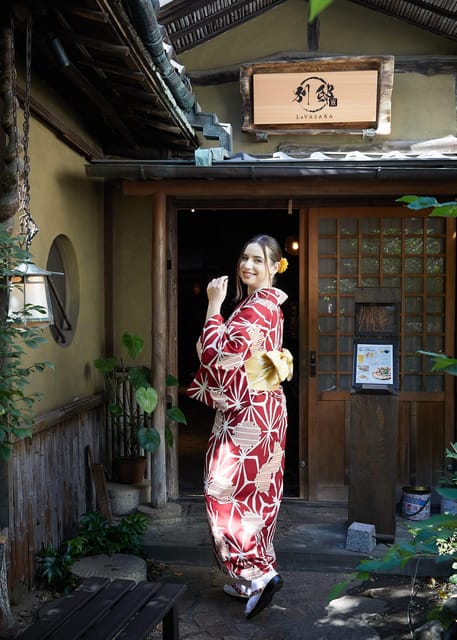
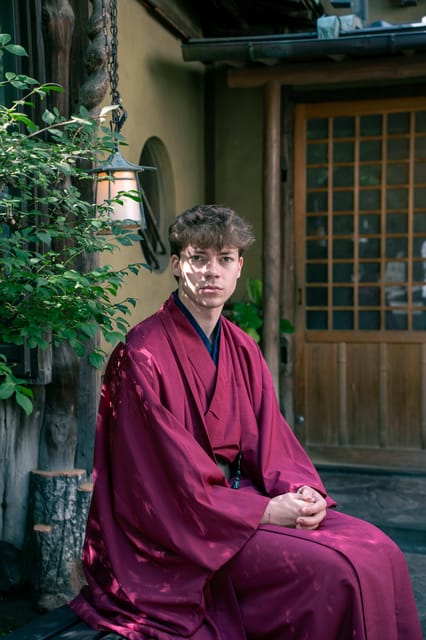
You’ll get a choice of kimono (or yukata in summer), and women also get hairstyle and accessories as part of the experience. That’s a big deal because the way your outfit is styled affects how you look in photos. It also affects how confident you feel while posing—when your hair and outfit are already set, you can relax instead of fixing things every two minutes.
And yes, it’s your first time wearing one: no problem. You’ll have professional help dressing, plus instructions so you know how to move without stress. The guide also shares kimono etiquette tips, which can save you from awkward moments—especially when you’re walking through areas where people still treat tradition with care.
One more practical note: having an assistant handle the outfit means less time spent searching for “how to sit / how to walk” videos on your phone. Your attention stays on the photos and the streets.
The photo walk and viewpoint stop: guided poses, real street scenes
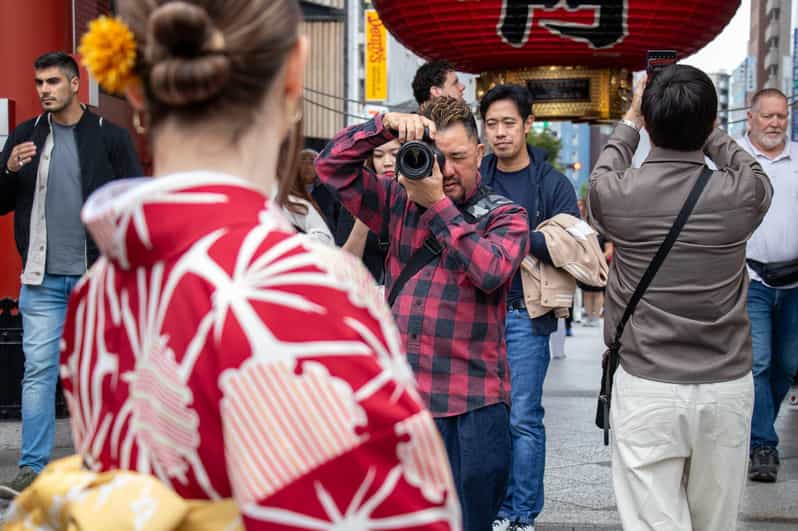
The core experience is a 2.5-hour guided walk that mixes photo stops with sightseeing. You’ll capture Asakusa’s well-known sights and also quieter spots your guide thinks are photo-friendly—places where you can frame a shot without feeling like you’re battling the crowd the whole time.
Here’s what makes this work for real people, not just Instagram-perfect ones: your guide isn’t only telling you where to go. They’re also acting as your photographer. That means you get pose ideas and direction, not vague advice like “stand over there.”
If you’re shy, this is especially helpful. A calm, patient photographer style can take the pressure off. And if you’re traveling with kids, the guide’s job includes keeping everyone engaged while still getting workable photos.
What the viewpoint stop adds
The itinerary includes a specific viewpoint photo stop. Even without naming every exact location, the logic is clear: you’ll get at least one moment where the surroundings open up enough to create variety in your set of photos. Street-level shots are great, but a single viewpoint angle helps your photo album feel complete instead of repetitive.

Learning Asakusa while you shoot
A great photo tour doesn’t just hand you a camera and wish you luck. This one layers local history into the walk, so the pictures mean something beyond the outfit.
As you move through the area, you’ll hear context about Asakusa and why certain streets or scenes matter. That can also improve your photos. When you understand what you’re looking at, you’re more likely to notice good framing opportunities—lines, entrances, architectural details, and the contrast between older spaces and modern life around them.
The tour also focuses on kimono etiquette, which again isn’t just “rules for rules’ sake.” It’s about making sure your day feels comfortable and respectful. Even simple guidance—how to hold yourself, how to be mindful while walking—helps you feel confident in front of the camera.
Photos you actually want: raw plus edited
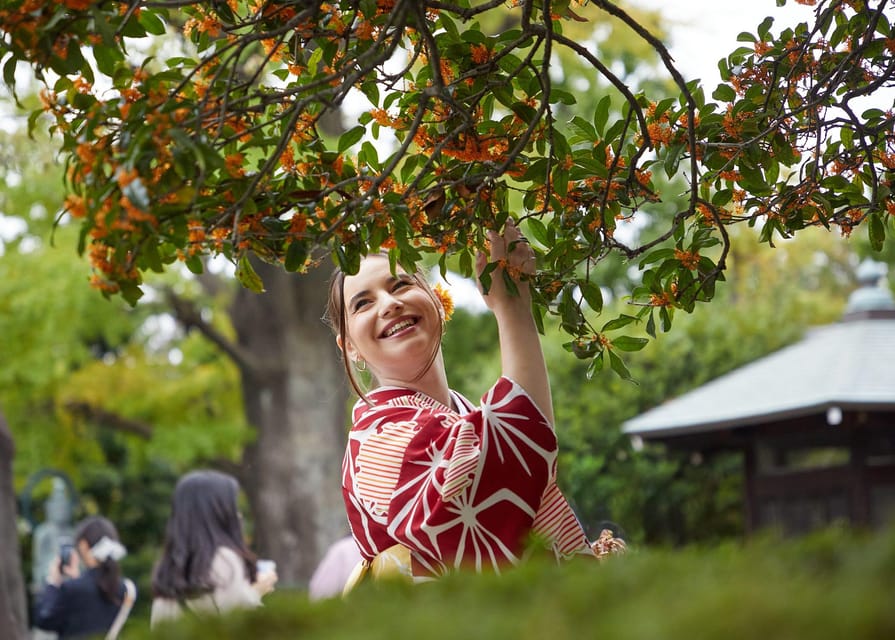
Most photo tours sell the “we’ll take your picture” concept. This tour gives you both raw and edited photos, plus instructions.
That combo is valuable. Raw photos give you flexibility if you want to choose slightly different angles or exposures later. Edited photos are the ones that are usually ready to share right away, with color and clarity tuned for a more polished look. Together, you end up with a bigger set to review—good if your poses didn’t turn out how you hoped during your first few stops.
Also, because the guide is directing you, you’re less likely to leave with a folder full of blurry head-crops. It won’t be perfect for every frame (nobody’s that lucky), but you’ll have enough usable variety to build a nice story.
Comfort and etiquette tips that will save your photos (and your mood)
Even though the tour provides kimono rental and dressing help, you still want your own game plan.
- Wear comfortable underlayers and keep layers in mind if the weather swings during your 150 minutes.
- Bring small basics: a hair tie, a compact water bottle if allowed, and tissues (kimono days can get hands-on busy).
- Expect slower pacing. Kimono fabric can be gorgeous and also slightly restrictive, especially when you’re learning how to walk and turn smoothly.
- If you’re unsure about etiquette, listen closely during the guide’s instructions. You don’t need to memorize everything—just apply it while you’re moving.
If you’re the type who hates feeling rushed, this tour is built for you. The guide’s photo direction reduces the “what do I do now?” anxiety, so you can enjoy the streets instead of managing your own confusion.
Who this tour is best for
This experience fits a lot of travel styles, and that’s clear from how it’s described and how it plays in practice.
- Solo travelers: You’re not stuck wandering alone in a kimono. The guide keeps you moving and helps you pose, so you’re not awkwardly asking strangers for photos.
- Couples and friends: It’s a fun way to make photos that look like they belong in the same story—matching outfits, matching angles, coordinated timing.
- Families: The experience works for children too, with kids ages 3 to 10 allowed for kimono availability. If your child is older, they’re treated like an adult for the purposes of the tour.
- First-time kimono wearers: This is geared for you. You’ll have assistance getting dressed and etiquette tips so you don’t feel lost.
If you want a fast “see everything in 60 minutes” day, this won’t be your best match. If you want a guided, photo-focused Asakusa experience with real cultural context, it’s a strong fit.
Value check: is $122 worth 150 minutes?
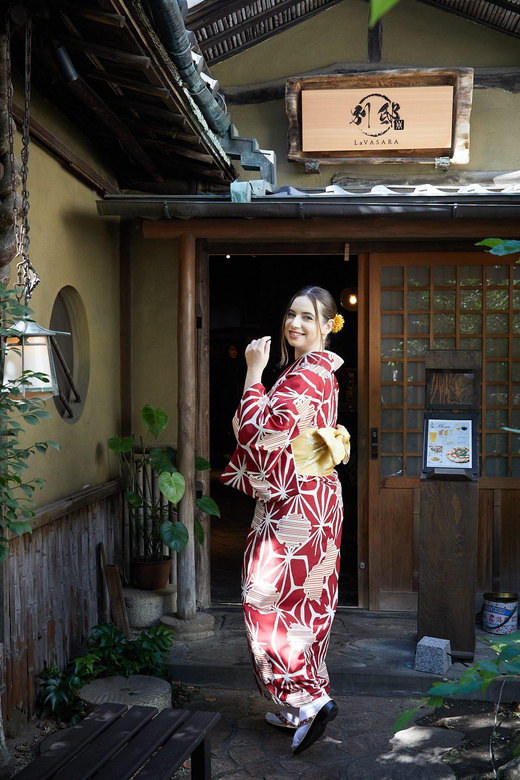
At $122 per person for 150 minutes, you’re paying for more than a walking tour. You’re getting:
- Kimono rental (and styling support for women, including hairstyle and accessories)
- An English-speaking local guide who also functions as your photographer
- Raw and edited photos
- Clear instructions for kimono comfort and etiquette
That changes the math. A regular photo session might cost similar money, but you’d still be responsible for outfit logistics and negotiating poses. Here, the outfit and the photo direction happen together, with a timeline designed for crowd control.
The value is strongest if you want a complete package: you show up, get dressed, shoot, learn, and leave with photos that don’t require guesswork. If you already own a kimono and love taking your own pictures, then it might feel more like a “nice to have.” But for most visitors, the all-in coordination is exactly what makes the price feel fair.
Small-group feel and guide attention
This tour offers private or small groups, which usually means more guidance per person. In practical terms, that matters for photos: you’re more likely to get pose adjustments and attention at the exact moment you need it, instead of waiting for the group shuffle.
It also helps with comfort. Kimono days can feel intimidating. Small groups make it easier to ask quick questions and settle in.
Should you book this Asakusa kimono photography tour?
I’d book it if you want a photo set that looks genuinely Japanese, with outfit support and a guide who helps you pose while explaining what you’re seeing. The 1:30 PM start is a smart choice for people who hate crowded photo lines, and the fact that you get both raw and edited photos is the kind of practical win that makes the day feel worth it.
I’d skip it only if you’re short on time, or if you already know you don’t want to wear a kimono for long enough to do a full 150-minute photo walk.
FAQ
How long is the Asakusa Kimono Photography Tour?
The tour lasts 150 minutes.
What time does the tour start?
The experience starts at 1:30 PM.
Where do we meet?
Meet in front of the Seven-Eleven (Tobu Asakusa Station-mae store), with your guide holding a red/orange MagicalTrip sign.
Is an English-speaking guide provided?
Yes, the tour includes an English-speaking local guide.
What’s included in the price?
Included items are kimono rental, an English-speaking local guide, raw and edited photos, and instructions.
Are food and drinks included?
No, food and drinks are not included.
What photo deliverables do I get?
You receive raw and edited photos.
Can children join, and is there a kid kimono option?
Kimono availability includes children aged 3 to 10. Children above this age are treated as adults.
What’s the cancellation policy and booking flexibility?
You can cancel up to 24 hours in advance for a full refund, and there’s an option to reserve now & pay later.
Should you book this Asakusa kimono photography tour?
Book it if you want a structured, supportive kimono experience with photo help and historical context, timed to reduce crowd problems. If you’re comfortable wearing a kimono for about 2.5 hours and you want photos you can actually use, this is a solid pick for Asakusa.