REVIEW · TOKYO
Tokyo Ryogoku Sumo Morning Practice + Photo Shoot with Wrestlers
Book on Viator →Operated by MagicalTrip Inc. · Bookable on Viator
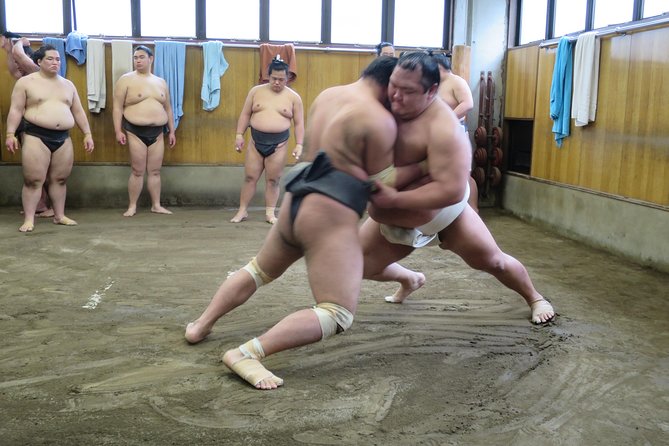
Sumo practice starts at 8 a.m. This Tokyo Ryogoku experience is interesting because you’re watching unstaged training in an actual stable setting, then you’re guided through what you’re seeing. I also like that the tour is led with a local guide who helps make the sport readable, fast.
The main thing to plan for is tatami floor seating and a long, quiet viewing style. You’ll get moments of explanation, but you’re also there to respect training, not to chat through it.
In This Review
- Key highlights worth prioritizing
- Why Ryogoku morning practice beats a tournament day
- Getting to the stable without going to the wrong Ryogoku
- Entering the stable: what you can (and can’t) do
- Watching practice like a fan: the rhythm you’ll see
- Photo shoot reality check: included photos, stable permissions
- Ryogoku Kokugikan: a quick look at sumo-town atmosphere
- Comfort and timing: the “two hours” that can stretch
- Is it good value at $98.16 per person?
- Who should book this morning practice tour
- Should you book? My practical take
- FAQ
- Where do I meet the guide?
- What time does the tour start?
- Is this tour always guaranteed to run?
- Are children allowed?
- Can I take photos during the practice?
- Do I need to buy an admission ticket for the practice?
- What should I bring for comfort?
Key highlights worth prioritizing
- Unstaged morning training in a real stable, not a staged performance
- Local guide access that helps you understand the flow of practice
- Included tour photos, with photo permissions decided by the stable
- Small group size (up to 7), which makes it easier to follow instructions
- First-come seating inside the stable (front isn’t guaranteed)
- Sumo-town add-on: a short guided look around Ryogoku Kokugikan
Why Ryogoku morning practice beats a tournament day
A sumo tournament is the headline. Morning practice is the work behind the scenes. You’re there when the athletes are training in a rhythm that feels practical and serious, not like a show built for spectators.
What you’ll notice right away is how different this feels from watching bouts on TV. Training is repetitive, methodical, and intense in a way that makes the sport’s discipline real. If you’re a fan, you’ll probably end up watching longer than you expected—because the details don’t stay small for long.
You can also read our reviews of more tours and experiences in Tokyo.
Getting to the stable without going to the wrong Ryogoku
This tour runs from Ryogoku, and that matters because there are two Ryogoku train stations. Go to the JR Ryogoku area, and meet at the JR East Exit. Your guide will be holding a red/orange MagicalTrip board.
From there, you’ll walk to a sumo stable. The walk time can range from about 5 minutes to as long as 30, depending on which stable is available that morning. That variability is normal for this style of access, but it’s still worth wearing shoes you’re happy to walk in.
Entering the stable: what you can (and can’t) do
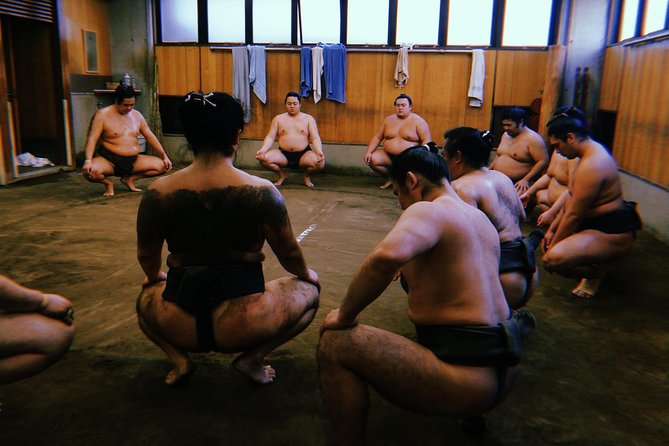
Once you reach the stable, you’ll enter together with your guide and watch the morning session from the tatami areas that are open to audiences. This is not a roam-anywhere situation. All areas are off-limits except the tatami flooring zones.
This is also where the rules get very real. Keep your voice down. The practice isn’t meant as entertainment, and the stable sets expectations for behavior. If you get told to stop doing something—especially around photos or where you stand—follow it immediately. One important note: the stable can refuse guests who offend the rules, and there’s no refund in that case.
And yes, you should plan ahead for comfort. You might have limited opportunities to use the toilet during the practice, so it’s smart to go before the tour starts. Most people will also be sitting on the floor since chairs typically aren’t offered.
Watching practice like a fan: the rhythm you’ll see
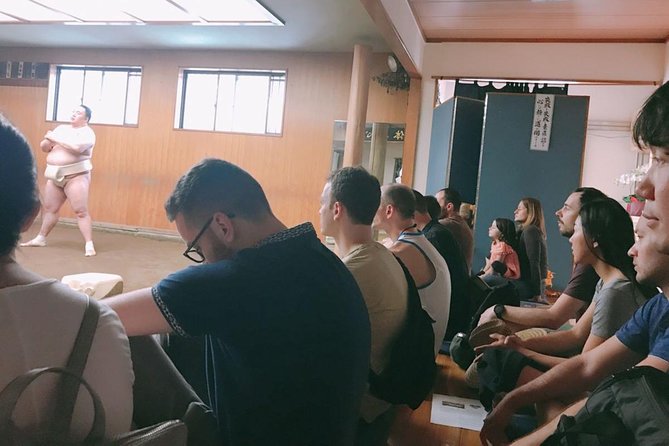
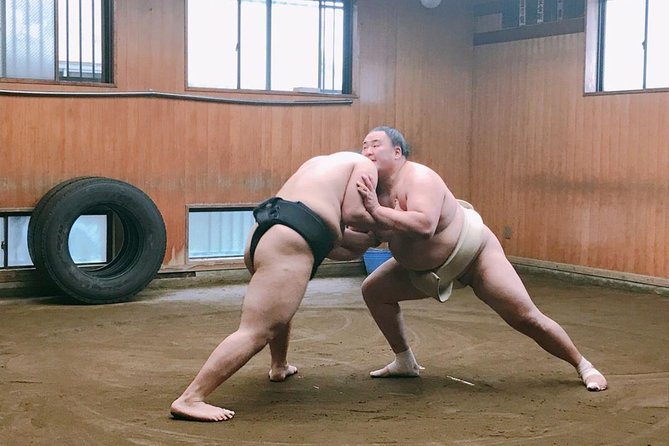
The best part of this experience is simple: up close, you get a real look at training. Morning practice usually includes warmups, drills, and technique work, and it can include actual sparring and practice bouts as athletes work on upcoming tournament needs.
One detail I love here is that the tour is built around observation. You’re not just collecting trivia. Your guide’s job is to help you track what’s happening so your brain connects the movements to the sport’s structure—hierarchy, discipline, and the physical grind of training.
If you’re hoping for an hour of nonstop narration, you might be a little disappointed. Some groups wanted more background and more of a session rundown. Still, you’ll come away with a much clearer picture of how serious the practice is, and why sumo has rules that shape everything, from movement to respect.
Photo shoot reality check: included photos, stable permissions
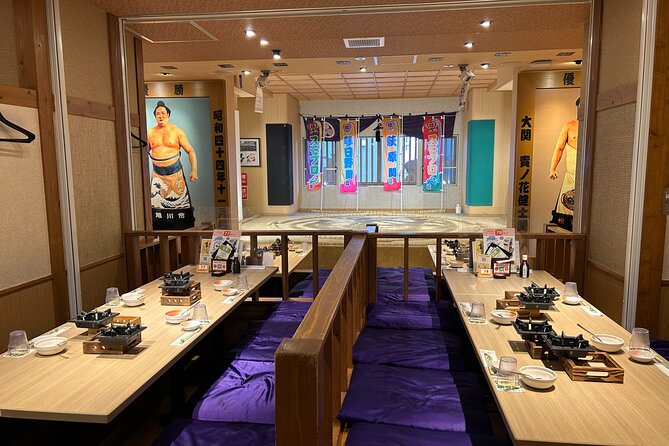
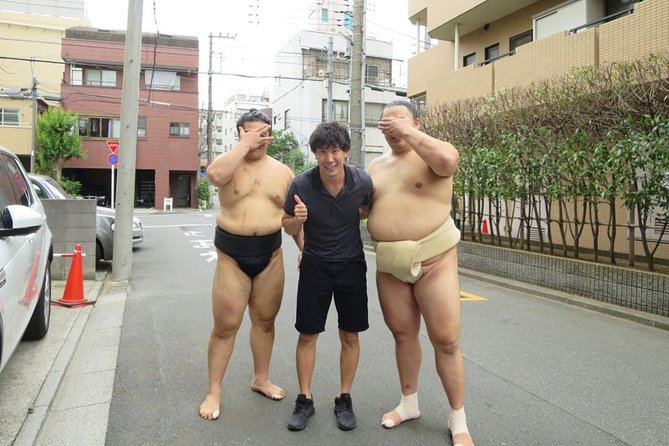
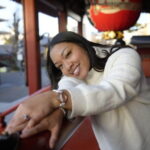
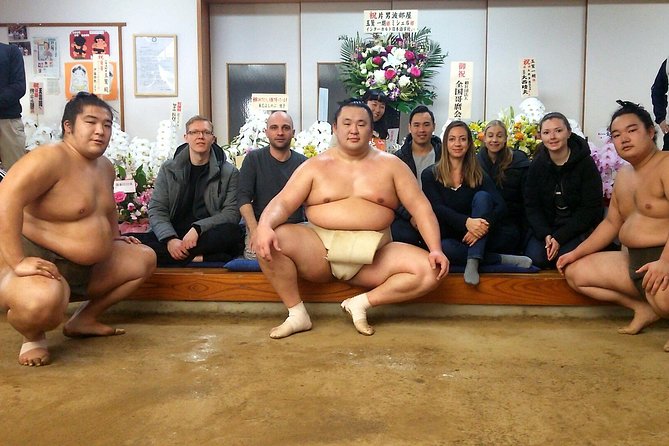
This tour includes tour photos, and you may also get a posed photo moment with wrestlers after practice—when permitted. That said, the stable controls photo rules day to day.
You might be allowed to photograph during the training, or you might not. The same goes for photos with wrestlers. So think of the photos as a strong possibility, not a guaranteed free-for-all.
A practical way to handle this: be ready to follow the stable’s instructions instantly. If a wrestler is approaching for photos, move only when your guide tells you to. If you’re told no photos during a certain phase, it’s usually because the stable is protecting the privacy and normal flow of training.



Ryogoku Kokugikan: a quick look at sumo-town atmosphere
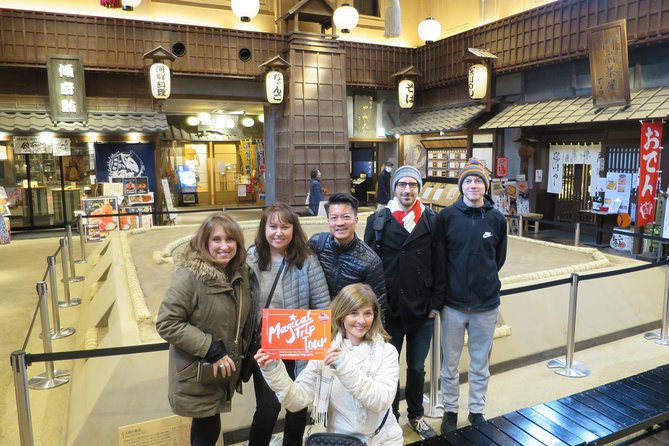
After the practice, you’ll return toward Ryogoku and have a short stop at Ryogoku Kokugikan. This portion is brief—about 10 minutes—and it’s focused on a guided stroll and quick orientation around sumo town.
Don’t expect a long sightseeing block here. Think of it as a small context break: you watch serious training first, then you get a taste of the Ryogoku area that surrounds the sport.
Comfort and timing: the “two hours” that can stretch
The tour is listed at about 2 hours, but in real life, sumo practice can run longer than expected. Your schedule should stay flexible. Also, the experience starts promptly at 8:00 a.m., so build in a little buffer to arrive early.
Seating inside the stable works on a first-come, first-serve basis. If your priority is being as close as possible, arriving right on time matters. Once seating is taken, it can be difficult to change where you sit.
One more comfort note that can’t be ignored: you may sit on the floor for around an hour and a half during practice. That’s not a problem for everyone, but it’s a big deal for anyone with knee or back sensitivity. If you fall into that category, you’ll want to consider whether you can comfortably sit for that stretch.
Is it good value at $98.16 per person?
At $98.16, this is not a bargain like a street-food walk. But it also isn’t just a casual visit. You’re paying for access you can’t easily replicate on your own: a morning stable visit with guidance, admission included for the practice, and tour photos handled through the organized setup.
You’re also getting something that’s hard to copy without local help. Sumo stables can be difficult for visitors to access respectfully and appropriately. With a guide, you’re more likely to be at the right place, understand the rules, and know what to look for.
Where the value can wobble is in expectations. Some people want deeper explanations and more structured guidance about the practice itself. Others also care a lot about photo opportunities and front-row seating. If your main goal is standing right at the edge of the action, first-come seating can be a factor. And if the stable’s schedule changes last minute, the tour may be canceled with a refund.
Who should book this morning practice tour
Book it if:
- You’re a sumo fan or you’re curious and want the sport explained in context.
- You want close access to real training in Tokyo’s Ryogoku sumo district.
- You’re okay with quiet, floor seating, and following stable rules without turning it into a commentary track.
Skip it (or at least adjust expectations) if:
- You want a long, classroom-style history lecture with constant narration.
- You don’t do well with prolonged floor seating.
- Your plan is rigid and you can’t handle the possibility that timing may shift based on the stable’s needs.
Should you book? My practical take
I’d book this if you can handle the quiet and the tatami seating, and if you’re excited about seeing sumo as athletes actually train. The combination of close viewing, local guidance, and the chance for included photos is exactly what makes this tour feel worthwhile.
If your comfort level with floor seating is low, or if you need heavy explanation for every minute, you may end up wishing for a different style of experience. For the right mindset, though, this is one of those Japan moments that feels real, not packaged.
FAQ
Where do I meet the guide?
Meet at Re.Ra.Ku Ryōgoku Ekimae (JR両国駅 East Exit side), at the address listed for the activity. Your guide will be holding a red/orange MagicalTrip board.
What time does the tour start?
The start time is 8:00 a.m.
Is this tour always guaranteed to run?
Sumo stables can adjust the schedule at the last minute based on tournament needs and the wrestlers’ condition. If the practice is suddenly canceled by the stable, your booking will be fully refunded.
Are children allowed?
This experience is for people aged 12 and over. Children under 12 are not allowed inside the sumo morning practice.
Can I take photos during the practice?
Photo rules are decided by the sumo stable. You may be allowed to photograph the training and/or take photos with wrestlers, or you may not be.
Do I need to buy an admission ticket for the practice?
No. The sumo morning practice entrance fee is not something you pay for, since admission is included.
What should I bring for comfort?
Bring water and, especially in summer, a hat for heat. Plan to sit on the floor on tatami, and consider using the toilet before the practice starts since you might have limited access during it.