REVIEW · HO CHI MINH CITY
The River’s Edge Photo Tour
Book on Viator →Operated by Vietnam in Focus - Day Tours · Bookable on Viator
River photos usually need time. Here you get both. This 4-hour Ho Chi Minh City shoot focuses on building a real photo story along the river edge, with stops that mix working life, portraits, architecture, and cityscapes. I like that the early timing brings softer river light, and I like the practical feedback style from guides like Paul Green and William, who help you improve fast with composition suggestions.
The route also has a lot of genuine texture: tugboats bringing coconuts and goods, a walk past a Buddhist temple, rickety houseboats in a floating village, and then a market scene with strong people-photo lighting. One consideration: it runs early (start time 5:30 am) and it depends on good weather, so you’ll want to be ready for a morning and possible rescheduling if conditions turn.
In This Review
- Key highlights to know before you go
- A 5:30 am start for river light and fewer crowds
- District 7 canal life: tugboats, coconuts, and working edges
- Past a Buddhist temple to portraits on anchored houseboats
- Turning the Saigon skyline into your river story’s payoff
- The traditional market stop and people photos with real light
- How the professional guide turns shots into a photo narrative
- Price and what you really get for $119
- Logistics that affect your experience (without ruining it)
- Who this tour is perfect for
- Should you book the River’s Edge Photo Tour?
- FAQ
- What time does the River’s Edge Photo Tour start?
- How long is the tour?
- Where does the tour take place?
- How many people are in the group?
- Is pickup available?
- What’s included in the price?
- Do I need good weather?
- Is cancellation free?
- What kind of photos will this help you shoot?
Key highlights to know before you go
- 5:30 am start for better light along the river and a calmer feel before the city fully wakes up
- Up to 6 travelers means you’re more likely to get personal help with your shots
- Canal work scenes with tugboats and cargo like coconuts for classic river-life images
- Floating village portrait opportunities with owners who often chat, helping you capture real moments
- Saigon skyline over the water so your story includes modern city energy, not just boats
- Traditional market light that’s ideal for people photography when you want more motion and expressions
A 5:30 am start for river light and fewer crowds
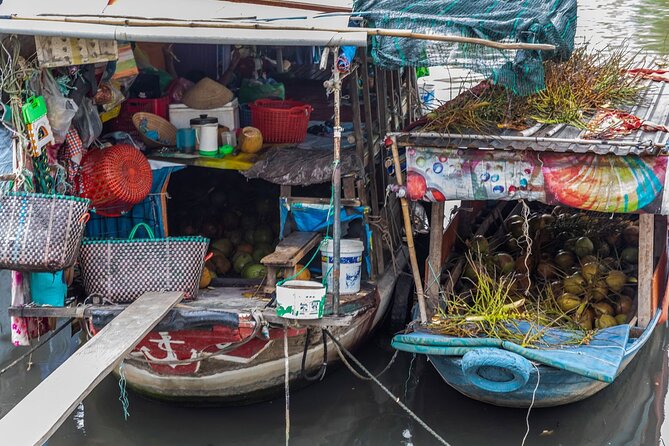
This tour is built around an early morning start time of 5:30 am. That matters more than people think. River light changes fast, and the first part of the day tends to look more flattering on skin tones, boats, and wet surfaces near the water.
Another small win: a 4-hour format is long enough to learn and shoot, but not so long you burn out. You can still have the rest of the day for normal sightseeing or a long breakfast—just plan your schedule around the morning.
If you’re the type who hates early starts, consider this your “trade”: you give up some sleep for river-side scenes that look better than a midday redo.
You can also read our reviews of more tours and experiences in Ho Chi Minh City.

District 7 canal life: tugboats, coconuts, and working edges

You begin in District 7 with a canal-side wander designed for working river life photos. The best part of this section is the realism. Tugboats arrive carrying coconuts and other goods from the Mekong, which creates natural story elements: the boat, the cargo, the people watching it, and the practical rhythm of daily work.
This is also a great place to practice a few core photo skills:
- Story-first framing: try to include more than one element (boat + cargo + people or surroundings) so your image feels like a moment, not just a subject.
- Layering: use the canal edge as a foreground guide, with tugboats and movement in the mid-ground.
- Directional light awareness: watch which way the light hits faces and boat surfaces, then adjust your angle rather than just your camera settings.
Potential drawback here: if you’re waiting for a perfectly posed scene, you may need patience. This part is about activity and effort, so your best photos will come from being ready when something happens.
Past a Buddhist temple to portraits on anchored houseboats
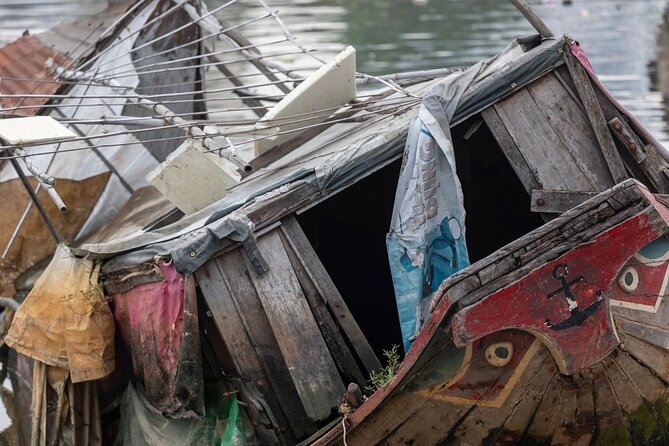
After the canal scenes, the route shifts. You pass a Buddhist temple and then move toward a floating village area with rickety houseboats anchored along the route.
This section is where portrait photography comes alive. The boat owners often come out for a chat, which gives you a chance to photograph people in context—someone at work, someone relaxing, or someone simply watching you photograph. That kind of interaction is gold because it helps your images feel connected to real life, not staged.
A practical tip I’d carry into this stop: keep your camera up and ready, but be respectful with timing. If the moment is calm, shoot at a slower pace. If people are talking or moving, work with that motion instead of trying to freeze it into a stiff pose.
In at least one group, clients specifically appreciated that the guide can help you approach people even when language is a barrier. That matters here. You don’t need to speak Vietnamese to get respectful interactions, because the guide’s job is to help the conversation and the flow of your photography.
Turning the Saigon skyline into your river story’s payoff
One of the most satisfying moves on the tour is finishing a segment with a dramatic view of Saigon’s 21st-century skyline over the river. This isn’t just a pretty backdrop. It’s a narrative pivot from traditional river work to the modern city rising above it.
Here’s why this section is valuable: it helps your photo set show contrast. Your earlier images are about boats, daily labor, and the river’s human scale. Then suddenly you have high-rise geometry across the water. Put those together and your story feels complete—past and present in the same frame.
How to shoot this part depends on your gear, but the approach is the key:
- Choose one main subject (a person near the water, the river edge, or a boat silhouette) and let the skyline become the supporting cast.
- Use the river as a leading line to pull the eye toward the buildings.
- Watch reflections if there’s surface shimmer. They can add mood, but they can also confuse your composition if you don’t decide what’s important first.
The skyline stop is also a reminder that this tour isn’t only about boats. It’s about pacing your images so your viewer feels the route, not just the individual scenes.
The traditional market stop and people photos with real light
The final segment leans into street photography. You end with a walk through a traditional market where the light can work beautifully for people photography.
Markets are great for portraits because people are already engaged—talking, moving goods, sharing space. Your job is to notice expressions and relationships, then time your shutter for the natural beat of activity.
If you want your photos to look more intentional, don’t only aim for close-up faces. Try:
- Candid mid-shots that include hands, goods, and body language.
- Environmental portraits where the setting explains context.
- Small group moments (someone helping someone, sharing space, or pausing to speak).
One thing to watch: markets can be crowded. Be calm, give people a little space, and prioritize shots that feel respectful. The best people photographs often come from waiting for a small pause, not from rushing the camera.

How the professional guide turns shots into a photo narrative
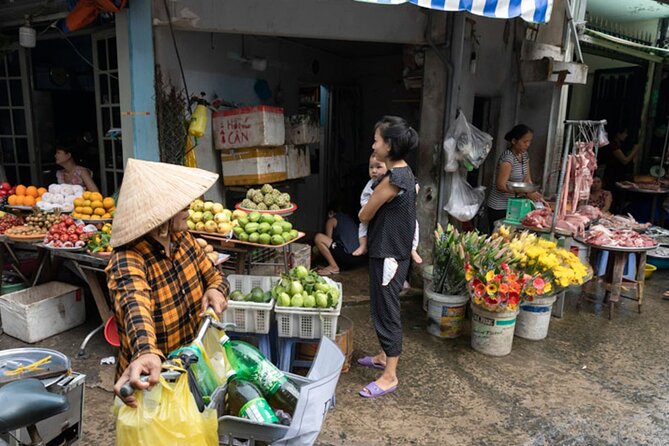
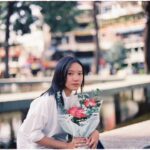
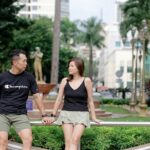
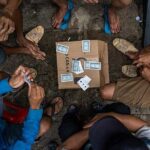
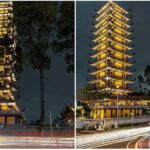
The biggest differentiator here is the professional photographer guide. This tour isn’t presented as a random walk with camera stops. The goal is to help you create and pace a photographic narrative—one shot can be good, but a sequence can be unforgettable.
You’ll get input on:
- Composition for different picture types (architecture, people, cityscapes)
- Using settings appropriately for the scene you’re facing
- Creating a story with pacing so your images don’t all look like the same photo
The feedback style is described in practical terms by past participants: guides like Paul Green and William give direction that helps you improve quickly, not vague compliments. One client highlighted how the guide suggested new ways to photograph the river that felt exciting and doable right away.
Another detail that helps: since your guide is managing the route, you’re not stuck trying to guess where to stand or when to pivot from one scene type to another. Your mental energy stays on the photography.
If you’re coming with a camera and a curiosity for learning, this tour gives you a clear framework to work within. If you’re coming with only a smartphone, you can still apply the same composition ideas—your crop and angle become your superpowers.
Price and what you really get for $119
At $119 per person for about 4 hours, the value comes from the mix of guide time, location access, and the coaching you’re likely to receive.
Here’s what you’re paying for that matters in real terms:
- A small group capped at 6 travelers, which increases the chance you’ll get attention
- A guide focused on photography instruction, not just escorting you around
- A morning route that hits multiple scene types—river work, floating village portraits, skyline contrast, and market people photos
- Pickup offered and a mobile ticket, which reduces friction on the logistics side
- Admission ticket free for the experience element
Group discounts are available too, which can make the per-person cost friendlier if you’re traveling with someone.
Would I call it cheap? No. Would I call it overpriced for a coach-guided photo story with rare-access local scenes? Also no. The price makes the most sense if you care about improving your photos and you like being guided to places you might not find on your own.
Logistics that affect your experience (without ruining it)
This tour asks for a morning start at 5:30 am, and it depends on good weather. That’s not filler policy. Morning and daylight are part of why the scenes look the way they do—river light and market brightness aren’t the same after rain or during dull skies.
There’s also a practical time/energy rhythm: 4 hours flies by when you’re shooting constantly, so you’ll want to keep your camera battery and memory card situation handled before you meet.
Most travelers can participate, so you don’t need to be a pro photographer. But you do need a willingness to walk a route and be ready to photograph at different angles and distances.
Who this tour is perfect for
You’ll likely love this if you:
- Want a photo-focused morning that covers architecture, people, and cityscapes
- Enjoy authentic, non-tour-bus areas around water and daily life
- Like portrait chances where people can actually talk to you, not just pose at a distance
- Want quick coaching that helps you improve your images during the tour
You might skip it if:
- You hate early mornings and don’t want to risk weather-related changes
- You only want landmark photos and prefer big-name sights with minimal walking
Should you book the River’s Edge Photo Tour?
I think you should book it if you want more than pretty pictures—you want a guided way to build a coherent set. The combination of river work scenes in District 7, floating village portrait moments, skyline contrast, and market people photography is a strong mix for anyone learning how to shoot a story, not a checklist.
If your schedule can handle a 5:30 am start and you’ll be happy working in real local neighborhoods with a camera, this is the kind of tour that gives you photos you’ll still care about when you’re back home.
FAQ
What time does the River’s Edge Photo Tour start?
It starts at 5:30 am.
How long is the tour?
The duration is about 4 hours.
Where does the tour take place?
It’s in Ho Chi Minh City, Vietnam, focusing on the river area around District 7.
How many people are in the group?
The tour has a maximum of 6 travelers.
Is pickup available?
Yes, pickup is offered.
What’s included in the price?
You get a professional photographer guide. The experience also lists admission ticket free, and it uses a mobile ticket.
Do I need good weather?
Yes. The experience requires good weather. If it’s canceled due to poor weather, you’ll be offered another date or a full refund.
Is cancellation free?
Yes. You can cancel for a full refund up to 24 hours before the start time.
What kind of photos will this help you shoot?
The tour covers architecture, people photography, and cityscapes, with guidance on composition and creating a paced photo narrative.