REVIEW · HO CHI MINH CITY
Private Sunset Photography Tour – Travel through history and time
Book on Viator →Operated by Saigon Photography Tours · Bookable on Viator
Golden hour turns Saigon into a photo classroom. I love how the tour mixes story-focused street photography with personal feedback from Adrien, so you leave with images that feel like Saigon, not stock photos. One thing to consider: it’s built for good weather and moderate walking, so plan around comfort as the light fades.
This is a private setup in Ho Chi Minh City, starting at 2:30 pm and running about 3.5 hours, with hotel pickup offered. You’ll bounce between a famous skyline landmark, older city lanes, and an underground-feeling neighborhood—an easy way to show yourself how history and daily life overlap in the same frame.
In This Review
- Key things that make this sunset photo tour work
- Why this sunset route feels like Saigon, not a checklist
- Price and value: what $89 gets you in real time
- Hotel pickup and a private format you can actually use
- Stop 1: Bitexco Financial Tower for skyline shapes and first-light planning
- Stop 2: Mong Bridge maze for old Saigon texture in modern streets
- Stop 3: Cong Vien 23 Thang 9 for underground character and scene-building
- How the mentor approach improves your photos fast
- What to bring so the tour stays fun in real life
- Best for: who will get the most out of it
- Should you book this private sunset photography tour?
- FAQ
- What time does the tour start?
- How long is the sunset photography tour?
- Is this tour private?
- Do I get hotel pickup?
- What’s included in terms of admission?
- Is the tour suitable for beginners?
- Do I need good weather?
- Is there free cancellation?
- What kind of activity level should I expect?
Key things that make this sunset photo tour work
- Adrien’s mentorship style: friendly, direct coaching plus practical camera guidance for all levels
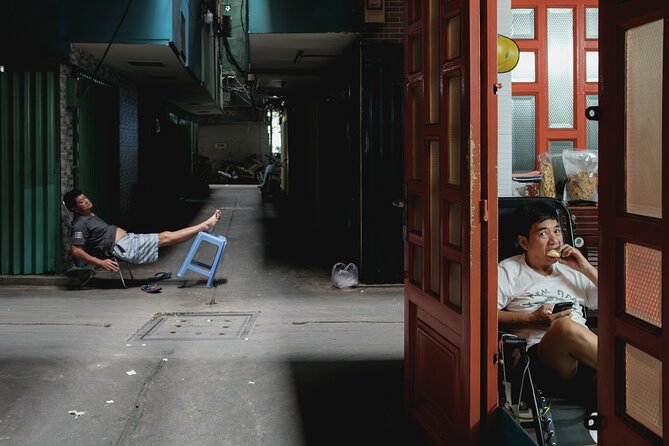
- Street scenes that don’t feel intrusive: the route is aimed at real life, not posed backdrops
- A tight 3.5-hour arc: skyline light to street texture to character-filled under-street spaces
- Included entry where it matters: Bitexco stop is free, and the later stops include admissions
- Private group format: only your group participates, so you can move at a comfortable pace
- Designed for storytelling: you’re taught how to spot moments and build a sequence, not just shoot a single photo
Why this sunset route feels like Saigon, not a checklist
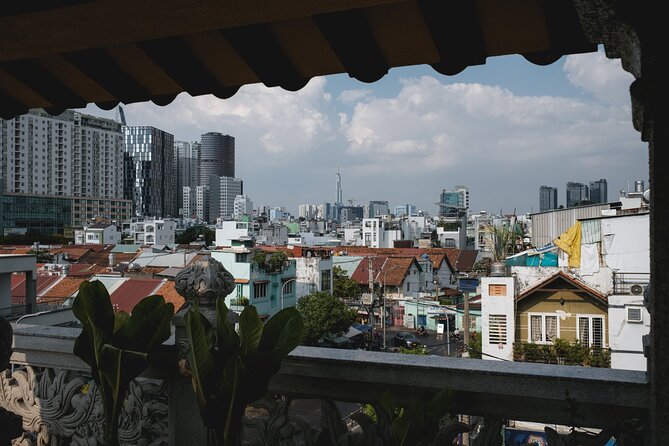
Saigon changes fast, and that shows up in photos. In one afternoon you can go from a tall, modern symbol of the city’s growth to older neighborhood textures where daily life still reads loud and clear. That contrast is exactly what this tour is built around.
What I like most is that the guide doesn’t treat photography as a solo sport. You’re actively coached while you walk. You get quick direction before you shoot, then you can adjust right away when you see what the scene is doing. Even if you only use a phone, you’ll benefit from the same thinking: light, timing, human scale, and story.
The other big win: you get access to places you’d likely skip on your own. The route is intentionally “through-history-and-time,” meaning you’re not just collecting pretty angles—you’re learning how Saigon’s past and present show up in people, street layouts, and casual moments.
You can also read our reviews of more tours and experiences in Ho Chi Minh City.



Price and value: what $89 gets you in real time
At $89 per person for roughly 3 hours 30 minutes, the value depends on one thing: how much you want guided shooting help. If you’re traveling with a camera or phone and you want your photos to improve fast, a mentor-style tour can be a bargain. You’re buying time, direction, and feedback—not just transportation to a view.
This isn’t a long, bus-heavy day. It’s a focused afternoon session, with pickup offered and a private group experience. You also get a mobile ticket, and the later parts of the route include admission costs where needed—meaning you don’t lose time figuring things out on the spot.
It’s also booked fairly far ahead (about 61 days on average). That’s usually a sign that people who care about photography treat this as a “do it early” activity, not a last-minute gamble.
Hotel pickup and a private format you can actually use
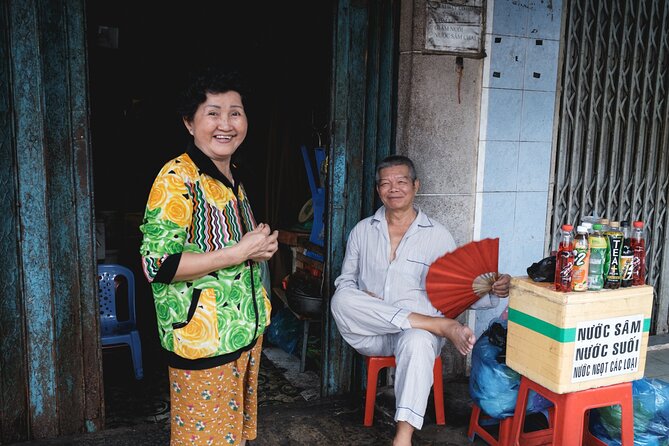
Meeting at 2:30 pm with hotel pickup offered is a smart way to start, especially if you’re new to Ho Chi Minh City. You can use that early stretch to get ready mentally: camera settings, what you’ll watch for, and how the day will flow from place to place.
Because it’s private (only your group), you’re not stuck waiting for a big crowd to catch up. That matters for street photography. The best moments happen for seconds, not for a scheduled group rest stop. A private format also gives the guide room to tailor advice—whether you’re getting started or you’re already comfortable with manual settings.
Stop 1: Bitexco Financial Tower for skyline shapes and first-light planning
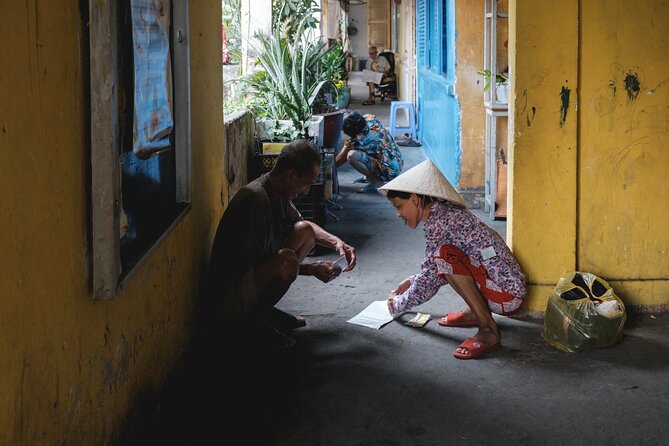
You start with a classic Saigon landmark: Bitexco Financial Tower. This is your “set your vision” moment. You get a photogenic, well-known structure that also helps you get your bearings fast—big geometry, clean lines, and a city skyline that signals you’ve arrived in the right place.
This first stop is about more than taking a hero shot. It’s the place where you’ll likely plan your approach for the rest of the walk. Sunset light changes quickly, and tall buildings can give you strong shadows and reflections. The guide’s early instruction tends to focus on how to translate what you see into a frame that tells a story, not just records a view.
Admission here is listed as free, so you’re not wasting time on costs at the very start.
Practical consideration: because it’s a tower area, you might find more people around than in the later alley stops. That’s normal—use it to your advantage. Look for human scale in front of the skyline, or patterns created by movement.
Stop 2: Mong Bridge maze for old Saigon texture in modern streets
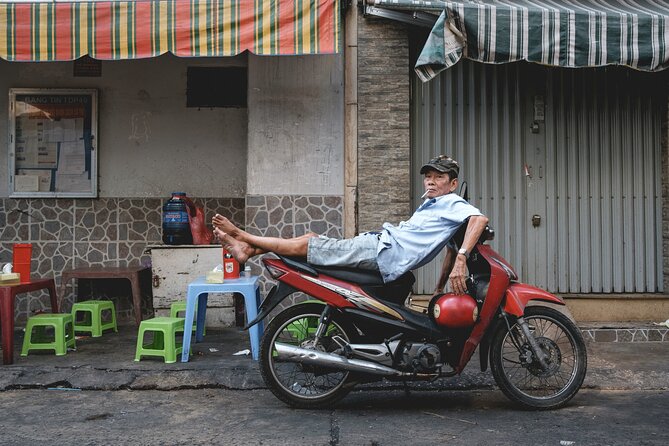
Next comes Mong Bridge, and this is where the tour shifts from skyline confidence to street reality. You move into a sprawling maze of small streets and alleys that represent older Saigon surviving inside the modern city.
This is the part of the route that tends to make people smile, because the scenes feel discovered. You’re not just walking down a postcard street. You’re working your way through narrow lanes where everyday life happens close to the camera. That proximity is great for street photography—faces, gestures, street-level signage, and small details that add up to atmosphere.
What you’re aiming for here is texture and rhythm:
- Find repetition (windows, steps, doorways, shop fronts)
- Use your frame to show how people move through the space
- Shoot the moment where action and light overlap
Admission is included for this stop, which helps keep the flow smooth.
Possible drawback: alley routes can be uneven, and you’re doing moderate walking. If you’re sensitive to uneven pavement or tight spaces, wear shoes you trust and keep your pace comfortable.



Stop 3: Cong Vien 23 Thang 9 for underground character and scene-building
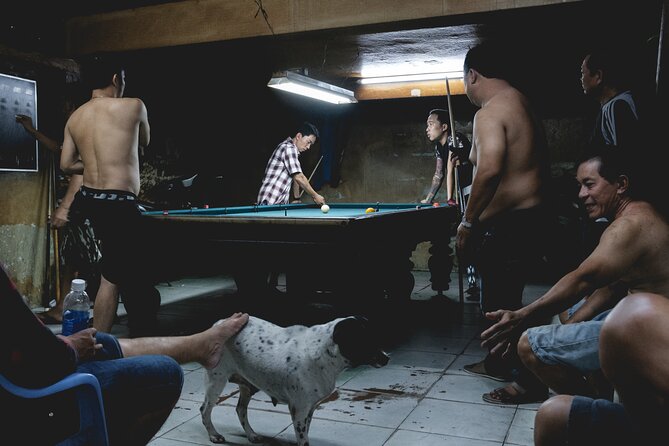
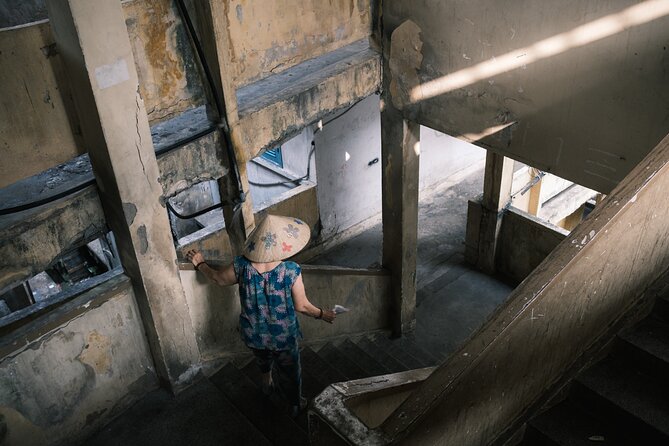
The final stop is Cong Vien 23 Thang 9, and it gives you a totally different vibe. Instead of open street air, you explore an underground-feeling neighborhood full of characters and photo opportunities.
This kind of space is a gift to photographers. Light behaves differently. Colors often feel deeper. People look more dramatic against walls and shadows. And because the setting feels slightly unusual, it’s easier to create images that look like you were somewhere specific—because you basically were.
This stop is where your earlier street-photography thinking pays off. If the guide has already taught you how to spot a scene that holds a story, you can put that into practice quickly. You’re looking for moments where someone’s expression or routine says something about daily life.
Admission is included, so again, you can focus on shooting instead of logistics.
Practical consideration: underground or semi-underground spaces can mean lower light and different contrast. If you’re shooting at higher shutter speeds, you may need to adjust your settings depending on your gear and how the light hits.
How the mentor approach improves your photos fast
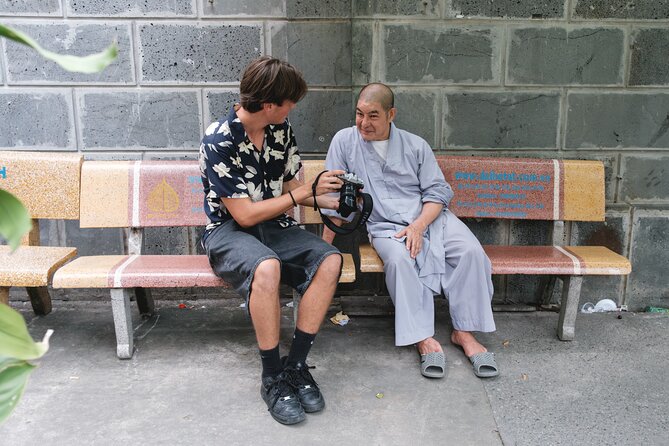
The tour is built around instruction, but it’s not classroom theory. It’s coaching you can use immediately.
Adrien’s teaching style shows up in the way participants describe the experience: he gives practical tips, explains camera settings, and supports beginners without making them feel behind. He also reviews photos during the tour, which is a big deal. Seeing what worked (and what didn’t) while the scene is still fresh helps you improve on the same day—not sometime later after you’re already back home.
Across the experiences, a few themes come up again and again:
Story over single shots. You’re guided to tell Saigon’s story through images—how people live, how streets shape behavior, how history shows up in layout and texture.
Comfort in street photography. Some of the best street images happen when you feel relaxed. That’s why it matters that the guide encourages non-obtrusive shooting. You’re in the neighborhood, not stalking it.
Sequence thinking. Instead of treating the tour as a collection of unrelated photos, you’re encouraged to build a sense of flow—how one scene leads to the next.
If you want something useful you can take to your own future travels: pay attention to how the guide frames choices. It’s not only what to shoot—it’s how to decide, then refine, then decide again.
What to bring so the tour stays fun in real life
The tour asks for moderate physical fitness, so plan for walking and changing locations. Bring water, and wear shoes that can handle city sidewalks and tighter alley areas.
For gear:
- Bring the camera or phone you’ll actually use
- If you have interchangeable lenses, bring what you know well (you won’t benefit from wrestling with unfamiliar setups)
- If you shoot on manual, be ready to adjust settings as light shifts from skyline to streets to underground spaces
If you’re a beginner, you don’t need to arrive with everything figured out. The point is that the guide will help you build a shooting plan on the spot—settings, composition, and what to watch for.
Best for: who will get the most out of it
This is ideal if you fall into any of these buckets:
- You want street photography coaching and personalized feedback, even if you’ve never taken a serious photo journey before
- You’re visiting Ho Chi Minh City for the first time and want a route that reveals neighborhoods you’d probably miss
- You want photos with people and place, not just architecture and empty streets
- Your group includes mixed levels (the tour has worked well for families and for people with no prior experience)
If you only care about a guaranteed set of scenic views with minimal walking, you might find the street-focused stops a bit more hands-on than you expected.
Should you book this private sunset photography tour?
I’d book it if your goal is better photos with real local energy, and you’re willing to walk and learn while the light is changing. The biggest selling point is the mentoring approach—Adrien helps you shoot with intention, then improves your results by looking at what you captured during the tour.
I’d skip it (or consider a different style of photo outing) if you want a mostly sit-and-aim tour with low movement and zero instruction. This experience is more active, and the value comes from using the guide’s advice immediately.
If you’re on the fence, here’s the simple test: ask yourself whether you want your images to feel like Saigon’s people and streets, not just where you went. If yes, this is a strong match.
FAQ
What time does the tour start?
The start time is 2:30 pm.
How long is the sunset photography tour?
It runs for about 3 hours 30 minutes.
Is this tour private?
Yes. It’s a private tour/activity, and only your group participates.
Do I get hotel pickup?
Yes, pickup is offered.
What’s included in terms of admission?
Admission is listed as free for the Bitexco Financial Tower stop, and included for Mong Bridge and Cong Vien 23 Thang 9.
Is the tour suitable for beginners?
Yes. The tour is described as helpful for both beginners and advanced photographers, with guidance and personalized feedback.
Do I need good weather?
Yes. The experience requires good weather. If it’s canceled due to poor weather, you’ll be offered a different date or a full refund.
Is there free cancellation?
Yes, free cancellation is available. You can cancel up to 24 hours in advance of the experience for a full refund.
What kind of activity level should I expect?
The tour notes a requirement of moderate physical fitness level, since it involves walking between multiple photo stops.