REVIEW · MOAB
Sunset and Night Photography in Arches National Park
Book on Viator →Operated by Rock Light Photo Tours · Bookable on Viator
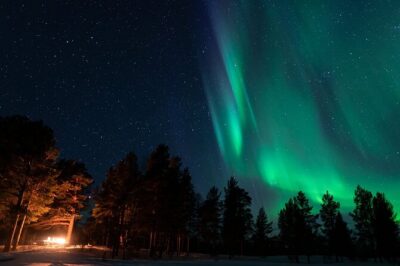
Arches at night changes everything. This tour strings together iconic photo stops from late afternoon through full dark, so you can capture golden light and then switch gears to Milky Way images. With a limit of 6 people, it’s built for real help, not just standing around waiting for the best view.
I especially like the hassle-free Moab transfers (when you get picked up in the guide’s vehicle) and the way the guide works on your shooting. You’ll get location suggestions, composition coaching, and help with camera settings if you’re a beginner.
One thing to consider: pickup is capped. The guide only has room for 4 passengers plus gear, so if you’re later in the signup list, you’ll need to drive your own vehicle and follow along.
In This Review
- Key highlights worth knowing
- Why Arches National Park is so good for night photography
- Small-group photo coaching that doesn’t leave beginners behind
- Getting there from Moab: pickup, gear, and the 4-seat reality
- A practical shooting plan: afternoon light to full dark
- Stop time inside Arches: more than one “must-stop”
- The sunset-to-blue-hour shift
- The in-between break
- Milky Way time: how the tour supports the hardest lighting
- What’s included (and what you still need to pay)
- What the walking is like (and who should plan to bring sturdy shoes)
- Pricing and scheduling: when $375 actually makes sense
- Who this tour is best for in real life
- Practical tips to get the most out of your night session
- Should you book the Arches sunset and night photography tour?
- FAQ
- How long is the sunset and night photography experience?
- What locations will we photograph in Arches National Park?
- Is national park admission included?
- What’s included in the tour price?
- Is pickup available from Moab?
- What if I’m not picked up in the guide’s vehicle?
- How many people are in the group?
- Is there hiking involved?
- What happens if weather isn’t good enough for night photography?
Key highlights worth knowing
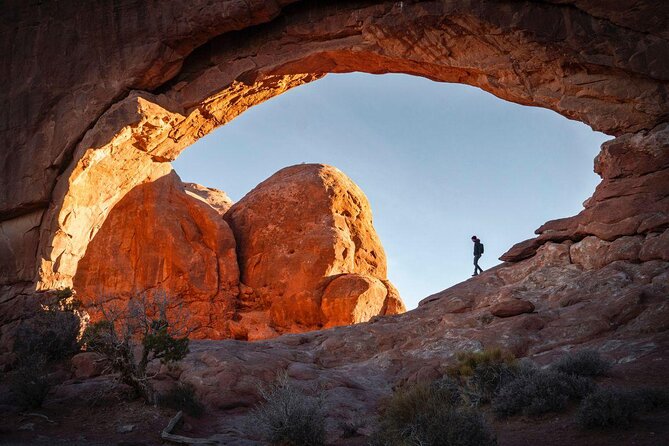
- Sunset to full dark timing that works for both golden-hour arches and Milky Way night shots
- Max 6 travelers means you’re not lost in the crowd
- Location hopping to lesser-known spots inside Arches, not just the usual pull-offs
- Hands-on photo coaching for composition, subject choice, and camera settings
- Snacks and ice-cold water provided to keep you comfortable during the long session
Why Arches National Park is so good for night photography
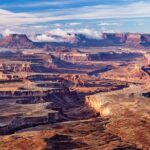
Arches National Park is basically a giant camera test chart for the sky. In daylight, the rock shapes read clearly. After dark, the same formations turn into silhouettes, and suddenly you’re trying to make the Milky Way feel like it belongs in the frame.
This matters because night photography isn’t only about darkness. It’s about timing, steadiness, and picking spots where the rock features still look strong at long exposures. The tour is structured around that reality, moving you through the park as the light fades from sunset into true dark.
Another plus: Arches has a lot of variety within relatively short distances. That’s how you end up with multiple “world class” photo locations in one outing rather than burning time with long drives.
You can also read our reviews of more tours and experiences in Moab.
Small-group photo coaching that doesn’t leave beginners behind
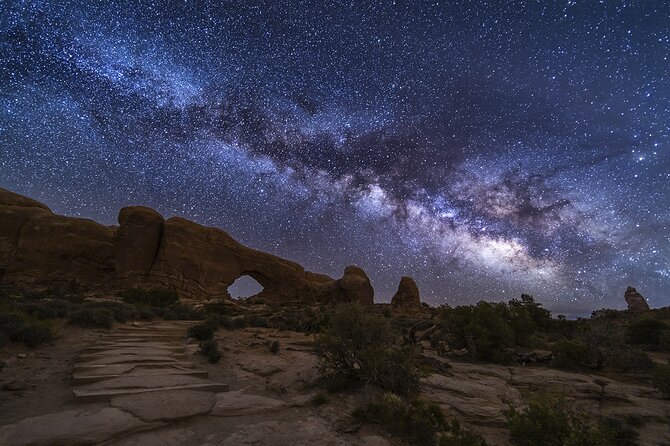
I like photo tours that treat the camera as part of the experience, not as an afterthought. Here, the guide offers tips and instruction as needed, including help with camera settings if you’re just starting out.
In practical terms, this kind of coaching helps you avoid the usual beginner problems:
- You set something once in daylight and then it stops working when the scene changes.
- You frame beautifully but the exposure doesn’t cooperate in low light.
- You’re stuck thinking too hard right as the sky clears into Milky Way visibility.
The session is designed to keep you shooting. You get guidance on composition and what to focus on as the sky transitions. And because the group is capped at 6, you’re more likely to get specific feedback rather than general advice.
If you’re more advanced, the same structure still helps. Arches gives you plenty of foreground options, and the guide’s suggestions on subject matter can help you experiment instead of copying the most obvious shot.
Getting there from Moab: pickup, gear, and the 4-seat reality
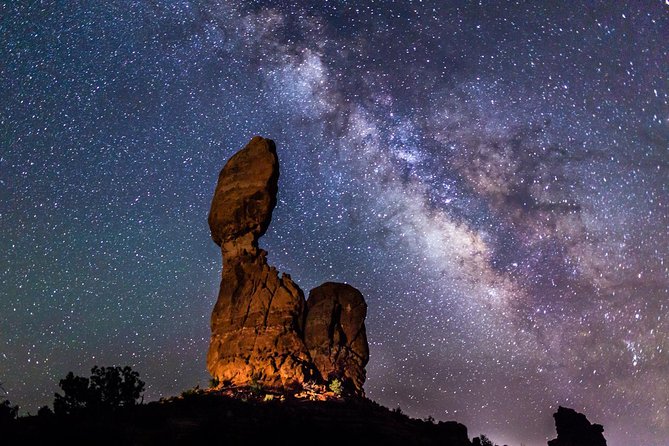
Starting point is the Arches National Park Visitor Center area, with an option for pickup in Moab. If you want that extra ease, you can ask to be met at your hotel or campground in Moab (not Castle Valley). The tour also notes you can meet at the Moab or Arches Visitors Center.
But here’s the key logistics detail: the guide’s vehicle holds 4 passengers plus gear comfortably. Only the first four people to sign up get driven by the guide. If you’re not in that group, you’ll drive your own vehicle and follow.
So if you hate the idea of driving in coordination, book early. If you’re fine driving yourself, it’s still a good setup because you won’t be stuck waiting for someone else’s schedule.
A practical shooting plan: afternoon light to full dark
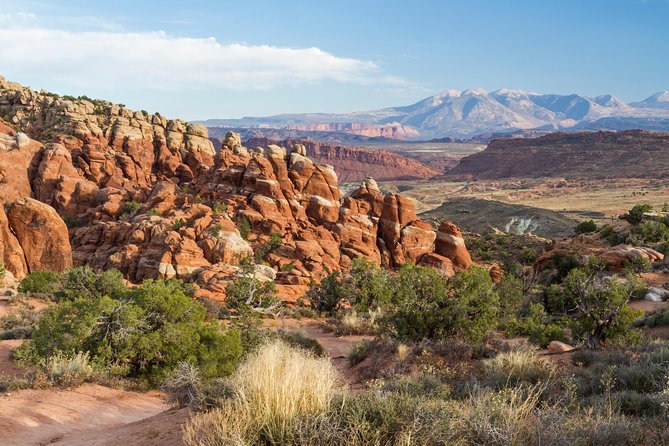
The tour runs roughly 6 to 8 hours, and the flow is simple in concept: you shoot during the afternoon, chase sunset, take a short break, then shift into night photography when the Milky Way emerges.
Stop time inside Arches: more than one “must-stop”
You’ll visit at least three major photo locations in Arches National Park as the afternoon turns into sunset. The guide focuses on places that work both compositionally and aesthetically, and you’ll get suggestions for how to frame the arches and rock formations as the light changes.
This approach is better than “one perfect view and then waiting.” You get multiple angles and different foreground options, which is how you end up with more keepers after you review your shots.
The sunset-to-blue-hour shift
As sunset approaches, light quality changes fast. That’s the moment when composition tips matter most, because you’re balancing rock detail with sky color and contrast. The guide helps you adapt your shooting plan rather than forcing you to guess.
The in-between break
Between sunset and full dark, there’s a brief pause. You’ll have snack bars and trail mix plus water refills available, which is smart because you may be out shooting for a long time. Once it’s dark enough for the Milky Way, you’re ready to focus on the night part without running on empty.
Milky Way time: how the tour supports the hardest lighting
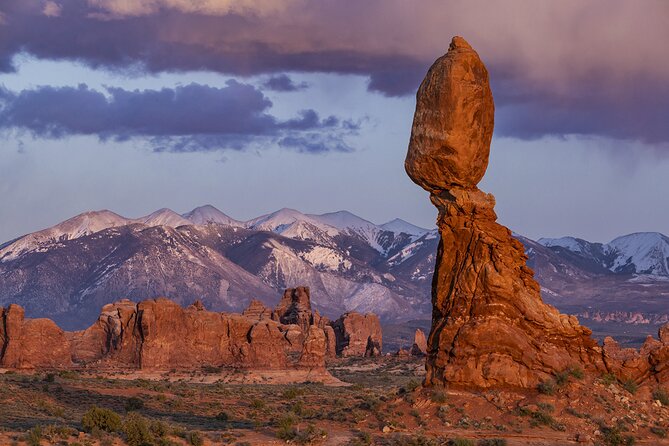
Night photography is where many people get discouraged, not because they aren’t in an amazing park, but because the timing is unforgiving. You can have the right gear and still miss the window if you’re underprepared or unsure how to set up quickly.
This is why the tour’s schedule is a big deal. You’re not just dropped off at dusk. You’re guided through a transition period and then positioned for the moment when the Milky Way emerges.
The guide also provides support that makes a difference:
- Camera setting help, especially if you’re new to night settings
- Composition guidance so you’re aiming at the right balance of sky and rock
- Suggestions on subject matter, so you’re not stuck photographing the same thing from the same angle
Also, the tour limits group size, which helps for night setups. Fewer people means less clutter around your shooting spot, and you can more easily concentrate on getting the frame you want.
One more practical note: the tour requires good weather. If skies don’t cooperate, they’ll offer a different date or a full refund. That’s the right policy for this kind of experience, because night photography is heavily weather-dependent.
What’s included (and what you still need to pay)
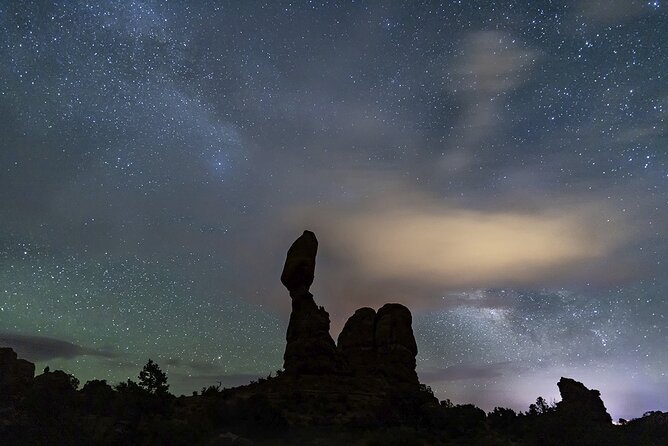
At $375 per person, you’re paying for more than a ride and a pretty sunset. You’re paying for structured guidance in one of the toughest lighting situations you can find outdoors, plus access tools that make park timing smoother.
Here’s what you should expect included:
- Snacks: snack bars and trail mix
- Bottled water support: the guide provides a cooler with ice water so you can refill refillable bottles
- Timed entry permit
- A guide-led photo plan through Arches (with instruction and tips as needed)
What is not included:
- National Park admission. You’ll need to bring a national parks pass or paid admission receipt from Arches.
That distinction is important for value. If you don’t already have a pass, factor admission into your total budget. The tour itself can be excellent value, but it can’t replace the park entry fee.
Also, because the tour is limited to 6 travelers, you get more attention and better use of time. For night photography, time is everything. Every extra minute you’re waiting with no clear sky is a minute you might not get back.
What the walking is like (and who should plan to bring sturdy shoes)
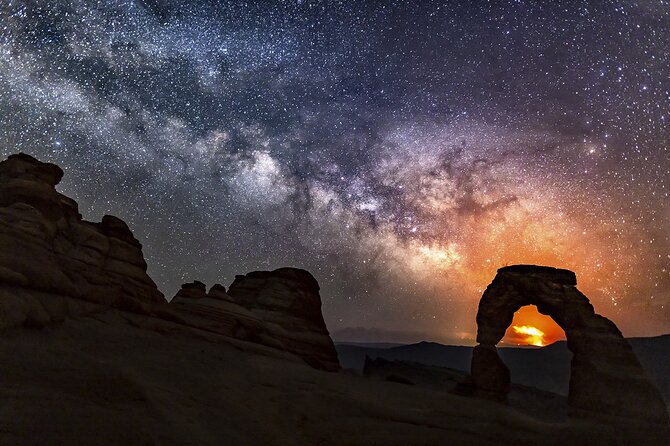
This isn’t described as a long trek. You might do some moderate hiking, less than 1 mile round trip, with some uneven ground.
That’s the kind of terrain where having shoes that handle rocks and uneven surfaces matters. If you’ve got mobility limitations or you don’t enjoy off-level walking while carrying a camera bag, you should think carefully before booking.
On the other hand, if you can handle short hikes and you’re comfortable moving on uneven ground, this format is a good match. It keeps you close enough to multiple locations without turning the day into a fitness challenge.
Pricing and scheduling: when $375 actually makes sense
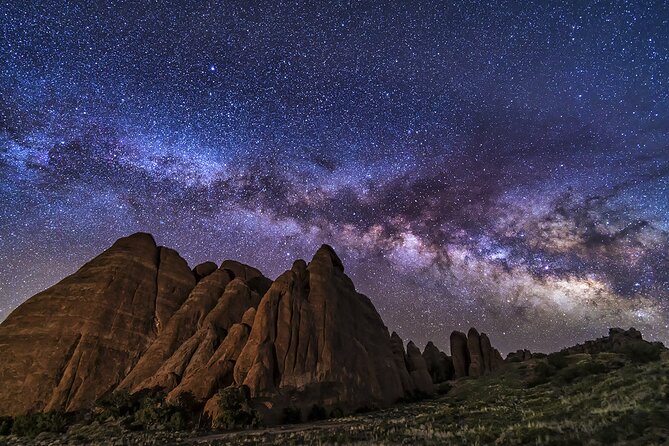
Six to eight hours in a national park at sunset and night is not casual. You’re paying for:
- Time spent on location scouting and planning
- A guide who provides composition and settings guidance
- A group limit that keeps the experience personal
- The logistics of timed entry and the flow needed to catch the Milky Way window
The tour also mentions it’s commonly booked about 66 days in advance on average. That doesn’t mean you can’t book later, but it does suggest you’ll want to plan ahead if you care about getting the guide pickup (since pickup is limited to 4 passengers in the vehicle).
In terms of value, this is strongest for people who:
- Want help with camera settings (especially beginners)
- Prefer a guided plan over guessing locations and timing
- Like small groups and don’t want a rushed experience
If you’re the type who already knows exactly where you want to shoot and you travel with a full night setup plan, you might find a less guided option suits you better. But if you want the best shot chances with less stress, this is a solid use of your time in Moab.
Who this tour is best for in real life
I think this experience fits best when you’re somewhere in the middle: you want to take great photos, but you don’t want the whole process to be a solo puzzle.
You’ll likely be a great match if you:
- Are curious about photographing the Milky Way and want practical help
- Want to learn composition and subject choices, not just press the shutter
- Prefer a small group (max 6) and a guide who can answer questions
It may be a tougher fit if you:
- Strongly dislike walking on uneven ground
- Expect guaranteed pickup in the guide vehicle regardless of signup timing
- Haven’t planned for park admission costs
Practical tips to get the most out of your night session
You don’t need to overthink it, but a few basics can help you enjoy the process more once you’re out there.
- Bring your national park pass or admission receipt so entry isn’t a headache.
- Plan to stay out after sunset, so dress for night conditions rather than daytime comfort.
- Bring a way to keep your camera steady and ready for low light, and be ready to follow the guide’s instructions quickly.
- Use the snack and water break intentionally. Eat something small, refill water, and refocus before the Milky Way part starts.
The guide will help with settings and shooting decisions, but your job is to show up ready to work as the light changes.
Should you book the Arches sunset and night photography tour?
Yes, if you want a guided, small-group way to photograph Arches at the best times of day. This tour’s biggest strength is that it connects the dots: you’re not only getting a sunset stop, you’re staying through full dark for Milky Way photography with support on settings and composition.
I’d book it especially if you’re a beginner or you’ve tried night shots before and wanted clearer coaching. The limited group size and the practical help with camera settings make it feel more like a field workshop than a drop-off tour.
Skip it (or think hard) if you’re expecting guaranteed pickup for everyone or if uneven ground is a problem for you. Also, understand that weather is a real factor—clear skies matter here.
If your goal is better photos with less guesswork, this is a strong option in Moab.
FAQ
How long is the sunset and night photography experience?
It runs about 6 to 8 hours, depending on light and conditions.
What locations will we photograph in Arches National Park?
You’ll visit at least three world-class photography locations within Arches, with an afternoon-to-sunset schedule that continues into night photography.
Is national park admission included?
No. National Park admission is not included. You should bring a national parks pass or a paid admission receipt from Arches.
What’s included in the tour price?
The tour includes snack bars and trail mix, water support (ice water for refills), and a timed entry permit.
Is pickup available from Moab?
Pickup is offered. You can meet the guide at hotels or campgrounds in Moab (not Castle Valley) or at the Moab or Arches Visitors Center. Only the first four people who sign up will fit in the guide’s vehicle comfortably.
What if I’m not picked up in the guide’s vehicle?
If you’re not one of the first four for the vehicle, you’ll drive your own car and follow the guide.
How many people are in the group?
The tour is limited to a maximum of 6 travelers.
Is there hiking involved?
There may be some moderate hiking, under 1 mile round trip, and some uneven ground.
What happens if weather isn’t good enough for night photography?
The experience requires good weather. If it’s canceled due to poor weather, you’ll be offered a different date or a full refund.