REVIEW · NEW YORK CITY
World Trade Center Photo Tour
Book on Viator →Operated by New York City Photo Safari · Bookable on Viator
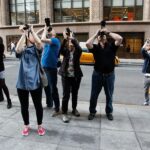
Architecture here is a camera test. This World Trade Center photo tour turns Lower Manhattan’s biggest modern icons into a focused practice session, with stops at the National 9/11 Memorial, the Oculus, and inside the PATH station. I like the small-group setup (up to 6 people per group, with a maximum of 8 total) because the photographer-guide can watch your framing and help quickly. I also like that the guide keeps things practical with architectural photography tips—lighting, angles, and composition you can use right away.
One thing to note: this tour does not include entry to One World Observatory. If you were hoping to photograph from inside the observatory experience, you’ll want to plan that separately.
In This Review
- Key things I’d prioritize on this World Trade Center photo tour
- Lower Manhattan’s geometry: why this tour works for photos
- Meet at Silverstein Family Park: how the 2.5-hour walk feels
- Stop 1 at the National 9/11 Memorial & Museum: respectful, photo-ready views
- Stop 2 around One World Observatory: Freedom Tower angles without the observatory ticket
- Stop 3 at the Oculus: composition drills with reflections and light
- Stop 4 inside the World Trade Center PATH station: graphic interior shapes
- The coaching you can use the moment you’re back on the street
- Price and value: $125 per group (up to 6) for 2.5 hours
- Small-group size: why the feedback matters
- Who should book this World Trade Center photo tour?
- Practical tips before you go (so your shots actually improve)
- Should you book?
- FAQ
- How long is the World Trade Center Photo Tour?
- Where does the tour start and end?
- Is One World Observatory entry included?
- Are there admissions included for the stops?
- What’s the group size?
- Will the tour run in bad weather?
Key things I’d prioritize on this World Trade Center photo tour
- Small group attention means you get feedback instead of just following a crowd
- Architectural photo coaching focuses on lines, balance, reflections, and scene management
- The Oculus stop is built for composition practice, including how to handle tricky light and surfaces
- Admission included for key stops like the National 9/11 Memorial area and certain interior photo locations
- PATH station interior time gives you graphic, modern shapes you can’t get from outside
Lower Manhattan’s geometry: why this tour works for photos
The World Trade Center area is one of the best places in NYC to study architecture as a design problem. You’re surrounded by bold lines, huge glass surfaces, and dramatic negative space—perfect for training your eye to see structure, not just buildings.
What makes this tour especially useful is that it’s not only about sightseeing. You’ll be nudged toward specific photographic goals: how buildings create perspective, how reflections change the scene, and how to control exposure when light is doing unusual things.
And since the tour runs in all weather, you’re also planning for real New York conditions. That matters because reflections, skylight glare, and overcast skies all change how these structures photograph.
You can also read our reviews of more tours and experiences in New York City.

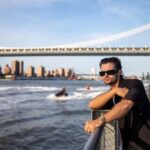
Meet at Silverstein Family Park: how the 2.5-hour walk feels
You meet at Silverstein Family Park, Greenwich St (the start point). The tour ends at the Oculus World Trade Center, 185 Greenwich St LL3110. It’s a practical loop through Lower Manhattan, and the pacing is designed to keep you shooting at multiple locations without burning your whole day.
The whole experience is about 2 hours 30 minutes. With that time, you get several distinct “photo settings” rather than a single long stop. For photographers, that variety helps you test techniques quickly—wide composition at one stop, tighter geometry at another.
Since you need moderate physical fitness and you’re walking between sites, wear shoes you trust. Also plan for weather—this is an all-weather activity, and the guide will still be working with what the sky gives you.
Stop 1 at the National 9/11 Memorial & Museum: respectful, photo-ready views
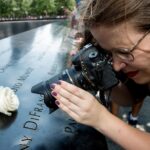
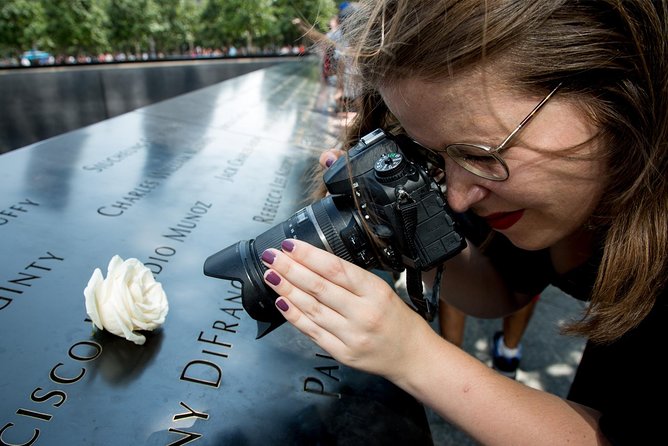
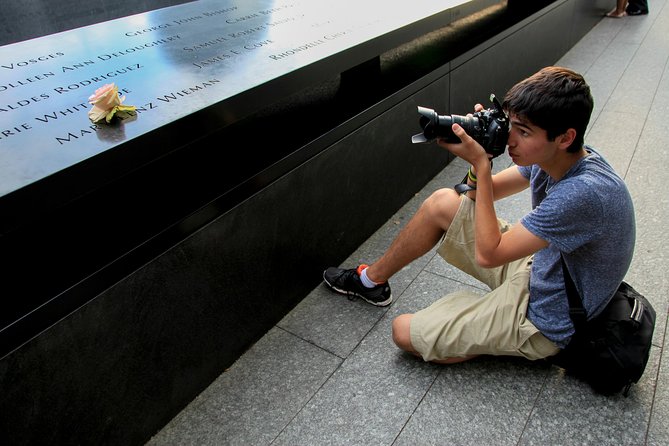
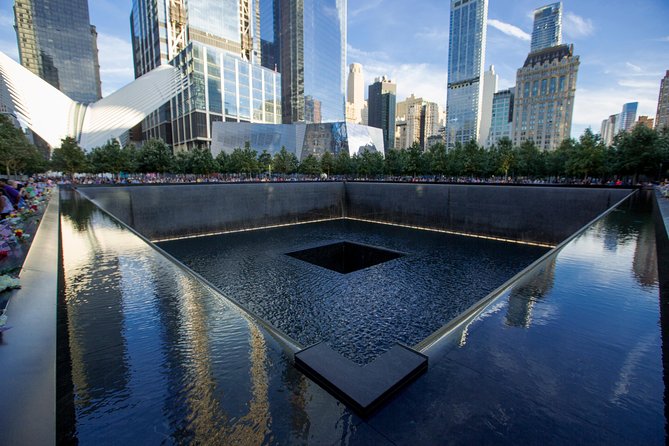
The National 9/11 Memorial & Museum stop is 30 minutes, and admission is free for this part of the experience. This is not the kind of location where photography is casual. You’ll want to be mindful of how you frame people and movement, and you’ll probably find yourself slowing down instead of sprinting for the most dramatic angles.
From a photo perspective, the Memorial area offers strong compositional lines and highly reflective surfaces. Water, edges, and the way the space opens up around you can help you practice clean framing and calm, balanced shots.
A practical consideration: because the time is limited, you’ll get more out of this stop if you decide in advance what you want to capture—wide “place” images, or details that emphasize the design and symmetry.
Stop 2 around One World Observatory: Freedom Tower angles without the observatory ticket
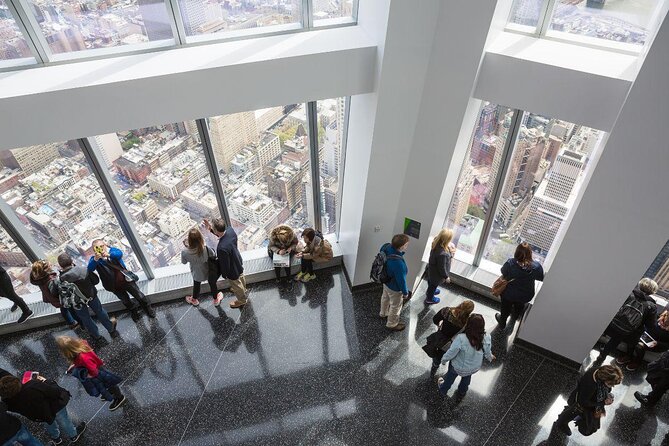
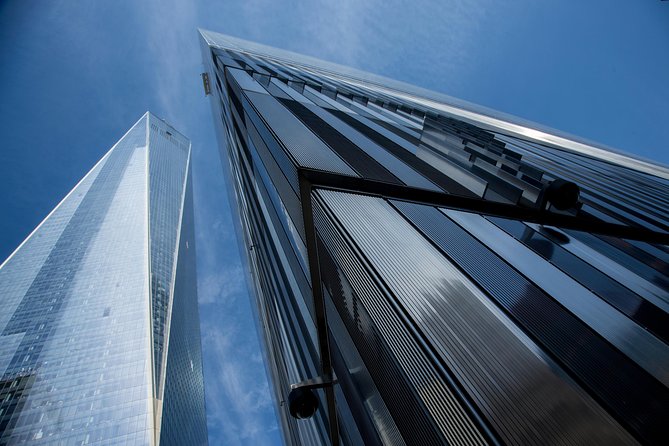
Next up is the One World Observatory area for about 30 minutes. Here’s the key point: this tour does not include entry to One World Observatory. You’ll still spend time in the Freedom Tower photo zone and learn how to capture the building’s grandeur and simplicity from outside.
This is a smart choice for a photo tour. Observatories are great, but they can also turn into a timed line-and-access experience. By staying outside, you can practice architectural fundamentals: where the sun lands, how tall buildings exaggerate vertical lines, and how to avoid a frame that feels tilted or cramped.
If you want skyline panoramas from above, you’ll need separate planning. If you want to master the outside geometry—this stop is built for that.
Stop 3 at the Oculus: composition drills with reflections and light
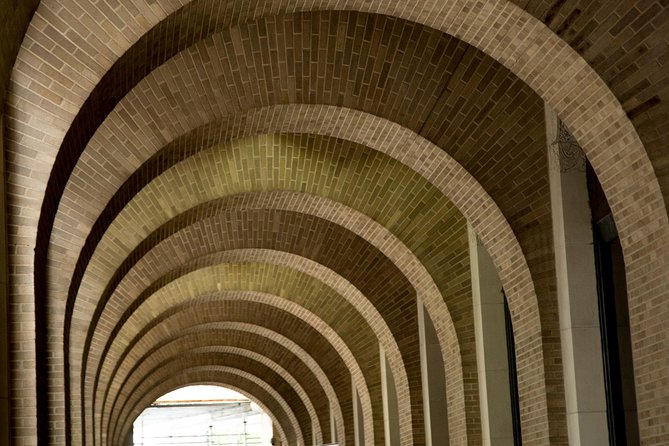
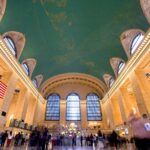
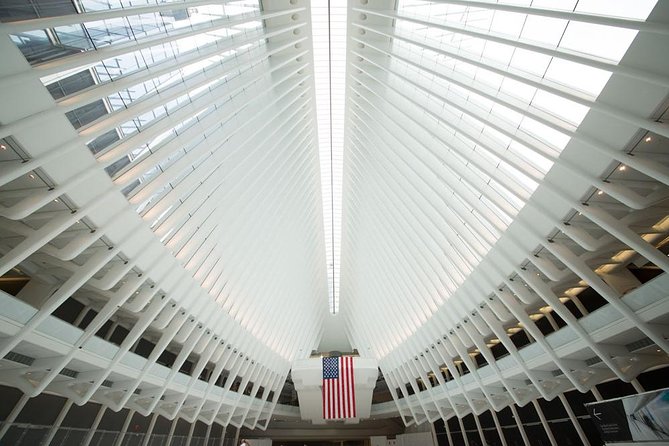
The Oculus stop is 30 minutes and admission is free. If you want a single place on this tour to practice “architectural vision,” this is it. The Oculus is the kind of space that punishes sloppy composition—lines converge, surfaces reflect, and lighting can make even simple scenes look chaotic.
The coaching focus here is specific:
- building composition through lines and balance
- anticipating lighting conditions
- managing scenes so your image doesn’t feel cluttered
- using reflections as part of the design
- experimenting with overexposure for an ethereal look
That last one is worth your attention. Overexposure sounds like a mistake until you use it intentionally to soften contrast and make bright surfaces feel airy. In a place like the Oculus, that can turn glare into atmosphere.
If you’re shooting with a phone, you can still try the concept: aim for clean geometry, then adjust exposure so highlights don’t crush everything into a flat white blob. With a camera, you can be more controlled, but the artistic goal is the same—shape the light.

Stop 4 inside the World Trade Center PATH station: graphic interior shapes
The PATH station (inside the Oculus complex) is a shorter stop—about 10 minutes—and admission is free. This is one of those quick moments where you can get surprisingly strong photos if you keep your goals simple.
Interior architecture tends to be more forgiving for symmetry and lines because you can control your distance from walls and ceilings. You’ll also encounter different levels of brightness—often a bright overhead glow with darker edges—which makes exposure and framing matter.
With only 10 minutes, don’t try to do everything. Choose one or two compositions you can repeat quickly: a wide shot to show scale, and a tighter shot that emphasizes repeating patterns or leading lines.
The coaching you can use the moment you’re back on the street
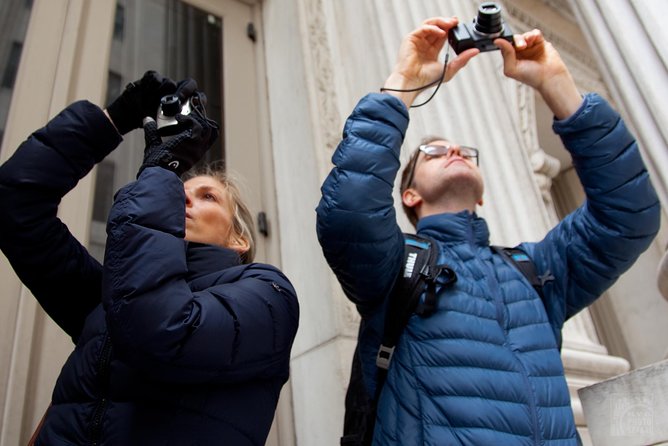
This tour is built around helping you see architecture like a photographer, not like a tourist. The guide’s tips are aimed at the exact issues that make modern NYC buildings tricky to shoot.
Here are the practical themes you’ll likely apply right away:
1) Lighting and angles
Tall structures and reflective surfaces don’t behave like old brick streets. You’ll learn how to position yourself and how to change your angle to reduce unwanted glare and improve shape.
2) Composition that controls attention
You’re taught to use lines and balance to pull the viewer into the frame. That’s how you get images that feel intentional, not just “taken near a landmark.”
3) Scene management
Modern architecture can fill the frame fast: signs, crowds, rails, reflections, and bright spots. Scene management is about deciding what the viewer should see first, then building the frame around that.
4) Reflections as a feature, not a problem
Instead of fighting reflections, you’ll learn when they create depth and when they distract. The difference is usually your angle and your exposure control.
5) Controlled overexposure
This isn’t about losing detail randomly. It’s about using brighter exposure to create an ethereal feel—especially useful in spaces like the Oculus where light can feel almost sculptural.
Even if you’re an experienced shooter, this kind of structured coaching saves time. You get a set of photo problems to solve in one concentrated area.
Price and value: $125 per group (up to 6) for 2.5 hours
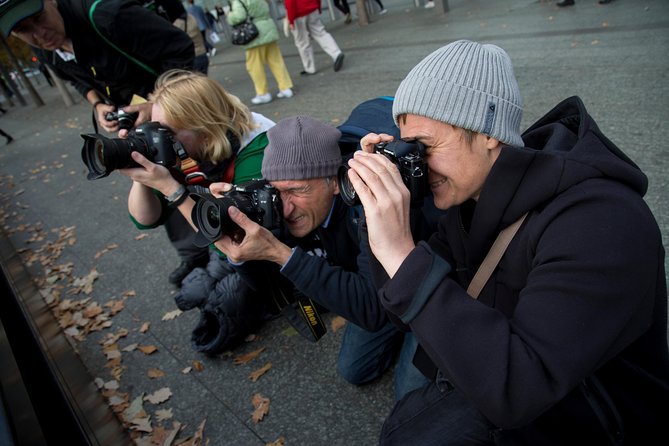
The price is $125 per group for up to 6 people, and the tour lasts around 2 hours 30 minutes. That pricing is why this works well for small groups of friends or a family unit—you’re not paying per person at a high rate if you travel together.
Think of the value in three buckets:
- Expert guidance from a professional photographer-guide
- Multiple high-yield stops where architectural photos are the focus
- Admission value where applicable (the Memorial area and certain interior photo locations are free for this experience)
The one “value gap” is One World Observatory entry, which is not included. If you want that ticketed experience, budget for it separately. If you’re focused on outside architectural photography and composition practice, you may not miss it.
Also, the tour uses a mobile ticket, which helps reduce friction right before you meet.
Small-group size: why the feedback matters
The experience keeps the group tight, with a maximum of 8 travelers and a small-group feel. In a place like the World Trade Center area, that’s not just comfort—it affects your results.
When it’s small, it’s easier to:
- reposition quickly when the light changes
- get help adjusting framing or exposure approach
- avoid feeling rushed at each stop
This kind of attention makes a big difference if you’re learning or if you want your photos to look more “architectural” and less accidental.
Who should book this World Trade Center photo tour?
You’ll get the most from this tour if you:
- want to improve architectural photography skills with clear, teachable concepts
- like modern design and want to practice composition, lines, balance, and reflections
- travel with 2–6 people so you can maximize the group price
- prefer guided structure over picking your own photo route and guessing where to stand
If you’re only after general sightseeing, you might feel the stop times are short. The tour is photo-focused by design, so it’s best for photographers or people who enjoy taking deliberate pictures.
Practical tips before you go (so your shots actually improve)
Based on how the coaching is framed, I’d plan a few things before you meet:
- Bring a camera with manual exposure control if you have it. The overexposure tip is easier to execute intentionally.
- If you shoot with a phone, be ready to adjust exposure and keep the frame clean; the Oculus will test your patience.
- Wear shoes with good grip. Even a short stop in an urban setting can be slippery or uneven depending on weather.
- Set one goal for each stop. Memorial: balance and respect. Oculus: lines and reflections. PATH: interior geometry fast.
You’ll get more out of the experience if you treat it like a mini class with fieldwork. The better your focus, the better your “keeper” photos.
Should you book?
Book this World Trade Center photo tour if you want guided architectural photography in Lower Manhattan with a practical focus on composition, light, and reflections. The small-group format helps you learn faster, and the mix of the Memorial area, the Oculus, and the PATH interior gives you different photo challenges in a short window.
Skip it—or plan a separate add-on—if One World Observatory entry is the main reason you’re visiting. Since the tour doesn’t include that ticketed access, your priorities should match the outside architectural coaching and interior photo moments you’ll get here.
If your idea of a great NYC photo day is practice with a plan, this one is a strong match.
FAQ
How long is the World Trade Center Photo Tour?
The tour is approximately 2 hours 30 minutes.
Where does the tour start and end?
It starts at Silverstein Family Park on Greenwich St and ends at the Oculus World Trade Center at 185 Greenwich St LL3110.
Is One World Observatory entry included?
No. The tour explores the area, but it does not include entry to One World Observatory.
Are there admissions included for the stops?
The National 9/11 Memorial & Museum stop and the Oculus stop are listed as free admissions for this experience. The PATH station stop inside the Oculus complex is also listed as free. One World Observatory is not included.
What’s the group size?
The experience is a small-group tour with a maximum of 8 travelers.
Will the tour run in bad weather?
Yes. It operates in all weather conditions, so dress appropriately for NYC conditions.