REVIEW · BERLIN
Private Photo Tour in Kreuzberg
Book on Viator →Operated by Berlin Photo Tours · Bookable on Viator
Kreuzberg has stories in plain sight. This private photo walk blends city history with photo know-how, so you’re not just taking pictures of buildings and squares—you’re learning what you’re actually looking at and how to frame it. I love that the guides are local photographers with real insider context, and I love how the tour can be customized to your interests (Sascha did this for me after talking in advance about what I wanted to see and shoot). The only real drawback to consider is that the route is designed around specific viewpoints and backdrops, so if you’re hoping to cover every corner of Kreuzberg in one go, this isn’t that kind of all-day sampler.
You’ll start at FHXB Friedrichshain-Kreuzberg Museum near Kottbusser Tor and move through a tight set of nearby stops in about 2 hours 30 minutes. Expect short photo stops (often around 15–20 minutes) with a longer block where the architecture and courtyards start to matter more. It’s a smart format if you like walking with purpose and coming away with a mini “map in your head” for future photo walks.
In This Review
- Key highlights you’ll feel right away
- What makes this Kreuzberg photo walk different from a normal photo tour
- Price and value for a private group of up to 5
- Stop 1: Adalbertstraße from Kottbusser Tor’s changing skyline
- Stop 2: Oranienplatz and the Lenné planning influence
- Stop 3: Oranienstraße courtyards and deciding which hidden spots are worth it
- Stop 4: Rio-Reiser-Platz and the story behind street-name meaning
- Stop 5: Mariannenplatz, a named Marianne, and the Kunsthaus angle
- Stop 6: Engelbecken and why Mitte counts as Kreuzberg for this story
- The photo skills you’ll actually walk away with
- Who this Kreuzberg photo tour is best for
- Logistics you’ll want to know before you go
- Should you book this private Kreuzberg photo tour?
- FAQ
- Where is the tour start location?
- How long is the photo tour?
- How many people are in each private tour group?
- What does the tour include for tickets?
- Where does the tour end?
- Are admission tickets needed for the stops?
- Can I cancel, and what is the refund window?
- Is the tour near public transportation?
- Are service animals allowed?
Key highlights you’ll feel right away
- Private, up to 5 people: your group stays small, so you get more targeted guidance.
- Local photographer guides: you’re getting both Berlin context and camera/shot thinking from the same person.
- Tailored route: the tour can adjust based on what you want to photograph, not only the pre-set script.
- Six story-driven stops: squares, street names, and courtyard architecture connect history to images.
- Mobile ticket: easy to carry, no paper scrambling.
- Climate-neutral work: the provider says their operation is climate-neutral.
What makes this Kreuzberg photo walk different from a normal photo tour
Most photo tours teach angles and settings. This one teaches you how to read a place. Kreuzberg can look like “cool street scenes” at first glance, but the tour keeps pulling you toward the stories behind the views: who planned what, why certain buildings survived or changed, and how today’s look ties back to earlier decisions.
That matters because it changes how you shoot. When you understand why a square looks the way it does, you start noticing the design choices—spacing, scale, what’s hidden in plain sight, and what’s worth waiting for as the light shifts. It also makes your photos more meaningful later, when you’re sorting images and trying to remember what caught your eye.
A small point with outsized value: this is a private experience. With up to 5 people, you can ask practical questions and get feedback at the right moment. If you’re traveling solo, that can feel especially good because you’re not tuning out to a group pace.
You can also read our reviews of more tours and experiences in Berlin.
Price and value for a private group of up to 5
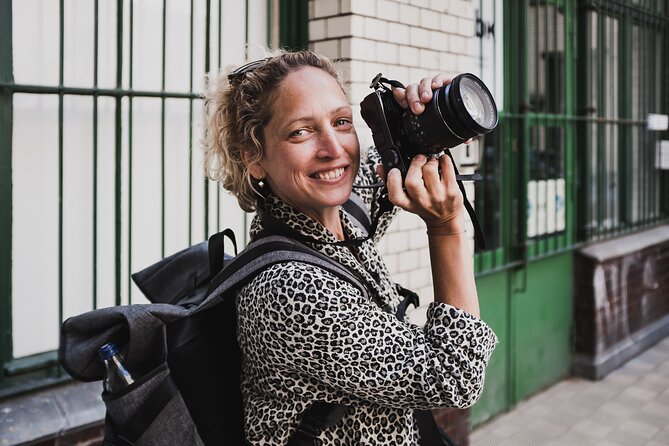
At $206.10 per group (up to 5), you’re not paying a per-person fare that spikes as you add people. That’s a good sign if you’re traveling with friends or want to keep the group tight for personalized help.
Is it cheap? No. But you’re buying something that’s hard to replicate on your own: a local photographer’s guidance tied to specific historical subjects, plus a route designed around photo-ready moments. And because the tour can adapt to what you want to shoot, the “value per minute” tends to feel higher than a generic photo walk.
Book early if you can. The tour is commonly reserved about 50 days in advance, which suggests this style of walk is popular with people who want more than sightseeing photos.
Stop 1: Adalbertstraße from Kottbusser Tor’s changing skyline
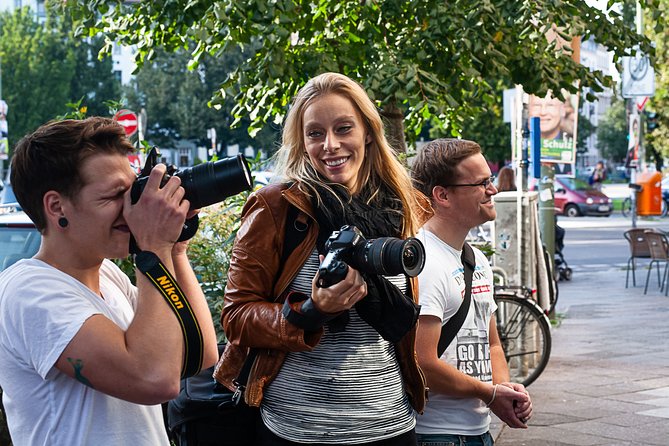
The tour begins at FHXB Friedrichshain-Kreuzberg Museum on Adalbertstraße 95A, in the Kottbusser Tor area. The first stop is all about change over time. You’ll look at historical pictures of the square and compare them with what you see now, including how wildly the space has shifted in roughly the last 150 years.
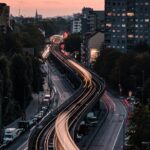
This is where you start building that “photo reading” habit. The guide connects the visible layout to what it used to represent: the large residential towers that dominate the area, what building plans they belonged to, and the reason the subway here runs as an elevated railroad. If you’ve ever photographed a place without knowing what shaped it, this kind of context helps you reframe your shots immediately.
Possible drawback to plan for: if you’re very gear-focused and hoping for lots of hands-on camera tweaking at the first stop, the emphasis here is more on story and viewpoint than on technical drills. You’ll still get photo guidance, just not in a purely classroom way.
Stop 2: Oranienplatz and the Lenné planning influence
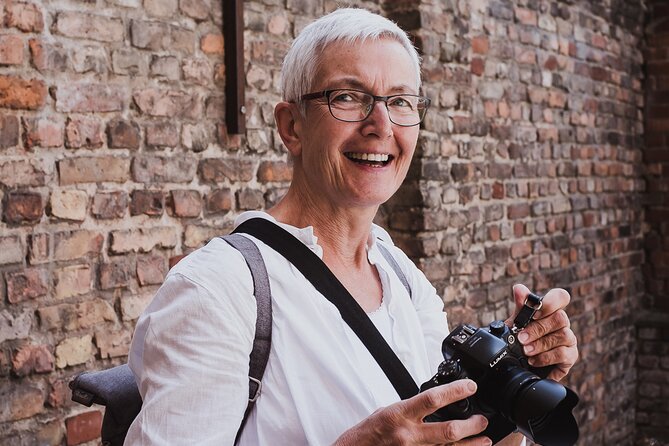
Next up is Oranienplatz. This stop focuses on urban planning, including how the square was shaped after being planned by Lenné. The name-dropping matters here because the guide ties Lenné’s influence to recognizable Berlin projects like Sanssouci and Pfaueninsel, so you’re not just learning trivia—you’re seeing how one planner’s thinking echoes across different areas.
For photography, Oranienplatz is useful because squares are natural composition tools. You can work on symmetry, leading lines, and the relationship between open space and surrounding architecture. Once you know there’s planning logic behind what looks like a simple plaza, you start lining up frames with more intention.
This stop is brief (about 15 minutes), so I’d treat it as a “setup moment” for the next part of your photo workflow. If you like to shoot in bursts, bring yourself into that rhythm here: take a few wide establishing shots first, then a couple tighter views once you see what the square reveals.
Stop 3: Oranienstraße courtyards and deciding which hidden spots are worth it
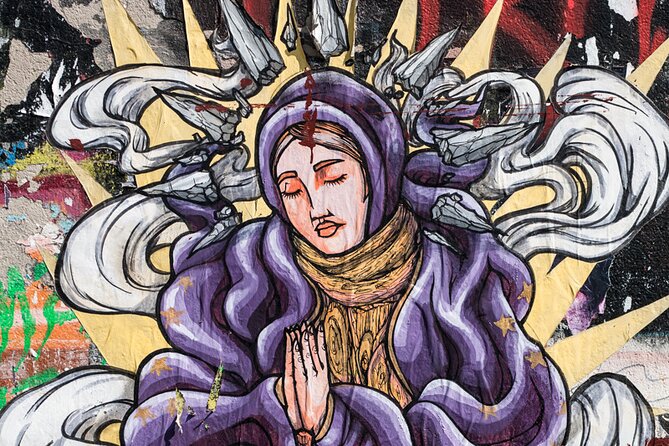
The most time is spent on Oranienstraße: about 1 hour dedicated to courtyards and what’s inside them. The key theme is practical: which back courtyards are actually worth visiting, and how to tell which ones you can access.
That’s the part I like most, because Berlin’s “in-between spaces” are often where the best photos come from—but only if you know the rules of access and what makes one courtyard more photogenic or interesting than another. Here, the guide points you toward the courtyards that fit the tour’s photo goals, instead of leaving you to wander and guess.
You also learn what dates the courtyards were built and what architectural ideas hide behind the entrances and passageways. That’s useful even if you’re shooting on a phone. When you understand age and design intent, you’ll notice textures, proportions, and details faster.
One consideration: courtyards can feel visually similar if you don’t have a prompt. The guide’s job here is to give you that prompt. So if you tend to get quiet or camera-shy, be proactive and ask questions while you’re there. This is one stop where conversation can sharpen your photos.

Stop 4: Rio-Reiser-Platz and the story behind street-name meaning
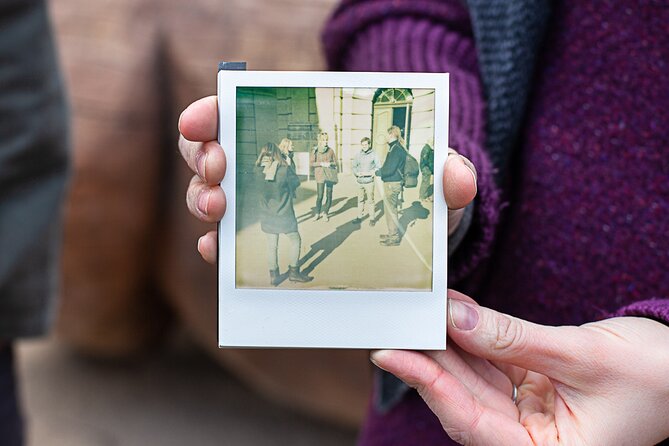
Rio-Reiser-Platz brings a different kind of history. The guide explains how Heinrich gave the place its name, then gets into a local struggle about housing: how there was a planned complete demolition of the houses standing there, how it was prevented, and what squatters have to do with it.
This stop matters for photography because it shows how modern names and modern conflicts can sit right next to your “simple” architecture shots. You’re not just photographing a square; you’re photographing the physical result of decisions made by people with power—and people without it.
The time here is about 20 minutes, which fits the theme: you’ll want to capture a few clean frames that communicate context, not just random detail shots. If you like photos with a caption-worthy story, this is a strong one to prioritize.
Stop 5: Mariannenplatz, a named Marianne, and the Kunsthaus angle
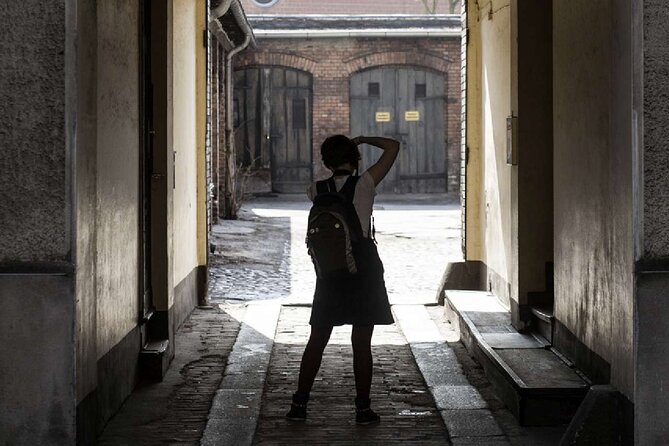
At Mariannenplatz, the tour focuses on the person behind the name: who Marianne was. Then it looks at what has happened there in the last decades and introduces the big Kunsthaus located on the square.
Even if you don’t memorize names and dates, this stop teaches a useful technique: match your composition to the narrative. If a location has a named figure and a prominent cultural building, your photos can reflect that by mixing wide context (square + building relationship) with at least one detail shot that shows the character of the Kunsthaus.
Time here is about 20 minutes, so I recommend a simple two-step approach: start with an establishing image, then take one or two tighter frames after you understand what the building contributes to the square’s mood. When the guide gives you the “why,” your framing gets easier.
Stop 6: Engelbecken and why Mitte counts as Kreuzberg for this story
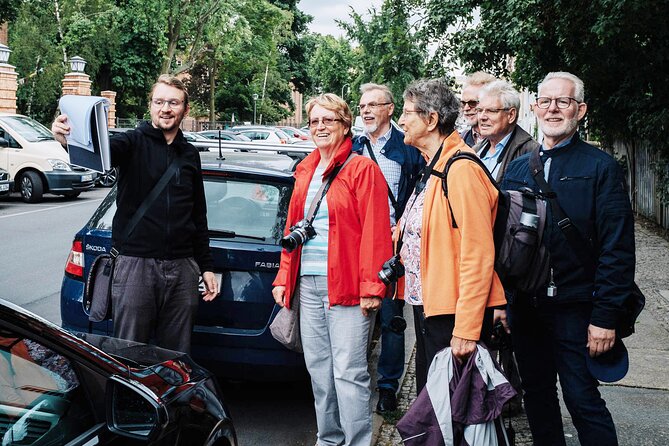
The final stop is Engelbecken. The interesting twist: even though it is located in Mitte, it belongs to Kreuzberg for many reasons. That’s not just geography trivia; it’s a story about resident commitment and local identity, supported by historical photos at this point.
For photography, identity is a compositional tool. You’ll likely see how people’s attachment to a place can change what you notice: small signs of community, the feel of the area, and the way history still shows up in today’s surfaces. This last stop is about “why this corner feels like it belongs,” and it gives your walk a more personal, grounded ending than purely architectural stops.
Time is about 20 minutes. That’s enough for a few strong images, especially if you’ve been building your photo focus through the prior courtyards and squares.
The photo skills you’ll actually walk away with
This tour isn’t a technical exam. It’s closer to learning a new way to look. The guides share image design knowledge and practical thinking, usually by tying it directly to what’s in front of you right now. That’s why it feels useful: you’re applying lessons immediately, not saving them for later.
Here are the kinds of skills I’d expect you to practice during the walk:
- Context-first framing: you’ll learn to make images that explain place, not just capture objects.
- Story-aware composition: when you know the backstory of a square or courtyard, you start choosing better angles.
- Access awareness for “hidden” spaces: courtyards aren’t automatically photo-ready; the guide helps you find the ones worth your time.
- Small-group feedback loop: with a private group of up to 5, you can adjust on the fly.
If you’re coming with only a phone, you’re fine. The key is attention, and this tour trains attention through the guide’s local knowledge. If you’re coming with a more serious camera, you’ll benefit too, especially when you’re capturing wide context plus details.
Who this Kreuzberg photo tour is best for
This is a great match for you if:
- You like history, but not the museum-only kind. You want story in streetscapes.
- You want better photos without treating the walk like a random photo scavenger hunt.
- You prefer small groups and interactive guidance from a local photographer.
- You’re the type who revisits images later and wants them to mean something.
It may be less ideal if you need a long, flexible itinerary that changes every few minutes based purely on your whims. The tour is structured around specific photo moments and historical themes, so you’ll get the best experience if you’re open to that planned flow.
Logistics you’ll want to know before you go
Plan to walk as the stops are close but you’re still moving for about 2 hours 30 minutes. The pace is built around short photo sessions—often 15–20 minutes—so wear comfortable shoes and keep your camera accessible.
The tour uses a mobile ticket, and it’s a private activity, so you won’t join strangers. Service animals are allowed, and it’s near public transportation. The provider also notes that most people can participate, and the guides are LGBTQI+ friendly, which helps keep the tone welcoming and respectful.
The tour runs for the long season listed under the meeting point’s hours (starting from 09/04/2020 through 06/16/2026). If you’re traveling outside those windows, you’ll want to check availability at the time you book.
Should you book this private Kreuzberg photo tour?
I’d book it if you want photos with context and you like learning while you walk. The strongest reason is the pairing: local photography guidance tied to specific Kreuzberg stories at each stop. You get a route built for making images that feel like they belong to the place.
I’d skip it only if you’re trying to cover Kreuzberg like a checklist. This tour is focused, not sprawling. You’ll get more satisfaction from it if you care about the “why” behind the visuals—courtyards, named places, planning history, and the human stories behind demolition fights and local identity.
If that sounds like your kind of trip, go ahead and reserve early. With the booking pace running about 50 days ahead on average, the schedule doesn’t always stay wide open.
FAQ
Where is the tour start location?
The tour starts at FHXB Friedrichshain-Kreuzberg Museum, Adalbertstraße 95A, 10999 Berlin, Germany.
How long is the photo tour?
It lasts about 2 hours 30 minutes.
How many people are in each private tour group?
It’s a private tour with your group only, up to 5 people.
What does the tour include for tickets?
You receive a mobile ticket.
Where does the tour end?
The activity ends in a different location from where it starts.
Are admission tickets needed for the stops?
The stops listed include admission ticket free.
Can I cancel, and what is the refund window?
You can cancel up to 24 hours in advance for a full refund.
Is the tour near public transportation?
Yes, it is near public transportation.
Are service animals allowed?
Yes, service animals are allowed.