REVIEW · BARCELONA
Photography route through the secret nature of Barcelona
Book on Viator →Operated by SensoriArt · Bookable on Viator
Barcelona changes mood when the train climbs.
This photography route through Collserola and Vallvidrera turns everyday Barcelona into close-up detail: forest edges, modernist architecture, and quiet water views you don’t stumble on by accident. I love the way it mixes practical guiding with photo prompts, so you know what to look for and how to frame it. I also love the contrast: mountain calm plus urban Barcelona glimpses from viewpoints. A small consideration: part of the start area requires your own zone/ticket (not included), so plan for that before you go.
The route is only about 3 hours, but it still has walking and hills. If you’re expecting flat sidewalks the whole way, you might find it more effort than you planned. Wear comfortable shoes and bring water and a snack.
In This Review
- Quick highlights
- Why Vallvidrera Feels Like a Secret Exit From Barcelona
- Getting There: Train from Plaza Catalunya to Baixador de Vallvidrera
- Stop 1: Baixador de Vallvidrera Starts You at the Forest Edge
- Stop 2: Parc de Collserola for Views, Flora, and Urban Contrasts
- Stop 3: Villa Joana and Terraced Parks with Big Neighborhood Views
- Stop 4: Pantano de Vallvidrera, Modernist Dam, Turtle Colony, and Pond Life
- Photography Tips That Make the 3 Hours Work
- Price and What You Get for Around $30
- What the Included Digital Photo Report Means for You
- Who This Tour Suits (and Who Might Skip It)
- Should You Book This Photography Route Through Secret Nature of Barcelona?
- FAQ
- How long is the Photography route through the secret nature of Barcelona?
- What time does the tour start?
- Where does the tour meet and end?
- What language is the tour offered in?
- What is included in the price?
- What is not included?
- Do I need a ticket for the first stop?
- Is the group size small?
- Does the tour require good weather?
- Is free cancellation available?
Quick highlights
- A photo route with a digital photo report that turns the day into something you can keep
- Train to the hills in about 20 minutes from Plaza Catalunya, then nature-focused stops
- Villa Joana and its terrace views, tied to Joan Verdaguer’s story
- Pantano de Vallvidrera highlights, including a modernist dam and a turtle colony
- Small group size (max 15) makes it easy to ask questions and share photo ideas
Why Vallvidrera Feels Like a Secret Exit From Barcelona
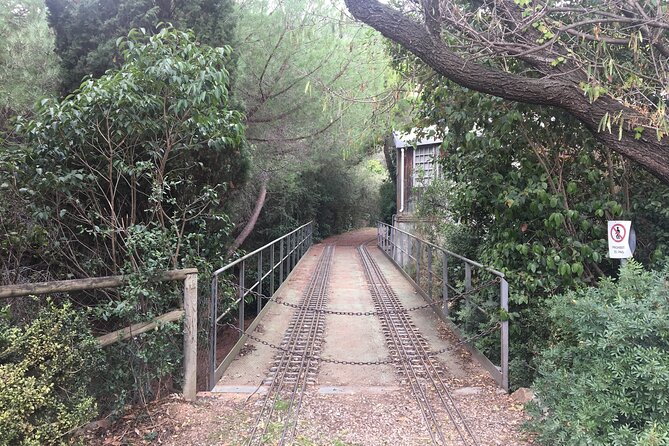
What I like about this route is the shift in atmosphere. One moment you’re in central Barcelona. The next, you’re heading into the mountains with Collserola Natural Park around you. It’s the kind of change that makes your photos feel more alive, because the light and the mood genuinely change as you climb.
This is also a creativity tour, not a checklist. You’re guided through places with plenty to photograph, but the goal is how you see—not just where you stand. If you’ve ever felt like you walk through Barcelona on autopilot, this route nudges you out of that.
And you get real variety. Modernist details appear right alongside forest paths and water settings. That mix is great for anyone who wants photos with both texture (trees, dam surfaces, pond edges) and scale (big views back toward the city).
You can also read our reviews of more tours and experiences in Barcelona.

Getting There: Train from Plaza Catalunya to Baixador de Vallvidrera
The day starts at Café Zurich, Pl. de Catalunya 1, with a 9:00 am start. From there, you take the train to Baixador de Vallvidrera. The ride is about 20 minutes, and that’s one of the best parts of the trip: you don’t need a full-day hike just to reach a mountain-feeling environment.
One practical heads-up: the stop connected to the first station has an admission ticket not included. The good news is that a voucher or ticket for the right zone is worth it. Translation: don’t overthink it, just make sure your transport works for that area.
The route runs with a group (up to 15), so you’re not stuck navigating. Still, plan to arrive early enough to feel calm at the meeting point. A smooth start helps you focus on photos instead of scrambling.
Stop 1: Baixador de Vallvidrera Starts You at the Forest Edge
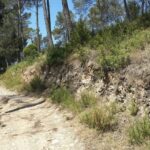
At Baixador de Vallvidrera, the itinerary is short and intentional: you head into the mountain and forest area right away. The time on this stop is about 20 minutes.
What matters here isn’t a big attraction. It’s the start vibe. You’re letting the surroundings set the tone for the rest of your photos—tree lines, shaded corners, and that soft transition from city to nature.
This is also where you’ll want to think about timing. Early in the route, your eyes are fresher, and your compositions tend to improve fast once you start noticing small details like textures on leaves, contrasts between sun and shade, and the way paths lead you deeper.
If you’re photography-inclined, this stop gives you permission to slow down. If you’re not, it still works because the environment does a lot of the work for you.
Stop 2: Parc de Collserola for Views, Flora, and Urban Contrasts
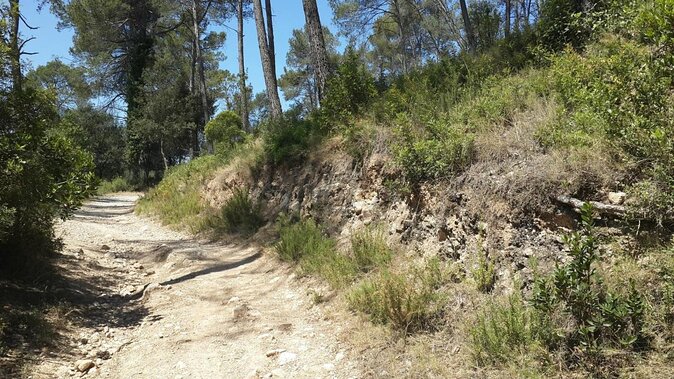
Next up is Parc de Collserola, about 1 hour. This is where the route really starts to feel like a place you’d never rush through. Vallvidrera sits up in the mountains, away from the center noise, and Collserola gives you a broad range of scenes to photograph.
The itinerary emphasizes views and the variety of flora and fauna. Even if you’re not chasing wildlife shots, the flora and the way plants shape the frame create stronger images. Look for layers: near leaves, mid-distance branches, and farther city hints.
A key benefit for your photos: you’ll get urban contrasts. That means you can include Barcelona context without the entire image becoming a city postcard. Think of it like storytelling. Nature explains the mood, and the city hints explain the setting.
Potential drawback: this is the leg where you’ll feel the terrain more. It’s not described as extreme, but it’s still a mountain park. If you’re sensitive to uneven ground, take your time and keep your footing steady so your photos don’t turn into hurried stepping.
Stop 3: Villa Joana and Terraced Parks with Big Neighborhood Views
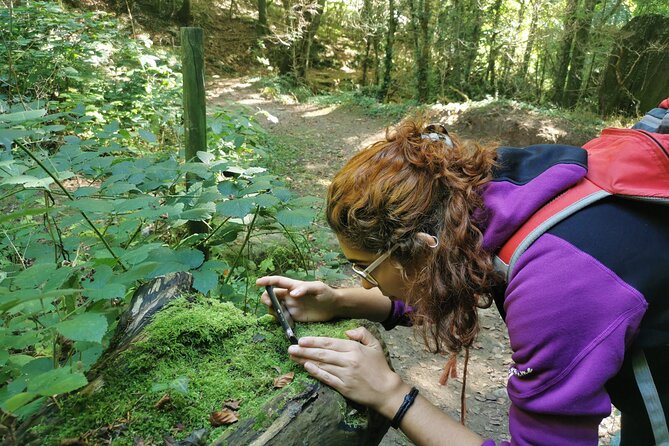
Villa Joana is a modernist stop with a human story. The tour highlights that it’s the place where Joan Verdaguer, a well-known village monk, died. You also get access through terraced parks and views over the neighborhood.
Time here is about 30 minutes, and that’s a perfect length. Long enough to walk around and find angles. Short enough that you don’t feel locked into one spot.
Modernist buildings often look great in daylight, but Villa Joana also gives you something more interesting: terraces. Terraces create natural framing. They guide your eye and make it easier to include foreground texture without inventing extra props.
If you like architecture photography, this stop scratches that itch. If you prefer landscapes, this one still helps because the viewpoint adds scale. You’re basically photographing a hillside home base for the neighborhood, with Barcelona in the background of your imagination.
This stop is marked as free entry, so it’s a good “value moment” in the route where you can focus on photos instead of deciding whether the next place is worth paying for.
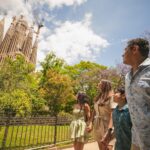
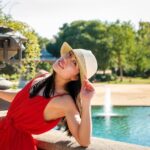
Stop 4: Pantano de Vallvidrera, Modernist Dam, Turtle Colony, and Pond Life
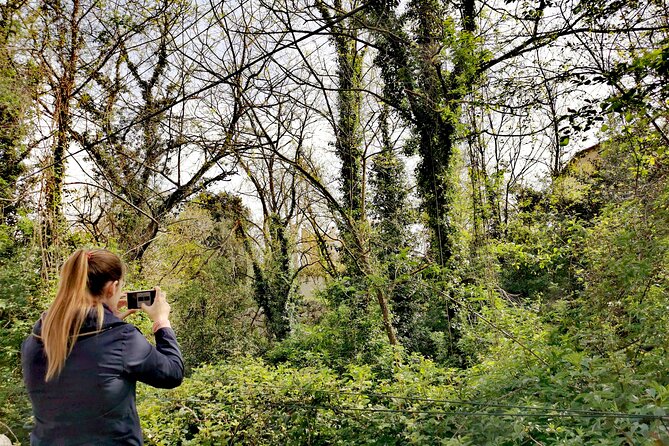
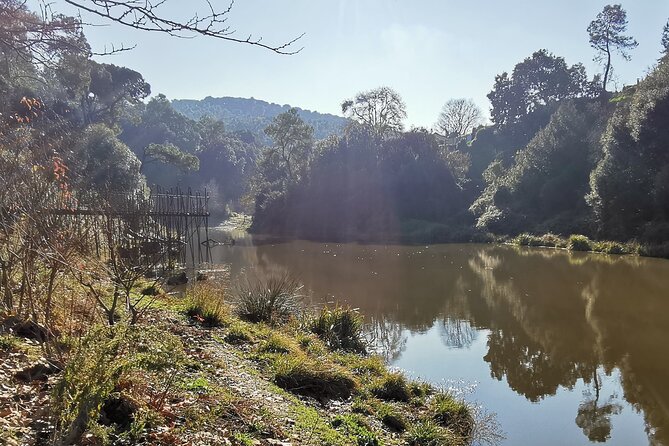
The last main stop is Pantano de Vallvidrera, about 30 minutes. This is the spot for water atmosphere and quirky details.
You’ll see a modernist dam plus a historic old railway booth. That combination is photo gold: straight architectural lines near something older, all with a natural setting around it. The tour also points out a turtle colony and a pond with an ecosystem. Even when you’re not close enough for wildlife shots, the idea of an ecosystem changes how you photograph the water edges—less generic, more attentive.
There’s also an access note through banana trees. That kind of detail matters because it gives you a sense of place you can’t fake in a regular photo walk. It also adds a fun contrast: Mediterranean-looking vegetation near a dam and swamp environment.
If you care about mood, Pantano is where your photos tend to soften—reflections, darker water tones, and a calmer feel after the forest and viewpoints.
Possible drawback to keep in mind: water-side areas can be cooler or damp depending on weather. The tour requires good weather, so in practice you’ll likely be fine, but dress for comfort. If it’s misty, your camera settings might need a little adjustment.
Photography Tips That Make the 3 Hours Work
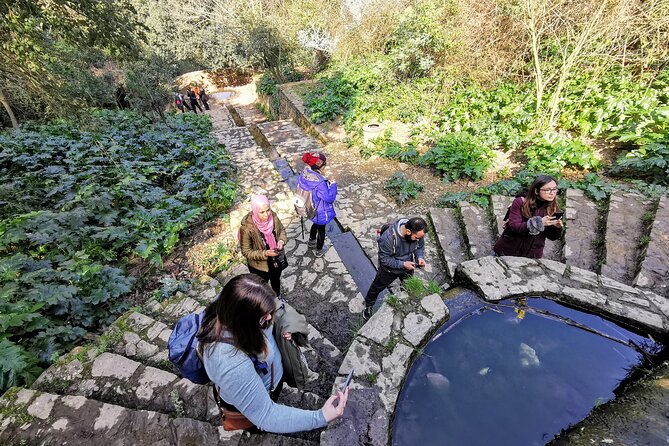
This tour isn’t just about visiting stops. It’s about training your camera eye. The biggest practical advantage is pacing: enough time at each point to shoot, then move on before your images get repetitive.
Here’s how I’d approach it while you’re there:
- Start broad, then go small. Get one overview shot of the viewpoint, then switch to textures—bark, dam surfaces, terrace edges.
- Work with contrasts. The route’s strongest theme is nature plus Barcelona. Use that by placing the city hints in the frame rather than trying to crop them out.
- Leave space for leading lines. Trails, terrace steps, and dam edges naturally pull the viewer’s eye where you want it.
Also, the included digital photographic report is a thoughtful add-on. You’re not just collecting photos on your phone; you’re leaving with an edited takeaway of the experience. That’s especially helpful if you don’t know what your best shots are yet.
If you’re traveling solo or with friends, the small group size (max 15) makes it easier to share quick tips—like lens ideas or composition thoughts—without turning the day into a classroom.
Price and What You Get for Around $30
At $30.04 per person for about 3 hours, the value depends on what you compare it to. You’re paying for more than a route. You’re paying for guided time, photo-oriented focus, and a digital photographic report afterward.
The tour also handles the hardest part: picking a sequence of places that actually makes photographic sense. Instead of you wandering Vallvidrera trying to invent a plan, you get stops that build from forest edge to viewpoint architecture to water-and-dam atmosphere.
Not everything is covered. Snacks aren’t included, and you should plan to bring water and something small to eat. Also, the first station stop has an admission ticket not included. So think of it as a guided nature photography day where the main costs are mostly your participation fee plus any zone-related ticketing you need.
For me, the best value indicator is the mix: Collserola park time, Villa Joana, and Pantano de Vallvidrera in one smooth half-day flow. That’s hard to assemble efficiently on your own without already knowing the area well.
What the Included Digital Photo Report Means for You
This is a small detail that ends up being a big deal. A tour that includes a digital photographic report means your effort doesn’t vanish into an unorganized camera roll.
You’ll likely appreciate this most if:
- you’re on a tight schedule and want help turning the day into usable images
- you’re still learning how to see composition and want a result that reflects what the tour taught you
- you want a souvenir that’s more than just a few blurry shots
Even if you bring your own editing workflow, having that guided “final product” can help you learn faster. You can compare your framing decisions in the moment with the final selection logic afterward.
Who This Tour Suits (and Who Might Skip It)
This one fits best if you like nature photography with a side of city contrast. You’ll enjoy it if you’re interested in urban-to-mountain transitions, modernist architecture, and water settings.
It’s also a good choice if you want a calm group day. With a maximum of 15 travelers, you’re less likely to feel lost in a crowd. And the tour is offered in English, so communication stays straightforward.
Who might skip it:
- If you strongly prefer fully guided transport with no independent ticket considerations, the first stop’s admission not included is a factor.
- If you don’t want to walk on uneven terrain in a mountain park, consider that this is still a nature route, not an indoor museum tour.
- If the weather is unreliable during your trip, remember the tour needs good weather and will be rescheduled or refunded if weather cancels it.
Should You Book This Photography Route Through Secret Nature of Barcelona?
I’d book it if you want a half-day that changes how you look at Barcelona. The route is efficient, the settings are genuinely different from the city center, and the photo focus keeps it from becoming a generic sightseeing walk.
I’d hesitate only if you’re very sensitive to hills, or if you dislike the idea of handling your own zone/ticket for the first leg. Also, if you can’t count on decent weather, build in flexibility.
If you fit the sweet spot—photography, curiosity, and a love of quiet mountain views—this is the kind of tour that turns a simple morning into a set of photos that actually tells a story.
FAQ
How long is the Photography route through the secret nature of Barcelona?
The tour lasts about 3 hours.
What time does the tour start?
It starts at 9:00 am.
Where does the tour meet and end?
It meets at Café Zurich, Pl. de Catalunya 1, L’Eixample, and ends back at the same meeting point.
What language is the tour offered in?
The tour is offered in English.
What is included in the price?
You get a digital photographic report of the experience.
What is not included?
Snacks are not included, and private transportation is not included. Also, admission for the first stop is not included.
Do I need a ticket for the first stop?
The first stop notes that an admission ticket is not included, and that a voucher or ticket for a zone is worth it.
Is the group size small?
Yes. The tour has a maximum of 15 travelers.
Does the tour require good weather?
Yes. It requires good weather, and if it’s canceled due to poor weather, you’ll be offered a different date or a full refund.
Is free cancellation available?
Yes. You can cancel up to 24 hours in advance for a full refund.