REVIEW · MONTEVIDEO
Montevideo: Walking Tour with Photographer and Audioguide
Book on Viator →Operated by DISCOVERS UyTravel · Bookable on Viator
A first stroll, with photos handled. This Montevideo walking tour mixes an offline audioguide with a photographer so you can focus on the streets, not settings and angles. You’ll move through key old-town spots and the riverfront promenade in about 1 hour 45 minutes.
I like two things a lot: the professionally edited photos sent to your email, and the way the route is paced for a true orientation of Ciudad Vieja. I also love that the audio guide covers major stops so you’re not just sightseeing—you’re learning what you’re seeing as you go.
One consideration: the app timing and the number of listed stops can feel a bit confusing. If you notice GPS starting the commentary before you reach a spot, just treat it as a guide and let your eyes catch up.
In This Review
- Key highlights you’ll actually feel on the street
- Why this Montevideo walk works on day one
- Meeting point and how to plan your time
- Stop-by-stop: what you’ll see and why it matters
- 1) Rambla de Montevideo: the city’s front porch
- 2) Templo Ingles de Montevideo: quick look at an early Anglican landmark
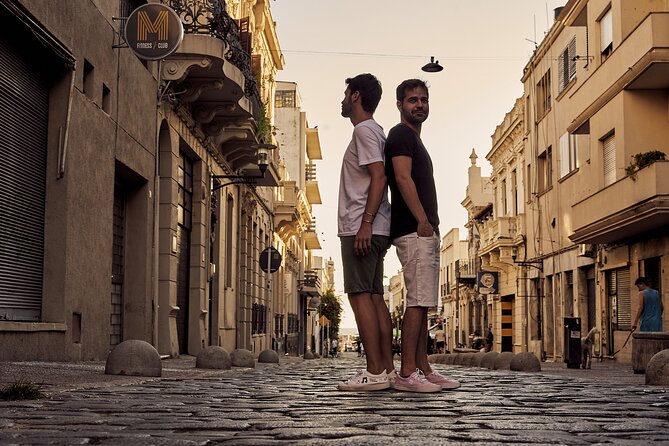
- 3) Peatonal Sarandi: the old-town pedestrian spine
- 4) Peatonal Bacacay: older, calmer, and charming between bigger stops
- 5) Teatro Solís: Montevideo’s major theater, even from outside
- 6) Plaza Matriz: the heart of the historic neighborhood
- 7) Puerta de la Ciudadela: a surviving piece of fortifications
- 8) Plaza Zabala: founder memory in the open square
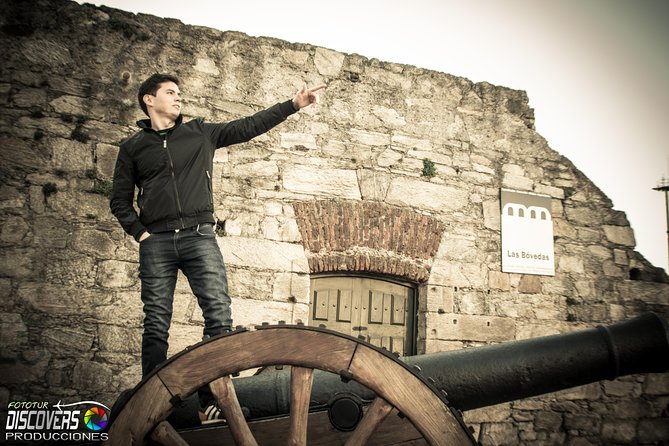
- 9) Espacio Cultural las Bóvedas: art and performance inside a cultural pocket
- 10) Public bank headquarters: a civic stop on the walk
- The photo-and-audioguide combo: how it actually feels
- Who this tour is best for
- Practical value check: is it worth $36.99?
- Tips to get the most out of the walk
- Should you book this Montevideo photo walk?
- FAQ
- FAQ
- How long is the Montevideo walking tour?
- How much does the tour cost?
- What’s included in the price?
- Do I need internet to use the audioguide?
- Where does the tour start and end?
- What languages are available on the audioguide?
- Is the tour suitable for pets?
- What if the weather is bad?
- Is there a limit on how many people join?
- Is the tour wheelchair-friendly or stroller-accessible?
Key highlights you’ll actually feel on the street
- Pro photographer in the mix: you’ll be guided to photo spots without scrambling for your own timing
- Offline audioguide: download ahead and use headphones; no internet needed during the walk
- Small group (max 8 travelers): easier pace, more chances to request photos, less waiting around
- Old-town route with real flow: you connect the Rambla to the pedestrian streets and central plazas without backtracking chaos
- Free admission at each stop: you’re paying for the guide, photos, and system—not ticket surprises
Why this Montevideo walk works on day one
Montevideo can be surprisingly easy to enjoy and surprisingly easy to misunderstand. The center looks walkable, but it helps to know what connects the river, the old walls, and the main plazas. That’s what makes this tour a smart first-day option: you get a curated route through the most-used public spaces and the civic center, with enough context to “read” the city as you walk.
At $36.99 per person for roughly 1h45, the price isn’t just about a guide talking. You’re also getting a photographer with professional equipment and a set of professionally edited photos delivered by email. For many people, that’s the difference between coming home with a few random snaps and actually documenting the trip without stress.
The group size matters too. With a maximum of 8 travelers, the pace feels human. You’re not dodging a crowd while trying to frame a shot, and the photographer can help you angle for photos without turning it into a production line.
Meeting point and how to plan your time

You’ll start at Av. Uruguay 857, 11100 Montevideo and finish at Plaza Zabala (the square honoring the founder of Montevideo). This matters because you’re not returning to your starting point—you’re walking a line through the old center, ending in a place where it’s easy to keep exploring.
Since it’s a daytime walking experience, I’d plan your day so you can actually enjoy the route after. You’ll likely get a lot of orientation in those 1h45, so if you’ve got another neighborhood to tackle later, this tour gives you the map in your head.
Bring at least one bottle of water, even though food isn’t included. The stops are free, the walk is short enough to feel doable, but you’re still outside. If weather turns, the activity may be canceled due to an adverse forecast—then you’ll either be offered another date or a full refund.
Stop-by-stop: what you’ll see and why it matters
1) Rambla de Montevideo: the city’s front porch
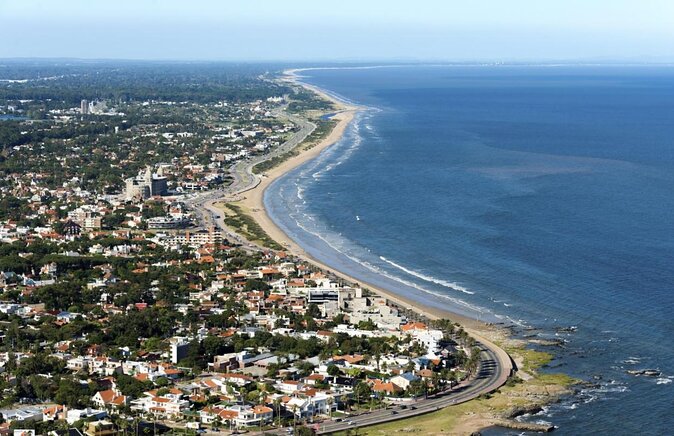
Your walk begins on Rambla de Montevideo, the most frequented promenade for both locals and visitors. This isn’t just a pretty walkway. It’s where people actually live outside: sports, mate breaks, fishing, socializing, and sun-and-salt lounging in the right sections.
What you’ll love here is the sense of Montevideo identity. The views of the Río de la Plata and the distinctive pink granite walls give you a quick visual anchor. Even if you’ve just arrived, the Rambla helps you understand which way the city faces and what kind of coastline culture you’re in.
Possible drawback: this is also a place where wind can play tricks. If it’s breezy, the walk will still feel fine, but you might want a hat or layers.
2) Templo Ingles de Montevideo: quick look at an early Anglican landmark
Next up is the Templo Ingles de Montevideo, facing the river on Rambla Sur. This is described as the first Anglican church founded in Uruguay—and in all of Latin America.
You’re not spending long here, but it’s a sharp cultural pause. The church gives you another layer to Montevideo’s story: the city’s connections were never only local.
The practical point: since the stop is brief, keep your eyes up—look for the relationship between the building and the riverfront setting.
3) Peatonal Sarandi: the old-town pedestrian spine
Then you move into Peatonal Sarandi, one of the classic pedestrian stretches where tourists, local workers, civil servants, artisans, and street artists overlap. This street is practical as well as scenic. It funnels you through a dense mix of plazas, historical buildings, art galleries, museums, shops, jewelry stores, and bookstores.
You’ll also get a sense of the sea and boat access to the port from corners along the way. That’s a useful mental connection: the Rambla isn’t just a view; it’s tied to the city’s movement and trade.
One note: this area can feel lively because it’s a real working corridor. If you’re someone who likes quieter streets for photos, you might want to rely on the photographer’s timing and take your time between busy moments.
4) Peatonal Bacacay: older, calmer, and charming between bigger stops
After Sarandi, you’ll walk Peatonal Bacacay, described as one of the oldest and most charming pedestrian streets in the old town. It runs between Teatro Solís and Peatonal Sarandí.
This stop works like a breather. It’s a smaller segment in the tour flow, but it helps the walk feel less like a checklist. You’re transitioning between major icons and still getting the character of the old center.
5) Teatro Solís: Montevideo’s major theater, even from outside
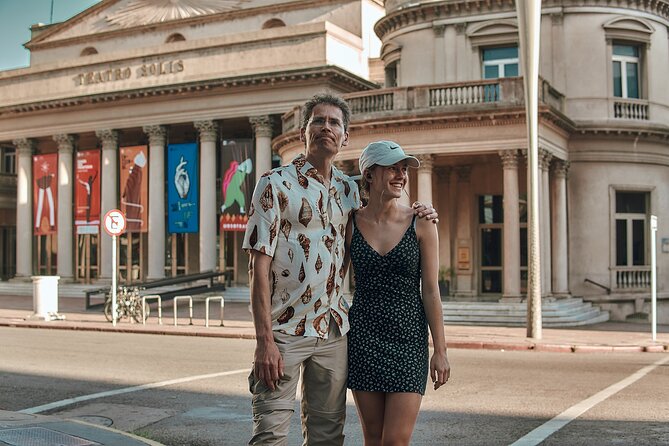
You’ll see Teatro Solís, the most important theater in Uruguay. It’s also the headquarters of the National Comedy, and its origins connect back to the early state period of Uruguay.
Even if you’re only viewing it from the outside during a walking tour, the building’s status signals something: Montevideo takes culture seriously. It helps your understanding of why the surrounding civic and pedestrian spaces feel the way they do.
Practical tip: wear shoes you trust. You’ll likely want to pause for photos, and this kind of landmark tends to invite “one more shot.”
6) Plaza Matriz: the heart of the historic neighborhood
Next is Plaza Matriz, also known officially as Plaza de la Constitución. This is the center of the historic neighborhood. In front of it you’ll find the Metropolitan Cathedral and the former Cabildo, now turned into a museum.
What makes this stop valuable is how it functions as a city compass. When you know where Plaza Matriz sits, it’s easier to orient yourself later and understand why other streets and sights feel connected.
A small challenge: plaza space can be open and exposed. If the weather is bright and windy, take a moment to breathe, then keep going.
7) Puerta de la Ciudadela: a surviving piece of fortifications
Then you reach Puerta de la Ciudadela, one of the few remnants of the city’s old fortification system. It’s described as a direct physical document of the Hispano-Montevidean fortification complex.
This is where the city stops being just scenic and turns into architectural evidence. It’s the kind of stop where an audioguide helps, because you’re looking at a structure that makes more sense once you know what it used to represent.
The stop is short, so focus on the doorway itself and the sense of how the city used to protect its core.
8) Plaza Zabala: founder memory in the open square
You’ll continue to Plaza Zabala, located in the Old City and named for Bruno Mauricio de Zabala, founder of Montevideo. This is also where you’ll end the tour.
Since it’s the finish point, it’s a good place to transition. Use it as your “okay, I’m oriented now” moment. From here you can branch out on your own with far fewer wrong turns.
9) Espacio Cultural las Bóvedas: art and performance inside a cultural pocket
The route includes Espacio Cultural las Bovedas, managed by theater and puppet group La Loca Compañía Uruguay and Fundación Amongarú Turismo y Comunidad.
Even though you may only be stopping briefly, this is a reminder that Montevideo’s culture isn’t locked inside museums only. Local performance groups and community-rooted initiatives help keep the city’s creative side active.
If you’re into puppets, theater, or community-driven arts, you’ll probably want to linger after the tour—if the space is open when you’re there.
10) Public bank headquarters: a civic stop on the walk
The last mention in the route is the headquarters of the public bank of Uruguay. The data doesn’t spell out specific architectural details, but you’ll likely treat it as a civic, institutional anchor that completes the old-center civic sweep.
This is the kind of stop that works best with the audioguide, because it helps you connect the building to the city’s broader public life.
The photo-and-audioguide combo: how it actually feels
This is one of those tours where the “extras” aren’t decorative. You’re getting three systems that support each other:
1) A photographer with professional equipment
2) Free professionally edited photos delivered by email
3) An audioguide in Spanish, English, and Portuguese (and they may be able to add other languages if possible)
You’ll want to download the audioguide data before you start, because it’s used without internet during the tour. Bring headphones so you can listen easily and stay locked in when you’re walking.
From the reviews, one thing I’d take seriously is timing. The GPS synchronization can sometimes start commentary while you’re still away from a spot. That’s not a deal-breaker, but it’s a reason to stay alert and use your eyes, not only the app. Another small issue: the app may show more locations than the tour actually covers in your time window, which can make the experience feel less exact than you expected.
Still, the biggest upside is obvious: you’re not left alone to figure out where to stand for photos. With Martin mentioned by name in multiple reviews, you can also expect a guide who knows the route and helps with photography moments so you don’t lose time thinking about the camera.
Who this tour is best for
This tour is a great fit if you:
- Want a first-day orientation of Ciudad Vieja and the Rambla
- Care about getting good photos without turning your vacation into a self-photography project
- Like a mix of guided context and walking through real public spaces
It may not be ideal if you have mobility or physical limits. It’s not recommended for people with reduced mobility, back problems, heart conditions, or pregnancy. It also cannot access a stroller, and it’s not suitable for pets (service animals are allowed).
If you’re generally healthy and comfortable walking for around 1h45, you’ll likely find the pace manageable—especially with a small group cap.
Practical value check: is it worth $36.99?
Let’s be blunt: walking tours can be cheap and still feel light on value. This one tries to justify its price with deliverables.
- You pay for the guide experience plus the photographer
- You get professionally edited photos by email, which is a real travel memory asset
- You use a free audioguide system that covers major sights
- Every stop listed has free admission, so you’re not paying ticket fees while walking
So if you want photos and historical context without hunting for opening hours or ticket lines, the value makes sense. If you’re the type who never reviews photos again, then you might feel the price more than necessary—but most people like having images worth keeping.
Tips to get the most out of the walk
Here’s how I’d set yourself up for a smooth experience:
- Bring water and wear comfortable shoes—you’re walking a full circuit through the old center.
- Use headphones so the audioguide doesn’t get drowned out by street noise.
- Download the audio guide data ahead of time since it won’t rely on internet during the tour.
- Give the photographer clear direction when you want specific types of shots (selfies, couple photos, group photos). That’s exactly what a pro can help with.
- If the GPS commentary starts early, don’t panic. Treat it as a hint, not a stopwatch.
Should you book this Montevideo photo walk?
I think you should book this tour if you want an efficient, confidence-building stroll through Montevideo’s core—plus photos that look like someone knew what they were doing.
Skip it (or at least reconsider) if you need perfect app-to-spot timing or you strongly prefer quieter walking routes. Also, if your body has limits—back issues, reduced mobility, heart conditions, or pregnancy—this may not be the best match.
If you’re flexible, enjoy old-town walking, and want a photographer to handle the hard part, this is a solid choice. It’s short, structured, and focused on the city’s most identity-heavy streets and public spaces.
FAQ
FAQ
How long is the Montevideo walking tour?
It lasts about 1 hour 45 minutes.
How much does the tour cost?
The price is $36.99 per person.
What’s included in the price?
You get an audioguide, free professionally edited photos delivered to your email, and a photographer with professional equipment.
Do I need internet to use the audioguide?
No. The audioguide is used without internet during the tour, so you should download the audio data in advance.
Where does the tour start and end?
It starts at Av. Uruguay 857, 11100 Montevideo and ends at Plaza Zabala (Zabala Square).
What languages are available on the audioguide?
The audio guide is available in Spanish, English, and Portuguese. If you use another language, there may be a possibility to add it.
Is the tour suitable for pets?
It is not suitable for pets. Service animals are allowed.
What if the weather is bad?
The experience requires good weather. If it’s canceled due to poor weather, you’ll be offered a different date or a full refund.
Is there a limit on how many people join?
Yes. The tour has a maximum of 8 travelers.
Is the tour wheelchair-friendly or stroller-accessible?
It is not recommended for people with reduced mobility, and it cannot access a stroller.