REVIEW · JAIPUR
Jaipur: Private Tour for Instagram and Photography Lovers
Book on GetYourGuide →Operated by Rajasthan Tour Driver · Bookable on GetYourGuide
Jaipur rewards fast eyes and a patient camera—this private tour is built for both. You’ll move through the city’s most photogenic angles in one day, from Pink City street scenes to big-ticket monuments like Hawa Mahal and Amber Fort.
I like two things a lot: the photo-focused stops (you get dedicated time to shoot, not just “walk past” viewing), and the smooth setup with a chauffeur-driven A/C private vehicle so you’re not negotiating transport between locations.
One thing to plan for: the day is packed, and there’s a moderate amount of walking. If you’re dealing with back issues or mobility limits, the fit may be tricky even though the tour is listed as wheelchair accessible.
In This Review
- Key photo-and-value highlights
- A one-day photo circuit through Jaipur’s main icons
- Getting around in an A/C private car (and why it saves your camera time)
- Patrika Gate: sunrise light and colorful corridors for instant payoff
- Hawa Mahal and Jantar Mantar: two very different photos, same strong payoff
- City Palace and Gaitor Ki Chhatriyan: royal interiors and stone cremation monuments
- Jal Mahal: the quick water-shot stop that can work fast
- Panna Meena ka Kund: geometry that photographs like a pattern book
- Amber Fort: big scale, best angles, and a real photo block
- Pink City streets and bazaars: your final “tell the story” photo set
- Lunch, markets, and how to time your energy
- Price and value: what you’re really paying for at about $14 per person
- Who this tour suits best (and who should think twice)
- Should you book this Jaipur photography tour?
- FAQ
- FAQ
- What does the tour price include?
- Is there an English guide?
- How long is the tour?
- Are monument tickets included?
- What stops are included in the day?
- Where do pickup and drop-off happen?
- What should I bring and avoid?
Key photo-and-value highlights
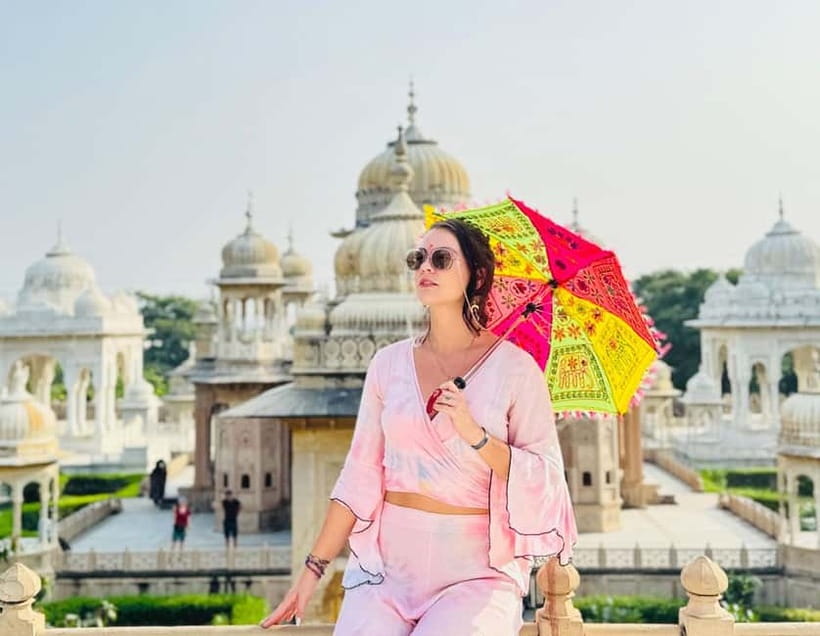
- English guide + picture help at the stops, so you know where to stand and when the light helps
- Private A/C car with a professional driver, which saves you time and stress in traffic
- One-day photo circuit that covers Patrika Gate, Hawa Mahal, Jantar Mantar, City Palace, Jal Mahal, Panna Meena ka Kund, and Amber Fort
- Dedicated shooting time at each landmark, including classic monument angles
- Skip-the-ticket-line style access for the planned sights (entry fees still aren’t included)
- Add-ons beyond monuments: a traditional village arts-and-crafts market plus a Pink City bazaar photo walk
A one-day photo circuit through Jaipur’s main icons
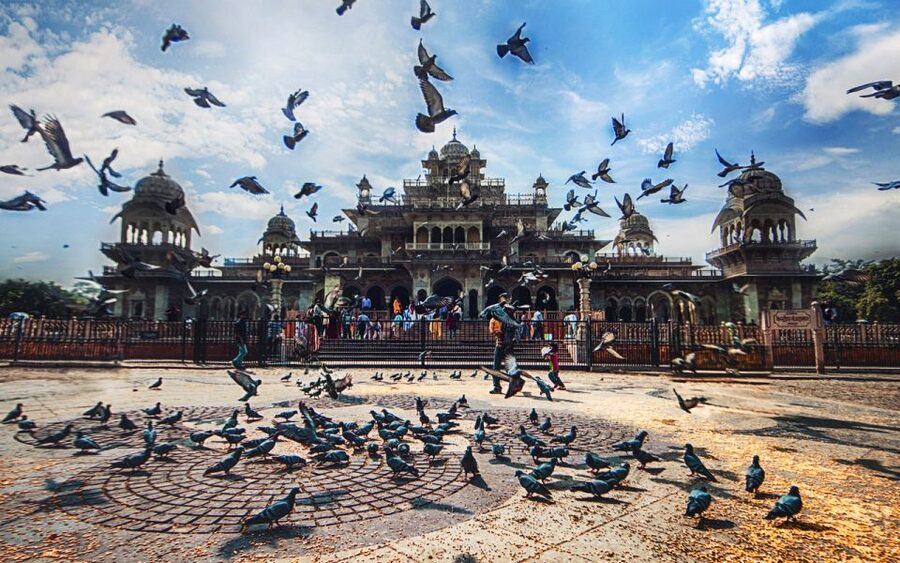
This is the kind of Jaipur day that works if you want results without building a whole DIY itinerary. The flow is simple: iconic landmarks early, forts and geometry in the middle, and a final Pink City walk with market time later. That sequencing matters. You get the shots you came for first, then you can slow down for street scenes and crafts.
The tour is also built around clear photo objectives. Think symmetry, repeating arches, and façade detail—Jaipur is full of it. Patrika Gate is a great example: you’re not just seeing a gate, you’re photographing a corridor of colors that gives you a strong “Instagram feed” look with minimal effort. The same idea repeats at Hawa Mahal and City Palace, where angles and repetition do a lot of the work for you.
The day is private, so you’re not stuck timing your camera with a big group shuffle. That privacy helps when you’re trying to frame people out of the shot or wait for a clear moment.
You can also read our reviews of more tours and experiences in Jaipur.
Getting around in an A/C private car (and why it saves your camera time)
Jaipur traffic can turn a photo plan into a guessing game fast. This tour solves that by including hotel (or airport/railway station) pick-up and drop-off plus a chauffeur-driven A/C private vehicle.
Your group size changes the ride:
- 4-seater sedan for groups of 1–2
- 6-seater SUV for groups of 3–5
- 12-seater minivan for groups of 5–10
That matters because you’ll spend your energy composing photos, not crowding into a cramped vehicle and losing time every time someone needs to stop.
Also, you get the kind of driving support that’s useful for a day like this: a professional driver who handles transit between sights. In guide-and-driver feedback for this experience, names like Imran, Sameer, Hasan, Nadeem, and Kudrt show up repeatedly, and the pattern is consistent—people mention smooth routing and careful driving, plus guides stepping in to help with picture moments.
Patrika Gate: sunrise light and colorful corridors for instant payoff
You start at Patrika Gate, one of those Jaipur landmarks that looks great even before you get technical. The structure gives you leading lines, arches, and a corridor effect that works for portraits and “feed” shots alike. The time here is short but designed for a real photo pause: you’ll have a photo stop plus a guided visit.
What makes this stop valuable is how quickly you can get a strong set of images. If your camera battery or your energy needs a first win, Patrika Gate delivers. It’s also a helpful warm-up for the day’s visual theme—faces, patterns, and geometry.
Practical tip: if you care about reflections and clean frames, take a few minutes to stand back and shoot vertically and then horizontally. The gate’s structure supports both, and it’s easier to experiment early than later when the day tightens.
Hawa Mahal and Jantar Mantar: two very different photos, same strong payoff
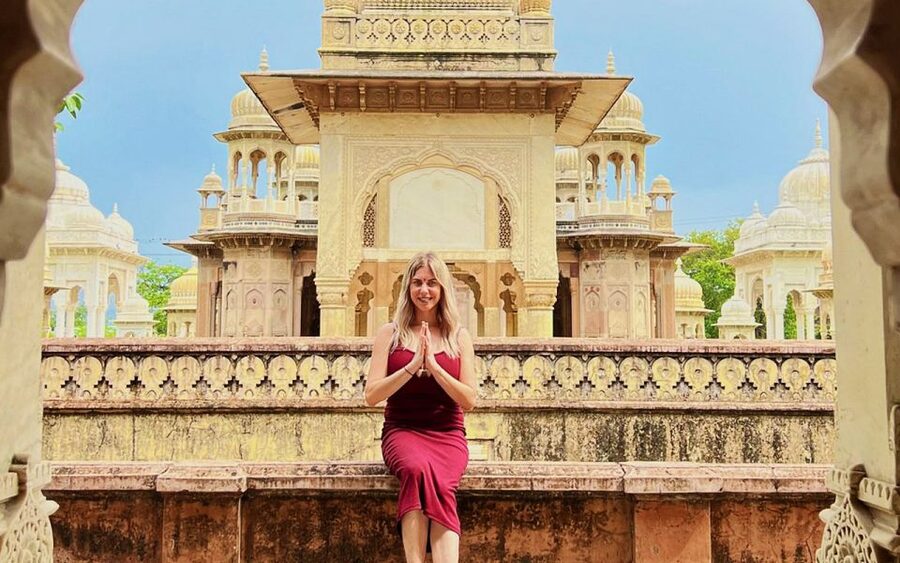
Next is Hawa Mahal, the Palace of Winds. It’s one of Jaipur’s most recognizable façades, and this stop is built for that recognition. You’ll get a photo pause and sightseeing time, and the goal is to capture the repeating window pattern that makes the building famous.
Then you head to Jantar Mantar, the UNESCO observatory with 19 instruments and the world’s largest stone sundial. For photography, this place is about shapes and scale: stone instruments, strong angles, and a layout that naturally frames your subject.
Here’s the key difference between these two stops:
- Hawa Mahal is about façade detail and strong front angles
- Jantar Mantar is about structure and perspective—how big these instruments feel in real life
So if you’re planning your photo style, use one as your “architecture close-up” day and the other as your “geometry and perspective” day.
City Palace and Gaitor Ki Chhatriyan: royal interiors and stone cremation monuments
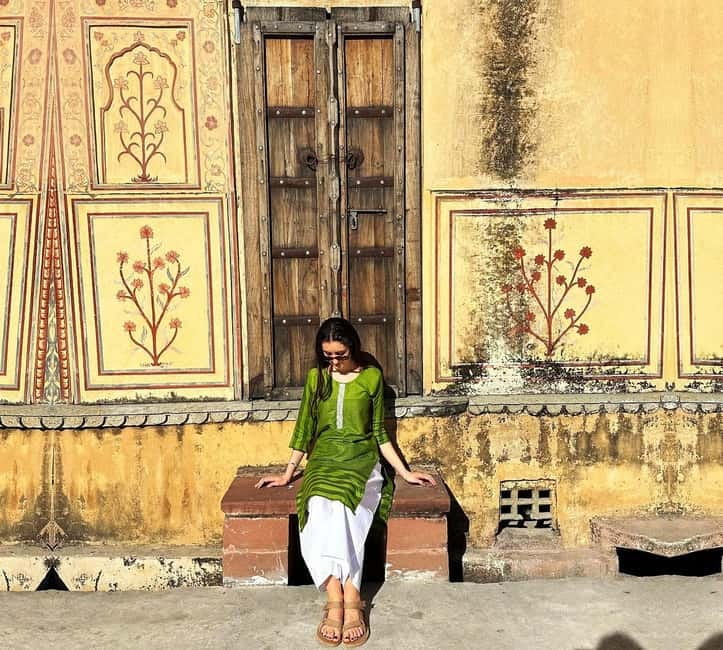
City Palace is a must for anyone who wants more than a single photo of a façade. You’ll have time for a photo stop and sightseeing with guided time, including attention on major rooms like the Chandra Mahal area and the palace’s blue wall look.
This stop is valuable because it connects the “pretty building” images to how the city worked. Even if you only catch a few details from the guide, City Palace gives you context for why Jaipur architecture looks the way it does.
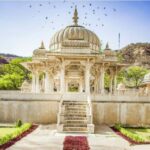
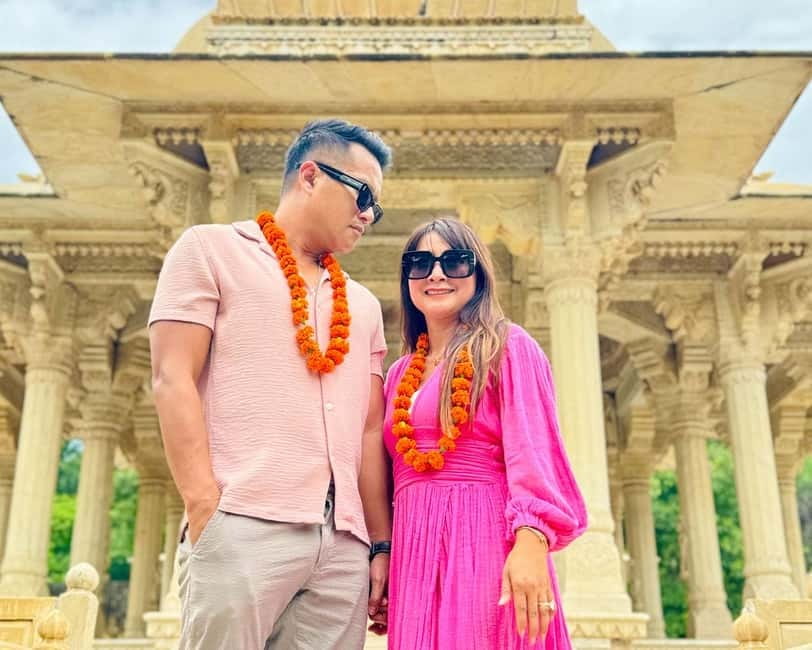
Then comes Gaitor Ki Chhatriyan (Royal Gaitor Tumbas). It’s a royal crematory site with intricately carved stone monuments. For photos, this is where you get texture: close carving detail, patterns on stone, and an atmospheric feel that’s different from the busy royal-city street scenes.
If your camera is heavy, this is a great moment to use a lighter lens or brace your tripod-less shots against a stable surface when permitted. The point is to slow down and shoot detail, not just distance.
Jal Mahal: the quick water-shot stop that can work fast
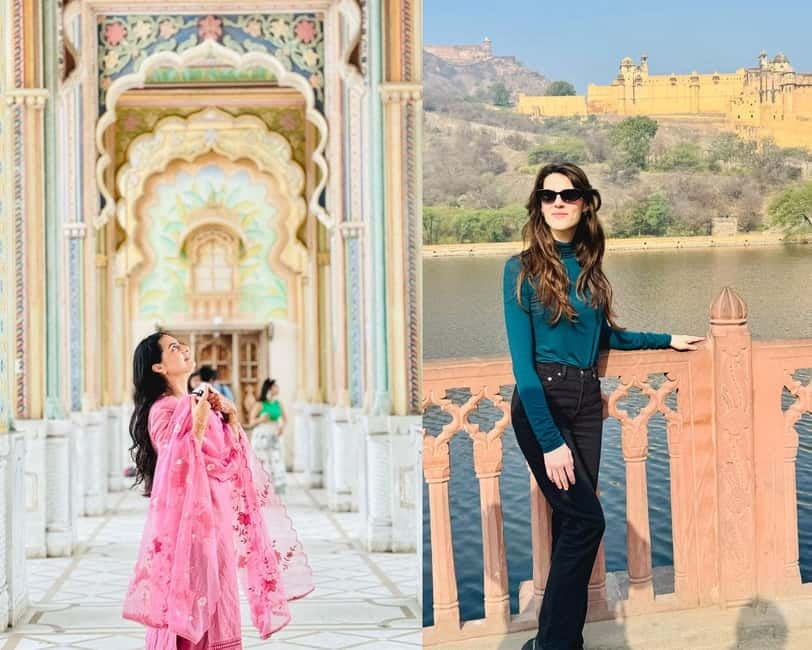
Jal Mahal sits in the middle of Man Sagar Lake. This is a short stop, but it’s a smart one for photographers: water reflections plus a palace silhouette give you that “Jaipur signature” contrast shot.
Because your time here is limited, keep your approach simple:
- Grab wide shots first (palace silhouette + lake context)
- Then do a couple of tighter frames focused on the building edge and surrounding water
If the light is harsh, don’t fight it for a long time. Water highlights change quickly, and you’ll get better frames by adjusting position rather than waiting forever.
Panna Meena ka Kund: geometry that photographs like a pattern book
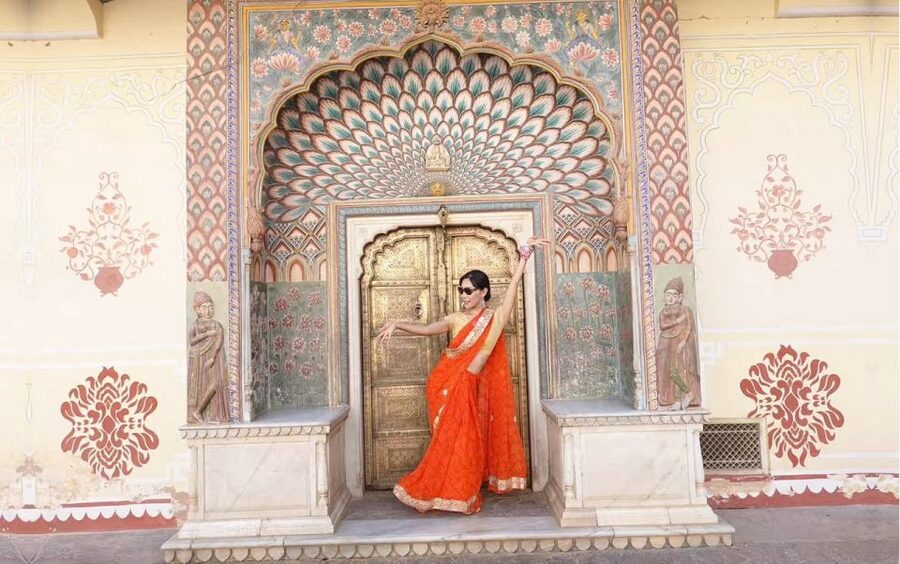
Panna Meena ka Kund is a stepwell, famous for its geometric staircases. This stop feels like the city translated mathematics into stone. You’ll get photo time and guided sightseeing, which helps because stepwells can be confusing at first glance—you’ll want to understand the layout to photograph it well.
For camera lovers, this is a great location for:
- symmetry shots
- top-down or angled frames
- “repeating staircase” compositions
If you like photos that look crisp and designed—even when you’re just using street photography instincts—this is a strong stop.
Amber Fort: big scale, best angles, and a real photo block
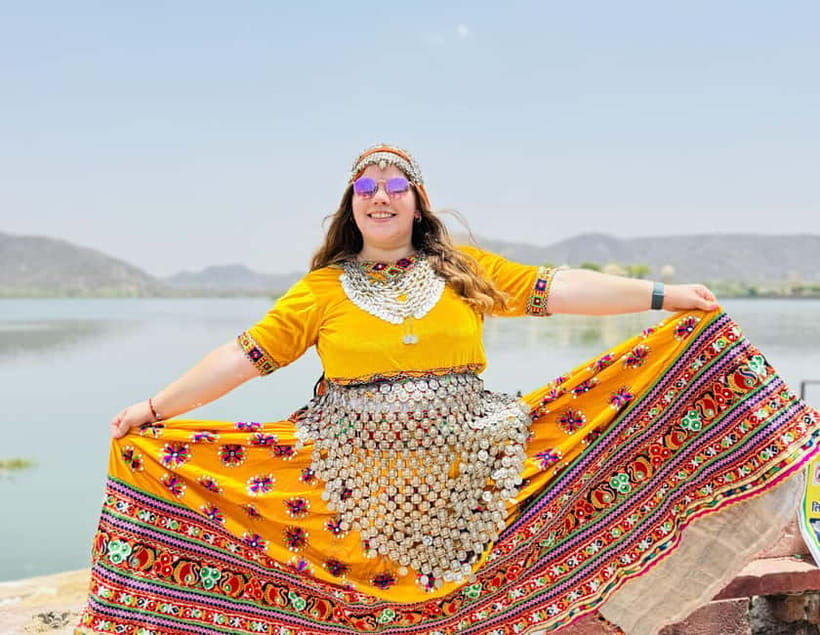
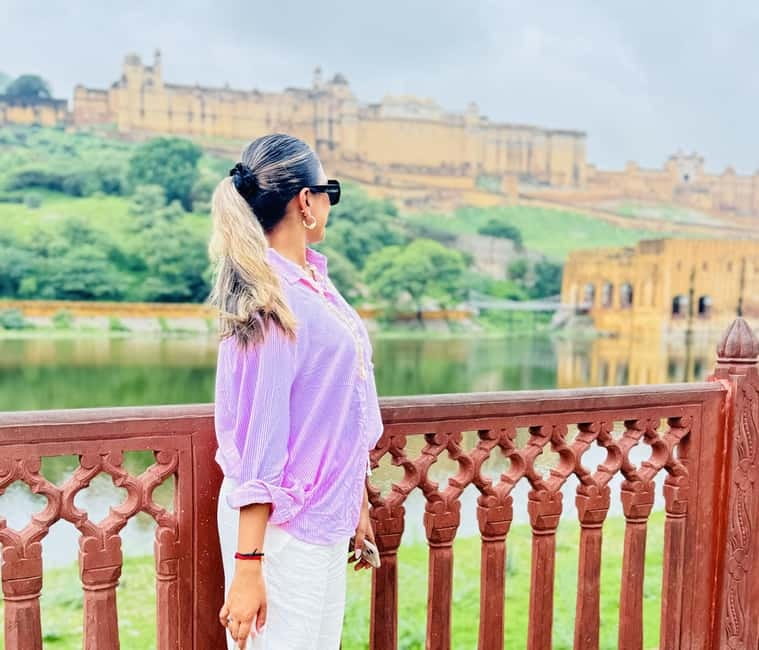
No Jaipur photography run feels complete without Amber Fort. You’ll have a photo stop and guided visit time here, with a longer block than many other landmarks.
What makes Amber Fort so photograph-friendly is the scale: ornate gates, courtyards, and layered architecture give you multiple shooting zones. One area rarely does it all, so you’ll want to use your time in chunks:
- one set for gates and exterior drama
- one set for courtyards and interior-facing angles
- one set for background layers
Watch for where the light hits the stone carvings. When the light is slanted, detail shows up better—and you’ll get less washed-out texture.
Also, the fort adds more walking than some other stops. The tour description calls it moderate walking overall, but Amber is often the part where you’ll feel it most. If you’re planning comfortable shoes, this is the reason.
Pink City streets and bazaars: your final “tell the story” photo set
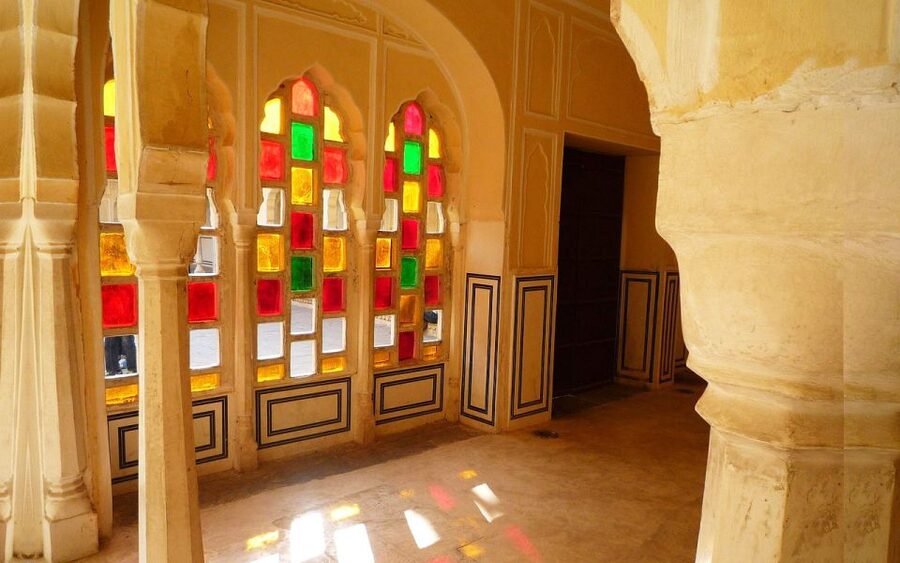
The day ends with Pink City time: a photo stop, guided tour, and market visits including food and arts-and-crafts areas. This is where your photos shift from monument proof to story shots—colorful bazaars, pink and yellow buildings, and street-style frames of everyday life.
This is also where the tour becomes useful beyond the famous landmarks. A good guide can help you avoid spending time in the wrong corners and point you toward lanes that give you better compositions without you feeling lost.
You’ll also visit a traditional village with arts and crafts market time and a short workshop (20 minutes). Even if you’re not shopping heavily, watching craft work happening nearby helps your photos feel grounded. Crafts don’t just look good; they give your images meaning.
Finally, you return to the Pink City for more photo time and market browsing (including arts-and-crafts time for about 45 minutes). It’s a practical way to keep your camera busy without turning the day into only walking among big stones.
Lunch, markets, and how to time your energy
Lunch is included as a stop at a local restaurant, plus there’s a food market element built into the day. The tour doesn’t spell out what dishes you’ll get, so plan to treat lunch as a chance to refuel and taste something local—don’t expect a detailed menu plan in advance.
A helpful note for photo lovers: when markets get busy, it’s tempting to shoot everything at once. Instead, set one goal for this segment—maybe street portraits, maybe building façades, maybe craft close-ups—and shoot with that intention. You’ll come away with a more coherent photo set.
If you’re someone who needs frequent breaks, you might find the day brisk. The upside is that you don’t have to handle logistics. The driver and guide handle movement while you focus on pictures and short walks.
Price and value: what you’re really paying for at about $14 per person
At about $14 per person for an 8-hour private tour with pick-up/drop-off and an A/C private vehicle, the value comes from the structure:
- you’re not paying separately for transport between distant landmarks
- you’re getting English guidance during the day
- you’re getting photo stops with time to shoot
- monument entry fees are not included, so the price is kept lower for you upfront
That last point matters. If you add up monument entrance fees, your total cost will climb, but you still avoid paying for a full separate guide + separate taxi plan. Also, the experience includes fuel and parking, which you’d normally end up paying in a DIY setup.
One more value angle: in the feedback shared for this tour style, guide quality shows up again and again—people name guides such as Ashwani, Gaurav, Saqlain Gaffar, Farman, Akram, and Ashwin, and drivers like Imran, Sameer, Hasan, Nadeem, and others. The common thread is that the combo of careful driving and hands-on help for photo angles makes the day feel efficient.
If you’re traveling solo or as a couple and want “great sights, minimal hassle,” this price structure can be a sweet spot.
Who this tour suits best (and who should think twice)
This tour fits best if you:
- love Instagram-ready architecture and geometry
- want a guided day that saves you from planning routes and timing
- prefer private transport over jumping between public options
- can handle moderate walking
You might think twice if:
- you have back problems or mobility impairments (the day includes walking between stops)
- you want a slow, unstructured sightseeing style instead of a photo-forward schedule
One small caution: the tour is listed as wheelchair accessible, but it also flags not being suitable for mobility impairments and mentions moderate walking. If mobility is a concern, ask your provider what walking distances look like at Amber Fort and along the stepwell and fort areas before you book.
Should you book this Jaipur photography tour?
If your main goal is to capture Jaipur in one strong photo day—classic monuments plus Pink City street frames—this is the kind of tour that can deliver. The big win is the combination of a private A/C ride, dedicated shooting time, and an English-speaking guide who can help with where to stand and what to focus on.
Book it if you want:
- a practical, photo-focused route
- minimal logistics work
- an efficient way to cover many top Jaipur sights in 8 hours
Consider other options if you want very slow pacing, lots of museum time, or you can’t comfortably handle the walking at Amber Fort and the stepwell areas.
FAQ
FAQ
What does the tour price include?
It includes hotel/airport/railway station pick-up and drop-off, a chauffeur-driven A/C private vehicle for the city tour, and fuel and parking charges. Monument entrance fees, lunch, and personal expenses are not included.
Is there an English guide?
Yes, the tour includes a live English tour guide.
How long is the tour?
The experience is listed as 8 hours.
Are monument tickets included?
No. Monument entrance fees are not included.
What stops are included in the day?
You’ll visit Patrika Gate, Hawa Mahal, Jantar Mantar, City Palace, Gaitor Ki Chhatriyan, Jal Mahal, Panna Meena ka Kund, Amber Fort, plus lunch and market time in Jaipur’s Pink City area.
Where do pickup and drop-off happen?
Pickup and drop-off are available in Jaipur and Kukas, with pick-up from your hotel or another desired location in Jaipur.
What should I bring and avoid?
Bring a passport or ID card and comfortable clothes and shoes. Alcohol and drugs are not allowed, unaccompanied minors aren’t allowed, and pets aren’t allowed. A smart casual dress code is recommended, with short shorts or sleeveless tops not recommended in temple areas.