REVIEW · JAIPUR
Jaipur: Private Instagram Tour of Top Photography Spots
Book on GetYourGuide →Operated by Rajasthan India Tour Driver · Bookable on GetYourGuide
Jaipur can feel like a Pinterest board in real life, and this photo-focused day keeps it practical. You’ll roll through standout viewpoints in a private setup with transport, then get help framing shots while a local guide fills in what you’re actually looking at.
I especially like how the route mixes famous landmarks with photo-ready “pause and shoot” stops. Patrika Gate is built for color and candid portraits, and Panna Meena ka Kund turns geometry into something you can shoot from multiple angles.
One thing to weigh: entrance fees and meals aren’t included, so your total spend will rise once you’re on-site. Also, because it’s a private tour, you should be clear up front if you want zero shopping detours.
In This Review
- Key Things That Make This Tour Worth It
- How This 10-Hour Jaipur Route Stays Photo-First (And Not Exhausting)
- Pickup and Transport: Tuk-Tuk Charm vs Car Comfort
- Patrika Gate: Why This Color Corridor Works So Well
- Jal Mahal: Reflections, Views, and Bird Season Notes
- Panna Meena ka Kund: Stepwell Geometry That Looks Like Art
- Amber Fort: Pols, Courtyards, and Doorway-Worthy Details
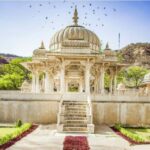
- Gaitor Ki Chhatriyan Near Amber: Fewer Crowds, Easier Shooting
- Hawa Mahal: The Classic Exterior Shot (and How to Make It Better)
- City Palace and Chandra Mahal: When Jaipur Turns Blue and Gold
- Jantar Mantar: Astronomy Instruments You Can Photograph Like Sculpture
- Albert Hall Museum: Royal Architecture and Night-Light Possibilities
- Jaipur Bazaars and Street-Style Shots: Color, Fabric, and People
- Price and Value: Why $9 Can Be a Bargain (With One Caveat)
- Who This Tour Suits Best
- Practical Tips Before You Go (So Your Photos Don’t Suffer)
- Should You Book This Jaipur Instagram Photography Tour?
- FAQ
- What’s the duration of the tour?
- Is pickup and drop-off included?
- What transportation options are available?
- Are entrance fees included for the monuments?
- Is lunch included?
- What’s the language of the guide?
- Is the tour private or shared?
- What should I wear for temples?
- Are there restrictions on luggage or items?
Key Things That Make This Tour Worth It
- Photo timing built in with morning-friendly stops like Patrika Gate and big-wins landmarks like Hawa Mahal
- You’re not just sightseeing: your guide helps with framing and scene context while you take photos
- A real private flow with hotel/airport/railway pickup and drop across many Jaipur neighborhoods
- A strong variety of subjects: stepwells, forts, royal buildings, astronomy, and street-style bazaars
- Optional tuk-tuk or car so you can match your day to comfort and your group size
- Less crowded time at Gaitor Ki Chhatriyan, which makes it easier to photograph without constant jostling
How This 10-Hour Jaipur Route Stays Photo-First (And Not Exhausting)
This tour is designed like a photo day, not a rushed checklist. The big advantage is that you get repeated chances to stop, walk a bit, and shoot—so you’re not stuck taking everything from inside a vehicle. Ten hours is long enough to cover major icons and still have time to breathe.
You also get a guide who isn’t just narrating dates. In the best moments, they help you aim for what your camera sees best: corridors, doorways, water reflections, and symmetrical layouts. That matters because Jaipur looks great in photos, but it’s easy to miss the best angles if you don’t know where to stand.
Finally, it’s private. That sounds like a sales line, but it actually changes the day: you can move at your pace, and your guide can adapt if you want more time at one stop than another.
You can also read our reviews of more tours and experiences in Jaipur.
Pickup and Transport: Tuk-Tuk Charm vs Car Comfort
Your day starts with pickup from a long list of areas around Jaipur, including Subhash Chowk, Pink City, Civil Lines, C Scheme, Vaishali Nagar, and more. If you’re arriving by train or staying in a hotel, you don’t have to “figure out” meeting points. You just show up and go.
Transport is either a private tuk-tuk or a car with a driver (tuk-tuk is also used for 1–2 people). In practice, a tuk-tuk can be fun for short hops and the “local feel,” while a car can feel easier if you want more comfort during transfers. For families or mixed ages, I’d lean car for stress-free moving through traffic.
The format is also built around private groups of different sizes, from 3-wheeled auto rickshaw for two people up to larger vehicles like a van for groups of 6–10. That means your group isn’t squeezed into the wrong vehicle type.
Patrika Gate: Why This Color Corridor Works So Well
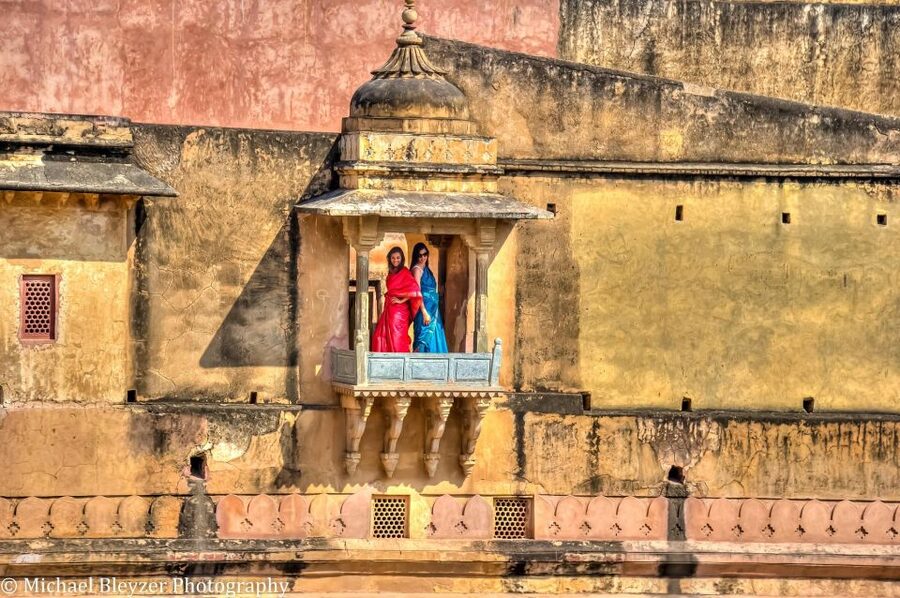
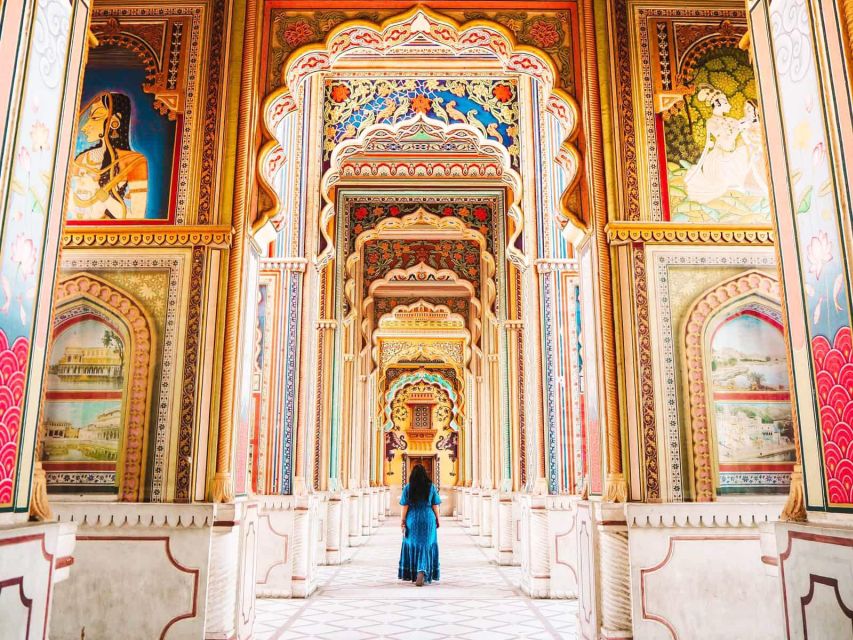
Patrika Gate is one of those places where the photo isn’t an accident. The corridor is bright, graphic, and lined with color that frames faces and outfits naturally, which is why it became a popular internet-style backdrop.
Plan for short bursts of shooting. You’ll likely want a few candid portrait frames (people walking, turning, talking) and a few more “composed” shots from the center line where the corridor pulls your eye inward. The tour includes time here plus a guided visit, so you’ll get context while you shoot instead of racing ahead.
If you’re serious about photos, arrive with a simple plan: one wide shot to show the corridor depth, one mid-shot with a clean background, and one tight shot on color details.
Jal Mahal: Reflections, Views, and Bird Season Notes
Jal Mahal, the Water Palace, gives you a different kind of Jaipur image—calm water lines and landmark silhouettes. The tour includes a stop with time to shoot and visit, and the big draw is the view of the Water Palace from the right angles.
There’s also a seasonal detail: the area can offer migratory bird sightings depending on the time of year. That means your best photos here might not be only architecture; you could also get silhouettes or wildlife moments if timing lines up.
One practical note: water-view photography often means more people looking for the same angles. Move deliberately, shoot, then step aside to let others pass so you’re not fighting for position.
Panna Meena ka Kund: Stepwell Geometry That Looks Like Art
The stepwell at Panna Meena ka Kund is one of the most camera-friendly structures in Jaipur for good reason. Those intricate staircases create lines, shadows, and repetition, and your framing options multiply quickly once you see the layout.
This is the kind of place where small changes in where you stand change the photo completely. Try shooting from higher viewpoints to emphasize layers, then switch to lower positions for stronger depth. If you’re traveling with a friend, alternate taking shots so one person can hold the phone/camera steady while the other tests angles.
The tour includes time for photography plus guided context, which helps you notice details beyond the obvious “steps and symmetry” look.
Amber Fort: Pols, Courtyards, and Doorway-Worthy Details
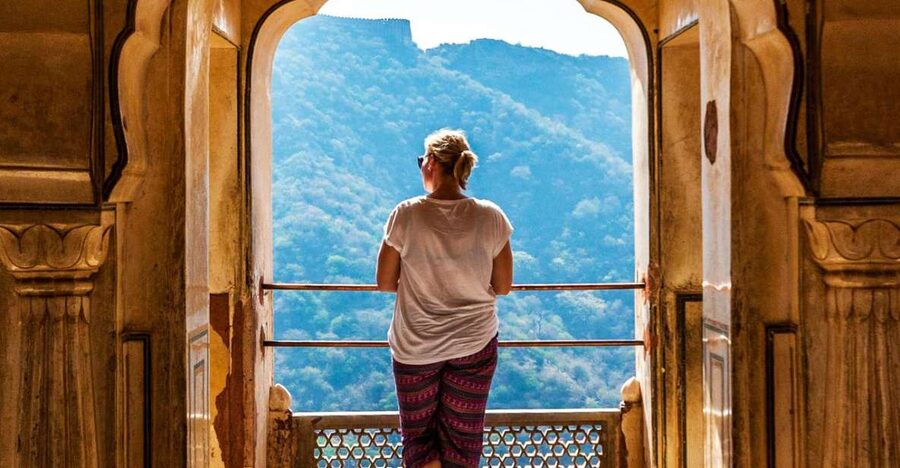
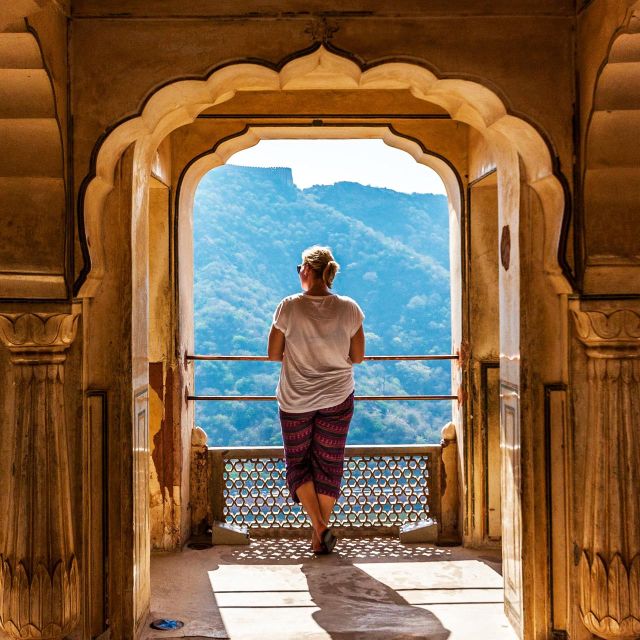
Amber Fort is the iconic Jaipur stronghold everyone wants in their camera roll, and you get the chance to shoot and explore with guided time. The standout photographic elements are the pols and courtyards—those atmospheric entryways and internal spaces that feel like old-city living rather than a museum display.
Expect plenty of strong architectural targets: antique-style doors, archways, and courtyard corners that let you photograph both people and stone without everything looking flat. It’s also a place where walking helps; if you stay in one spot, you’ll miss the angles that reveal depth.
Practical tip: wear shoes that can handle uneven surfaces. This is a “comfortable shoes” moment, not a “pretty but fragile footwear” day.
Gaitor Ki Chhatriyan Near Amber: Fewer Crowds, Easier Shooting
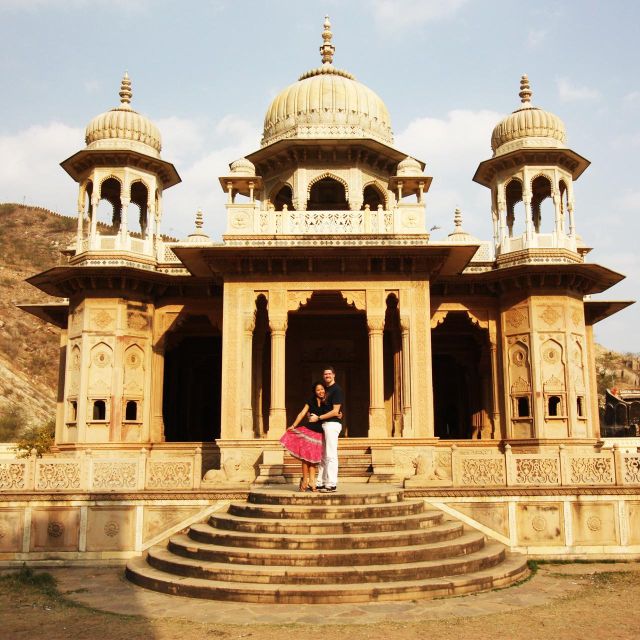
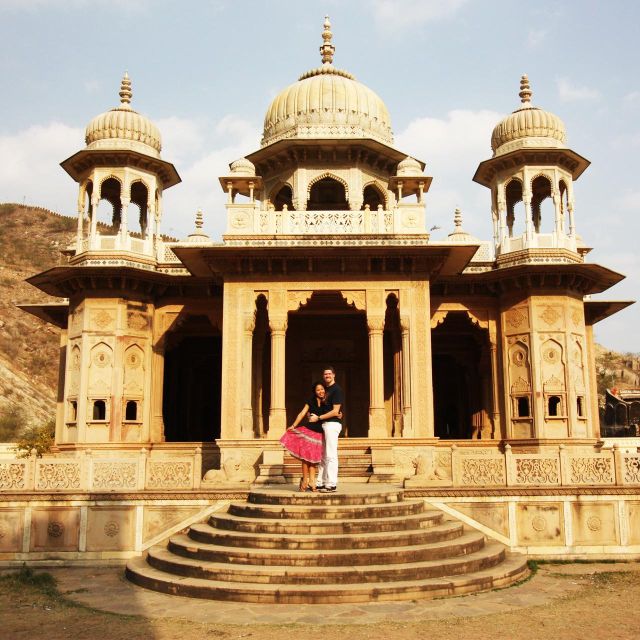
If you want a quieter stop during the day, Gaitor Ki Chhatriyan is a smart choice. People often praise this area because it feels peaceful and calm, and the pace is gentler than the most famous landmarks.
Photography-wise, it’s a place for softer compositions: structures, arches, and stone details that don’t need a huge crowd to make them interesting. Less crowd means you can wait for the light, and you’re less likely to get stuck taking photos through shoulder-to-shoulder gaps.
This stop is also close to Amber, so it fits naturally into the fort-focused portion of your day without wasting travel time.
Hawa Mahal: The Classic Exterior Shot (and How to Make It Better)
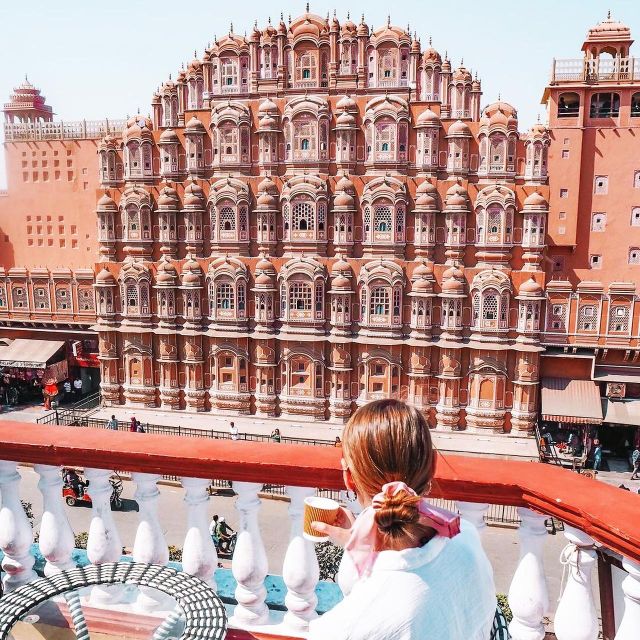
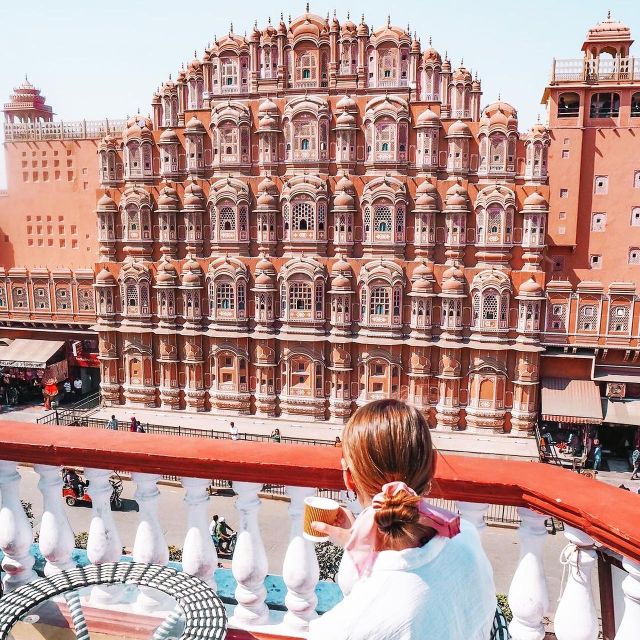
Hawa Mahal is the Palace of Winds, and it’s one of the most photographed buildings in Jaipur for a reason: it gives you a façade that turns into patterns. The tour includes a stop here with time to visit and photo, so you can take the classic exterior image and then look for variations.
Try three approaches:
- Shoot straight on for the grid-like façade look
- Shoot at an angle to add depth
- Shoot people in foreground near the windows for scale
The tour context helps you understand why the building design matters, so you’re not just photographing a pretty wall. And if you’re aiming for portraits, this area can give you those quick “standing, walking, looking” shots that look natural instead of overly posed.
City Palace and Chandra Mahal: When Jaipur Turns Blue and Gold
City Palace is where Jaipur feels royal in a way that’s easy to photograph. You’ll get time for a guided visit and walking, with photo stops that help you capture both grand room impressions and architectural details.
Chandra Mahal is especially notable for its blue-walled look. That gives you a distinct color contrast day—so if you’ve been shooting lots of sandstone tones, you’ll welcome a palette shift.
The best photos here often come from mixing views: a wider shot that shows scale, then close-ups of textures or doorways. Since the tour includes guided time, you can ask questions that help you spot details you might miss on your own.
Jantar Mantar: Astronomy Instruments You Can Photograph Like Sculpture
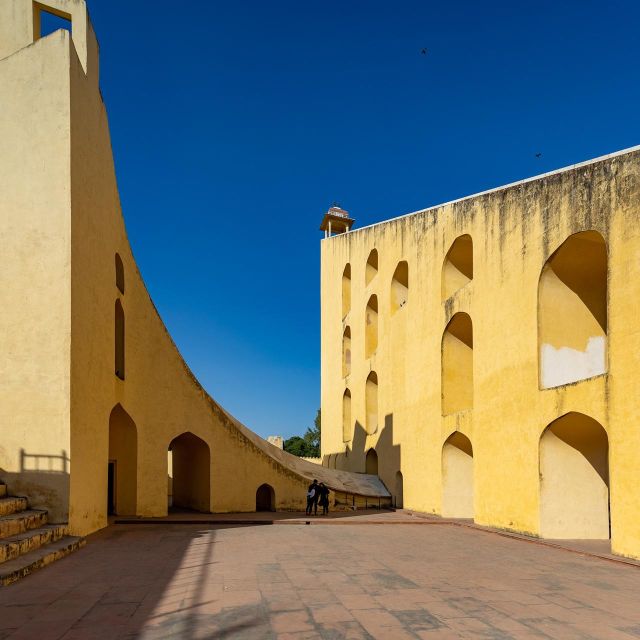
Jantar Mantar is not just a landmark—it’s an architectural toolset. The big feature is the world’s largest sundial, but the real photo value is that you’re photographing giant instruments. They feel like science objects, but they’re also built like public art.
You’ll have guided time and a full hour to work the angles. This is where patience pays off. Try shooting from slightly different perspectives to see how the structure shapes space, then add people for scale so your photo tells a fuller story.
If you like architecture photography, this stop is a strong anchor in the itinerary because the shapes hold up even when light isn’t perfect.
Albert Hall Museum: Royal Architecture and Night-Light Possibilities
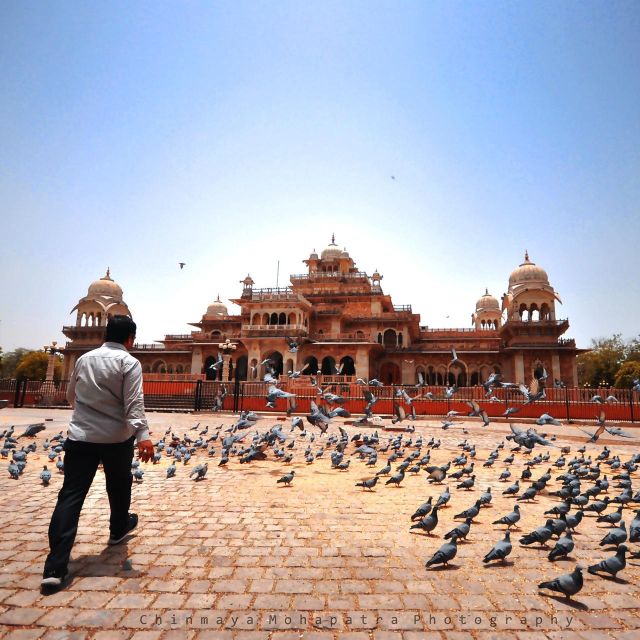
Albert Hall Museum is praised for its royal-themed architecture and strong photo potential. The tour includes a stop with visit time, and it’s known for looking particularly majestic when lit with soft yellow lights at night.
That night detail matters even if you’re visiting in daytime: it tells you the building’s design works under different lighting. If your day timing allows later shots (within the tour day), keep your eye on how the façade highlights change as clouds and sunlight shift.
As a portrait backdrop, it can work well too because the structure provides a “finished” setting rather than a cluttered background.
Jaipur Bazaars and Street-Style Shots: Color, Fabric, and People
This is the part of the day that makes your photos feel like Jaipur and not just a list of monuments. You’ll have time for walking and shopping, and the focus can shift to street-style: colorful stalls, traditional items, and market texture.
Some people also love pairing bazaar time with small “break moments”—like chai and casual browsing—so the day doesn’t feel like constant shooting. If you’re shopping for textiles or small items, this is where your photos can also show what you bought, not just what you saw.
One heads-up from a less happy experience: some tours can spend extra time in sales-focused stops. If you want a photography-first day, tell your guide plainly that you want minimal shopping time and maximum shooting time, especially at the start of the day.
Price and Value: Why $9 Can Be a Bargain (With One Caveat)
At around $9 per person for a 10-hour private day, the value is the headline. You’re getting pickup and drop, a private guide for heritage and history context, mineral water, and transport by car or tuk-tuk. That’s a lot of real-world support for a low listed price.
The caveat is straightforward: entrance fees to monuments and any meals aren’t included. So your final cost depends on what tickets you need and whether you plan to buy lunch or snacks during the route. Also, if you want private moments that aren’t time-boxed, you should be aware that the stops are built into a schedule.
My take: this tour is a great fit if you want an efficient photography route with local guidance and you’re comfortable handling entrance tickets yourself.
Who This Tour Suits Best
This is ideal for:
- People who want Instagram-style results but also want cultural context, not just photos
- Families or small groups who benefit from private transport and a flexible guide
- Travelers who can walk moderately and wear comfortable shoes
If you’re a serious photographer, you’ll appreciate the variety—corridors, stepwells, fort courtyards, astronomical instruments, and street markets. If you hate being rushed, your best move is to spend the first stop clarifying your priorities so the guide can pace the day accordingly.
Practical Tips Before You Go (So Your Photos Don’t Suffer)
Here’s what will make the biggest difference:
- Bring a camera you actually use, plus a charged power bank if you shoot often
- Wear comfortable shoes, since there’s a moderate walking load throughout the day
- Follow the smart-casual dress guidance, and skip short shorts or sleeveless tops at temples
- Leave big luggage behind, since large bags aren’t allowed on the tour
Also, keep a simple plan for the day: shoot wide first to lock in the landmark, then switch to details and portraits. It reduces the stress of decision-making while you’re on the move.
Should You Book This Jaipur Instagram Photography Tour?
Book it if you want a photo-first, private Jaipur day that covers major landmarks plus less crowded angles, with a guide helping you frame shots. The low price can feel almost unreal given the transport and guided stops—just budget extra for entrance fees and food.
Skip or reconsider if you want a strictly no-shopping day and you dislike sales detours. In that case, message ahead with a clear request for photography time priority. Also confirm your preferences for tuk-tuk vs car based on your group’s comfort.
If your goal is a great mix of iconic Jaipur views and practical photo help in one day, this is a strong bet.
FAQ
What’s the duration of the tour?
The tour lasts 10 hours.
Is pickup and drop-off included?
Yes. Pickup and drop-off are included from the hotel, airport, railway station, or other desired location in Jaipur.
What transportation options are available?
You can travel by private tuk-tuk or by private car with a driver (car option is available).
Are entrance fees included for the monuments?
No. Entrance fees to monuments are not included.
Is lunch included?
No. Any meal or lunch is not included.
What’s the language of the guide?
The guide is available in English, French, German, Italian, or Spanish.
Is the tour private or shared?
It’s a private group tour.
What should I wear for temples?
Smart casual is recommended, and short shorts or sleeveless tops are not recommended for temples.
Are there restrictions on luggage or items?
Pets aren’t allowed, and luggage or large bags aren’t allowed.