REVIEW · JAIPUR
Jaipur: Instagram Tour of The Top Photography Spots
Book on GetYourGuide →Operated by Jaipur tour taxi cab · Bookable on GetYourGuide
Jaipur, but make it photogenic. This 8-hour private photography tour in Rajasthan strings together the city’s best photo viewpoints with comfortable, air-conditioned transport and a chauffeur to keep the day moving. You’ll hit famous landmarks like Hawa Mahal and Amber Fort, plus quieter spots that are great for catching color and light.
I like the way this tour is built around making images, not just sightseeing. Guides (I’ve seen names like Neeraj, Khalid, Baba, Raj, Janid, and Salman) tend to bring both history context and practical photo ideas, so your pictures come out more intentional, not random.
One possible drawback: with so many stops packed into one day, some visits are brief. If you want slow wandering and lots of time at a single site, you may feel a bit rushed, especially during peak hours.
In This Review
- Key highlights worth planning for
- The real point of an Instagram tour in Jaipur
- Patrika Gate to Jawahar Circle Park: start strong with color and carvings
- Birla Mandir and the Albert Hall pairing: architecture with contrast
- Hawa Mahal: where close details beat one perfect shot
- Pink City streets and the City Palace complex: frame the setting, not just the sights
- Jantar Mantar and the science-meets-stone look
- Jal Mahal (Water Palace): shoot it from the road, then breathe
- Gaitor Ki Chhatriyan and the fort finale: details then grandeur
- Lunch, shopping, and using downtime for better photos
- What the $30 price really means for value
- Comfort, pacing, and what to expect from your driver
- Who this tour is best for (and who should skip it)
- Should you book this Jaipur photography tour?
- FAQ
- How long is the Jaipur Instagram photography tour?
- What is included in the price?
- Are entrance fees included?
- Is this a private tour?
- What language is the driver?
- Do you provide pickup from the airport or railway station?
- Is cancellation free?
Key highlights worth planning for
- Photo-first route that hits the city’s most camera-friendly landmarks in one go
- Private car with a chauffeur plus pickup and drop-off from your hotel/airport/railway
- English-speaking driver and guides who focus on both framing and explanations
- Classic Jaipur backdrops like Patrika Gate, Albert Hall, Jantar Mantar, and City Palace
- Fort-and-palace payoff with Amber Fort, Panna Meena ka Kund, and Hathi Gaon
- Built-in downtime for lunch and shopping so the day doesn’t feel constant sprinting
The real point of an Instagram tour in Jaipur
Jaipur can be a lot. Big distances, lots of traffic, and crowds that show up right when the light gets good. This is exactly why an organized private photography tour works so well here: you get a driver to handle the logistics while you focus on the frames.
The day mixes show-stopper landmarks with practical photo stops. Patrika Gate gives you a strong opening. Albert Hall and Ram Niwas Garden offer a calmer, garden-and-architecture vibe. Then you swing back into postcard territory with Hawa Mahal, Jantar Mantar, the City Palace area, and finally the Water Palace view at Jal Mahal. It’s a smart way to cover more in less time without turning the day into chaos.
You can also read our reviews of more tours and experiences in Jaipur.
Patrika Gate to Jawahar Circle Park: start strong with color and carvings
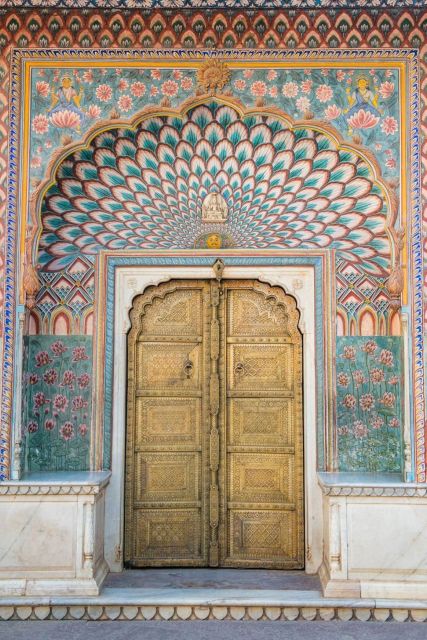
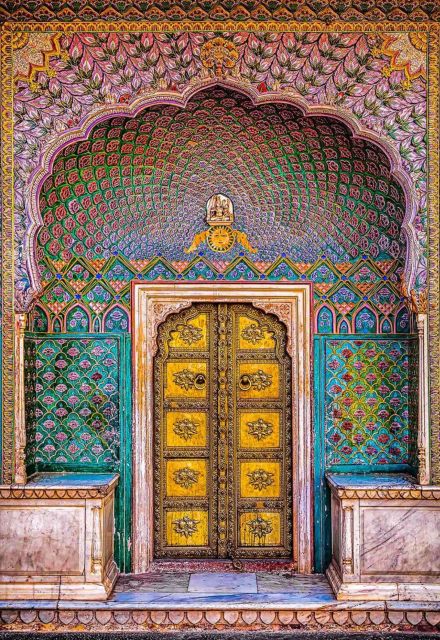
Most people race straight for the headline monuments. This route starts at Patrika Gate, the entrance to Jawahar Circle Park, because the gate itself is a photo magnet. Expect vibrant colors, detailed carvings, and a dramatic architectural look that photographs well from multiple angles.
You’ll get a walk time here, which is important. Jaipur photography isn’t just about facing the building. You’ll want to try a few perspectives—wide shot first, then move closer to catch the textures. If you come in with an idea of what you want (facade details, symmetry, or people in the scene), this early stop is a great place to set your style.
Birla Mandir and the Albert Hall pairing: architecture with contrast
Next up is Birla Mandir inside the Pink City area. This stop is useful because it changes the mood. Instead of only chasing huge facades, you get more of a temple-and-city atmosphere that can produce cleaner, more intimate compositions—especially when the light softens.
Then you move to Albert Hall Museum, often seen as Jaipur’s grand museum building. You’ll likely appreciate two things here:
1) the backdrop is strong, so your photos don’t rely on props
2) the setting adds context, since you’re in a formal garden area outside the city wall
Ram Niwas Garden is a welcome reset. It’s a place where you can pause, look at the building again, and shoot a few more frames without the pressure of constant movement. Indo-Saracenic style may sound like a textbook term, but in real photos it means: lots of shapes, lines, and texture that catch light.
Hawa Mahal: where close details beat one perfect shot
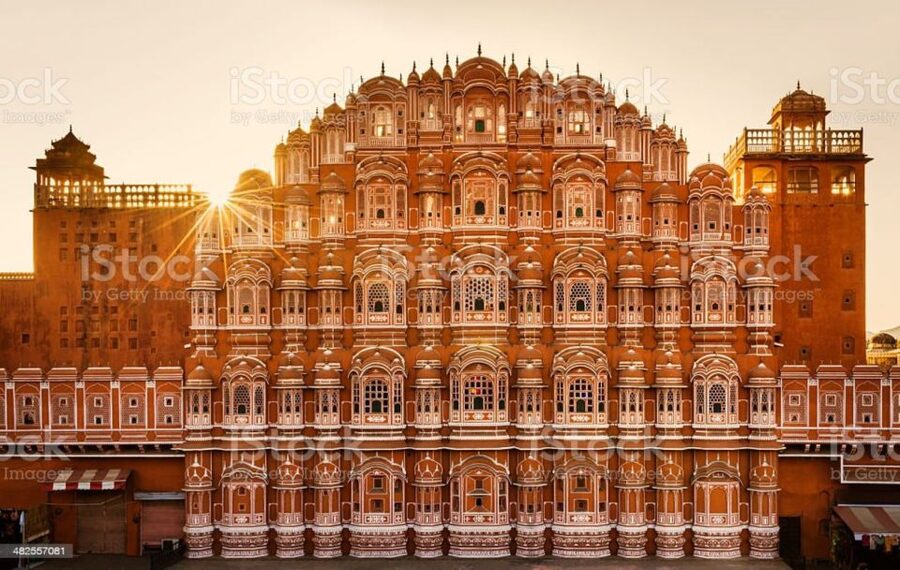
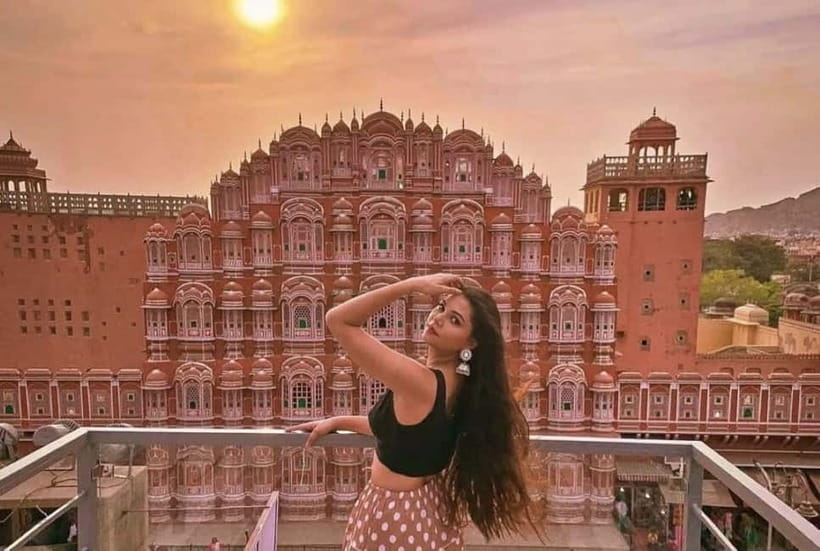
If you’re aiming for Instagram-style images, Hawa Mahal is non-negotiable. This palace-from-afar landmark is one thing, but the real photo opportunity is in the facade details: the jharokhas and the rhythm of the windows. From different angles, you’ll see light and shadow change across the surface.
You’ll have time for a photo stop and also a guided visit. That helps because the story matters with this building. Knowing it was built in the 18th century by Rajput King Sawai Pratap Singh makes your photos feel more grounded than just pretty architecture.
Practical tip: shoot wide for the full impact, then go tighter for window patterns and textures. The best Hawa Mahal photos usually aren’t only the iconic wide view.
Pink City streets and the City Palace complex: frame the setting, not just the sights
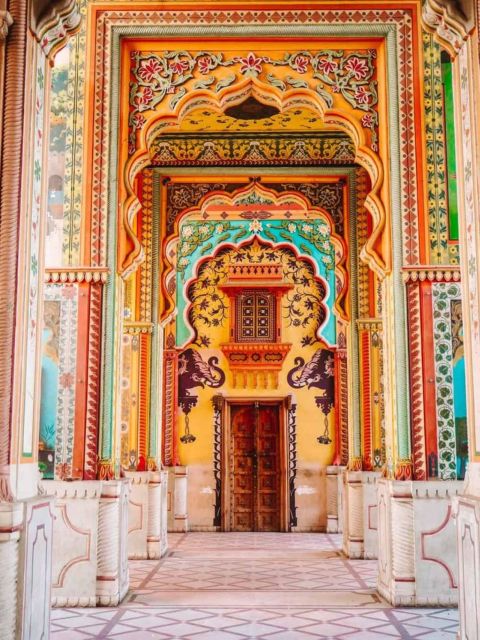
You’ll spend time in the Pink City area with photo opportunities and guided context. This is where your pictures can shift from “landmark hunting” to “place storytelling.” Look for small scenes that show color, walls, signage, and everyday movement. In a city like this, those details make the photos feel lived-in.
Then comes the City Palace complex, which spreads across courtyards and buildings with galleries, restaurants, and museum trust offices. The good news for photographers: courtyards and transitions naturally create layers, which makes images more interesting than a single-front facade.
A reality check: with a packed schedule, you may not see every corner. So choose your priorities ahead of time—wide interior courtyards, ceiling/arch details, or balcony-like views—then give your eyes permission to stop chasing everything.
Jantar Mantar and the science-meets-stone look
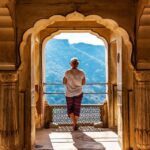
Jantar Mantar is your reminder that Jaipur isn’t only about palaces. It’s also about measurement, astronomy, and royal engineering. It was constructed by Maharaja Jai Singh of Jaipur in 1724, and that date gives the place a serious backbone.
This stop is fantastic for photos because the shapes are bold and graphic. Even if you’re not a science person, the structures read well in pictures: angles, circles, and repeating forms. If your guide is the hands-on type (names like Khalid and Neeraj come up for a reason), you’ll likely get useful explanations that help you photograph with intent—what to line up, where to stand for the clearest view, and how to frame the instruments.
Jal Mahal (Water Palace): shoot it from the road, then breathe
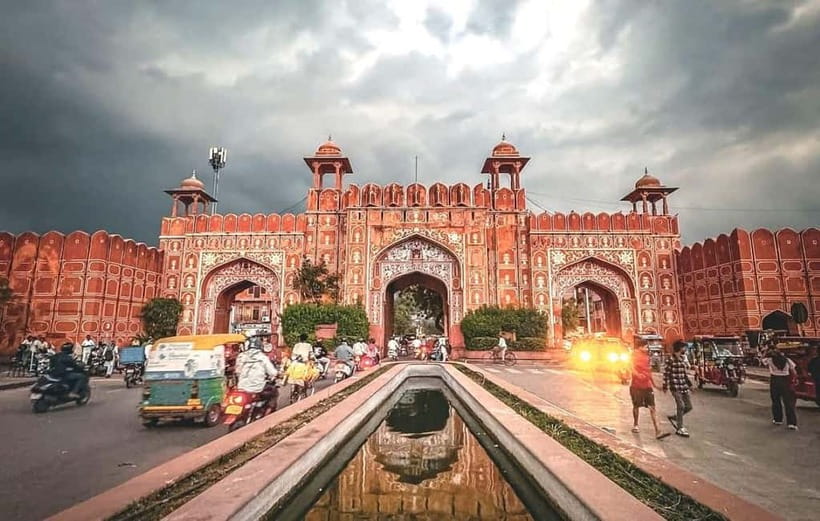
Jal Mahal sits in the middle of Man Sagar Lake. The Water Palace is one of those “how is that even here?” landmarks, and photos tend to look best from staying points along the roadside.
You’ll have chances for amazing pictures with the palace in the background and hills layered behind it. This is a good moment to slow down because the scene is naturally cinematic. Use the time to try:
- a wider shot that includes lake + sky
- a tighter shot that isolates the palace silhouette
- a low-angle perspective if the staying point allows it
Don’t overthink it. This is one of those places where the view does half the work.
Gaitor Ki Chhatriyan and the fort finale: details then grandeur
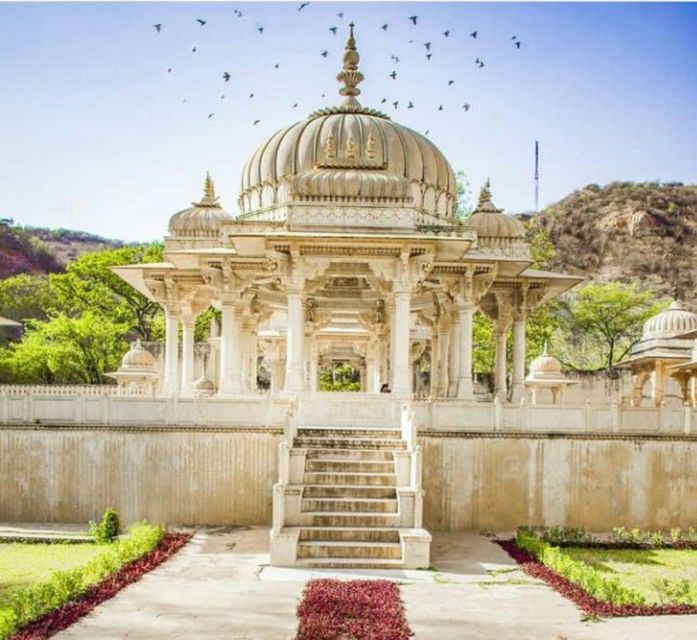
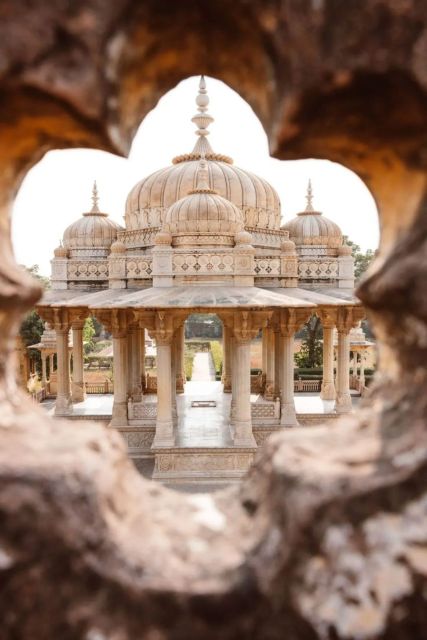
After the big-city monuments, you’ll stop at Gaitor Ki Chhatriyan for photo opportunities and a shorter visit. This is the kind of place that can add variety to your collection. Instead of only chasing the most famous symbols, you get more of those sculpted, memorial-style structures that photograph beautifully when the light hits the stone.
Then the day turns toward the bigger experience: Amber Fort. This is where you’ll likely feel the time difference. You’ll have a guided visit, sightseeing time, and a walk session that lasts longer than several earlier stops. For photography, forts offer layers—walls, courtyards, gates, and views over the surrounding area.
Two bonus stops make this section even stronger:
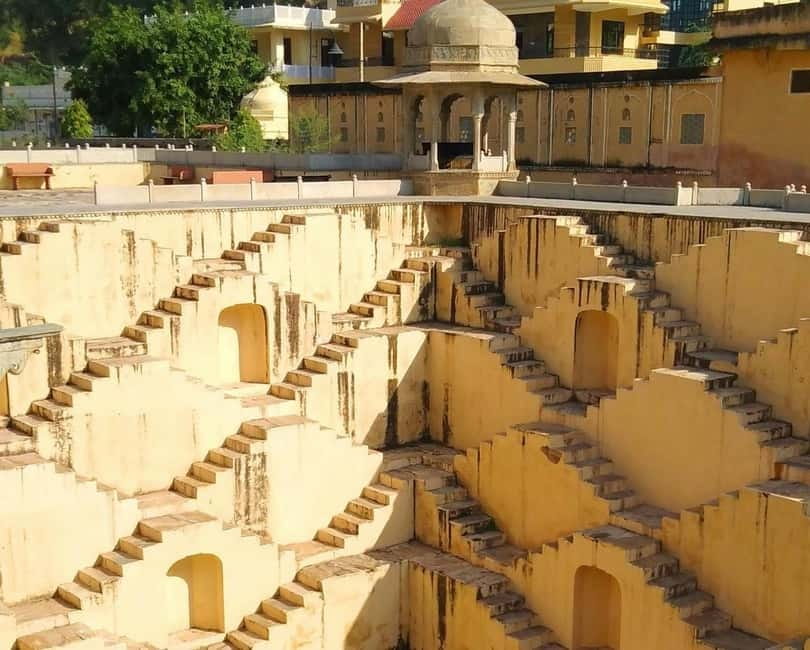
- Panna Meena ka Kund (a stepwell stop) is short, but it can produce strong geometry shots if you’re ready to frame quickly
- Hathi Gaon gives you another scene change and an extra hour to work your camera angles
If you only care about the headline sights, Amber Fort can be your whole trip. If you like variety, this final stretch is where your photo set stops looking repetitive.
Lunch, shopping, and using downtime for better photos
Not every stop is a monument. You’ll get break time for lunch and some free time, plus a shopping window with an arts and crafts market visit.
I like downtime here because it keeps you sane. You’ll want a moment to check your photos, wipe your lens, and decide what you still want. During free time, you can also look for small craft shops or street textures that add variety to your feed.
If shopping isn’t your thing, treat that hour as a practical reset. Wear comfortable shoes—Jaipur isn’t the place for rigid footwear when you’re walking between spots and climbing a few steps along the way.
What the $30 price really means for value
At $30 per person for an 8-hour private tour with an air-conditioned vehicle, chauffeur, bottled water, and taxes covered, the value is mostly about time and convenience. In cities like Jaipur, self-guided touring can get expensive fast once you factor in taxis, waiting time, and the stress of navigating traffic while still trying to hit the right photo spots.
Where this price helps most:
- You don’t waste time coordinating transport between far-apart sights
- You get a driver to manage fuel/parking/toll logistics
- You get a plan that’s already grouped around viewpoints and key landmarks
What you should budget for separately:
- Entrance fees may be required for places where they aren’t included
- Meals aren’t covered
- Souvenir photos (if offered) are not included
So think of this as a transport-and-guiding package for photo-heavy days. Pay for what you get: time, structure, and help framing your shots.
Comfort, pacing, and what to expect from your driver
You’ll travel in a private vehicle with air-conditioning and a chauffeur. The driver is English-speaking, and the tour is private, meaning you’re not stuck sharing space with strangers who want different things from the day.
The best part of a private setup is flexibility. The tour notes that it can be tailored to your comfort, so if you want to linger at Hawa Mahal longer for better light or speed up through a stop, you can usually ask.
Pacing matters. Because it’s one day with multiple major sights, you should come with realistic expectations: you’ll see a lot, but you won’t have a whole afternoon at every location. If your goal is the maximum number of high-quality images, this pace fits. If your goal is slow travel with deep exploration, consider saving some sights for a second trip.
Who this tour is best for (and who should skip it)
This tour fits you best if you want:
- a one-day Jaipur photography plan that prioritizes camera angles
- a driver who handles the route so you can focus on shooting
- guides who bring both context and practical ideas (I’d look for the kinds of support people reported from Neeraj, Khalid, and Baba)
You might want a different approach if:
- you hate moving every hour or two
- you prefer long museum time over quick photo stops
- you’re traveling with someone who isn’t into photography and wants slow pacing at every stop
Should you book this Jaipur photography tour?
I’d book it if you’re doing Jaipur on a short schedule and want photos that look like you planned them, not like you rushed them. The combination of private air-conditioned transport, classic Jaipur landmarks, and helpful guiding makes the day feel efficient without feeling cheap.
Before you click confirm, double-check two practical things:
- Entrance fees and meals aren’t listed as included, so plan for those costs
- The day is busy, so wear comfortable shoes and bring a fully charged phone/camera
If you’re flexible and want a structured way to hit the biggest photo moments—Patrika Gate, Hawa Mahal, Jantar Mantar, Amber Fort, and more—this is a strong choice for value and results.
FAQ
How long is the Jaipur Instagram photography tour?
It lasts 8 hours.
What is included in the price?
Pickup and drop-off from your hotel/airport/railway station, a private air-conditioned vehicle with a chauffeur, fuel/parking/tolls, bottled water, and all government taxes (including GST).
Are entrance fees included?
Entrance fees are not included if they are needed for places not covered by the package.
Is this a private tour?
Yes, it’s a private group tour with a private vehicle.
What language is the driver?
The driver is English-speaking.
Do you provide pickup from the airport or railway station?
Yes. The driver can pick you up from the airport/railway station and will wait with a sign with your name.
Is cancellation free?
Free cancellation is available up to 24 hours in advance for a full refund.