REVIEW · NEW DELHI
Heritage Delhi Photography Walk (2 Hours Guided Walking Tour with Rickshaw Ride)
Book on Viator →Operated by Yo Tours · Bookable on Viator
Delhi turns your camera into a compass. This heritage photo walk is a tight route through Safdarjung Tomb and the Lodhi area, plus a cycle rickshaw hop between stops, so your photos don’t feel like a checklist. I like how the guidework focuses on practical timing and photography tips, including advice from guides such as Saumya to chase golden hour and plan for night illumination.
One thing to watch: entrance tickets aren’t included for the historical sites, so your final spend depends on what you choose to enter. There’s also no hotel pickup or drop, and it’s not an air-conditioned ride since most of the time you’re walking.
In This Review
- Key highlights to know before you go
- Why This 2-Hour Heritage Photo Walk Makes Sense
- Price and Logistics: What $18.62 Really Covers
- Starting at Safdarjung Tomb: Finding the Group Fast
- Stop 1: Safdarjung Tomb for Architectural Photos and Big-Mausoleum Drama
- Stop 2: Lodhi Garden for Trees, Flowers, and Tomb Details
- Lodhi Art District: Street Art Themes That Break Up the Past
- The Cycle Rickshaw Ride: Fun Transport and a Photo Break
- The Guide Experience: Friendly Storytelling Plus Shot Advice
- Photo Tips You Can Use Immediately (Even If You’re Not a Pro)
- Who This Tour Fits Best
- Weather Matters Here
- Should You Book This Heritage Delhi Photography Walk?
- FAQ
- How long is the Heritage Delhi Photography Walk?
- How much does the tour cost?
- Are entrance fees included for Safdarjung Tomb or other sites?
- What’s included in the tour besides the guide?
- Where does the tour start and end?
- What’s the group size limit?
- What happens if the weather is poor?
- FAQ
- Do I need hotel pickup or drop?
- Can most people participate?
- Is cancellation free?
- Do guides speak English?
- Is the cycle rickshaw part of the itinerary?
- Do I get confirmation after booking?
- Is the tour limited to one specific photography style?
Key highlights to know before you go
- Cycle rickshaw between sights: a classic Delhi-only transport moment that also breaks up the walking
- English-speaking storytelling: guides explain what you’re seeing in plain language
- Golden-hour photo guidance: time it right for better light, like Saumya’s tips
- Safdarjung Tomb framing: a late-18th-century mausoleum setting for strong architectural shots
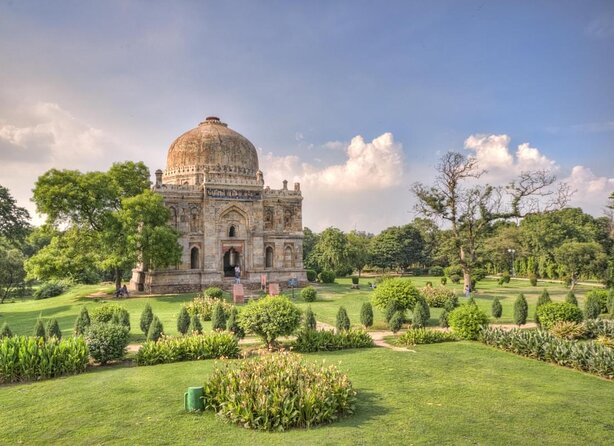
- Lodhi Garden variety: trees, flowers, and tombs in one photo-friendly green pocket
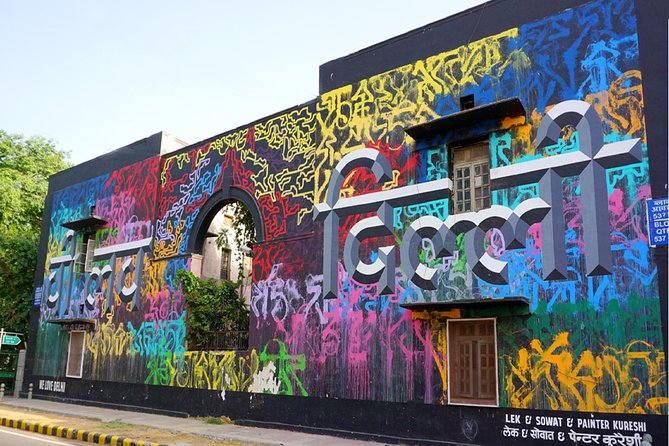
- Lodhi Art District wall art: graffiti themes that range from nature to life and death
Why This 2-Hour Heritage Photo Walk Makes Sense
This is the kind of tour that respects your time. In about 2 hours, you get three concentrated photography zones in the New Delhi area, without the long transfers that often drain a first photography day.
I also like that it’s not only monuments. The route mixes heritage architecture and contemporary street art, so your photos come out with more personality than a straight “temple-and-more-temples” outing. Add a small group size (maximum 12), and you can actually ask questions instead of shouting over a crowd.
The main tradeoff is obvious: it’s a walking tour. If you’re expecting lots of deep downtime, you might find the pace brisk.
You can also read our reviews of more tours and experiences in New Delhi.



Price and Logistics: What $18.62 Really Covers
The price is $18.62 per person, and that’s fairly easy to justify for a guided photo walk. You’re paying for the guide, the route planning, and the photography coaching—plus the cycle rickshaw ride between sights.
What’s not included is just as important. Admission tickets to historical sites aren’t included, including Safdarjung Tomb. So when you budget, assume you’ll likely pay one or more site entries on top of the tour price.
A couple practical notes:
- There’s no air-conditioned vehicle since the experience is mostly walking and cycling by rickshaw.
- There’s no hotel pickup or drop, so you’ll want to get yourself to the start point in good time.
- You’ll receive a mobile ticket, which is convenient for last-minute details.
Starting at Safdarjung Tomb: Finding the Group Fast
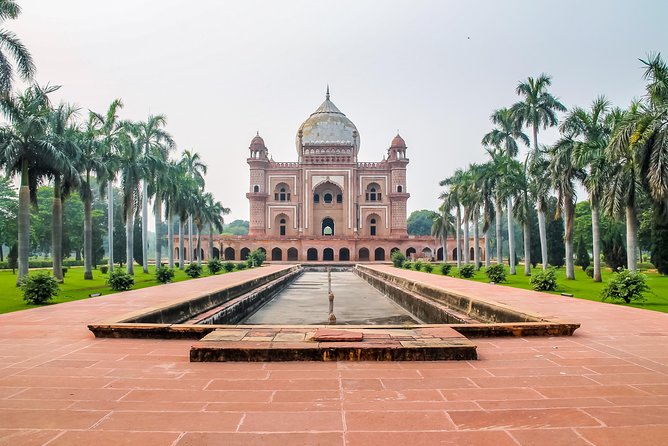
The tour starts at the Safdarjung Tomb ticket counter near Airforce Golf Course, Delhi Race Club (meeting point listed in maps as H6Q6+WR5). This is one of those meeting spots that works well because you’re starting at a place that’s already photogenic and easy to orient around.
Your ending point is at Lodhi Gardens, specifically near the Lodhi street art street. That matters because it means you’re not sent back to where you began—you finish where you can keep shooting on your own if you have energy (or just want to explore).
Confirmation happens at booking, so you’re not left guessing what’s going on with the time or group.
Stop 1: Safdarjung Tomb for Architectural Photos and Big-Mausoleum Drama
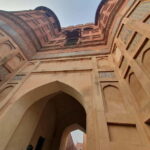
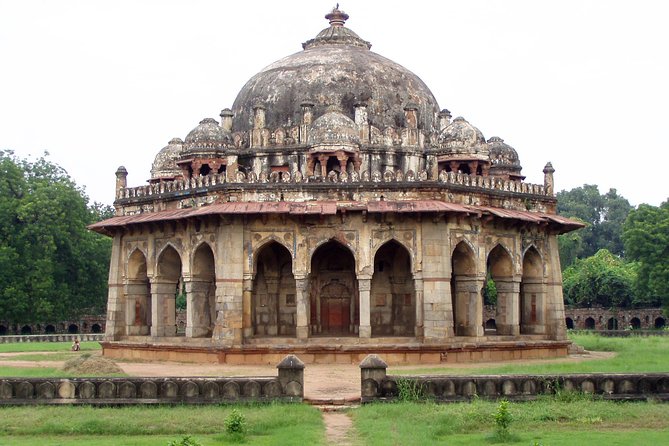
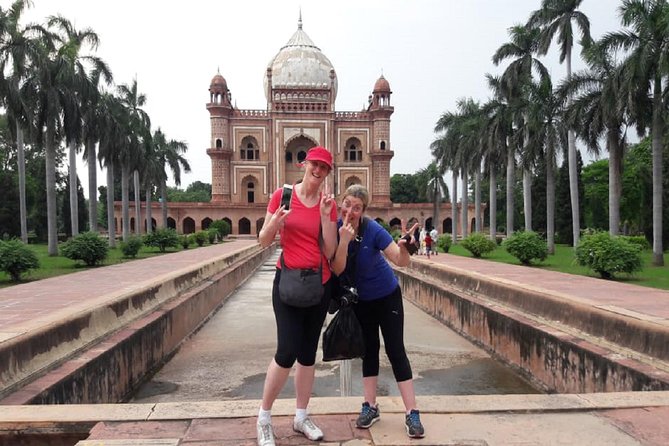
Safdarjung Tomb is your first stop, and it’s a strong choice for photography. The mausoleum was built in the late 18th century, giving you that classic Delhi monument look with enough symmetry and detail to keep your camera busy.
This is also a smart timing stop. In feedback, guides like Saumya are known for advising the best time to shoot—golden hour can make stone edges glow and shadows more readable. If you’re the type who cares about light direction, start paying attention early, because this first location sets your photo “style” for the rest of the walk.
The one drawback is cost. Entrance is not included, so you’ll decide on-site whether you want full access for interior or best angles from within.
Stop 2: Lodhi Garden for Trees, Flowers, and Tomb Details
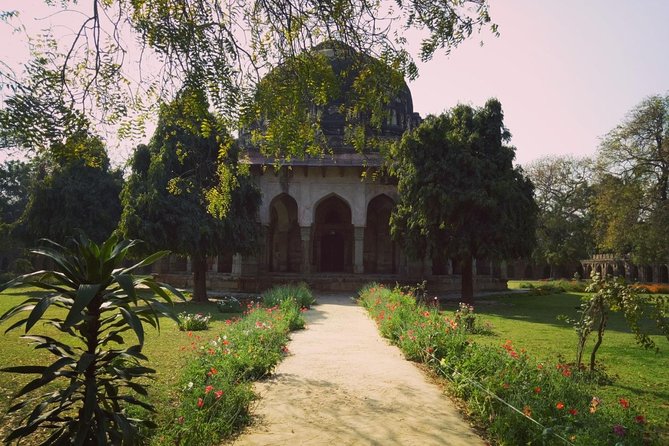
Next is Lodhi Garden, where the photos shift from heavy stone to softer texture—trees, flowers, and shaded paths. You’ll spend about 1 hour here, which is enough time to slow down and actually work on compositions instead of only snapping.
What’s especially useful for photos is that Lodhi Garden isn’t just greenery. The route includes:
- Rose Garden
- Sikandar Lodi Tomb
- Shah Sayyid Tomb
That combination gives you three different kinds of shots in one stop: color and stems, architectural forms, and historical tomb views. Even if you’re not a specialist photographer, it’s the kind of variety that helps you keep your photos from feeling repetitive.
Because the tour is designed for walking, you’ll likely be moving between viewpoints at a natural pace. If you’re someone who hates walking between photo stops, this might be the part that tests your patience. Still, the payoff is diversity.




Lodhi Art District: Street Art Themes That Break Up the Past
After the garden, you head to the Lodhi Art District, with about 30 minutes for street art. This is where the photos start looking modern and personal, and it’s a welcome contrast to tomb and garden imagery.
The street art themes can include nature and big-life concepts like the origin of the world and life and death. You don’t just get graffiti as decoration—you get wall storytelling, which is great if you like photos that feel like they mean something.
This stop also rewards different skills. If your monument photos are all about lines and symmetry, street art asks for something else: framing, background layers, and catching the right wall angle. It’s also a good time to experiment with a different lens or focal length if you’ve brought one.
Keep your expectations realistic: 30 minutes is quick. Use it to make a few deliberate shots rather than trying to photograph every wall.
The Cycle Rickshaw Ride: Fun Transport and a Photo Break
Between the sights, you’ll hop a cycle rickshaw—a classic, only-in-India transport moment. This ride isn’t just for fun; it helps you reset your body and eyes between photo zones.
I like that it also creates a natural moment for conversation. Short rides give you time to ask questions like where to stand, what angle to try, and when to shoot. It’s also a low-effort way to move through an area without feeling like you’re rushing.
One caution: the ride itself won’t be air-conditioned. If you’re visiting in hotter weather, bring water and plan for the reality that you’ll feel the sun while walking and waiting at viewpoints.
The Guide Experience: Friendly Storytelling Plus Shot Advice
This tour is built around a guide who’s more than a map holder. The experience includes highly trained, friendly guides who speak English and other languages, plus photography tips and discussions that connect heritage and modern Delhi.
The most practical part is how guides influence your timing. In feedback, Saumya is singled out for telling participants when the light would be best—golden hour for strong results—and also suggesting that the same area can look great when illuminated at night. That’s the kind of advice that makes your photos improve fast, even if you’re using a phone camera.
Another guide name that comes up is Shika, praised for helping people pick the best time too. So the guide approach seems consistent: you’re not just walking—you’re learning how to see the city with better light and better angles.
Photo Tips You Can Use Immediately (Even If You’re Not a Pro)
You don’t need a fancy kit for this tour. What you do need is a simple strategy.
Here are the photo habits that fit what the guides are doing:
- Ask about the best time at the start. If your guide offers a timing plan, follow it. Light changes everything.
- Shoot in sequences, not random singles. For tomb architecture, take a few frames from one angle, then shift position slightly for a better line.
- Watch the background. Gardens and street art both benefit from clean backgrounds—step a little to reduce clutter.
- Use shade intentionally. In a garden, shade helps skin tones and reduces harsh glare on stone and signage.
If you want to level up fast, plan to spend your best effort on one or two “hero shots” per stop, then fill in with supporting images.
Who This Tour Fits Best
This tour is a great match if you want:
- a guided day that mixes heritage sites and contemporary street art
- a small group experience (maximum 12) with room to ask questions
- practical photography tips rather than only sightseeing narration
- a classic transport moment with the cycle rickshaw
It’s also a good option for a first visit to Delhi’s central areas, because you get a feel for how different parts of the city visually talk to each other.
If you’re expecting a car-and-comfort “drive-by tour,” you might not love it. This is walking-focused, and the comfort level is basic by design.
Weather Matters Here
The experience requires good weather. If conditions are poor, you’ll be offered a different date or a full refund. That’s especially important for a photo walk, because heavy rain and low visibility can ruin both lighting and ground conditions.
If you’re flexible, pick a day that’s bright with good visibility. Even if it’s warm, clear light tends to make both stone monuments and street art look better.
Should You Book This Heritage Delhi Photography Walk?
I’d book it if you care about making your photos look intentional without spending a full day planning. The mix of Safdarjung Tomb, Lodhi Garden, and Lodhi Art District gives you variety in a short time, and the English-speaking guides bring useful shot advice—especially around the light.
Skip it only if:
- you hate walking and can’t handle a guided route on your feet
- you don’t want to pay separate entrance tickets
- you want a fully chauffeured experience with minimal effort
If you’re trying to learn how to see Delhi through a camera, this is a solid use of time—and a great way to leave the day with images that tell a bigger story than a single landmark.
FAQ
How long is the Heritage Delhi Photography Walk?
It lasts about 2 hours.
How much does the tour cost?
The price is $18.62 per person.
Are entrance fees included for Safdarjung Tomb or other sites?
No. Admission tickets for historical sites are not included, including Safdarjung Tomb, and entrances for other included sites are also not listed as included.
What’s included in the tour besides the guide?
You get a cycle rickshaw ride between sights, plus photography tips and conversations with the guide. It also uses a mobile ticket.
Where does the tour start and end?
It starts at the Safdarjung Tomb ticket counter and ends at Lodhi street art street in the Lodhi Gardens area.
What’s the group size limit?
The tour has a maximum of 12 travelers.
What happens if the weather is poor?
This activity requires good weather. If it’s canceled due to poor weather, you’ll be offered a different date or a full refund.
FAQ
Do I need hotel pickup or drop?
No. There’s no hotel pickup and drop listed. You meet at the Safdarjung Tomb ticket counter.
Can most people participate?
The info says most travelers can participate.
Is cancellation free?
Yes. Free cancellation is offered, and you can cancel up to 24 hours in advance for a full refund.
Do guides speak English?
Yes. The guide speaks English and other languages.
Is the cycle rickshaw part of the itinerary?
Yes. Hop a cycle rickshaw ride is included between the sights.
Do I get confirmation after booking?
You receive confirmation at the time of booking.
Is the tour limited to one specific photography style?
The route is designed for many kinds of shots—architecture, gardens, and street art—so it works whether you’re using a phone or a camera.