REVIEW · LONDON
Beginners Photography Course – Small Group Workshop
Book on Viator →Operated by London Photo Tours and Workshops · Bookable on Viator
Your camera stops being scary fast. This four-hour, max-six-person workshop turns basic controls into real results, with teaching that matches your camera. You’ll also walk through classic London photo spots—so the lessons stick beyond a classroom.
I love the hands-on, camera-specific tuition led by Lou, the kind where you’re not stuck translating someone else’s gear. I also like that the session builds around the three big exposure tools—ISO, shutter speed, and aperture—with short practice tasks you can repeat later.
One consideration: it’s not a sit-and-watch tour. You’ll be moving and shooting on foot for about 4 hours, so bring a charged battery and be ready to learn by doing.
In This Review
- Key Highlights You’ll Feel on Day One
- Why This Beginner Course Works in London (and Not Just Anywhere)
- What You Need to Bring (So the Tutor Can Teach Your Exact Camera)
- Meeting at London Bridge: Easy Start, Clear Flow
- Stop 1: More London and City Hall (The Real Exposure Boot Camp)
- Stop 2: Tower Bridge (Composition, Depth of Field, and Light)
- Stop 3: Tower of London Views (Lens Choices and Shutter Speed)
- How the Assignments Make Your Learning Stick
- Price and Value: Is $336.07 Worth It?
- Who This Workshop Is Best For (and Who Should Skip)
- Should You Book This Beginners Photography Course?
- FAQ
- How long is the Beginners Photography Course?
- What is the group size?
- Where does the tour start and end?
- Is instruction offered in English?
- What camera equipment do I need to bring?
- Are there entrance tickets included for the stops?
- What is included in the price?
- Is food or lunch included?
- What is the minimum age?
- Is there free cancellation?
Key Highlights You’ll Feel on Day One
- Max six people means you’re not a background character; you get attention while you troubleshoot settings.
- Teaching geared to your exact camera helps you stop wrestling with vague advice that never matches your model.
- City Hall basics in a focused 2-hour block gives you control of exposure before you point your lens at landmarks.
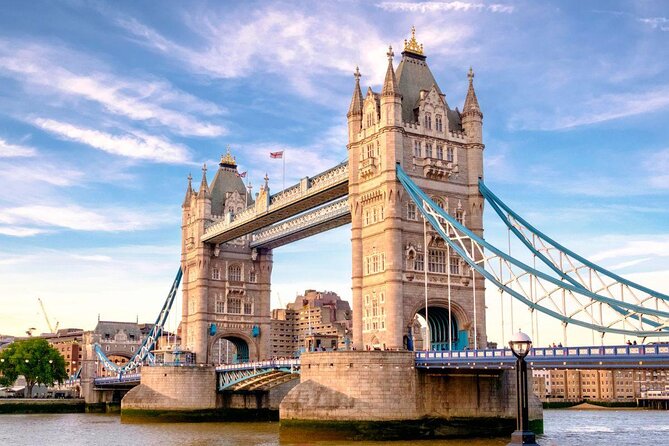
- Tower Bridge practice for composition and depth of field makes framing and focus feel practical, not theoretical.
- Tower of London stop for lens and shutter speed choices so you can handle tricky light and distance.
- Short assignments turn ISO/aperture/shutter speed from memorization into muscle memory.
Why This Beginner Course Works in London (and Not Just Anywhere)
London is full of shiny distractions. A lot of beginner classes end with you “seeing sights” and leaving with a random set of photos that look fine in bright weather and fall apart indoors or at dusk. This workshop is built to stop that pattern early.
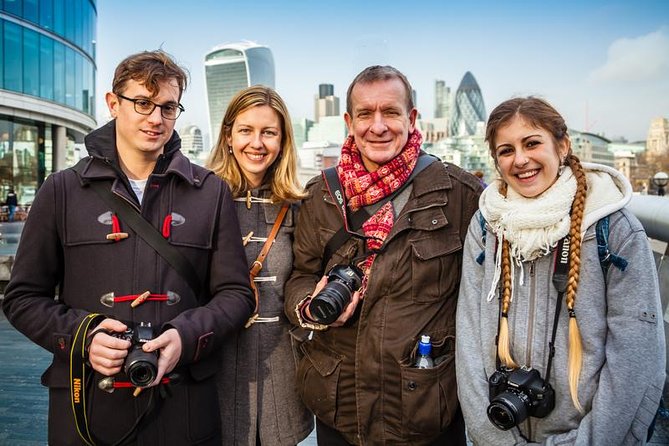
You’ll learn the fundamentals with a tutor who can handle many camera types. Then the group keeps small—up to six—so you’re more likely to get unstuck fast when your specific settings don’t behave like the tutorial video you watched.
I also appreciate that the lesson is practical. Instead of drifting through photography talk, you practice on location and learn how light and subjects change what your camera needs. That’s exactly what you’ll face when you travel.
You can also read our reviews of more tours and experiences in London.

What You Need to Bring (So the Tutor Can Teach Your Exact Camera)
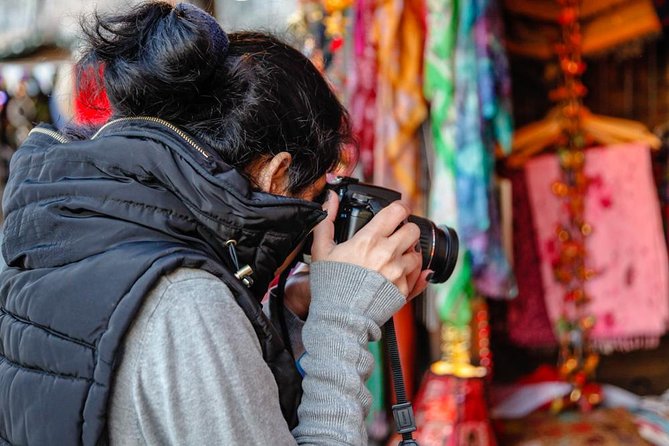
This course expects you to bring your own camera and treat it like the main character. That means a fully charged battery, spare if you have one, and memory cards. If you’ve inherited a camera or bought one used, the first part of the workshop is where things usually click—especially if you’ve been stuck in Auto or Scene modes.
You’ll also want to arrive ready to shoot, not ready to troubleshoot for the first hour. The session is short enough that you’ll get the most from it when you show up prepared and willing to experiment with settings in front of your tutor.
A useful detail: it’s offered in English, and the workshop uses a mobile ticket. If you’re juggling time zones and travel days, that makes it easier to keep your plan simple.
Meeting at London Bridge: Easy Start, Clear Flow
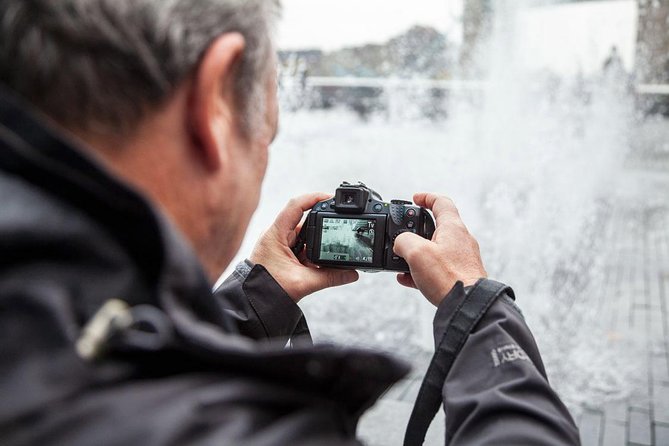
The workshop starts back at London Bridge Station area, near London Bridge Station Approach Rd (SE1 9SP). You’ll end back at the meeting point, so you’re not left navigating the city alone after you’ve learned a bunch.
Why that matters: when you’re learning camera basics, you need a calm rhythm. A straightforward start and end helps you focus on what you’re doing with the lens instead of worrying about transport, timing, or where everyone is heading next.
It’s also near public transportation, so it fits well into a normal London day. If you plan to do other things after, you’ll at least know the course doesn’t sprawl into a half-day transit project.
Stop 1: More London and City Hall (The Real Exposure Boot Camp)
Your long teaching block happens at City Hall, in the More London area. This is where beginners get the foundation that makes everything else feel logical.
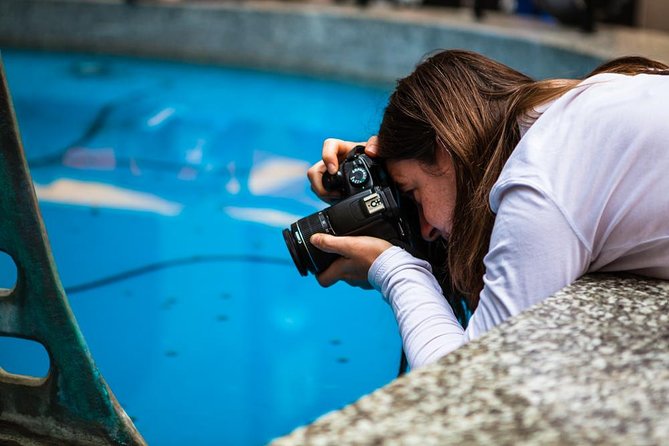
You’ll learn how to use your digital camera effectively and take control of its main functions and settings. The tutor targets the basics in a way that matches your specific model, which is a big deal. Generic tips like Set aperture to X or Use shutter speed to Y are less helpful when your camera labels controls differently or uses menus in an unexpected order.
Short assignments are part of the learning here. You’ll practice and build understanding of:
- ISO
- shutter speed
- aperture
And it’s not just “learn the terms.” The goal is that you can connect what you change to what you see. If you’ve ever wondered why your photos look too dark, too blurry, or flat, this is where you start diagnosing the cause instead of blaming yourself or the weather.
You’ll also get guidance on how to approach different subjects. That sounds broad, but on location it usually means learning how to frame, when to adjust focus, and how to make choices that lead to sharper, more intentional photos.
One helpful detail from real experiences with Lou: if your camera is behaving strangely, she takes time to help you figure it out. In at least one situation, the fix wasn’t a new camera or app—it was doing a factory reset so the device settings made sense again. That kind of support is exactly what you want in a beginner workshop.
Stop 2: Tower Bridge (Composition, Depth of Field, and Light)
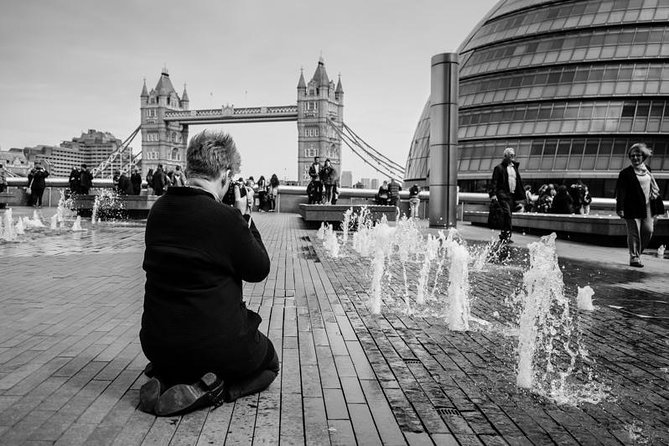
After City Hall, you head to Tower Bridge. This stop is shorter—about 30 minutes—but it’s aimed at helping you apply what you learned quickly.
You’ll photograph from across the river to capture the imposing bridge. Then the tutor works on composition and depth of field, plus how light changes what your camera should do.
Here’s what makes this part valuable: Tower Bridge is the type of subject that tempts you to just point and shoot. It has strong shapes, reflections, and distance. That makes it a great place to practice:
- composition (how you place the subject in the frame)
- depth of field (how much is sharp from front to back)
- focusing techniques and how your focus affects sharpness
- how lighting conditions shift what you should adjust
You’ll also learn practical ways to frame the shot, not just “take a nice photo.” The emphasis is on developing your eye for why one angle works better than another.
Admission at each stop is listed as ticket free, so you’re not spending time solving entry fees. It keeps the session focused on shooting.
Stop 3: Tower of London Views (Lens Choices and Shutter Speed)
Next is a 30-minute stop at the Tower of London viewpoint across the river. This is where the session tightens around how to handle distance and subject detail.
You’ll photograph the Tower of London from across the river and learn how to use light effectively. The tutor also covers lens choices, shutter speed, and composition.
Even if you think you don’t know what lens you’ll need, you can still learn a lot here. This stop helps you connect the three big exposure settings to what you’re photographing. For example, shutter speed choices can change whether motion looks crisp or blurred, and that matters when you’re shooting around water and moving crowds.
Composition also matters more at this stage because you’re dealing with a big landmark. A small change in angle can reduce distractions or highlight the subject more clearly. You’ll also get advice on how to approach different subjects, which helps when you’re later photographing things beyond London.
Again, teaching is geared to your camera. That’s key. Beginners often get stuck because they learn one method that works on a friend’s camera but not on theirs.
How the Assignments Make Your Learning Stick
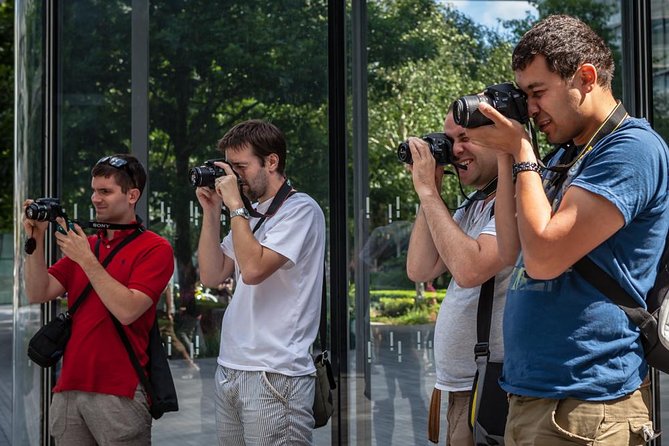
If you’ve ever taken a class and thought, Great, I understand it, and then forgot it by the next day, you’ll like how this course is structured.
The workshop uses short assignments to practice core controls. The intent is to build a repeatable loop:
1) set a camera control
2) take a photo
3) see what changed
4) adjust based on what you want
That’s the real reason the three exposure tools stop feeling like a puzzle. Instead of memorizing what ISO, shutter speed, and aperture mean, you start feeling the relationship between them.
It also helps that the group stays small. If you’re confused mid-practice, you’re more likely to get quick, specific help rather than waiting your turn.
And if you’re not the only kind of beginner, that’s fine too. The way it’s taught allows you to benefit even if you’re newer than some people in the group. You’re not expected to move at a single pace.
Price and Value: Is $336.07 Worth It?
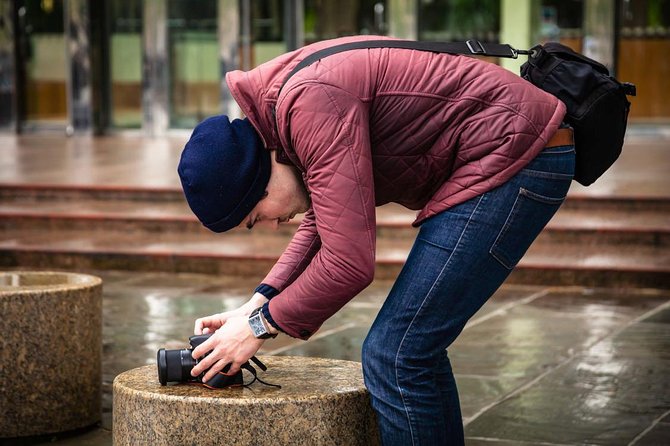
At $336.07 per person for about 4 hours, this isn’t a budget “just take photos” experience. But it isn’t priced like a full-day private lesson either.
The value comes from three things you can’t easily replicate on your own:
- Small group size (max six), which supports real feedback
- Camera-specific tuition, so you’re not stuck applying tips that don’t match your model
- Practice on location with structured assignments, which speeds up learning
If you’ve been stuck on Auto and Scene modes, this course is a shortcut to self-sufficiency. One of the biggest wins reported by beginners is that after learning the exposure basics, camera menus stop looking like random clutter. That’s not just a confidence boost—it changes the kind of photos you’ll consistently get on future trips.
Also, you’re not paying extra for food or lunch. That might sound like an extra cost you’ll handle, but it also gives you control over your schedule and where you eat later.
Who This Workshop Is Best For (and Who Should Skip)
This is best for you if:
- you’re a true beginner or you’ve only used Auto/Scene modes
- you want to understand the basics without guessing what settings mean
- you like hands-on learning, not long lectures
- you travel and want usable skills that work outside the UK too
You might want to skip or look for a different level if:
- you’re hoping for a mostly sightseeing-focused tour with minimal camera instruction
- your gear is a very unusual setup and you’re not ready to spend time identifying controls (the tutor can help, but the course is built for active use)
Because teaching is tailored to your camera, most people can participate, and the minimum age is 16.
Should You Book This Beginners Photography Course?
I think you should book it if you want fast clarity and practical results. The structure makes sense: learn fundamentals at City Hall, then test them immediately at Tower Bridge and the Tower of London viewpoint. The small group size and camera-specific instruction are the real differentiators, and those are exactly what beginners need to stop feeling stuck.
If you’re willing to experiment during the session—trying shutter speeds, ISO, and apertures while the tutor is right there—this course gives you skills you can reuse for years. Just come prepared: fully charged battery, memory cards, and a camera you’re ready to use.
FAQ
How long is the Beginners Photography Course?
The course is about 4 hours.
What is the group size?
The workshop has a maximum of 6 travelers.
Where does the tour start and end?
It starts near London Bridge Station Approach Rd (SE1 9SP) and ends back at the same meeting point.
Is instruction offered in English?
Yes, the tour is offered in English.
What camera equipment do I need to bring?
Bring your own camera with a fully charged battery and memory cards (spare battery if you have one).
Are there entrance tickets included for the stops?
Each stop is listed as Admission Ticket Free, and the tour includes a photography walking tour approach.
What is included in the price?
A professional photographer with extensive teaching experience is included, along with expert and experienced tuition for the walking tour.
Is food or lunch included?
No, food and drinks and lunch are not included.
What is the minimum age?
The minimum age is 16 years.
Is there free cancellation?
Yes, free cancellation is available up to 24 hours in advance for a full refund.