REVIEW · BARCELONA
Barcelona: Private Phone Photography Class – Park & Old Town
Book on GetYourGuide →Operated by Nostos Tours · Bookable on GetYourGuide
Your iPhone is about to behave. This private Barcelona class turns your camera from point-and-pray into intentional shots, with real practice starting at Arc de Triomf. You’ll learn how to frame and position shots like a photographer, guided by Onno, an expert teacher who’s also a Barcelona tour guide.
I especially like the focus on framing and positioning, not confusing camera menus. I also love the practical “zoom-magic” approach, so you can get dramatic results without needing technical settings. You’ll leave knowing how to plan shots and then nail them on the sidewalk.
One thing to consider: while it works with many phones, it’s better matched to iPhones and higher-end Androids, so you may see the biggest results if your device is newer or more capable.
In This Review
- Key things you’ll get from this class
- Why this Barcelona phone class works (and doesn’t waste your time)
- Meeting under Arc de Triomf: the framing and positioning mindset
- Parc de la Ciutadella: fountain scale, mammoth sculpture, and zoom-magic
- El Born medieval streets: architecture, people, and courtyard shots
- Posing and getting better portraits without becoming a model
- Simple phone editing: the final touch that makes shots feel finished
- Price and value: is $94 per person worth it?
- Who this class suits best (and who might want something else)
- A practical way to get the most out of your 2 hours
- Should you book this private iPhone photography class in Barcelona?
- FAQ
- Where do we meet for the Barcelona phone photography class?
- How long is the experience?
- What language is the instructor?
- Do I need to bring a camera?
- What should I bring with me?
- Is this class only for iPhones?
- What stops will we photograph during the class?
- Is the experience wheelchair accessible?
- Is there free cancellation?
- Is there a way to reserve without paying right away?
Key things you’ll get from this class
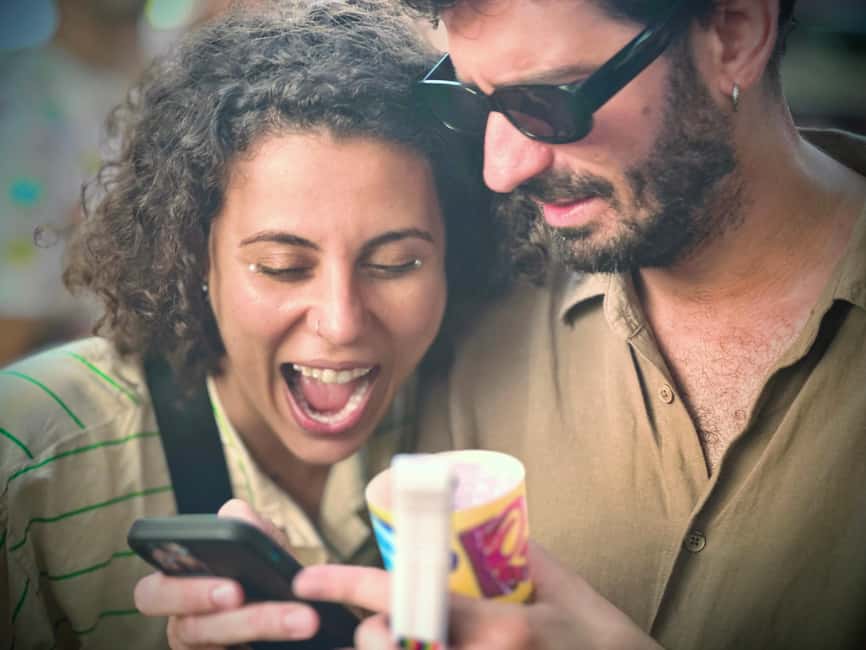
- A private, 2-hour lesson designed to improve your photos quickly
- Framing practice on real Barcelona spots, not a classroom demo
- Zoom-magic tricks to create surprising perspectives with your phone
- City park + Old Town variety, from Ciutadella’s big scenes to El Born’s medieval lanes
- Easy editing on your phone plus a simple approach to finishing shots
Why this Barcelona phone class works (and doesn’t waste your time)
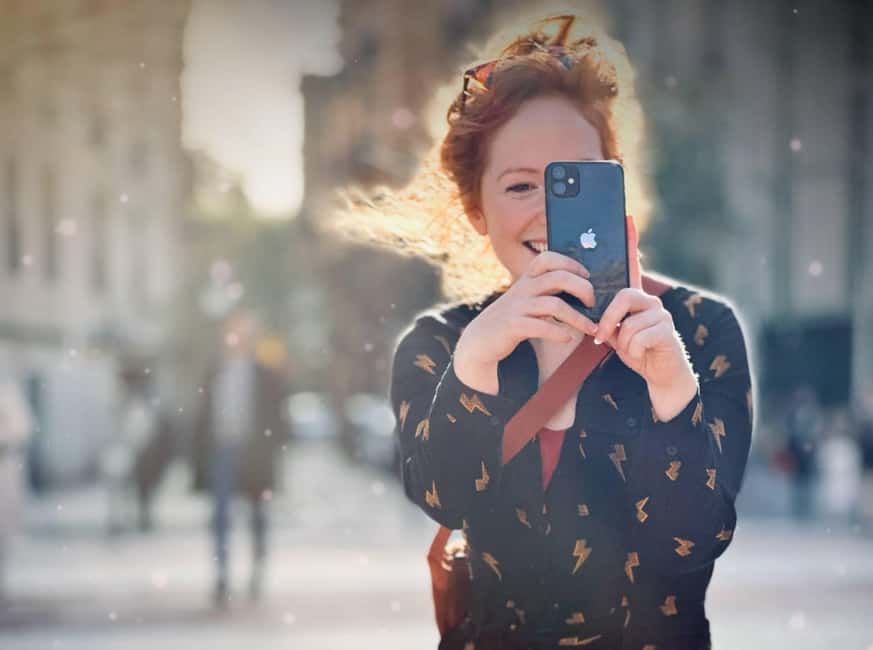
If you’ve ever looked at your own photos and thought, why does it look so flat in real life? this course is built to fix that. It’s not a staged photo parade. It’s a hands-on class where you’ll be nudged, corrected, and coached as you shoot.
The big win is that you learn the parts that actually change a photo: where you stand, how you aim, how you crop, and when to use your camera’s features. You also get taught like a photographer, not like someone reading a checklist off a screen.
And because it’s private, you’re not stuck copying what someone else is doing. You can ask why a shot works, and you can try again right away.
You can also read our reviews of more tours and experiences in Barcelona.


Meeting under Arc de Triomf: the framing and positioning mindset
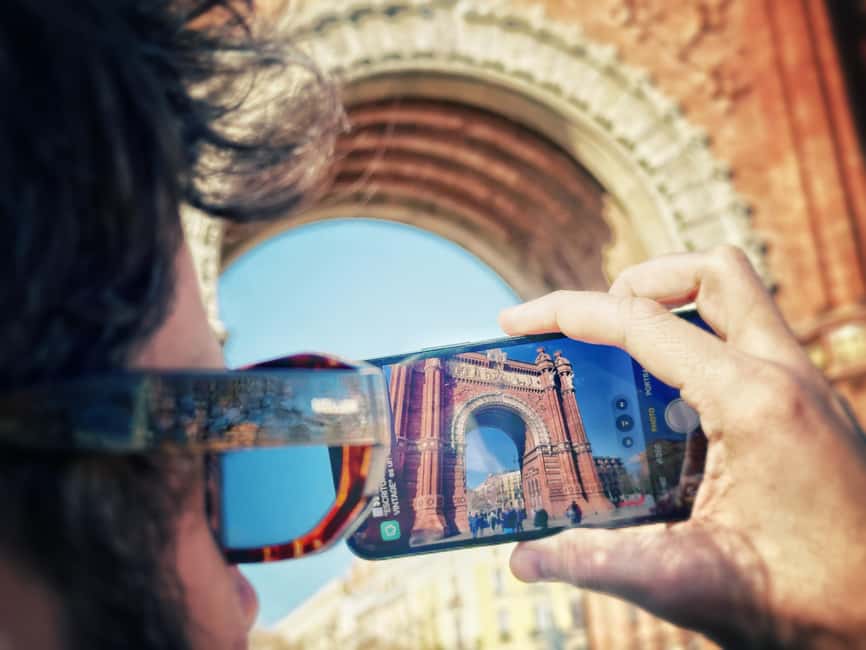
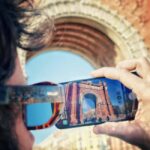
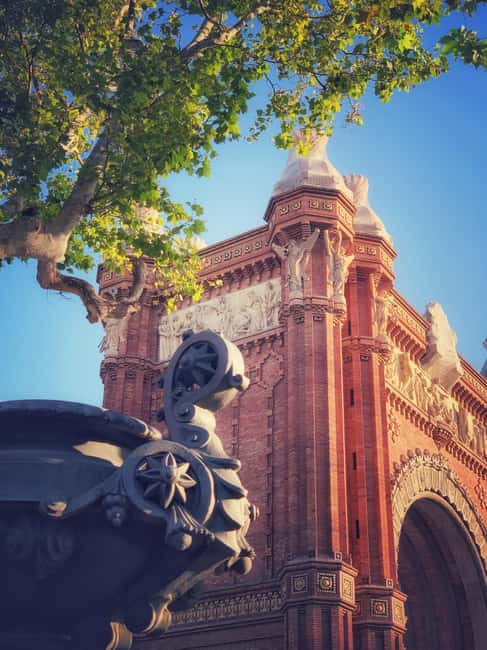
You’ll meet your guide under the arch at Arc de Triomf, at a spot marked by a white umbrella. It’s a great starting point because it’s visually clean and structured: you can test angles and compositions fast without needing to hunt for a scene.
Right away, you’ll practice one of the most important skills in photography: framing and positioning. This is the stuff most phone users miss. Instead of zooming in to fix everything, you learn to compose with your feet first.
Expect instruction on practical basics like:
- How to build a shot using lines, edges, and placement
- How to choose an angle that makes a building feel more three-dimensional
- How to think about subject, background, and spacing
The nice part is that it’s all meant to be applied immediately. You’ll shoot, adjust, and shoot again. By the end of the first stretch, you’ll start seeing Barcelona like a photographer sees it.
Parc de la Ciutadella: fountain scale, mammoth sculpture, and zoom-magic
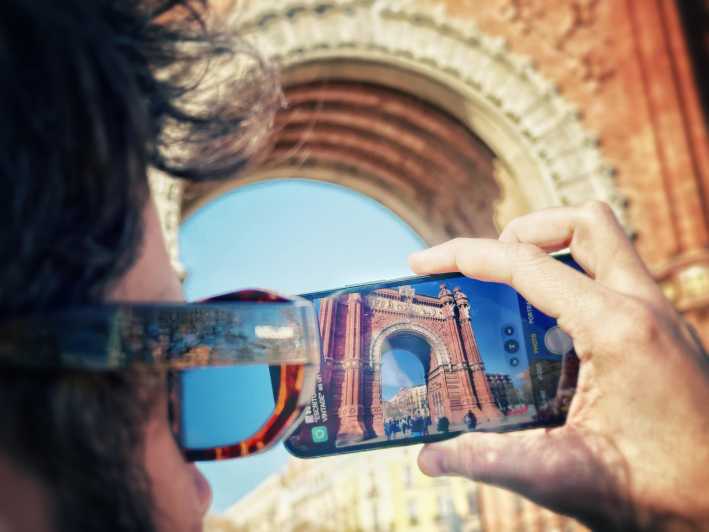
Next you head into Parc de la Ciutadella, where the visuals are huge and varied enough to teach you more than one lesson at a time. This is where the class earns its reputation for getting you confident fast.
You’ll work with:
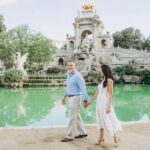
- A massive fountain that’s perfect for learning how to include scale
- A mammoth sculpture, an unexpected subject that helps you practice composition without defaulting to the obvious
- Jurassic-looking palms and dense plantings that give you layered depth
What I like about this park stop is the mix of “big and small.” Big scenes help you understand wide framing and how to keep the image from feeling empty. Smaller, quirky details help you practice tighter compositions and background control.
And then there’s the key technique: experimenting with zoom-magic and lens-like effects on your phone. The goal isn’t to worship zoom. It’s to learn how to use it to change perspective, compress space, and guide the eye toward your subject.
You’ll also learn how to spot moments where a slightly different angle makes the photo feel more intentional. That’s the difference between taking a picture and making an image.
El Born medieval streets: architecture, people, and courtyard shots
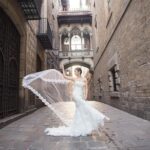
After the park, you shift gears into the old city, specifically the El Born neighborhood. This is where phone photography gets real, because the environment is messy in the best way: narrow streets, textures, doorways, courtyards, and people moving through.
Here, the class focuses on architectural, people, and street photography. That means you’ll be practicing different kinds of photos, not just one style.
In practice, you’ll learn how to:
- Keep buildings from looking flat by choosing angles that add depth
- Frame people without making it awkward (or accidentally cropping them badly)
- Use courtyards and small openings to create natural composition frames
One underrated benefit of this section is that it teaches you to slow down. You start noticing repeating patterns: arched entries, stone textures, shadows, and the way courtyards cut the noise of the street.
It also helps you understand timing. Street photos don’t happen only at the perfect tourist landmark. They happen when you find the right moment between movement and stillness.
Posing and getting better portraits without becoming a model
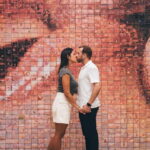
A phone class can turn into either purely scenery shots or purely selfies. This one includes posing, which is practical if you want your photos to look like they belong in your own travel memories.
You’re not expected to strike magazine poses. You’re taught simple ways to stand, angle your body, and use your phone so you look natural while still getting good framing.
This matters in Barcelona because the streets are dense. If you don’t know how to place your body and phone position, your photos can come out cramped or unflattering. With instruction, you’ll learn quick fixes that make a huge difference.


Simple phone editing: the final touch that makes shots feel finished
The class wraps with a drink and then a focused session on quick editing. This is where you stop letting random filters do the work for you.
You’ll learn easy editing techniques that aim to improve what you already captured. The style here is about finishing, not transforming your image into something fake.
You’ll also cover the role of phone features like camera modes, with guidance on how they fit into real photography decisions. The point is to help you understand what to use and when, so you’re not guessing later.
Even if you’re brand new, you’ll leave with a workflow you can repeat. That’s what turns your next trip into better results, not just one lucky day.
Price and value: is $94 per person worth it?
For $94 per person over 2 hours, this is best value if you want real coaching, not just a scenic walk with occasional tips.
This price makes sense because you’re paying for an expert teacher who guides you through multiple Barcelona settings, corrects your technique in real time, and then helps you finish with editing. You also get the context that matters: your guide is a tour guide of Barcelona too, so you’re learning photography while also getting a sense of where to stand and what to look for.
You’re also not required to bring anything besides a charged smartphone. No additional equipment. If you already own a capable iPhone or higher-end Android, the course is designed to help you use what you have.
If you’re the type who wants to learn once and then apply it for the rest of your trip, this class fits your style.
Who this class suits best (and who might want something else)
This is a strong fit if:
- You want better photos fast and don’t want to mess with technical settings
- You’re happy to learn by doing: shoot, adjust, try again
- You care about street scenes, architecture, and portraits in the same session
- You want simple editing steps you can use right away
It might be less ideal if:
- You’re looking for a deep, technical course focused on manual settings (this one stays practical and phone-first)
- Your phone is older or basic and doesn’t support newer camera behaviors well (the class is better suited to iPhones and higher-end Androids)
A practical way to get the most out of your 2 hours
Show up with your phone charged, and don’t overthink it. During the class, do these things:
- Keep your camera ready and switch angles quickly
- Ask simple questions like what to change and why
- Be willing to redo shots. The second try usually wins
- After the editing session, apply the edits to one of your favorite photos right there
Also, if you’re traveling with a little one, the experience has shown flexibility during rainy or family situations, so you’re not signing up for something so strict that you can’t manage real life.
Should you book this private iPhone photography class in Barcelona?
If you want to leave Barcelona with photos that look like you planned them, book it. The strongest reason is the combination: practice in iconic areas plus coaching you can apply anywhere after the class ends.
I’d especially recommend it early in your trip. When you learn framing, zoom effects, and basic editing up front, every later sight becomes an opportunity instead of a guessing game.
Skip it only if you already know exactly what settings and compositions you want, and you mainly want a general sightseeing walk. For most people who love Barcelona but struggle with phone photos, this is one of the most direct ways to upgrade your results.
FAQ
Where do we meet for the Barcelona phone photography class?
You’ll meet your instructor under the arch of Arc de Triomf, with the guide holding a white umbrella.
How long is the experience?
The class lasts 2 hours.
What language is the instructor?
The instructor teaches in English.
Do I need to bring a camera?
No camera is included. You’ll use your own smartphone.
What should I bring with me?
Bring a charged smartphone.
Is this class only for iPhones?
It works with any smartphone, but it’s better suited to iPhones and higher-end Androids.
What stops will we photograph during the class?
You’ll practice around Arc de Triomf, explore Parc de la Ciutadella, and then photograph in the El Born neighborhood.
Is the experience wheelchair accessible?
Yes, the tour is wheelchair accessible.
Is there free cancellation?
Yes. You can cancel up to 24 hours in advance for a full refund.
Is there a way to reserve without paying right away?
Yes. You can reserve now and pay later.