REVIEW · SINGAPORE
Singapore Photography Masterclass – Private Photography Lesson
Book on Viator →Operated by Aperture Tours · Bookable on Viator
A camera lesson in the middle of Singapore is more useful than it sounds. You get a private instructor who helps you see light and composition in real time, then applies it to the city you came to photograph. I like that the session can be street-focused in daylight or turned into a twilight and night portfolio push around Marina Bay.
Two things I really value here: you get realtime feedback on your settings and framing, and the guide adapts to your camera even if it is not their usual model. The main consideration is simple: this is a 3-hour window, so you’ll want to arrive ready to shoot (and not spend half the time figuring out basic menu settings).
In This Review
- Key things to know before you shoot
- Choosing Day Street vs Twilight Night in Singapore
- Meeting on Esplanade Bridge: the fastest way to start shooting
- Chinatown street practice and temple-focus photography
- Jubilee Bridge and Helix Bridge: reflections, lines, and motion
- Marina Bay and the Marina skyline lesson
- Gardens by the Bay and Supertree Grove at night
- The real value: settings you can actually use
- Price and value: what $190 buys you in Singapore
- What to bring (and what to plan for so you don’t waste time)
- Who this is for—and who should skip it
- FAQ
- FAQ
- How long is the Singapore Photography Masterclass private lesson?
- How much does it cost per person?
- Is this a private tour or a group tour?
- What areas will we photograph during the session?
- Can I choose a daytime street session or a night photography session?
- What is included in the price?
- Do I need to bring my own camera or tripod?
- Can I cancel for a full refund?
- Should you book this private photo lesson in Singapore?
Key things to know before you shoot
- Private, on-your-group lesson: you get one-on-one time with a professional photographer guide, plus a local guide.
- Day street or night portfolio: choose a daytime street photography tour or a twilight-to-night route for more dramatic light.
- A route built for variety: Chinatown textures, then bridges, then Marina Bay, then Gardens by the Bay and Supertree Grove.
- Guidance that respects your style: the instruction is supportive and flexible, so you’re not forced into one look.
- You bring the camera habits, the guide brings the fixes: settings, focus, and exposure are part of the teaching.
- Tripod planning: a tripod is not included, though you can hire one.
Choosing Day Street vs Twilight Night in Singapore
The big decision with this experience is whether you want street scenes in daylight or a night portfolio that leans into neon, reflections, and the famous Gardens by the Bay area.
If you pick the daytime street photography focus, you’ll spend more time working the city at human scale: walking, watching for moments, and learning how to compose with buildings and people moving through your frame. It is ideal if you just bought your first camera, or if you know your basics but your photos still feel inconsistent.
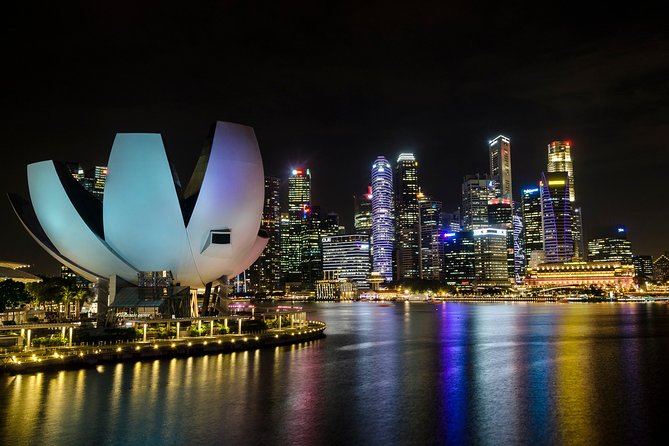
If you go for twilight and night hours, you’ll have the chance to practice the harder stuff: exposure when the background is bright, focus when subjects are moving, and composition when city lights start to dominate. This option is especially strong if you want your portfolio to show more than tourist landmarks. The route is built to end near Gardens by the Bay, with Supertree Grove included as a highlight when you’re shooting at night.
You can also read our reviews of more tours and experiences in Singapore.
Meeting on Esplanade Bridge: the fastest way to start shooting
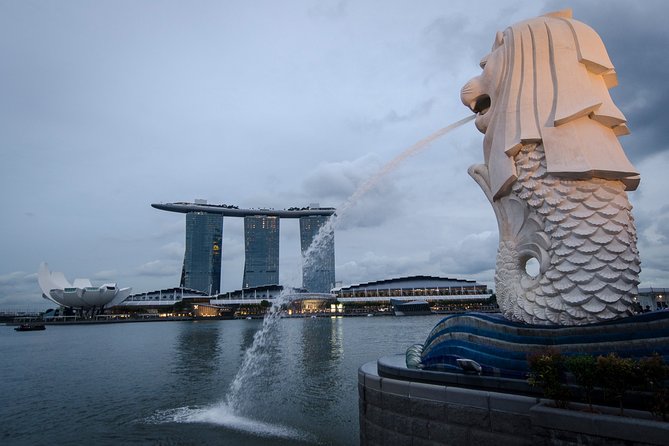
You start at Esplanade Bridge (Esplanade Dr, Singapore). That location matters because you’re close to Marina-side views right away, so you can begin with clear sightlines and a good sense of Singapore’s geometry.
This is also where a good instructor can get you unstuck fast. In a short session, the first minutes should help you stop guessing. The guide you’ll work with (professional photographer guide, local guide) can help you make quick choices about shutter speed, aperture, ISO, and focus mode based on what you’re shooting that day—street people in motion or architecture under changing light.
If you’re the type who likes a plan, you’ll appreciate the fact that there are a good range of departure times. That makes it easier to match your lesson to the light you want: brighter daytime for street work, or earlier twilight if you want the slow shift into night.
Chinatown street practice and temple-focus photography
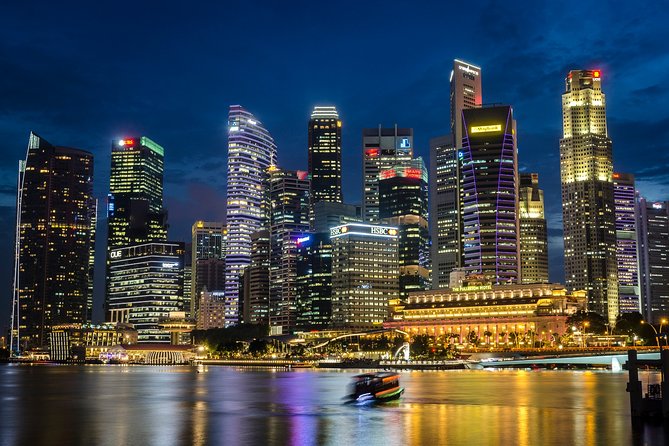
As you move into Chinatown, you get a change in texture and detail. This area is all about close-in scenes: signage, layered streets, and the feeling of standing inside Singapore’s older neighborhoods while people carry on their daily rhythm.
For street photography, Chinatown is a great classroom because it forces you to think about framing. You can practice composing with lines from shop fronts and doorways, using mid-shots for storytelling, and then stepping in for tighter details. It is also a place where you can test whether your exposure holds up when the lighting shifts between shade and brighter storefronts.
Then you’ll head to Buddha Tooth Relic Temple and Museum, a key stop that adds a more structured, monumental subject to your walk. Even if you are mostly a street shooter, this stop helps you balance two skills at once:
- keeping your camera settings consistent for sharp results, and
- finding compositions that respect the architecture without turning everything into the same postcard angle.
One practical benefit: when the scene offers both wide visuals and close details, you can quickly practice how aperture affects depth and how your focusing method handles contrasty subjects.
Jubilee Bridge and Helix Bridge: reflections, lines, and motion
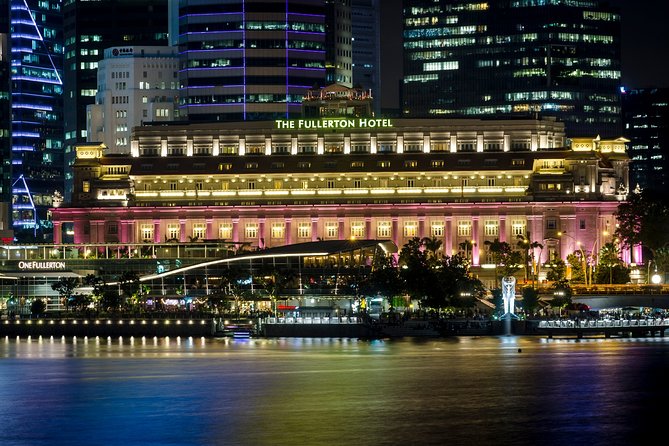
Next come the bridges: Jubilee Bridge and The Helix Bridge. Bridges are underrated for photography lessons because they naturally teach composition. You get repeating lines, strong geometry, and often water reflections or city skyline views depending on the angle and time of day.
At Jubilee Bridge, your job is usually to decide: do you want symmetry, leading lines, or reflections? A strong instructor will push you to make that decision instead of shooting everything. You’ll also get time to practice shutter speed choices when there’s movement around you (people walking, light shifting, water and surfaces changing how highlights behave).
Helix Bridge adds another layer because of its curved metal look and its relationship to Marina-side views. This is a place where your background can steal attention if your settings are off, so it is a good spot to learn how to keep your subject crisp while the environment adds context.
If you’re building a night portfolio, bridges are especially useful for learning exposure control. When lights start to dominate, you’ll want to keep details instead of blowing out highlights. Even small setting tweaks can make a big difference here.
Marina Bay and the Marina skyline lesson
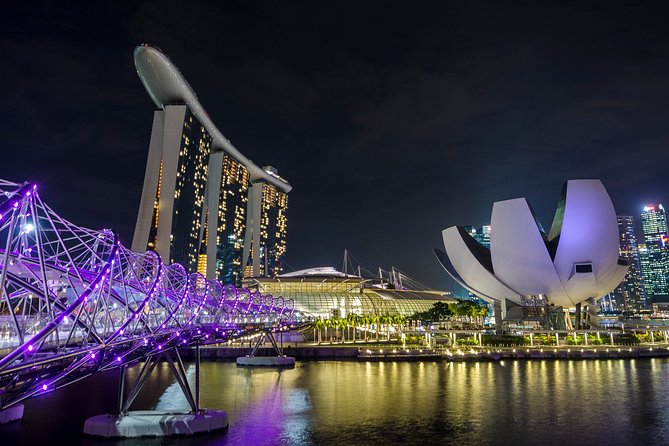
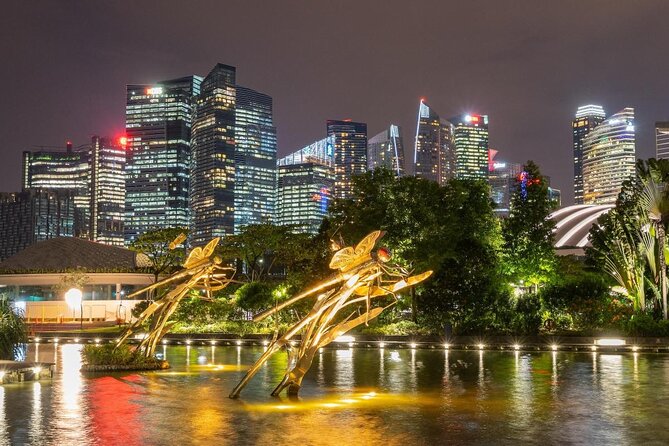
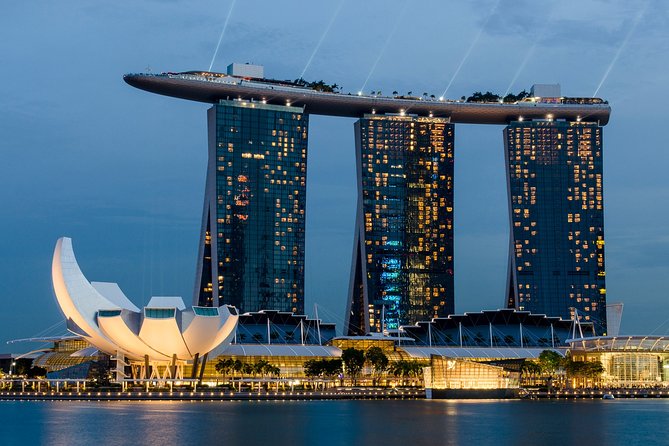
Then you arrive at Marina Bay, which is where Singapore’s photography identity starts to show up clearly: modern skyline, clean lines, and big scenes that reward both wide framing and careful exposure.
This stop is where you should start thinking about your photo series as a set, not just single shots. Ask yourself what you want the viewer to feel: sleek and minimal, or dramatic and energetic. A private guide can help you adjust without wrecking your style. In practice, that means you keep creating, but you get a fix when a setting choice prevents the image you want.
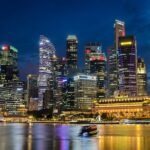
For daytime, Marina Bay gives you crisp architectural visuals. For twilight and night, it becomes a study in light falloff and reflections. This is where knowing how aperture, shutter speed, ISO, and focus work together pays off fast. You won’t just hear about it—you’ll apply it immediately to what’s in front of you.
Gardens by the Bay and Supertree Grove at night
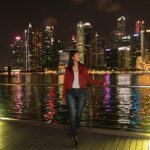
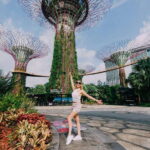
Your route culminates at Gardens by the Bay, then Supertree Grove. The reason this ending works so well is that it gives you a natural photo payoff: once the city shifts into night, the color, scale, and lighting design become a foreground subject, not just a background.
If you’re doing the night-focused option, you’ll often be aiming around twilight into the night hours, when the scene changes quickly. The guide can help you manage your exposure as the light intensity shifts and the artificial lighting starts to dominate.
This is also where you can build a stronger portfolio variety. You can shoot:
- wide shots to show scale and placement,
- mid shots for framing and movement around the gardens, and
- more detailed compositions if you’re confident with focus and depth of field.
Ending near Supertree Grove matters because it is one of the places where your lesson can turn into a set of images that look like a real body of work, not just a few scenic photos.
The real value: settings you can actually use
A lot of photo tours say they teach settings. This one is built around learning how to use the camera controls while you’re walking through real scenes.
You’ll work on the core levers—aperture, shutter speed, ISO, and focus—and you’ll practice compositional technique as you go. The point is not to memorize camera language. The point is to make your camera behave the way you imagine in your head.
One of the most praised parts of this experience is how flexible the instruction feels. Lance, for example, is described as extremely helpful and accommodating, giving realtime feedback and tricks while still respecting the photographer’s own creativity. That kind of coaching matters because it reduces the time between taking a shot and understanding what to change.
There’s another practical strength: the guide may not know your exact camera model ahead of time, but they still provide detailed help with settings. That’s a big deal if you travel with a system you’re still learning. You shouldn’t have to master your camera before a lesson; you should learn it with support.
If you want to improve quickly, come with a few goals:
- one weakness you want to fix (focus, motion blur, noisy images),
- one style you want to practice (street storytelling, architectural lines, night mood),
- and one type of photo you want to take home.
Price and value: what $190 buys you in Singapore
At $190 per person for about 3 hours, the value depends on one thing: how much you want guided instruction versus solo exploring.
If you’re the kind of traveler who loves planning and you’ll be shooting anyway, this is a strong use of your time. Three hours is long enough to practice, fail, adjust, and see results, but short enough that it fits into a day without swallowing your itinerary.
You also get the benefit of private touring (only your group), plus a professional photographer guide and a local guide. That combo helps because you’re not just learning technique—you’re also learning where to aim your technique. Singapore can be visually overwhelming. A good local routing brain saves you from spending your lesson stuck in the wrong spot for the kind of photo you want.
Finally, there are group discounts, plus a mobile ticket for your booking. Not flashy, but practical. If you’re traveling with someone who also wants to learn, it can be an easier sell because you’re sharing the same guided time.
What to bring (and what to plan for so you don’t waste time)
A camera is not included, and a tripod is not included either (but you can hire one). So your success will hinge on showing up prepared.
Bring:
- the camera you’ll actually use (and your usual lens),
- any basics you rely on (extra battery, memory card—things like that are not listed, so you’ll want to handle them yourself),
- and if you’re aiming for night portfolio shots, consider hiring a tripod if you know you’ll want stability.
Also think about your starting point. If you’re just learning photography, focus on learning what your camera can do in different lighting. If you’re already comfortable with manual settings, you might want to ask for help refining how you pick settings for street vs night scenes instead of just switching modes.
Who this is for—and who should skip it
This experience fits best if you want a guided photo session that actually teaches, not just points. It is ideal for:
- beginners who bought a first camera and want clearer control over the basics,
- intermediate photographers who know terms like aperture and shutter but struggle with consistent results,
- and anyone who wants street photos in daylight or a night portfolio around Marina and Supertree Grove.
It may not be your best choice if you only want a casual walk with scenic stops and no focus on technique. Also, because the session is about settings and shooting decisions, you’ll get more value if you’re willing to pause, adjust, and shoot again rather than just collecting wide views.
FAQ
FAQ
How long is the Singapore Photography Masterclass private lesson?
It runs for about 3 hours.
How much does it cost per person?
The price is $190.00 per person.
Is this a private tour or a group tour?
It is a private tour/activity, so only your group will participate.
What areas will we photograph during the session?
The route includes Esplanade Bridge, Chinatown, Buddha Tooth Relic Temple and Museum, Jubilee Bridge, Marina Bay, The Helix Bridge, Gardens by the Bay, and Supertree Grove.
Can I choose a daytime street session or a night photography session?
Yes. You can opt for a daytime street photography tour or build your night portfolio instead.
What is included in the price?
A professional photographer guide, a local guide, and the private tour are included.
Do I need to bring my own camera or tripod?
A camera is not included. A tripod is not included, but you can hire one.
Can I cancel for a full refund?
You can cancel up to 24 hours in advance for a full refund.
Should you book this private photo lesson in Singapore?
If you want to leave Singapore with better photos and a clearer understanding of your camera settings, I’d book it. The biggest reason is the private coaching style, including realtime feedback and the way the guide works with your equipment and your creative choices.
I’d especially book if you like either street photography in daylight or a night portfolio around Marina Bay and Supertree Grove. And if you have a short trip, this 3-hour format is one of the most practical ways to get meaningful instruction without losing an entire day.