REVIEW · BARCELONA
Private Photography Walking Tour with a Local
Book on Viator →Operated by Photo Walking Tours Barcelona · Bookable on Viator
Barcelona, but photographed with a purpose. This private half-day walk mixes hands-on composition and shutter speed lessons with real Barcelona storytelling as you move through classic neighborhoods.
I like that you get teaching tailored to your level. All levels are accepted, the group stays small (max 10), and the guide can offer 1-to-1 tuition as you practice what you’re learning right in the streets. I also like the way the lessons connect to the city’s themes—Spanish Civil War moments, famous artists and their Barcelona influence, and a Catalan culture art finish with a one-photo challenge.
One consideration: you’ll be on your feet for about 2 to 2 hours 10 minutes, so comfy shoes and a moderate walking pace help. If you want a slow, sit-down museum-style day, this may feel too active.
In This Review
- Key highlights to know before you go
- A camera-first route: from Santa Caterina Market toward City Hall
- How the guide teaches photo skills without making it complicated
- Composition rules you can actually use
- Manual settings and shutter speed, even if you’re new
- Photo history and city history working together
- Spanish Civil War to Barcelona artists: building story, not just shots
- The Spanish Civil War stop: make your photo say something
- Famous artist and Barcelona influence: learn to connect culture to images
- Catalan culture and the one-photo challenge that proves you got it
- Price and value: what $63.05 buys you in real teaching time
- What’s not included (so you can budget)
- What to bring, and how to make the most of the two hours
- Bring
- Your mindset
- Who this tour suits best (and who might want something else)
- Should you book this Barcelona photo walking tour?
- FAQ
- Where do we meet for the tour?
- How long does the tour take?
- Is this tour for beginners?
- Can I use my smartphone for the photography lessons?
- How big is the group?
- What’s included in the price?
- Can I get a refund if my plans change?
Key highlights to know before you go
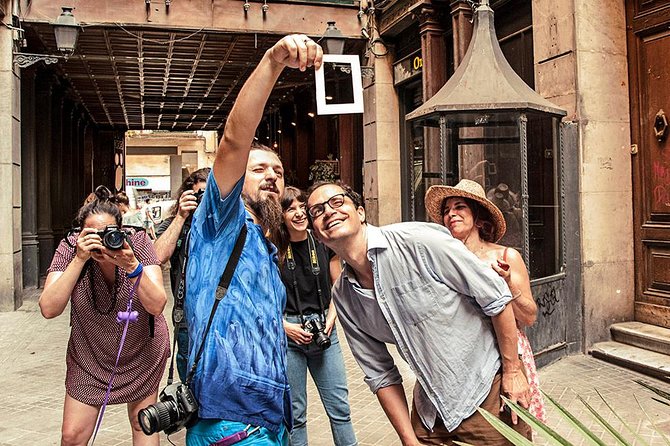
- Small-group, private teaching with 1-to-1 tuition options for all levels
- Hands-on photo rules you use immediately while walking Barcelona
- Barcelona storytelling stops including Spanish Civil War themes and Catalan culture
- Photo-history context on how we got from early photography to today’s use
- A practical photo challenge that forces you to apply what you learned
A camera-first route: from Santa Caterina Market toward City Hall
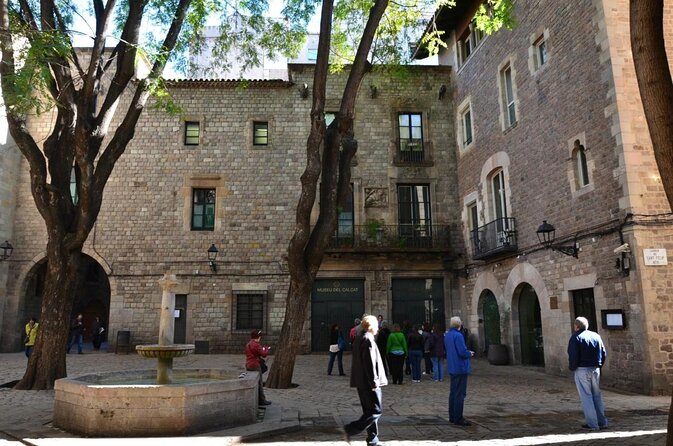
This tour is built for people who want two things at once: to see Barcelona more clearly and to take better photos because you understand what you’re doing. You start in front of Santa Caterina Market, which is a lively, real neighborhood setting rather than just a postcard photo spot. From there, you walk into the Gothic Quarter atmosphere and keep moving through the lanes and corners where “background” becomes part of the picture.
The best part of the route design is that the learning doesn’t happen in a classroom. You get a concept, you practice it while you’re still there, and you get feedback before the street moves on. That matters in Barcelona, where a great angle can disappear in a minute when crowds pass or the light shifts.
Expect a finish near City Hall (Plaça de Sant Jaume area), where you do a quick wrap-up of the photo tips you picked up along the way. If you want extra feedback, the guide can share deeper comments in a local bar afterward. That’s useful if you’re leaving with lots of photos but want to know which direction to take next.
Value tip: if you only photograph Barcelona by default, you’ll come home with more “pretty” pictures. If you follow the guide’s rules and practice immediately, you’ll leave with a repeatable method—so your next Barcelona day (and your next city) gets easier.
You can also read our reviews of more tours and experiences in Barcelona.

How the guide teaches photo skills without making it complicated
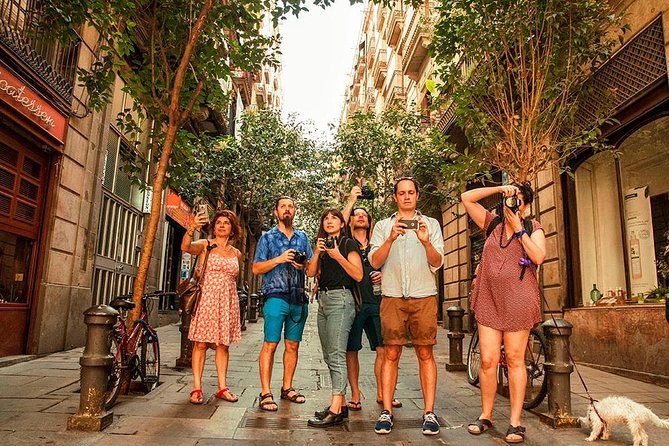
The teaching style here is practical. The tour isn’t just a walking history lesson with a camera stuck in your hand. It’s a photo-skills session that uses Barcelona as the studio.
You’ll start by meeting the guide and sharing your interests—street photography, architecture, travel photos, or whatever you’re chasing. He also asks your experience level, and that’s where the small-group setup helps. With a max of 10 and the option for 1-to-1 tuition, you’re less likely to get a generic lecture that doesn’t fit your camera or your goals.
Composition rules you can actually use
One of the most repeated strengths of this kind of tour is patience with real-life shooting. You’re taught how to see—not just how to tap the shutter. Composition topics include how to frame a scene, use elements in the foreground and background, and spot visual patterns in tight spaces. In the Gothic Quarter, this matters because there are strong lines, repeating textures, and a lot of small details that turn into storytelling when you arrange them intentionally.
Manual settings and shutter speed, even if you’re new
The tour focuses on camera settings like shutter speed and the difference between automatic mode and control. Beginners usually struggle with two things:
1) knowing what setting to change
2) understanding what effect that change has on the final image
This tour aims to solve both by connecting settings to what you’re photographing on the street. You’ll learn enough to stop relying only on Auto mode. And if you’re using an iPhone or another phone camera, the guide can still help you get better results—one review specifically noted help with smartphone shooting.
Reality check: you don’t need to show up knowing photography terms. But you’ll benefit if you’re willing to experiment for a couple of hours. That “play time” is where the learning sticks.
Photo history and city history working together
A smart part of this tour is that it links photography to the places you’re standing in. Before you do the more storytelling-focused shooting, you pass through photography history—interesting facts about how the industry developed and how people use photography today.
Why that matters: it helps you stop treating photos as just souvenirs. You start thinking like a photographer who makes choices: what you include, what you exclude, and why your viewer’s eye goes where it goes. Even a short photo-history segment can reframe how you look at light, timing, and framing.
At the same time, Barcelona history is not added as background noise. It’s used as a prompt for what to photograph.

Spanish Civil War to Barcelona artists: building story, not just shots
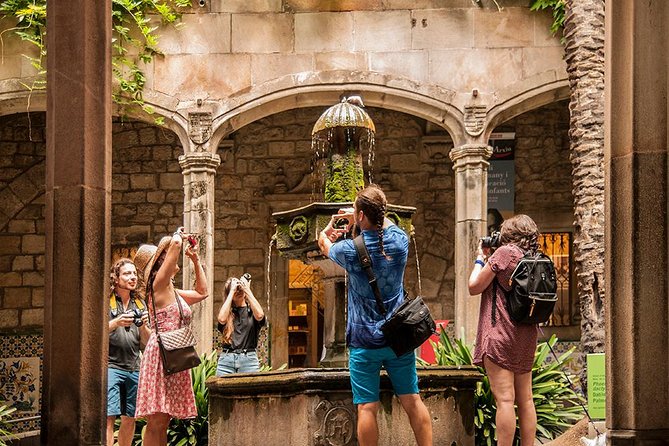
One of the tour’s most distinctive elements is the way it treats photography like storytelling. Instead of “take a nice picture here,” you get moments where history becomes the theme of your frames.
The Spanish Civil War stop: make your photo say something
During the walk, you talk about the Spanish Civil War. Then you start building a story through your photos—using composition and camera choices to communicate a mood, a memory, or a sense of time. This is a good fit if you like narrative photography or if you’re tired of flat images that could be taken anywhere.
Practical angle: when you’re given a theme, you photograph differently. You look for symbols, contrasts, and details that support the story. That’s a real skill, and it transfers beyond Barcelona.
Famous artist and Barcelona influence: learn to connect culture to images
Later you speak about a famous artist and how Barcelona influenced their life and work. The point isn’t to turn the tour into a lecture about art history. It’s to sharpen your eye for what the city does to artists—and then to apply photo tips and tricks that match that way of seeing.
If you enjoy architecture, design details, or anything visually artsy, this section can help you take more than one “pretty corner” photo. You start looking for the shape language of the city: how buildings, streets, and street life combine into a visual style.
Catalan culture and the one-photo challenge that proves you got it
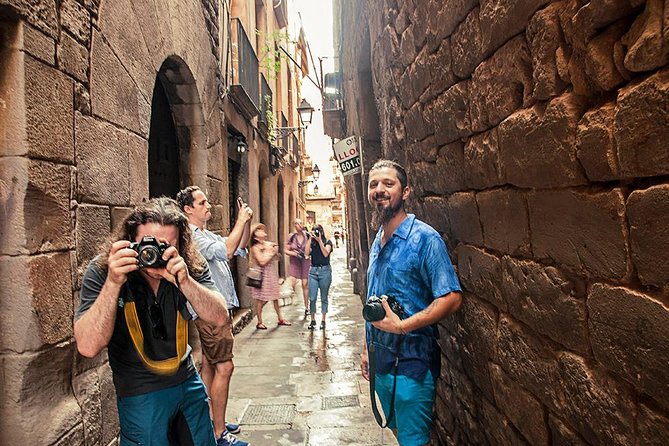
The tour ends with Catalan culture and art themes, and you finish with a photography challenge. This is where the session turns from learning mode into execution mode.
The challenge is simple in concept: you put your new knowledge into one photo. That forces you to apply composition rules, camera settings ideas (like shutter speed if you’re using them), and the storytelling mindset you’ve practiced during earlier stops.
This is also a good moment to shake off the “I don’t know what I’m doing” feeling. Two hours of guided structure can feel short, but it’s long enough to:
- learn a rule
- test it on real streets
- tighten your choices
- produce at least one stronger final image
If you’re the type who always takes 30 nearly identical photos, this challenge helps you aim. One photo done intentionally beats a hundred shot accidentally.
Price and value: what $63.05 buys you in real teaching time
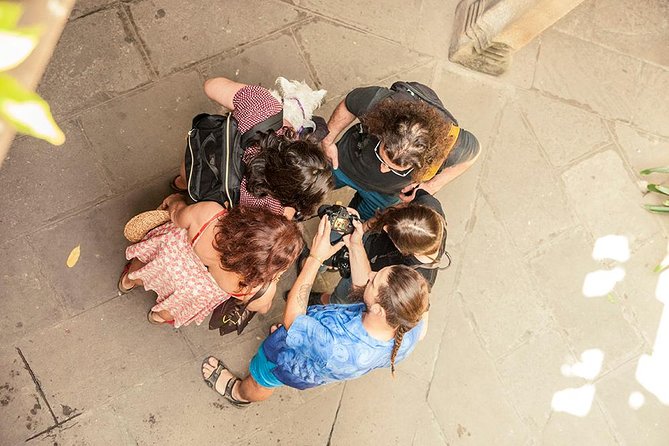
At $63.05 per person for about 2 to 2 hours 10 minutes, you’re paying for more than a walk. You’re buying guided attention from a professional photographer who teaches composition rules, manual thinking, and storytelling structure.
Here’s why the value is good for the money:
- The group cap is small (max 10), and 1-to-1 tuition is part of the approach.
- You’re not waiting for turn-taking like in big group tours.
- The tour is focused on photography skills and applying them on the street, not just sight-seeing.
It also matters that the tour uses mobile ticketing, which makes it easier to show up and start without extra fuss. And the duration is “half-day realistic”—long enough to learn and practice, short enough to keep your full Barcelona day open for other plans.
What’s not included (so you can budget)
Souvenir photos are available for purchase, but they’re not included. Food and drinks aren’t included either, so plan for a snack break afterward if you want one—especially since you may want time to review your images once you’re done.
What to bring, and how to make the most of the two hours
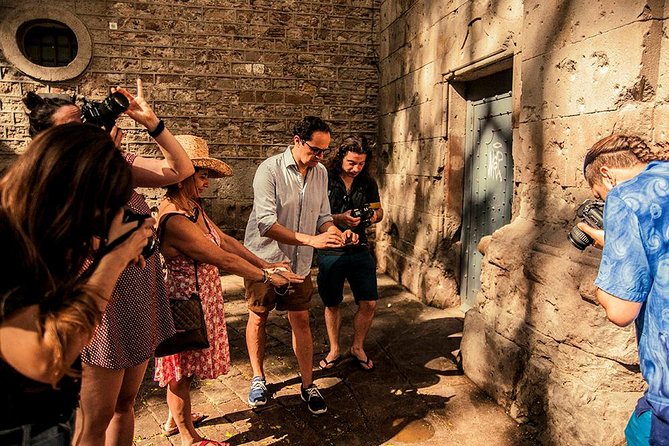
To get the best results, don’t just bring gear—bring curiosity. A camera (or smartphone) is obvious, but what matters more is that you’re ready to change settings and try different shots.
Bring
- Your camera or smartphone, and any chargers you need
- Comfortable walking shoes (you’ll cover ground through neighborhoods)
- If you use a manual camera, consider bringing basic knowledge of your modes so you can follow shutter speed and exposure guidance faster
Your mindset
Show up thinking: I want to learn how to see. You’ll get more from the tour if you pick a goal before you start—like “I want to stop using only Auto” or “I want stronger composition in street scenes” or “I want to photograph architecture in a more intentional way.”
This tour also works well if you’re traveling with family or teens. One review mentioned booking for a 13-year-old with a photography passion, and the tour was still described as enjoyable and useful. If you can handle walking for a couple hours at a moderate level, it’s a solid fit.
Who this tour suits best (and who might want something else)
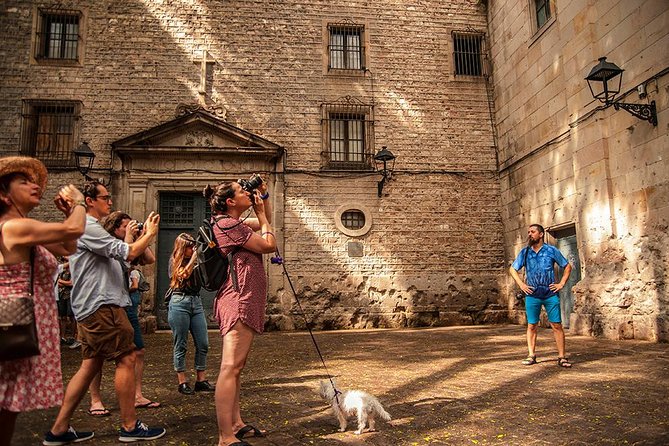
This is ideal if:
- you want photography skills that change how you shoot, not just where you shoot
- you like Barcelona’s older streets and want to learn angles you might walk past
- you want a guide who mixes city context with camera instruction
- you’re okay with an active walking pace and practicing on the go
It may be less ideal if:
- you want a very long photo workshop with lots of time for gear troubleshooting and post-processing
- you’re only interested in quick landmark photos and don’t care about composition or settings
- you’re expecting a museum-style sit-and-read history experience
The tour’s format is tight: it moves. The payoff is that you leave with images and habits you can repeat.
Should you book this Barcelona photo walking tour?
If you’re in Barcelona for a short time, I think it’s a smart booking. Two hours is enough to change the way you shoot—especially because the guide ties photography rules directly to what you’re seeing: market street life, Gothic Quarter lanes, Spanish Civil War themes, artist influence, and Catalan art.
Book it if you want:
- a small-group experience with room to ask questions
- practical instruction on composition and settings (or phone photography)
- history prompts that make your photos feel like stories
Skip it if you want a passive tour where you can just wander and take casual snaps with no instruction. This one expects participation—good news: that’s exactly why it works.
If you do book, choose clothes you can walk in, bring your camera ready to experiment, and come with one simple goal. The tour is structured so that goal turns into better photos without you having to become a full-time photographer by lunchtime.
FAQ
Where do we meet for the tour?
You meet in front of Santa Caterina Market to start, and you finish near City Hall (Plaça de Sant Jaume area).
How long does the tour take?
It runs about 2 hours to 2 hours 10 minutes.
Is this tour for beginners?
Yes. All levels are accepted, and the guide offers 1-to-1 tuition options while keeping the group small.
Can I use my smartphone for the photography lessons?
Yes. The tour supports different camera setups, and at least one review specifically mentioned help with a smartphone camera.
How big is the group?
The tour has a maximum of 10 travelers per booking, keeping it small enough for real teaching and questions.
What’s included in the price?
The price includes the private tour and guided photography instruction.
Can I get a refund if my plans change?
You can cancel for a full refund if you cancel up to 24 hours in advance of the experience start time.