REVIEW · SINTRA
19th Century Photography Experience
Book on Viator →Operated by Five Historic Photography Studio · Bookable on Viator
A photo that looks like it survived time. This 19th-century wet-plate collodion session lets you make a tintype portrait with a full look at the dark-room development process, plus you get period clothing and props to set the mood. I love that you’re not just watching from a distance—you see the negative come to life step by step under safe red light. I also love that the portrait is real and physical, with choices for how big your tintype will be. One drawback to plan for: the exposure time can run up to 10 seconds, so you’ll need to stay very still, and it’s not wheelchair accessible.
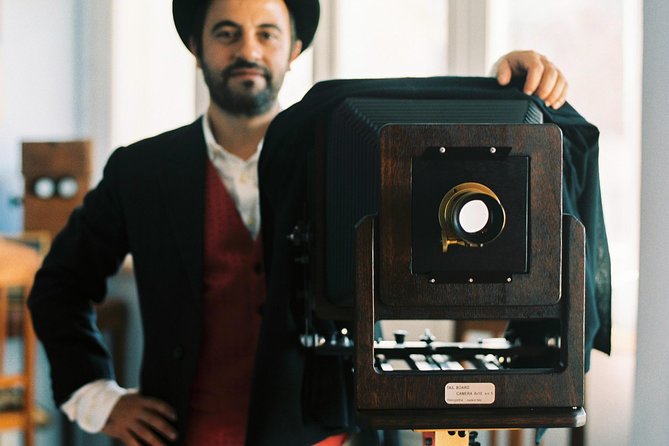
You’ll meet at Five Historic Photography Studio in Sintra, where the place itself feels like a working museum: antique cameras, period furniture, and historical photography materials. Because it’s a private session for your group in English, the host can tailor the pace to you, whether you’re coming with your own outfit ideas or you want to use what’s available on site.
At a price of $48.06 per person for about an hour, this is a good value when you want a keepsake that looks genuinely made in another era (not a printed souvenir). Digital copies cost extra (€5.00 per booking), so if you want shareable files, budget for that up front.
In This Review
- Key Things That Make This Experience Worth Your Time
- Five Historic Photography Studio: A Real 19th-Century Workshop in Sintra
- Wet Plate Collodion and Tintype: What You’re Making (and Why It’s Different)
- Your Portrait Session: Clothing, Props, and the Stillness Test
- Watching Development in the Dark Room Under Safe Red Light
- Timing in Real Life: When Your Tintype Plate Is Ready
- What You Take Home: A Physical Keepsake With Care Guidance
- Price and Value: Is $48.06 Worth It?
- Who This Fits Best (and Who Might Want Another Option)
- Should You Book the Wet-Plate Collodion Tintype in Sintra?
- FAQ
- What is the main photographic process used in this experience?
- How long does the experience take?
- When can I collect my tintype portrait?
- Is this a private session or a group activity?
- Are digital copies included?
- Is the experience suitable for young children?
- Is the studio wheelchair accessible?
Key Things That Make This Experience Worth Your Time
- Wet-plate collodion (1851 process): You’ll work with a technique tied to Frederick Scott Archer’s invention.
- Dark-room viewing under safe red light: You’ll watch the development process rather than just being handed a final print.
- Tintype plate ready later: Your aluminium plate is ready to collect one hour after shooting starts.
- Portrait size choices: You can pick from three different sizes for your final tintype.
- Period clothing and props: Use the studio’s wardrobe or bring your own for a more personal look.
- Private, English-led session: Your group gets the host’s full attention, not a crowded group pace.
Five Historic Photography Studio: A Real 19th-Century Workshop in Sintra
The setting is a big part of why this works. You’re not sent to some generic activity space where someone demonstrates a process once and you move on. At Five Historic Photography Studio, you walk into a place built for the craft: antique cameras, period-style furniture, and reference material about 19th-century photography. It helps your brain switch gears fast. Instead of thinking about a “show,” you start thinking about process, timing, and materials—exactly what the wet plate technique demands.
The studio is easy to reach because it’s near public transportation, and the meeting point is straightforward: Largo 1º de Dezembro 14, 2710-496 Sintra, Portugal. The tour ends back where you start, so you’re not scrambling across town afterward.
Plan for a calm, focused hour. This is private, meaning only your group participates. That matters because wet plate collodion isn’t a one-size-fits-all trick. The host will guide you on posing and help you get the best result within a short exposure window.
One more practical detail: it’s not wheelchair accessible. If mobility is a concern for anyone in your group, you’ll want to factor in the studio setup before booking.
Wet Plate Collodion and Tintype: What You’re Making (and Why It’s Different)
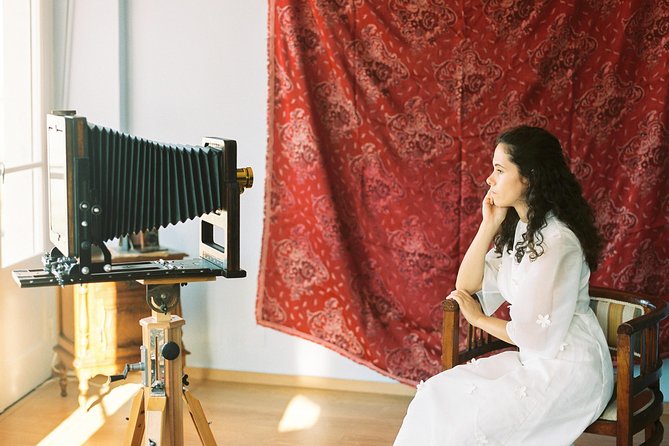
This is about making a tintype portrait using the wet plate collodion process, invented in 1851 by Frederick Scott Archer. The result has that classic look you associate with old photographs: deep, slightly tonal contrast and a finish that feels physical in your hands.
Here’s what you should expect conceptually. Wet plate collodion involves preparing a light-sensitive surface, exposing it while the subject holds still, and then developing it. That’s why this experience is so hands-on. You’re not just receiving an image—you’re following the logic of the process from start to finish.
The session also includes a clear introduction to 19th-century photography and how collodion works. That context is surprisingly valuable, because it turns the experience from a cool souvenir into a real skill-based craft you can understand. You’ll learn what’s happening during the exposure and why the timing matters so much.
You’ll also have choices for your final image. The tintype portrait comes in three different sizes, so you can decide how big of a keepsake you want. If you’re planning to frame it or display it at home, size matters. Larger sizes can feel more dramatic, but smaller ones can be easier to store and travel with.
One important realism check: exposure can be as long as up to 10 seconds. That doesn’t mean you’ll spend your whole time waiting in place, but it does mean you should come prepared to hold a steady pose. If you’re expecting lots of movement or lots of giggling mid-shot, plan for extra patience.
Your Portrait Session: Clothing, Props, and the Stillness Test
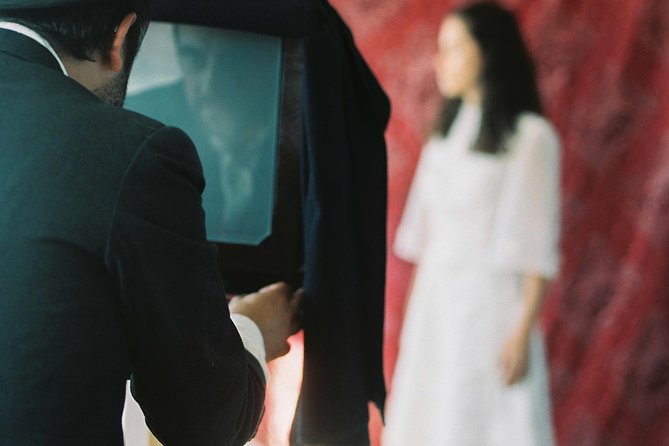
The portrait part is where this becomes personal. You’ll work with a host who guides you through your tintype/portrait sitting, and you’ll have access to 19th-century clothes and props for your image. The studio wardrobe can save you time, especially if you don’t want to shop for an outfit before you arrive.
Even better: you can bring your own clothing ideas. The studio provides period-appropriate accessories (like hats and supporting props), but if you already have something that fits the look, you can use it to make the portrait feel more like your story than a generic costume.
This is a great setup for couples, friends, or solo travelers who want their photo to look intentional. It also works well for people who like photography as a hobby, because you get a sense of how old processes shaped portrait posing. In the wet plate era, stillness wasn’t just “nice to have.” It was part of the photograph.
If you’re traveling with kids, take the stillness seriously. It’s not recommended for children under 6, largely because exposure can take several seconds. For little ones, that may be hard. For older kids and adults who can follow directions and hold a pose, it’s usually manageable.
A simple tip before you go: choose your pose and outfit plan ahead of time if you can. If you arrive unsure, the host will help, but you’ll have less time to refine your choices when you’re already in the middle of a time-sensitive craft process.
Watching Development in the Dark Room Under Safe Red Light
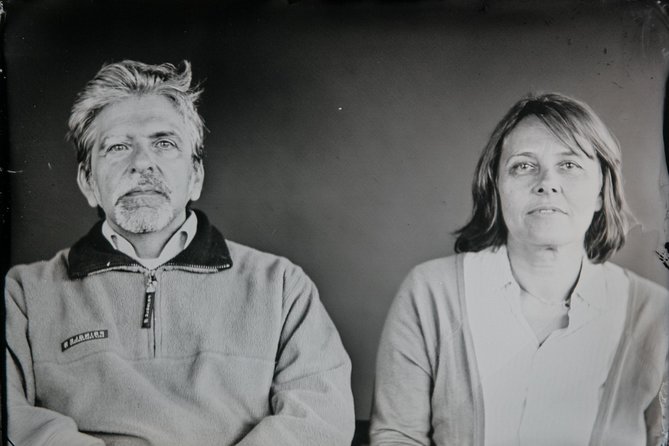
This is the part most people remember. Wet plate collodion is one of those processes where the outcome depends on doing the work correctly, and the dark room is where that becomes visible.
You’ll be guided to the laboratory/dark room to witness the full development process. It’s done under safe red light, which keeps the work controlled while you watch. You’ll see how the image forms from the negative stage, and the transformation happens quickly enough that it feels almost like a reveal.
The experience is also designed as more than a passive demonstration. You’re observing a real step-by-step workflow: what happens after exposure, what the host is doing in the moment, and how the image begins to appear. Seeing the process makes the final tintype feel earned, not just delivered.
One practical note: you may want to plan on recording if that’s important to you. In at least one case, a guest was able to capture the moment on video. Still, it’s smart to ask in the room whether photography or recording is allowed during the development steps.
Why this matters for value: a lot of souvenir photos are “click and done.” Here, you’re learning how the picture takes shape. Even if you never try wet plate collodion again, you’ll leave with a clearer understanding of what early photographers actually did.
Timing in Real Life: When Your Tintype Plate Is Ready
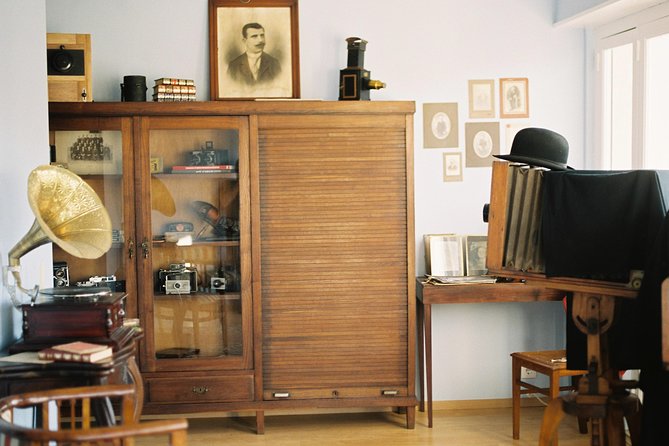
The timing is one of those details that can make or break your plan if you’re pairing this with other things in Sintra.
The session runs about 1 hour. But your tintype plate is ready later: you collect your plates one hour after the shoot starts. That means the portrait is created during the session, then you’ll return at the right time (based on the experience’s schedule) to pick up your aluminium tintype.
So how do you plan around it? Keep your next activity flexible. You’re in Sintra, where you likely have multiple stops lined up. Build in time to wander or grab a coffee, then come back to collect your plate when it’s ready. This is especially important because you want your tintype intact and protected from the moment you receive it.
The good news: the studio is set up for this workflow. You’re not taking the plate immediately and crossing town with it like a fragile hot potato. You’ll also get the portrait provided in a protective way.
What You Take Home: A Physical Keepsake With Care Guidance
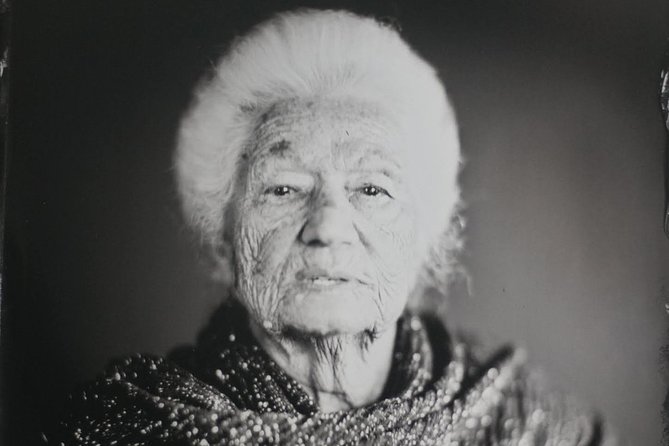
Your main takeaway is straightforward and satisfying: you receive the tintype portrait created by the host. The studio provides it in a nice box for protection, and you’ll get guidance on how to care for it.
That care advice is more important than it sounds. Tintypes are physical objects, and they don’t behave like a phone photo or a typical print. If you want your portrait to keep looking its best, follow the handling and storage tips provided at pickup.
Size also plays into the take-home experience. Since you can choose from three sizes, you can pick based on how you plan to display or store it. If you want a more display-ready piece, choose the larger option. If you want something easier to carry home, the smaller size may be the better fit.
Also keep in mind: this experience includes a one-of-a-kind result. Even with similar setups, portraits vary based on how people pose and how light hits at the moment of exposure. That’s part of the charm.
Price and Value: Is $48.06 Worth It?
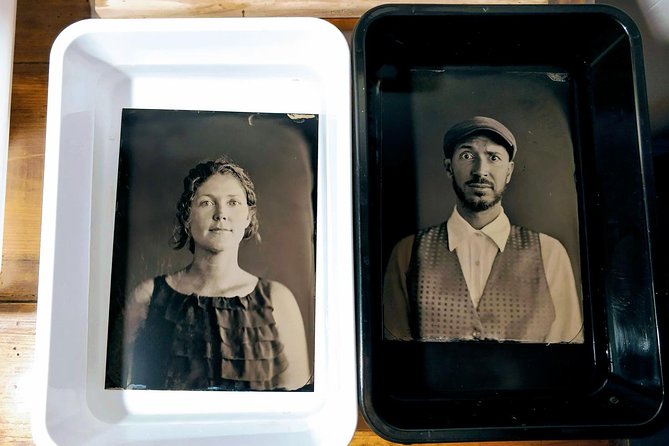
At $48.06 per person, you’re paying for more than “a photo.” You’re paying for materials, time, and expert handling of a process that’s technical and timing-sensitive. The wet plate workflow includes the introduction, the portrait sitting, the dark-room development viewing, and the final physical tintype that you can box and keep.
Then there’s the hidden value: experience-based learning. You’re not only getting an object; you’re learning what makes the object possible. The dark room steps are where the experience becomes educational, and the craft knowledge is the part that often outlasts the novelty of the final image.
The main extra cost to understand: digital copies are not included. If you want shareable files, budget €5.00 per booking. That’s a small add-on compared to the overall cost, but it’s worth deciding before you arrive so there are no surprises.
One more value point: since it’s private, you’re not competing for time with strangers. That helps the host spend the right amount of attention on your group, especially during the posing/exposure portion where precision matters.
Who This Fits Best (and Who Might Want Another Option)
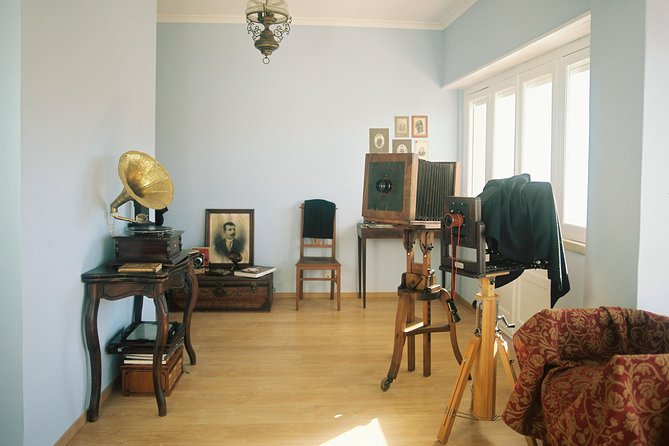
This experience is a strong match if you enjoy old-school crafts, photography, or you want a travel memory that isn’t easily replaceable. It also fits well if you like hands-on learning, because you’ll see the whole workflow in the dark room rather than just a final reveal.
It’s also great for people who want a guided photo shoot with a structured process. Because it’s private, you get a calmer pace than typical group activities.
But be honest about the limits:
- It’s not wheelchair accessible, so plan for that if mobility needs apply.
- It’s not recommended for children under 6 due to possible exposure up to 10 seconds.
- You’ll need to stay still for your portrait, so if your group has trouble following timing cues or holding a pose, you may find it challenging.
Most travelers can participate, and the host includes guidance throughout. So it’s not a museum lecture. It’s active, with enough structure that you’re not left guessing what to do next.
Should You Book the Wet-Plate Collodion Tintype in Sintra?
If you want a keepsake with real craft behind it, I think this is worth booking. The combination of a wet plate collodion portrait, dark-room development viewing, and the chance to use period clothing and props makes the experience feel complete. You end up with a physical tintype that looks like it came from another era, and you understand the steps that create it.
Book it with two things in mind: stillness during exposure and the fact that you’ll pick up your plate about one hour after shooting starts. If you can work with those, this becomes a memorable Sintra moment that you’ll actually want to keep.
FAQ
What is the main photographic process used in this experience?
You’ll create a tintype portrait using the wet plate collodion process, which was invented in 1851 by Frederick Scott Archer.
How long does the experience take?
It takes about 1 hour (approximately).
When can I collect my tintype portrait?
Your aluminium plates are ready to take one hour after the experience starts (specifically, one hour after the shoot starts).
Is this a private session or a group activity?
It’s private. Only your group will participate.
Are digital copies included?
No. Digital copies are €5.00 per booking.
Is the experience suitable for young children?
It is not recommended for children under 6, because the exposure time can reach up to 10 seconds.
Is the studio wheelchair accessible?
No, the experience is not wheelchair accessible.