REVIEW · YEREVAN
Urbex photo tour in Armenia
Book on Viator →Operated by central tour · Bookable on Viator
Armenia turns your camera into a passport. This 7-day trip blends urbex-style abandoned photo stops with major Armenian landmarks like Khor Virap, Geghard, and Garni—so your days don’t feel repetitive. I like that it’s structured for an easy rhythm (hotel, meals, and transport handled) and that the urbex side stays special, with stops designed for serious photographers and a small group.
Your balance here is the big win: you’ll shoot eerie, forgotten places and then reset with church stonework, khachkars, and dramatic mountain views. The main thing to consider is the price: at $2,301.32 per person, you’re paying for a guided, all-in package with curated access and a tight schedule, not just sightseeing.
In This Review
- Key Things That Make This Armenia Urbex Photo Tour Work
- Entering Yerevan: the clean start to a busy week
- Khor Virap and Noravank: Armenia’s religious drama with photo-friendly viewpoints
- Selim Pass to Caravanserai: a Silk Road stop that feels like a time machine
- Lake Sevan and Sevanavank: a monastery backdrop with room for calm shots
- Haghpat Monastery plus an extra urbex photo window: UNESCO structure and eerie contrast
- Sanahin Monastery and the Mikoyan Brothers Museum: stone faith plus Soviet-era perspective
- Vanadzor and Soviet pioneer camps: a different kind of abandoned atmosphere
- Amberd Fortress and Tegher Monastery: mountain-era structures with steep views
- Garni and Geghard: pagan stone, cave churches, and a strong finish
- Price and Logistics: what $2,301.32 really covers
- Who This Urbex Armenia Photo Tour Is For
- Should You Book It?
- FAQ
- How long is the tour?
- What’s included in the price?
- Is pickup provided from the airport?
- Are urbex locations revealed in advance?
- Is the first dinner included?
- How big is the group?
Key Things That Make This Armenia Urbex Photo Tour Work
- Small group feel (max 10): easier pace, more attention, and less chaos when you’re trying to frame a shot.
- All-in comfort: three-star hotel and meals throughout the program (with the first dinner as the only optional gap).
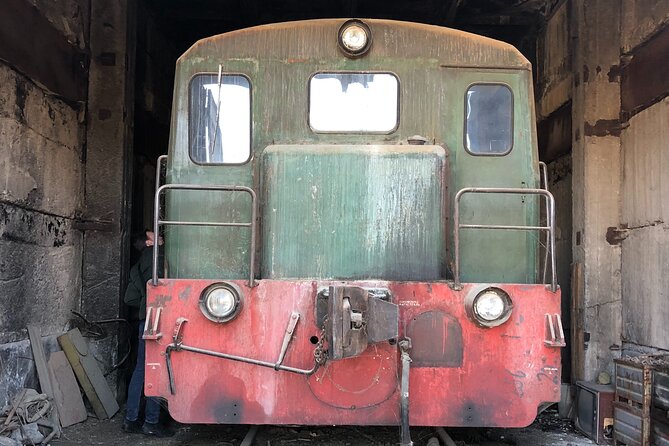
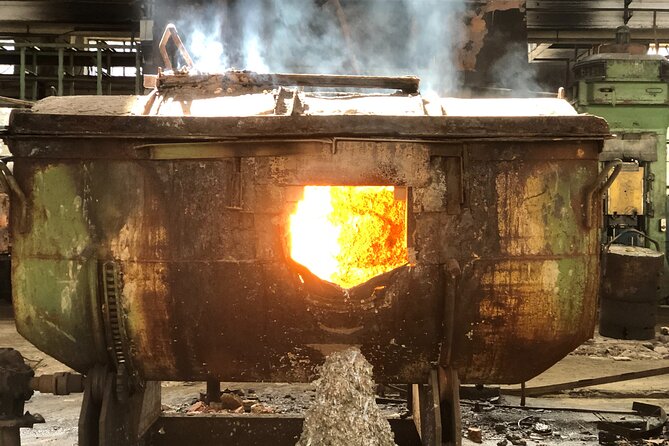
- Real variety in subject matter: monasteries and pagan sites side-by-side with abandoned buildings, including the kind of structures that urbex photographers chase.
- Guided photo time with secrecy in mind: the exact urbex location isn’t spelled out ahead of time, keeping sites protected.
- Scenic Armenia between stops: you’re constantly moving through Vayots Dzor, Lori, Aragatsotn, and around Lake Sevan, not stuck in one area.
- A guide’s local know-how matters: Nvard (Central Tour Armenia) is praised as patient, friendly, and serious about history, with excellent English; she also worked with Hanzebeeld on past runs.
Entering Yerevan: the clean start to a busy week
Most days on this tour start with movement, so Day 1 is about getting your bearings. You meet at Zvartnots International Airport, then transfer to the hotel in Yerevan. There’s time to settle in before dinner, which is listed as optional for the first evening (and not included).
This matters for you because Yerevan can feel like a launchpad—busy roads, lots of sights, and different neighborhoods. With the transfer handled, you can focus on sleep, gear check, and planning your camera batteries. If you’re traveling with lenses, tripods, or drones, this is the moment to make sure everything is packed and easy to reach, because later days are tight and photo time is time-sensitive.
Also, this tour starts at 9:00 am, and the program moves quickly after that. If you want a relaxed start, arriving the day before (when possible) is your friend—though the tour does get you going from the airport either way.
You can also read our reviews of more tours and experiences in Yerevan.

Khor Virap and Noravank: Armenia’s religious drama with photo-friendly viewpoints
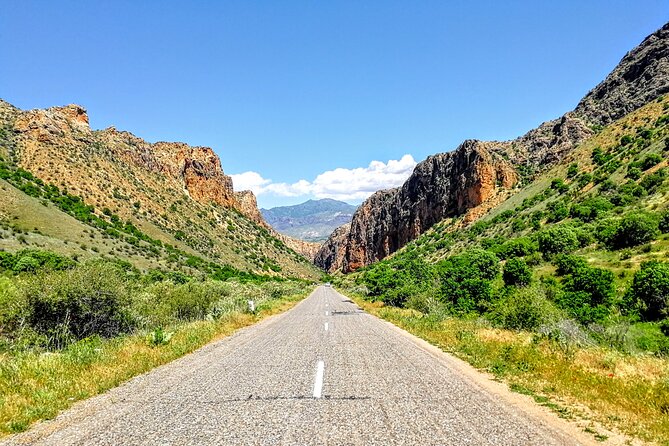
Day 2 is a strong opener because it hits two of Armenia’s most photogenic church landscapes. First up is Khor Virap, a pilgrimage site tied to Saint Gregory the Illuminator, who is traditionally linked to imprisonment near a pit before curing King Tiridates III. The monastery sits in the Ararat plain, and you’ll get the classic view setup people travel for: Mount Ararat in the distance.
From a photography perspective, this is valuable because the light can change fast in open landscapes. If you’re shooting portraits, wide angles, or landscapes, you’ll want to be ready for that shift as the afternoon turns. The stop is 45 minutes, so it’s not a long drift. Think: arrive, orient, shoot, then move.
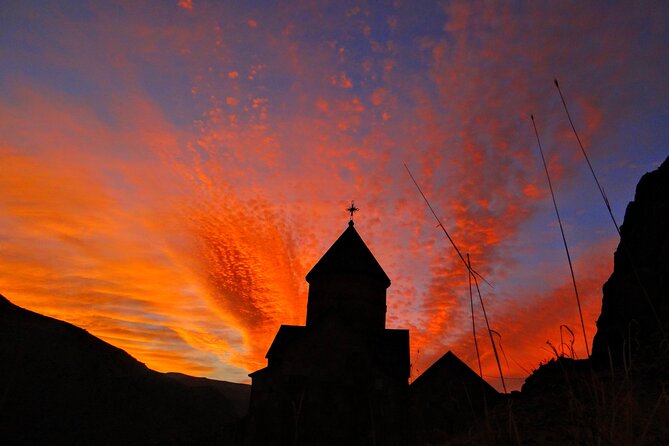
Next you go to Noravank Monastery in a narrow gorge of the Amaghu River (Vayots Dzor Province). The big draw here is the 13th-century stone architecture and the carved exterior details that pop even in indirect light. The stop is also timed at about 45 minutes—enough to appreciate the setting and get images without dragging your schedule into the evening.
A possible drawback: both are popular sights, so expect other visitors in the mix. The good news is the pace is planned, so you’re less likely to lose time waiting around.
Selim Pass to Caravanserai: a Silk Road stop that feels like a time machine
On Day 3, you pass through Vardenyats Pass (Selim Pass), with a quick stop at the Orbelian Caravanserai. This is a 14th-century resting place for traders traveling along the Silk Road, built with a large courtyard and small rooms for shelter and goods. There’s also a chapel and a well in the complex.
The reason I’d put this stop high on the list is simple: it gives you a human-scale architecture break between big landscapes and long monastery days. For urbex photographers, it also quietly reinforces the same theme as abandoned sites—how humans used buildings for survival, routine, and travel—just in a still-lived-in historic form.
The stop time is short (about 30 minutes), so come with a plan. If you’re photographing textures, courtyard geometry, doorways, or the way the stone frames the sky, this is the kind of place where a few minutes of careful positioning can beat rushing five shots.
Lake Sevan and Sevanavank: a monastery backdrop with room for calm shots
After that, the tour heads to Monastery Sevanavank, on the northwestern shore of Lake Sevan in the Gegharkunik Province. The monastery dates back to the 9th century and includes churches, a courtyard, and khachkars. The lake setting is the main story here: Lake Sevan is described as Armenia’s largest high-altitude lake, and you can see why people return again and again.
Why it’s worth your time: Sevanavank provides visual contrast from the earlier gorge and fortress imagery. If your urbex shots are all shadows and decay cues, the lake horizon gives you a clean place to balance your photo set—wide compositions, reflected light, and calmer color palettes.
The stop is about 45 minutes. That’s long enough for a few angles, but not long enough to wander off the main points. If you like slow photography, you’ll still get some breathing room, but keep your camera moving efficiently.
Haghpat Monastery plus an extra urbex photo window: UNESCO structure and eerie contrast
Day 3’s second act is Haghpat Monastery, another UNESCO World Heritage site (designated in 1996). It’s a medieval monastic complex built between the 10th and 13th centuries, famous for architecture with intricate carvings and multiple buildings, including St. Nishan and a bell tower and library. Haghpat gives you ornate stonework and a strong sense of “crafted permanence.”
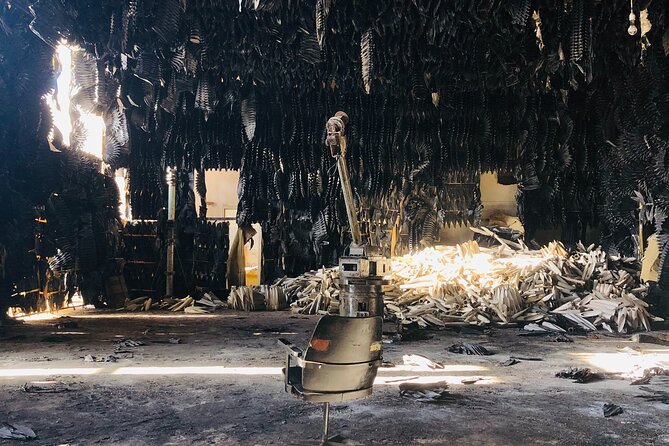
But the day also includes a dedicated urbex photo tour segment (about 45 minutes) before you drive to Haghpat village and monastery. This timing is important. You’re not just jumping from one location to the next; you’re alternating types of visual storytelling: broken or abandoned human spaces, then intact medieval religious stone.
The tour ends the day with overnight and dinner in the village, which is great if you like the feeling of being somewhere smaller and less staged. One practical consideration: if you’re sensitive to colder evenings in northern Armenia, pack accordingly for the village overnight. The itinerary doesn’t specify weather, but the region and season can be cooler than Yerevan.

Sanahin Monastery and the Mikoyan Brothers Museum: stone faith plus Soviet-era perspective
Day 4 starts with Sanahin Monastery, another UNESCO site. It was founded in the 10th century and functioned as an important center of learning and culture. You’ll see multiple churches, chapels, and the famous Gavit (a meeting hall/vestibule). The structures are built with local tuff stone, which tends to photograph beautifully because it shows subtle color and texture in changing light.
Then comes a different kind of history: the Mikoyan Brothers Museum in Sanahin. It focuses on two brothers, Anastas and Artem Mikoyan—both tied to Soviet politics and aviation. You’ll find personal belongings, photographs, documents, and exhibits about their contributions. This is one of those stops that expands the trip beyond stone monasteries into 20th-century Armenia’s connection to the USSR.
If your goal is urbex photography, this day adds a helpful contrast. You’re seeing how people built systems—political, industrial, aviation—while the urbex portion will show systems left behind. Same theme, opposite emotional tone.
The museum stop is long (about 4 hours). That’s a real chunk of time, so pace yourself. If you’re planning to photograph museum displays, bring the right settings discipline; indoor lighting can turn “quick shots” into blurry regret.
Vanadzor and Soviet pioneer camps: a different kind of abandoned atmosphere
On Day 5 you reach Vanadzor, described as Armenia’s third-largest city in the Lori Province. The city is on the Pambak River and surrounded by the Lesser Caucasus hills, and it’s a hub for cultural and economic life. The tour time gives you space for a stop in the city (around 3 hours) and then a separate photo tour linked to Soviet pioneer camps (about 2 hours).
The pioneer camps are explained as Soviet-era summer camps for children, often held in remote picturesque locations, with activities like sports and arts and with government subsidy and ideological goals. From a photography point of view, these camp spaces often offer a specific visual language: signage, dorm-like structures, outdoor activity cues, and the feeling of planned youth routines left behind.
A practical note: these places can be visually busy. If you want strong images, pick one or two compositions and wait for the light to align. When everything is interesting, your strongest photo is often the one with the clearest framing.
Amberd Fortress and Tegher Monastery: mountain-era structures with steep views
Day 6 moves into the higher altitude feel with Amberd Fortress in Aragatsotn Province, at about 2,300 meters above sea level. Amberd is medieval and was built in the 7th century, then rebuilt and expanded over centuries. It served as a military stronghold during Arab invasions and later during Seljuk and Mongol periods. There’s also a church on site, dated to the 11th century.
The stop is about 45 minutes, and the big payoff is the views over surrounding mountains. This is another “reset” day in the program: fortress stone, sky, and distance can give your camera a break from close textures.
Next is Tegher Monastery, a 13th-century hilltop site with well-preserved structures like a church, chapel, and khachkars. It’s described as having been a center for education and culture in its heyday, and now it’s a cultural and religious attraction.
Why this pair works: Amberd gives you defense and distance; Tegher gives you spiritual craftsmanship. Together they add depth to your idea of Armenia beyond churches and into the landscape of power and worship.
Garni and Geghard: pagan stone, cave churches, and a strong finish
Day 7 is built for grand contrasts before your return to Yerevan. First: Garni Temple, a pagan site tied to pre-Christian Armenia. It’s described as a well-known symbol of pagan heritage and was later converted into a royal summer house. Then you’ll visit the Garni Gorge area for Symphony of the Stones, a natural basalt column formation that produces a musical sound when struck, with columns arranged in a way that resembles an instrument.
After that comes Geghard Monastery Complex, UNESCO listed. The standout feature is the way some churches are in caves and others are dug out of the surrounding rock face. This isn’t just pretty scenery—it’s a built environment where religion and geology fuse.
Time on each stop is around 30-45 minutes. That’s enough for a solid photo set if you move with purpose. The program ends with transfer back to Yerevan.
If you want a final-piece portfolio strategy: choose your best 2-3 images from your entire trip at this point. Then pick a theme—religious Armenia, abandoned Armenia, or stone-and-sky Armenia—and edit accordingly. The order of the day helps you build a clean narrative.
Price and Logistics: what $2,301.32 really covers
At $2,301.32 per person, this is not a budget tour. You’re paying for a coordinated, guided circuit that includes:
- three-star hotel accommodations,
- meals for the main days (breakfasts, lunches, and six dinners),
- an air-conditioned vehicle,
- pickup offered and transfers tied to a set meeting at Zvartnots Airport,
- and a group size capped at 10 travelers.
Where the value shows up is in your time and stress. You don’t have to plan routing between Yerevan, Vayots Dzor, Lake Sevan, Lori, Aragatsotn, and back. You also don’t have to solve the big photo-tour problems: finding the right angles, keeping the day flowing, and moving efficiently between sites with scheduled durations.
Also consider the urbex component. Exact location secrecy is part of the concept, and that implies planning on the operator’s side. Even if you don’t care about secrecy itself, it usually means the itinerary is designed specifically for photo outcomes, not just general sightseeing.
The one “watch out” is the cost relative to a normal Armenia tour. If you mostly want churches and landscapes, you might feel this is too focused on urbex photography. If you actually want a guided blend—history plus abandoned photo work—this price starts to make sense.
Who This Urbex Armenia Photo Tour Is For
This tour fits you best if:
- you’re serious about urbex-style photography and want guided access to abandoned structures,
- you like mixing modern, Soviet, and medieval Armenian themes into one trip,
- you prefer a fixed schedule with hotel and meals included,
- and you want a small group with a guide who can explain what you’re seeing.
It may feel less ideal if:
- you want lots of free time to roam at your own pace,
- you dislike structured photography time blocks,
- or you only want classic tourist sights and not abandoned-site sessions.
Should You Book It?
I’d book this if you want a camera-first Armenia trip that doesn’t leave you stuck with only monasteries or only ruins. The combination of Haghpat and Sanahin UNESCO sites, Geghard’s rock-cut churches, and the dedicated urbex windows is exactly the kind of mix that can build a standout photo story.
Skip it if $2,301.32 feels high for your travel style, because you’re paying for coordination and photo-focused access. Also, note the first evening dinner is optional and not included, so plan to eat after you land.
If you do book it, I’d treat the program like a photo sprint with breaks: charge batteries early, pack a rain layer, and keep your schedule mindset tight. The payoff is a set of images you won’t get from a standard Armenia checklist.
FAQ
How long is the tour?
The itinerary runs for about 7 days (approximately). The days are arranged around transfers plus around six days of sightseeing and photo stops.
What’s included in the price?
Accommodation in line with the itinerary and meals as per itinerary are included (breakfasts, lunches, and six dinners). You also get an air-conditioned vehicle, and the program includes the listed admission tickets.
Is pickup provided from the airport?
Yes. Pickup is offered, and the start meeting point is Zvartnots International Airport. The start time is listed as 9:00 am.
Are urbex locations revealed in advance?
No. The exact location of the urbex site is not specified in advance because the idea is to keep locations secret to help preserve them.
Is the first dinner included?
No. Dinner for the first evening is described as optional and not included.
How big is the group?
The tour has a maximum group size of 10 travelers.