REVIEW · YEREVAN
5 days photography tour in Armenia
Book on Viator →Operated by Gira Travel · Bookable on Viator
Armenia rewards the camera at every turn. This 5-day photo tour blends classic monastery stonework, fortress drama, and big mountain light with a tight route starting in Yerevan. You’ll also get wine tasting built in, so it’s not just churches and cliffs.
I especially like two things about this experience: you move efficiently between high-impact sites, and the driving isn’t just transport. The communication you’ll get from Aram is described as practical and responsive, and the driver role can expand—Arman is noted as being prompt and informative, even acting more like a guide than a chauffeur.
One consideration: entry tickets for several stops are not included. You’ll want to budget for those add-ons, and plan for some longer days where you’ll trade sleep for the best light and angles.
In This Review
- Key Things to Know Before You Go
- Why a 5-Day Armenia Photo Route Starts in Yerevan
- Day 1: Garni Temple, Geghard, and the Symphony of Stones
- Garni Temple: Sun-Temple Symmetry
- Geghard Monastery: UNESCO Carved Into the Mountain
- Symphony of Stones (Garni Gorge): The Viewpoint That Feels Like a Stage
- Day 2: Khor Virap’s Ararat Mood, Areni Wine, and Noravank’s Red Cliffs
- Khor Virap: A Monastery With Major-View Energy
- Hin Areni Winery: Wine Tasting and a Photo-Friendly Break
- T’rchuneri (Bird) Cave / Areni-1 Complex: Ritual-Site Thinking
- Noravank Monastery: Two-Storey Church in a Narrow Gorge
- Day 3: Lake Sevan Light at Sevanavank, Haghartsin’s Forest Monasteries, and Dilijan Town
- Tsaghkadzor: Ski Resort Views Even Off-Season
- Sevanavank: A Monastery Peninsula on Lake Sevan
- Haghartsin Monastery: Three Churches and a Gavit
- Dilijan: Forest Town Atmosphere for a Final Wandering Shot
- Day 4: Saghmosavank Silhouettes, Amberd’s Fortress in the Clouds, and Kari Lake
- Saghmosavank Monastery: A 13th-Century Complex on a Precipitous Gorge
- Kasagh River: Short Stop, Possible Reflections
- Armenian Alphabet Monument: Cultural Identity on Mount Aragats
- Amberd Fortress: Fortress in the Clouds (And Why That Name Fits)
- Kari Lake: Cold, Limpid, and Frozen for Most of the Year
- Day 5: Yerevan’s Cascade, Vernissage Art, and Sacred Sites at Etchmiadzin and Zvartnots
- Cascade Complex: Stair Terraces and Sculpture Garden Vistas
- Vernissage Market: Armenian Crafts Along Aram Street
- Victory Park and Mother Armenia: Big Soviet-Era Monument Scale
- Etchmiadzin Cathedral: The Armenian Apostolic Church’s Mother Church
- Zvartnots Temple: 7th-Century Ruins With a Distinct Circular Plan
- Price and Value: What $626 per Group Really Buys
- What You’ll Want to Bring for Better Photos
- Who This Tour Suits Best
- Should You Book This 5-Day Armenia Photography Tour?
- FAQ
- How long is the tour?
- What is the price and group size?
- Where does the tour operate?
- Is pickup included?
- What is included in the tour price?
- Are entry tickets to attractions included?
- Is accommodation included?
- Are food and drinks included?
- Is a professional guide included?
- What languages are offered?
- Can I cancel for a full refund?
Key Things to Know Before You Go
- Small-group pace (up to 3): easier for photo timing than big bus schedules
- Pickup and private air-conditioned vehicle: stress less about getting between sites
- Wine tasting included: a break from monuments without breaking the itinerary
- Big variety in 5 days: temples, UNESCO monasteries, caves, fortresses, and lake views
- Some sites require paid entry: plan for tickets beyond what you pay for the tour
- Schedule flexibility is part of the experience: you may get extra stops beyond the list
Why a 5-Day Armenia Photo Route Starts in Yerevan
Yerevan is a smart base for photography, and this tour uses that advantage well. You get a steady flow of day trips that all orbit the same center: monasteries in ravines, views over plains, and dramatic stone architecture that looks good in many kinds of weather.
From a photo standpoint, the route makes sense. You’re not stuck chasing one type of subject. One day is about vertical cliff faces and carved churches; another day is about fortresses above clouds and cold, high-altitude water. That variety matters because Armenia’s best images often come from contrast—soft details beside harsh geology, warm stone beside cool sky.
The private vehicle also helps you work like a photographer, not like a tourist with a checklist. If your timing is off, you’re not waiting on a giant group.
You can also read our reviews of more tours and experiences in Yerevan.


Day 1: Garni Temple, Geghard, and the Symphony of Stones
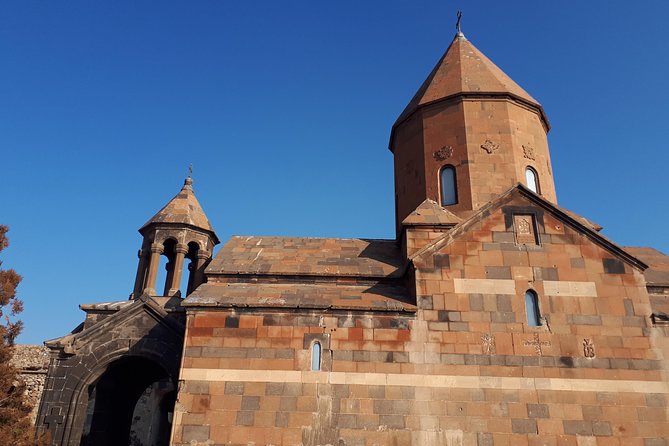
Day 1 is a strong “starter set” with three hits that cover different looks of Armenia.
Garni Temple: Sun-Temple Symmetry
Garni Temple sits in the village of Garni, about 30 km east of Yerevan. It’s a classical, colonnaded structure—clean lines that photograph well from multiple angles. Since admission is not included, you’ll want to keep an eye on what you’ll pay on the spot.
Photographically, this stop is about geometry. Try wide frames that show the temple’s setting, then step closer for repeating columns and shadow lines. If the light is bright, the shadows do half the work for you.
Geghard Monastery: UNESCO Carved Into the Mountain
Next up is the Monastery of Geghard. This one is listed as a UNESCO World Heritage Site with enhanced protection, and it’s partially carved into the adjacent mountain. Admission is free here, which is a nice win for your budget.
This is the stop for textured stone and layered architecture. Because the monastery blends into rock faces, you can frame scenes that feel sheltered on one side and open to dramatic cliffs on the other. For cameras, it’s great for contrast: dark carved interiors against brighter exterior stone.
A practical note for your photos: you’ll likely want multiple compositions—wide shots for the whole complex, plus close-ups where the carvings and stone seams create patterns.
Symphony of Stones (Garni Gorge): The Viewpoint That Feels Like a Stage
The day ends with Symphony of Stones, tied to the Garni Gorge area. You’ll be above the gorge on a promontory, and on a clear moment you can see the first-century AD Temple of Garni in the wider landscape context. The Garni Temple admission isn’t included, while the viewpoint stop is listed as 30 minutes with admission not included.
This is short and sweet by design. The goal is to get you a lookout moment you can build into a series of images: cliff lines, gorge depth, and the “mini stage” feeling from your elevated position. If you’re trying to capture both stone and scale, this is where you’ll benefit from having a zoom lens or a willingness to reposition quickly.
Day 1 takeaway: You’ll get classic architecture, UNESCO rock-carving detail, and gorge-scale views—enough variety to set your whole photo rhythm for the week.
Day 2: Khor Virap’s Ararat Mood, Areni Wine, and Noravank’s Red Cliffs
Day 2 shifts the mood from central high-value monuments to borderland views, then into a canyon monastery style that screams for photos.
Khor Virap: A Monastery With Major-View Energy
Khor Virap is an Armenian monastery in the Ararat Plain, near the border with Turkey, about 8 km south of Artashat. Admission is free, and the setting near ancient Artaxata gives it a sense of place.
Even if you only have a short time slot (listed as 1 hour), treat it like a golden-hours kind of stop. This area is famous for broad horizons, and for photography that means you’ll want to capture both the monastery itself and the way the surrounding plain opens out behind it.
Hin Areni Winery: Wine Tasting and a Photo-Friendly Break
Then you head to Hin Areni Winery for wine tasting and shopping, with a 30-minute stop. Admission is free, but you’re getting a real activity here, not just a photo pause.
This is also useful for your workflow. After hours of stone and churches, you’ll refresh your eye. Take a few photos of the tasting space only if it suits you—otherwise use it as a reset so your next stops feel sharp.
T’rchuneri (Bird) Cave / Areni-1 Complex: Ritual-Site Thinking
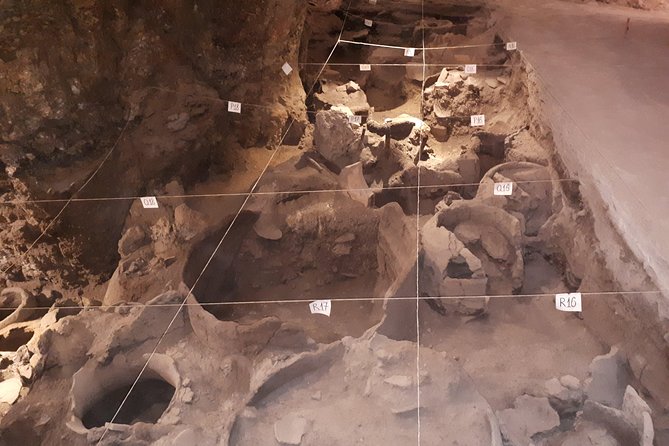
The tour stops at the Areni-1 cave complex near Areni village along the Arpa River. This is described as a multi-component late Chalcolithic/Early Bronze Age ritual site and settlement. Admission is not included.
Cave sites are a different kind of challenge: light levels can be tricky, and you’ll often have limited time to frame angles. If you shoot low light, be ready for noise or slow shutter trade-offs. If you don’t, prioritize composition where the cave structure creates strong shapes.
Noravank Monastery: Two-Storey Church in a Narrow Gorge
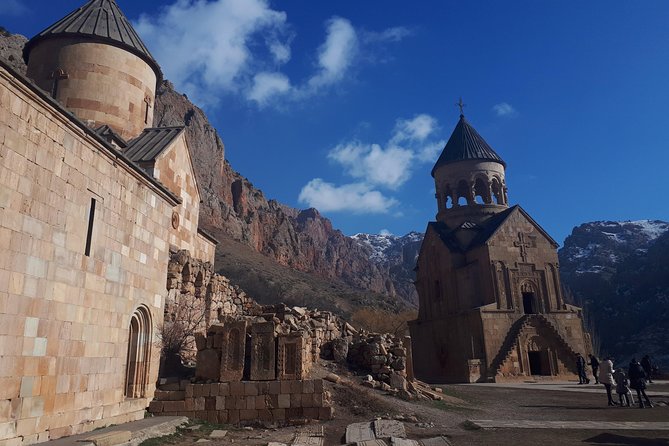
Noravank is a 13th-century monastery in a narrow gorge carved by the Amaghu River, near Yeghegnadzor. It’s known for tall, sheer, brick-red cliffs—exactly the kind of background that makes a small subject look huge.
Admission is free here, and you’ll have 45 minutes. Noravank’s Surb Astvatsatsin (Holy Mother of God) Church has two storeys, with access to the second floor via a narrow stone staircase jutting from the face of the building. That architectural feature is a gift for photographers: it gives you a vertical path and a framing line all at once.
Day 2 takeaway: You get big-horizon mood, a cultural break, and then gorge-red monastery drama that’s hard to replicate anywhere else.
Day 3: Lake Sevan Light at Sevanavank, Haghartsin’s Forest Monasteries, and Dilijan Town
Day 3 brings in water, then forests, then a town that’s meant for wandering.
Tsaghkadzor: Ski Resort Views Even Off-Season
Tsaghkadzor is a ski resort area above the town of Tsaghkadzor, roughly 60 km north east of Yerevan. It’s listed as 1 hour with admission free. Even if you’re not skiing, you’re there for photo potential: resort terrain gives you sweeping angles and wintery geometry if weather cooperates.
Use this stop to shoot the “in-between” landscapes: not just monuments, but Armenia’s mountain structure and the way human development sits against it.
Sevanavank: A Monastery Peninsula on Lake Sevan
Monastery Sevanavank sits on a peninsula at the northwestern shore of Lake Sevan. The background detail matters for your photos: it was originally on a southern island, and when Lake Sevan was artificially drained (starting in Stalin’s era), the island became a peninsula. Admission is free.
This is an ideal place to shoot water and stone together. Look for compositions where the monastery sits against the lake edge, then get close enough to show how the architecture holds up in a landscape that’s constantly moving.
Because this is a 1-hour stop, prioritize: one wide establishing shot, one medium architectural shot, and one detail crop.
Haghartsin Monastery: Three Churches and a Gavit
Haghartsin is near Dilijan in Tavush Province, built between the 10th and 13th centuries. The complex includes three churches (St. Gregory’s, St. Stephen’s, and St. Astvatsatsin) plus a gavit and refectory. Admission is free.
A complex like this rewards a slower pace within your time. The churches give you different building proportions, and the gavit/refectory areas help you build a sequence of images rather than a single frame.
Dilijan: Forest Town Atmosphere for a Final Wandering Shot
The day ends with Dilijan, a spa town inside Dilijan National Park. Admission is free, and you have 30 minutes.
This is a good “breathing” stop. Use it to shoot traditional Armenian architecture and street texture without feeling like you must deliver monument photos only. If you’re tired, keep it simple: capture a few compelling façades and exit before you lose interest.
Day 3 takeaway: water light, monastery architecture in forested terrain, then a town moment that lets you reset your eye.
Day 4: Saghmosavank Silhouettes, Amberd’s Fortress in the Clouds, and Kari Lake
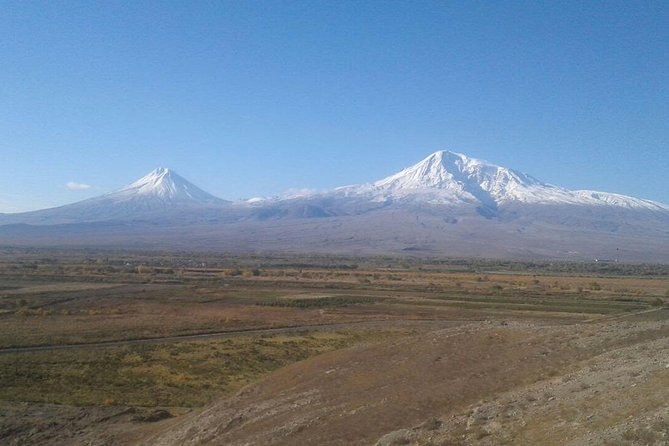
Day 4 is about altitude and shape. You’ll see how monasteries and fortresses behave when the mountains take over.
Saghmosavank Monastery: A 13th-Century Complex on a Precipitous Gorge
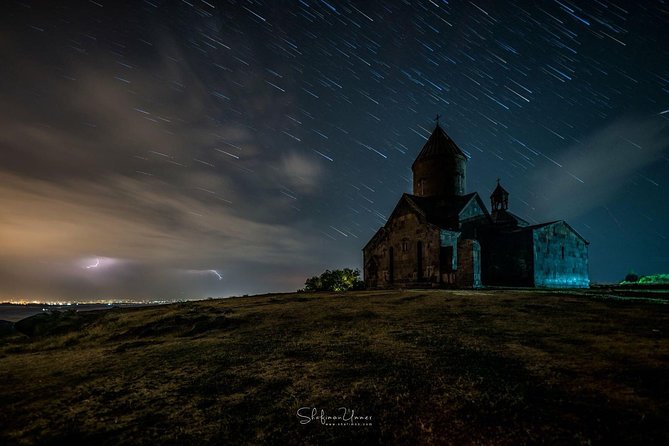
Saghmosavank is a 13th-century monastic complex on top of a gorge carved by the Kasagh River. Admission is free and the stop is 30 minutes.
This one is all about silhouette and positioning. When you’re shooting against mountainous backdrops, aim for frames where the monastery rooflines and stone edges are crisp against the sky or slope.
Kasagh River: Short Stop, Possible Reflections
The Kasagh River stop is brief (15 minutes) and free. This isn’t necessarily for landmark photos; it’s more of a timing and composition moment.
If you can find calm water or interesting bends, you might get soft reflections or leading lines. If the light isn’t cooperating, don’t force it—use the time to get ready mentally for Amberd.
Armenian Alphabet Monument: Cultural Identity on Mount Aragats
Then you visit the Armenian Alphabet Monument on the eastern slope of Mount Aragats in Artashavan. It commemorates the 1600th anniversary of the Armenian alphabet designed by Mesrop Mashtots in 405 AD. Admission is free.
This stop gives you a more modern cultural symbol, and that’s useful in a photography set. It breaks the pattern of only medieval stone. If you shoot signage-style subjects, look for angles where the monument sits against mountain texture.
Amberd Fortress: Fortress in the Clouds (And Why That Name Fits)
Amberd is a 10th-century fortress at about 2,300 m altitude, on Mount Aragats, near the confluence of the Arkashen and Amberd rivers. Admission is not included and the stop is 45 minutes.
This is where the phrase fortress in the clouds makes photographic sense. Higher altitude can mean crisp air and dramatic sky. You’ll want to photograph the fortress itself, but also the way it’s positioned against the mountain. When a subject is this far up, the “background” becomes part of the subject.
Kari Lake: Cold, Limpid, and Frozen for Most of the Year
Kari Lake is a freshwater lake at 3,185 m on the slopes of Mount Aragats. It’s listed as having a small surface area and cold, clear water, and it’s frozen for 8–9 months. Admission is free and time is 45 minutes.
This is a quiet finale for Day 4, and it’s excellent for landscape-style photos when conditions are right. You can frame it as a small jewel in a big mountain setting, or focus on texture at the shoreline.
Day 4 takeaway: silhouettes, high-altitude fortress drama, and a cold-water stop that changes your pace from monuments to atmosphere.
Day 5: Yerevan’s Cascade, Vernissage Art, and Sacred Sites at Etchmiadzin and Zvartnots
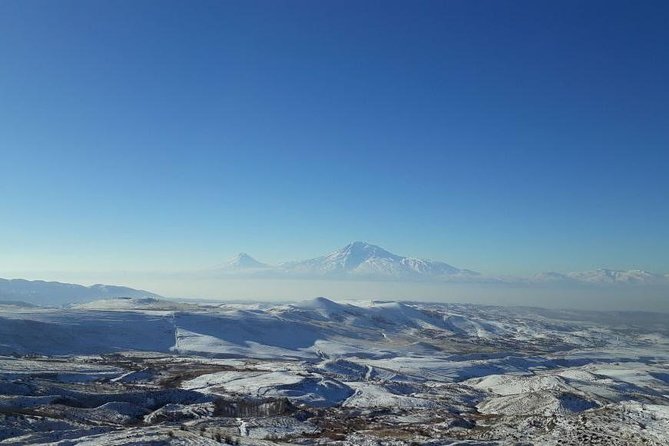
Your last day is where you trade mountain altitude for the energy of the capital and the sacred sites near Vagharshapat.
Cascade Complex: Stair Terraces and Sculpture Garden Vistas
In Yerevan, you visit the Cascade Complex with terraced gardens and long staircases, plus the Cafesjian Museum of Art area. Admission is free in the time slot (listed as 1 hour). The complex has been under construction over decades, with major parts completed by 2009.
For photography, the Cascade is a built-in viewpoint. The terraces and stairs create leading lines, and the wide angles let you capture both people-free architecture shots and moments if locals are around. If you want clean frames, go for early or late light when shadows are strong.
Vernissage Market: Armenian Crafts Along Aram Street
The Vernissage market is an open-air art market along Aram Street and Buzand Street, about 350 meters long. Admission is free and you have 1 hour.
This is a useful stop because it adds color and handmade texture to a week that’s been dominated by stone. For your camera, think close-ups: details on crafts, displays, and faces only if you can do it respectfully.
Victory Park and Mother Armenia: Big Soviet-Era Monument Scale
Victory Park and the Statue of Mother Armenia are next. The stop is 30 minutes and free. The park ties to the late 1930s and was renamed Victory Park after the Great Patriotic War.
This is a “scale” photo stop. Look for wide compositions that show the statue’s dominance and also tighter crops where the monument’s surfaces and lines create strong geometry.
Etchmiadzin Cathedral: The Armenian Apostolic Church’s Mother Church
Etchmiadzin Cathedral is the mother church of the Armenian Apostolic Church, located in the city also known as Etchmiadzin and Vagharshapat. Admission is free and time is 30 minutes.
Cathedral photography often gets tricky because of rules and crowd flow. In your time slot, prioritize respectful exterior compositions and one or two interior images if they’re allowed. Even from outside, the cathedral’s significance reads in its form.
Zvartnots Temple: 7th-Century Ruins With a Distinct Circular Plan
Finally, you visit Zvartnots Temple (Zvartnots Cathedral), a 7th-century cathedral now in ruins near Vagharshapat. The stop is 45 minutes and admission is not included.
Zvartnots is worth planning around because ruins give you clean photo logic: you can shoot the circular exterior idea and also study surviving interior piers. Ruins are also a good place for black-and-white if you like tonal contrast.
Day 5 takeaway: you end with Yerevan structure, craft and culture, then a set of sacred architecture that mixes living cathedral and ruin.
Price and Value: What $626 per Group Really Buys
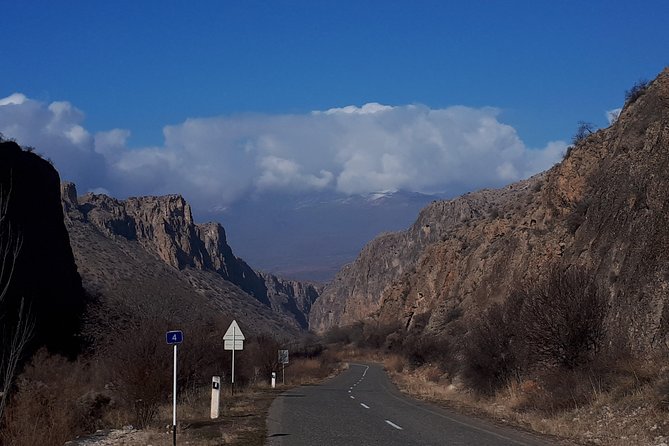
The price is $626.00 per group, up to 3 people, for about 5 days. That grouping matters. You’re paying for a private vehicle with a professional driver, fuel and parking coverage, wine tasting, and all taxes and fees tied to the tour.
So the real value calculation is this: how much would it cost you to line up the same route with private transport, timed stops, and a wine stop included? For small groups, the per-person math can be far kinder than taking separate taxis or trying to self-drive the whole loop, especially when you want to keep your camera schedule tight.
What’s not included is equally important. Entry tickets to attractions aren’t covered, and accommodation and food/drinks are also not included unless you add them. So you should think of the tour as the transport + planning + key experiences package, and treat attractions like Geghard and Noravank as sometimes free but sometimes paid depending on the site.
In plain terms: the price is fair when you want convenience and you’ll actually use the private route.
What You’ll Want to Bring for Better Photos
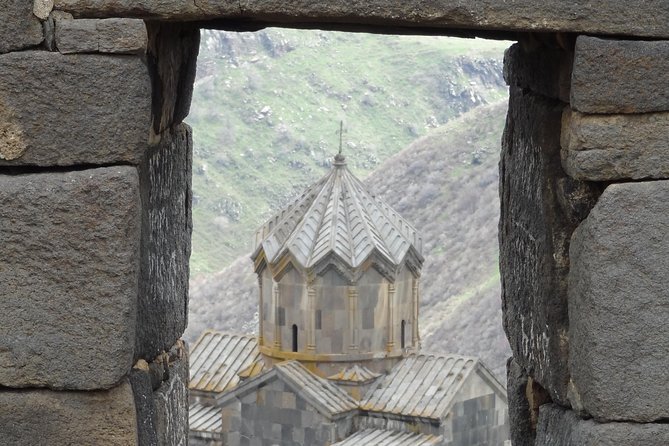
This tour has a mix of sacred sites and outdoor lookouts, plus a high-altitude lake day. You don’t need special gear to enjoy it, but you do want comfort so you can keep shooting.
- A camera setup you can adjust fast between dark interiors and bright stone exteriors
- A light jacket even if it looks warm in the city, since higher areas can feel colder
- Water and a snack plan for days where food isn’t part of the tour cost
- A way to handle entry ticket spending on top of the tour price
If you’re shooting video or doing long exposures at night later in Yerevan, plan your charging strategy too. The tour runs multiple stops daily, so battery management becomes part of the experience.
Who This Tour Suits Best
This tour fits you if you want a photography-focused itinerary without having to plan every turn. You’ll also like it if you prefer guided transport and flexible timing over strict checklist tourism.
It’s a good match for:
- Small groups (up to 3) who share a vehicle and want to coordinate photo timing
- People who like a mix of architecture and nature rather than only landscapes or only churches
- Travelers who appreciate cultural context, especially around UNESCO sites and Armenian heritage monuments
If you need a long, slow pace with lots of downtime, you might find the structure busy. But if your goal is to leave Armenia with a strong set of images across very different scenes, this route makes sense.
Should You Book This 5-Day Armenia Photography Tour?
If you’re traveling in a small group and you want an efficient photo route based in Yerevan, I’d say it’s worth booking. The combination of private transport, smart daily variety, and built-in wine tasting gives you more than just a monument tour. The chance of schedule flexibility, plus a driver who can act more like a guide, is the kind of practical advantage that improves your day-to-day experience.
Just budget for entry tickets at the paid stops, and accept that some days are designed to maximize photo moments rather than lounge time. If that sounds like your style, you’ll likely come away with a set of images that feel connected by theme: Armenia’s stone, sky, and human stories—captured in one continuous week.
FAQ
How long is the tour?
The tour lasts about 5 days.
What is the price and group size?
It costs $626.00 per group, up to 3 people.
Where does the tour operate?
The tour is based in Yerevan, Armenia.
Is pickup included?
Yes, pickup is offered.
What is included in the tour price?
It includes a professional driver, transport by private air-conditioned vehicle, fuel and parking fees, wine tasting, and all taxes, fees, and handling charges.
Are entry tickets to attractions included?
No. Entry tickets to attractions are not included.
Is accommodation included?
No. Accommodation is not included.
Are food and drinks included?
Food and drinks are not included (unless requested).
Is a professional guide included?
A professional guide is available upon request.
What languages are offered?
Possible languages are English and Russian. If another language is arranged, prices may change.
Can I cancel for a full refund?
Yes. You can cancel up to 24 hours in advance for a full refund. If you cancel less than 24 hours before the start time, the amount paid is not refunded.