REVIEW · TROMSO
Tromsø: Northern Lights Hunt with Photographer
Book on GetYourGuide →Operated by Your Tromsø Guide · Bookable on GetYourGuide
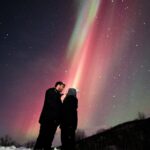
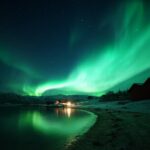
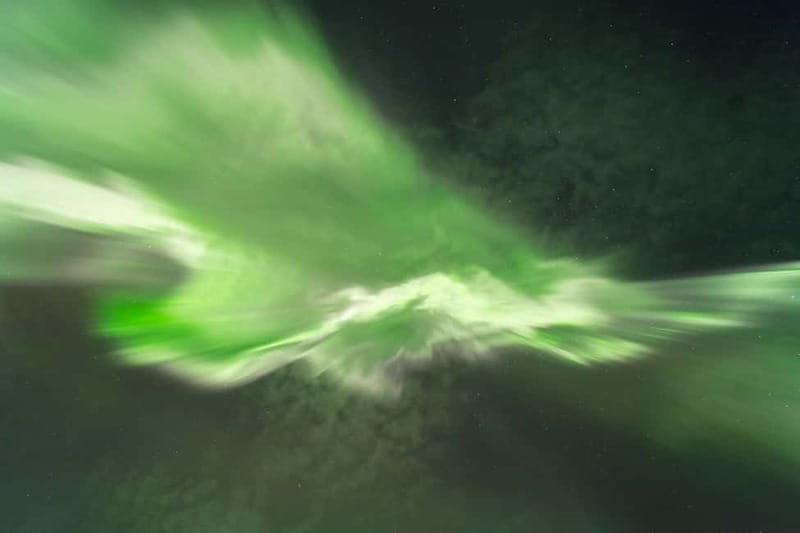
Photos and soup come with the aurora.
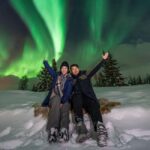
This Tromsø experience pairs small group evenings with guide Mirko and includes professional photos so you’re not only hoping for green skies—you’re preparing to capture them. The vibe is intimate, and the whole night is built around finding darker conditions outside the city.
I especially like the way the tour mixes practical Northern Lights guidance with local context about the region. You get campfire warmth while you wait, plus a real photo workshop that helps you set up your camera in the cold.
One thing to weigh: the aurora is never guaranteed. Even with smart planning and clear-sky chasing, you can end up with cloudy skies or low solar activity—so go with flexibility, not expectations of a sure show.
In This Review
- Key highlights you’ll actually feel during the night
- Meeting at the Ice Bar and getting winter-ready fast
- How the aurora hunt works when Tromsø skies don’t cooperate
- The quiet spot: why “where you stand” matters more than you expect
- Campfire time: homemade soup, hot chocolate, and a calmer wait
- Photo tripod support plus a real camera workshop
- The timeline: 7 hours of aurora hunting, not just a quick stop
- Price ($241) and whether this feels like good value
- Who this suits best (and who should skip it)
- Rules and practical notes that protect the experience
- Should you book this Tromsø photographer aurora hunt?
- FAQ
- How long is the Northern Lights tour?
- What’s included in the price?
- Is the Northern Lights guaranteed?
- Where do we meet?
- What should I bring?
- What language is the guide?
Key highlights you’ll actually feel during the night
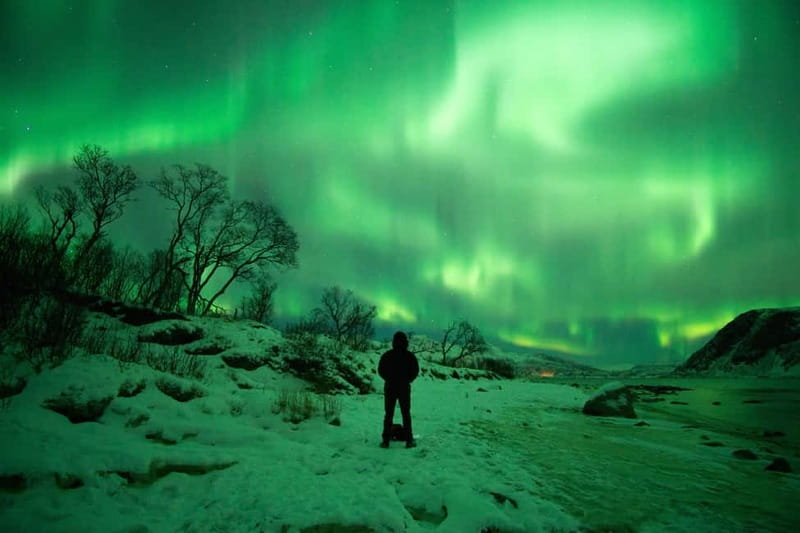
- Small group (max 8): less waiting around, more time at the best spot.
- Clear-sky “aurora hunt” driving: the route adjusts based on weather, not a fixed checklist.
- Thermal suit + proper setup: warmer bodies mean you can focus on watching and shooting.
- Campfire dinner of homemade soup and hot drinks: waiting becomes part of the experience.
- Tripod support + photo workshop: you’ll learn settings and shooting basics on location.
- Guide-taken professional photos: you get your aurora memory even if your camera misses.
Meeting at the Ice Bar and getting winter-ready fast
Most aurora tours start with a promise and end with a frantic scramble. This one starts calmer. You meet in front of the Ice Bar in Tromsø, then you’ll gear up for the Arctic night.
Thermal suits are provided, and that matters more than you think. If your core is warm, you can stand still long enough to let the aurora develop—and you’re less likely to rush your camera shots just because your hands are freezing. Still, the tour strongly encourages you to wear basic winter clothing (inner layers), even though you’ll get the suit.
You’ll also want to bring the basics listed by the operator: a hat, gloves, scarf, snow clothing, and water. I’m glad water is included in the guidance. In cold weather you don’t always feel thirsty, but you still need hydration.
You can also read our reviews of more tours and experiences in Tromso.
How the aurora hunt works when Tromsø skies don’t cooperate
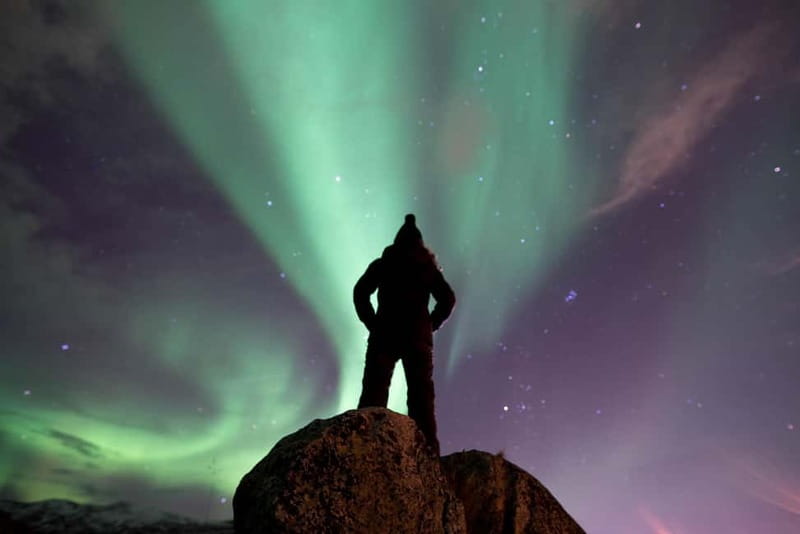
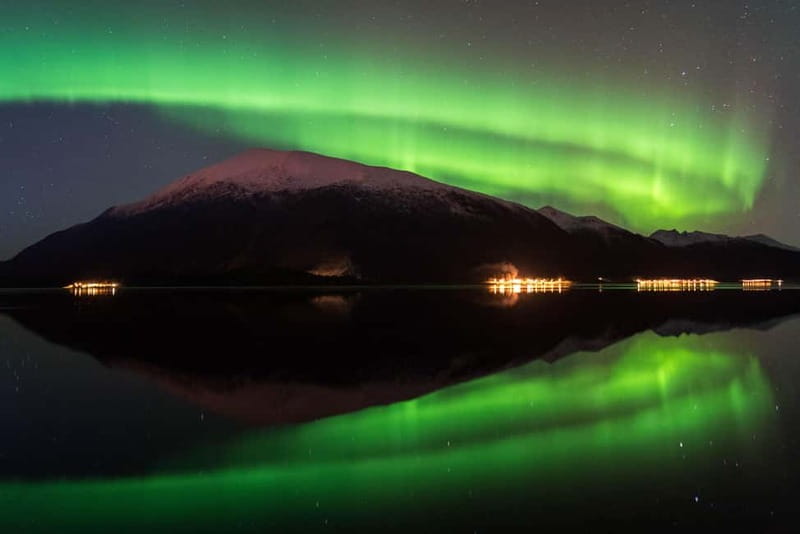
The core idea is simple: to see the Northern Lights, you need darker skies than Tromsø’s city lights. The tour runs outside the city and moves based on real-time conditions.
Here’s what makes it work for you:
- Your guide prioritizes clear skies because clouds can block the aurora.
- If Tromsø is cloudy, the plan can shift. The direction depends on evening weather, and you may even cross into Finland if conditions look better there.
- Waiting is part of it. The lights can show up after minutes—or take a couple of hours.
In other words, you’re not just sitting and staring. You’re doing an actual “search,” guided by someone who understands local cloud patterns and winter conditions. One of the best practical takeaways is to go in with the mindset that the night is about positioning and timing, not control.
The quiet spot: why “where you stand” matters more than you expect
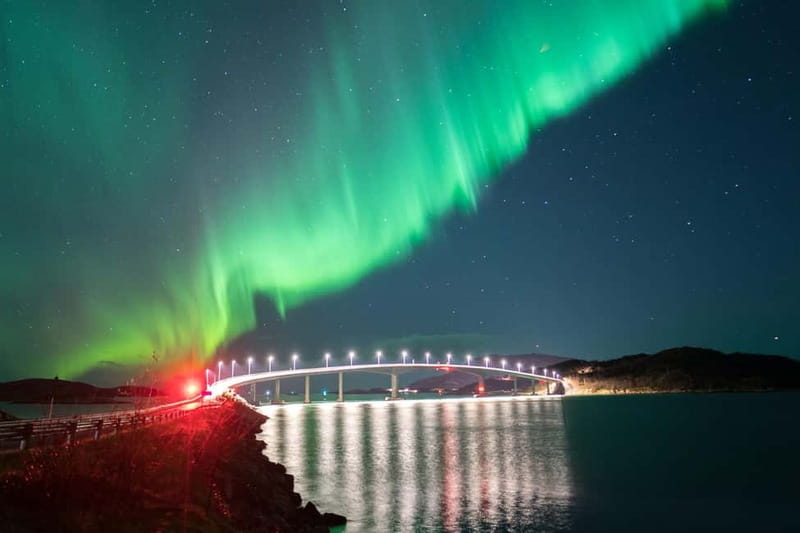
Once conditions look promising, you stop in a location that aims to minimize outside interference—quiet, away from other groups and artificial lights. That’s a big deal for your viewing quality and your photos.
Aurora watching can be oddly hard to judge in advance. Even on an active night, the difference between:
- a bright environment and
- a darker one
can be the difference between “green smudge” and a clear, dramatic display.
The small-group limit (up to 8 participants) helps here. When the group is small, you tend to have fewer people clustered together fighting for the best angles. It’s also easier for the guide to fine-tune where you stand and when you move.
Campfire time: homemade soup, hot chocolate, and a calmer wait
The best aurora nights have a second rhythm: the pause between excitement. This tour builds that pause into the schedule with warmth and food.
After you’re set in the viewing area, you’ll light a campfire and warm up with homemade soup, bread, and hot drinks like hot chocolate, tea, and coffee. You’ll also get cookies. It turns “waiting for the sky” into something you actually enjoy, instead of time you endure.
This is one of my favorite parts because it keeps your energy steady. If you’re cold and hungry, your attention drifts. If you’re warm and fed, you stay present—watching, noticing the subtle changes, and letting your eyes adjust to the dark.
There’s also a cultural layer here. Your guide shares explanations about the Northern Lights plus history and culture tied to the region. That transforms the night from just a photo mission into a better understanding of what you’re seeing.
Photo tripod support plus a real camera workshop
If you’ve ever tried to photograph the Northern Lights with an ordinary camera setup, you know the frustration: the lights move, exposure takes time, and the results can look nothing like what you see with your eyes.
This tour gives you two big advantages for photography:
- Professional tripods for stable shots
- A photo workshop that teaches you how to set up your camera for aurora capture
You’ll also learn basic approach while you’re on site, not later in a classroom. That’s the key difference. The workshop is designed for this exact environment—cold hands, low light, long exposures, and the need to keep your framing steady.
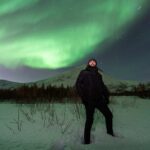
Then comes the safety net: the guide takes professional photos of you. So even if your camera learning curve is steeper than you expected, you still leave with strong images.
Tip for your own odds: bring a camera you can control manually (or at least semi-manually), and be ready to copy the guide’s suggested settings. The goal isn’t fancy gear; it’s correct exposure and stability.
The timeline: 7 hours of aurora hunting, not just a quick stop
The total duration is 7 hours, but the exact timing depends on what the weather does. Sometimes the drive is shorter; other times you travel farther to find clearer skies.
That flexibility is what you want, honestly. Aurora nights are dynamic. Cloud cover can shift, and solar activity can be variable. A tour that locks you into one location would be riskier.
In practical terms, plan for:
- a chunk of time traveling to the right region,
- time searching for a better sky,
- and time waiting quietly where you stop.
You’ll spend meaningful time outside. The thermal suit helps, but you’ll still feel winter in your face and hands if you underdress. Dress like you’re going to be outside a long time, not like you’re taking a short walk.
Price ($241) and whether this feels like good value
At $241 per person, this isn’t the cheapest way to chase the aurora. But it’s not random pricing either. You’re paying for several things bundled together that would cost more separately:
- thermal suit included
- professional tripods provided
- a photo workshop included
- dinner built around homemade soup, bread, and hot drinks
- professional trip photos included
The math is easiest when you compare what you’d otherwise need to spend to get similar results. If you already own the right tripod and know how to use it, you still get the guide’s role in finding the sky and setting expectations. If you don’t, the workshop and tripods become even more valuable.
To me, the biggest “value” factor is the small-group size. A group up to 8 tends to feel more personal, which matters on a night where positioning and patience are everything.
Who this suits best (and who should skip it)
This experience is built for adults and teens who can comfortably handle cold conditions outdoors for extended periods.
It’s not suitable for:
- children under 14
- people with mobility impairments
- wheelchair users
- people over 70
So if you’re within the age range and you can stand or walk in winter conditions, you’re a good fit—especially if you want more than just a sighting.
You’ll likely enjoy this tour most if you:
- care about photography (or at least want help getting photos that look right)
- want a guide who explains what you’re seeing
- prefer a smaller, calmer night over big bus energy
It also helps if you’re the type who can enjoy waiting. The aurora can take time, and this tour treats that as part of the fun.
Rules and practical notes that protect the experience
A night like this has a few strict boundaries, mostly to keep everyone warm and comfortable.
- Smoking is prohibited at all times during the excursion, including breaks outside the vehicle. In a small minivan setting and with shared gear, smoke can stick to jackets and gloves fast.
- No pets.
- No baby strollers.
- No alcohol or drugs.
- No unaccompanied minors.
- No fireworks.
- Food and drinks aren’t allowed in the vehicle.
I like that the rules are clear. It usually means fewer distractions and a smoother experience when the group is focused on the sky.
Should you book this Tromsø photographer aurora hunt?
I’d book it if you want an aurora night that’s practical, warm, and photo-focused—with a guide who’s actively searching for clear conditions rather than just following a fixed route. The inclusion of thermal suits, tripods, a camera workshop, homemade campfire food, and professional photos makes this feel like a complete package, not a hope-and-pray outing.
I’d think twice if you’re only comfortable with fixed schedules and guaranteed outcomes. The aurora can be elusive. Even on a well-run hunt, the sky can stay covered. If you can stay flexible and enjoy the full “wait, learn, warm up, shoot, repeat” rhythm, this tour fits well.
If you want, tell me your travel month and whether you’re bringing your own camera. I can suggest what to pack for that specific temperature range (winter here can run from +5°C to -30°C) and how to prioritize shooting settings.
FAQ
How long is the Northern Lights tour?
The tour lasts 7 hours, and the exact timing can vary depending on how long it takes to find clear skies.
What’s included in the price?
You get a thermal suit, professional tripods, a Northern Lights photo workshop, professional photos taken by the guide, and dinner with homemade soup, bread, and hot drinks. There’s also a campfire for warmth.
Is the Northern Lights guaranteed?
No. The aurora is unpredictable. The guide will do everything possible to find clear skies, but a sighting can’t be guaranteed.
Where do we meet?
You meet in front of the Ice Bar.
What should I bring?
Bring a passport or ID, hat, water, gloves, snow clothing, and scarf/thermal layers. The operator also recommends you wear inner layers even with the thermal suit provided.
What language is the guide?
The live guide speaks French.