REVIEW · METEORA
Private Meteora By Night Photography Tour
Book on Viator →Operated by METEORA PHOTO TOUR · Bookable on Viator
Night shoots in Meteora are pure magic. This private tour is built for night photography in one of Greece’s most dramatic landscapes, and you also get a close-up look at a UNESCO World Heritage Site. I love the way Christos helps you nail low-light camera settings, and I love the push to get to the right viewpoint at the right moment. One thing to consider: it’s very photo-focused, so if you’re mainly after a relaxed stroll, you might feel a bit on a schedule.
You’ll pick from several start times and join a guide who grew up in the area, so the evening isn’t just pretty—it’s planned. Pickup is offered, and you stay in a private setup where only your group participates, which makes it easier to ask questions and adjust at your pace.
In This Review
- Key highlights worth showing up for
- Meteora at Night: why this tour feels different
- Meet Christos and get “camera help,” not just directions
- The Great Meteoron Monastery photo session (outside shots)
- A realistic drawback
- How the 4-hour evening flows (and what you’ll actually do)
- Night photography basics you’ll appreciate (even before the coach talk)
- Pickup, private format, and why logistics change the quality
- One consideration about the private setup
- Where this tour fits best (and who might skip it)
- Price and value: is $155.12 worth it for a 4-hour private shoot?
- Quick practical tips before you go
- Should you book Private Meteora by Night Photography?
- FAQ
- How long is the Private Meteora By Night Photography Tour?
- Is this tour private?
- Do you offer pickup?
- Do I need to buy an admission ticket for Great Meteoron Monastery?
- What should I bring?
- Are there different start times?
- What is the cancellation policy?
Key highlights worth showing up for
- Christos brings pro photo skills plus real teaching: he actively helps with your camera settings, not just where to stand
- Right spots, right timing: he guides you to the viewpoints when the light and shadows behave best
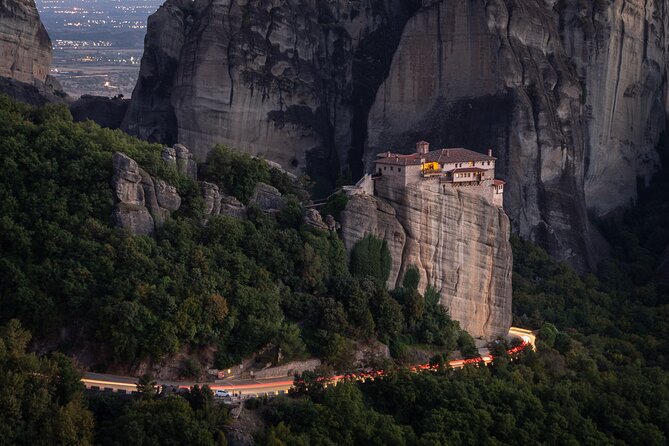
- Great Meteoron Monastery exterior photo stop: a dedicated session framed for good results, with admission listed as free
- UNESCO Meteora rock-pillars experience at night: you see the monasteries in a completely different mood
- A private, flexible 4-hour format: convenient start times, pickup option, and only your group with you
Meteora at Night: why this tour feels different
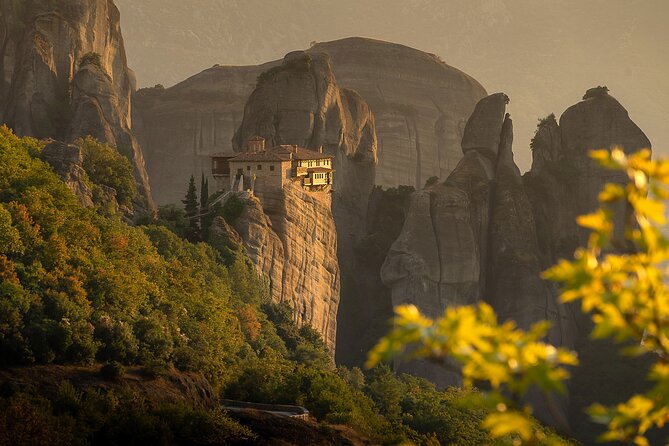
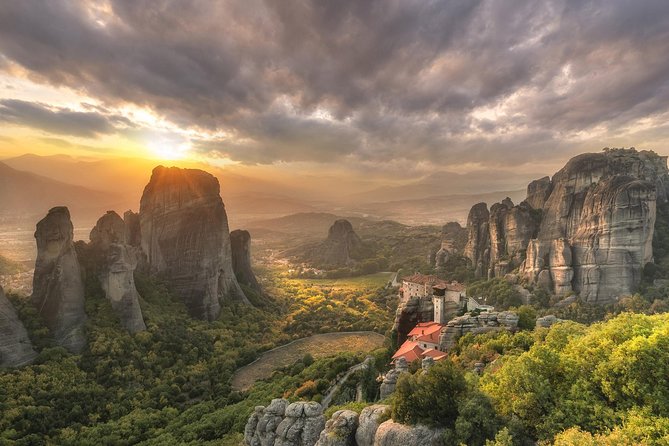
Meteora by day is already wow. Meteora at night turns the whole place into a darker, moodier stage—rock pillars and monastery silhouettes that look like they’re lit on purpose. That change is exactly why a night photography tour makes sense: you’re not just sightseeing, you’re using the setting’s natural drama to make stronger images.
What I like about this kind of tour is that it’s not random. You’re not wandering around with a vague plan. You’re led to viewpoints and supported while you work through the tricky part of night shooting—low light, shaky hands, and the way focus and exposure behave after dark.
Also, the tour is private. That matters more than people think. When you’re trying to figure out settings in a dark parking spot—while everyone else is trying to move on—privacy is a big comfort boost. It also makes it easier to tailor the pace.
You can also read our reviews of more tours and experiences in Meteora.
Meet Christos and get “camera help,” not just directions
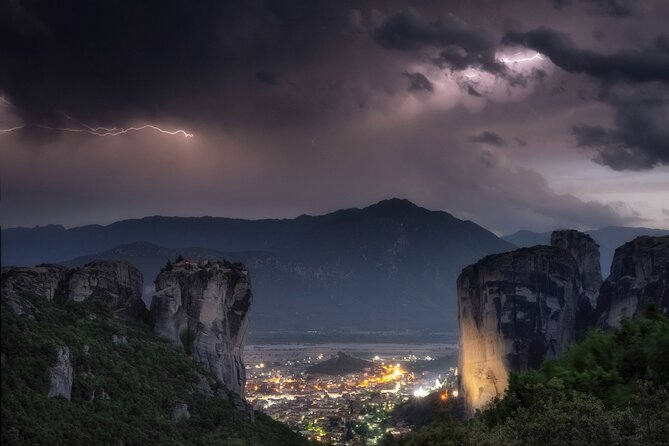
Christos is at the center of why this works. The praise around his approach is consistent: he’s a professional photographer, and he teaches while you shoot. In practical terms, that means you’re not left guessing.
Here’s what that coaching can change for you:
- You stop relying on auto mode in the dark and start using your camera in a way that fits night conditions.
- You get placed where your composition actually has depth—rock pillars, monastery shapes, and dark sky all working together.
- You can ask quick questions as you go, instead of trying to learn everything at home later.
One specific theme from the experiences shared is that Christos is friendly and easy to be around, even for people who feel nervous about being out at night. If you’re traveling solo (especially as a woman), that kind of comfort can be the difference between enjoying the night and rushing through it.
And since Christos grew up in the area, you get something beyond generic photography talk: he knows the best spots and the timing. That local timing piece matters a lot after sunset, because the light isn’t constant. Shadows shift. Highlights fade. Even when the sky stays dark, the contrast around the rock formations changes.
The Great Meteoron Monastery photo session (outside shots)
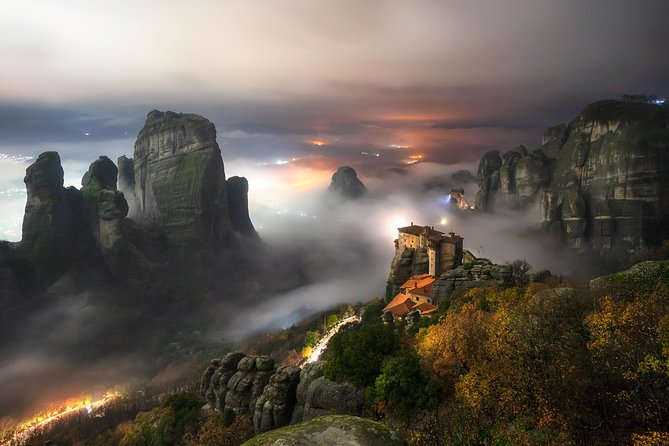
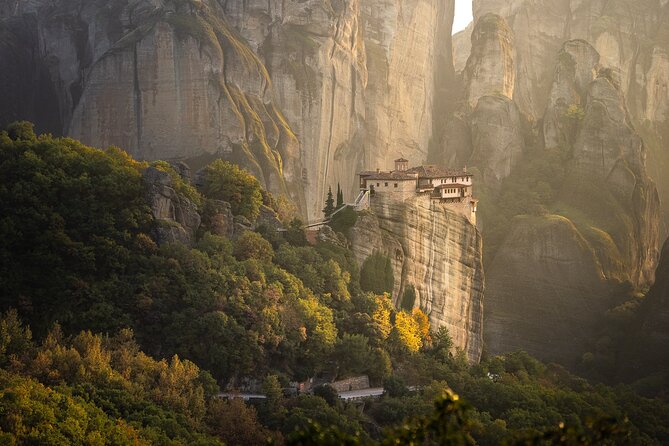
Your first named stop is Great Meteoron Monastery. You’ll photograph it from the outside, and the session is listed at about 30 minutes. Admission for that stop is noted as free, which is useful if you’re trying to keep the overall day costs under control.
Why this stop is smart on a night shoot:
- Great Meteoron has a recognizable shape, so it’s easier to frame when everything else is dark.
- The outside viewing angle helps you capture monastery architecture against the broader rock setting.
- It gives you a baseline subject early in the tour, so you can dial in settings before you move on to more creative compositions.
You also get direct help here with camera settings. The simple takeaway: use this first session to test and adjust. If you wait until later, you may spend the most time fighting exposure. Use the Great Meteoron time to get comfortable with your camera at night—then let the rest of the viewpoints become about composition.
A realistic drawback
Thirty minutes at the first stop can feel quick if you’re brand new to night photography. The benefit is that the pace keeps you moving toward better shooting moments. The trade-off is you’ll want to arrive ready to shoot immediately, not after a long setup.
How the 4-hour evening flows (and what you’ll actually do)
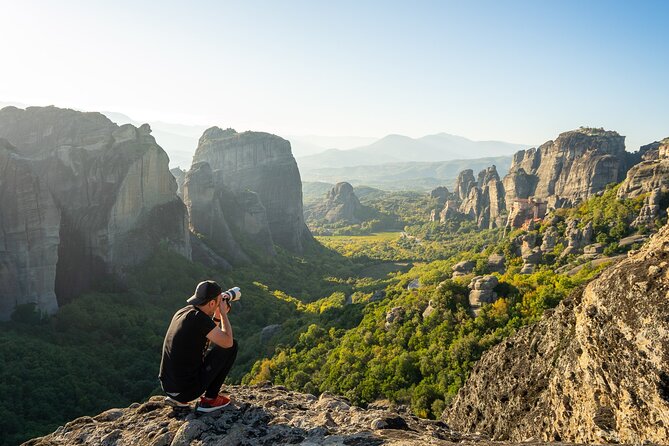
This tour runs about 4 hours. Since only Great Meteoron is specifically named in the itinerary you have, the rest of the evening is best thought of as a sequence of viewpoint stops around Meteora’s rock pillars.
A typical rhythm you can expect:
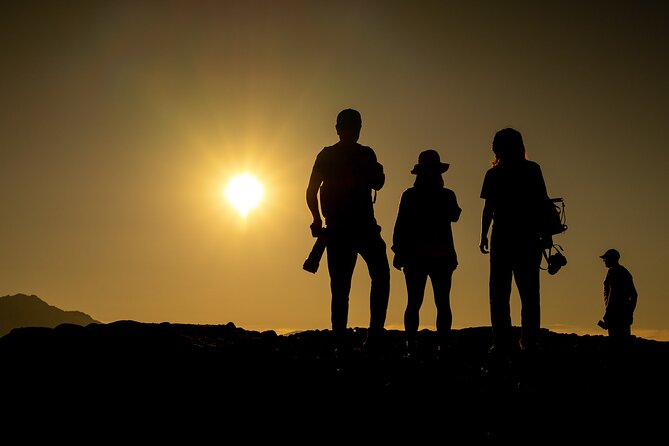
- Meet your guide and get oriented quickly, including what you’re aiming to capture that night.
- Move between viewpoints so you can work with different angles and compositions.
- Practice low-light photography with on-the-spot tips and instructions.
- Adjust settings as you go, because night conditions change faster than you expect.
The value of this structure is that it forces learning through doing. Night photography isn’t one skill. It’s a bundle: exposure, focus, composition, and dealing with motion. When you spread those challenges across several viewpoint moments, you get more reps—more chances to correct what didn’t work.
You also get to choose from several start times. That’s more useful than it sounds. If you pick a start time that matches your energy level and your comfort with being out later, you’ll enjoy the night more. If you only have one window, at least the tour gives options so you can pick what feels workable.
Night photography basics you’ll appreciate (even before the coach talk)
Even though the guide helps you, you’ll enjoy the tour more if you bring a little night-awareness with you. Here are a few ideas that pair well with hands-on instruction:
- Bring your camera and be ready to experiment. Night shooting rewards people who try, fail, adjust, and try again.
- Expect focus to be harder after dark. Your camera may hunt. Your guide’s help can save time, but you still want patience.
- Plan for longer exposures. If you’re using settings that need steadiness, your photos will improve when you reduce movement.
- Watch your horizon and edges. At night, it’s easy to accidentally cut off the monastery shape or tilt frames, especially when you’re concentrating on exposure.
If you already shoot at night as a hobby, you’ll likely appreciate the targeted guidance. If you’re new, don’t worry—you’re not being sent away to figure it out alone. The tour’s core feature is that you get help while you shoot.
Pickup, private format, and why logistics change the quality
At $155.12 per person, this isn’t a huge-budget activity, but it’s not a casual add-on either. So you want to feel clear on what that price buys.
Here’s what it buys you, based on the tour details:
- Private tour: only your group participates, so you’re not rushed by strangers’ timelines.
- Pickup offered: less stress, especially once it’s dark and you’re focused on shooting.
- Mobile ticket: no paper hunt.
- Group discounts: if you’re traveling with friends or family, the value can improve.
Most importantly, you’re paying for guided positioning and real-time instruction. In a place like Meteora, where views are strong but lighting is everything, that guidance is the difference between a decent shot and a keeper.
One consideration about the private setup
Private also means you’re paying for a dedicated experience. If you’re the type who wants lots of walking and casual wandering with no instruction, this might feel too structured. If you want instruction and a photo plan, it’s a great match.
Where this tour fits best (and who might skip it)
This is a strong choice if:
- You care about night photography and want guidance on camera settings.
- You want a flexible evening with multiple start times.
- You prefer private attention so you can ask questions and move at your pace.
- You’re visiting Meteora and want one efficient, high-impact night outing.
It may be less ideal if:
- You don’t want to work with a camera at all and prefer a pure sightseeing trip.
- You dislike being out at night, even if the tour is guided and paced.
In terms of participation, the tour notes that most travelers can participate and that service animals are allowed. It’s also near public transportation, which is helpful if you’d rather not rely on pickup.
Price and value: is $155.12 worth it for a 4-hour private shoot?
Let’s be practical. At $155.12 per person for about 4 hours, you’re paying for a private guide plus active instruction. You’re also paying for time spent at the best moments for night imagery, including a dedicated stop at Great Meteoron.
You’re not just buying access to a viewpoint. You’re buying:
- guided selection of viewpoints around Meteora,
- support while you adjust camera settings,
- and pacing that helps you produce better images in fewer hours.
If you’re already a serious photographer, you may feel the cost is justified because you get feedback and correction while you shoot. If you’re a first-time night shooter, it often feels even better value, because you skip the trial-and-error phase that usually happens after the trip.
There’s also a potential value win if you travel in a group. The tour includes group discounts, so splitting the expense can reduce the per-person hit.
Quick practical tips before you go
These won’t be flashy, but they’ll help you enjoy the evening more:
- Bring your camera fully charged and ready to shoot quickly.
- If you have a preference for how you like to shoot (very bright vs. moodier and darker), tell the guide so you can aim your settings.
- Wear something comfortable for low-light walking and standing still for composition.
- Treat Great Meteoron as your warm-up session. Use it to test settings, then refine as you move to other viewpoints.
Should you book Private Meteora by Night Photography?
If you want a Meteora night that’s more than sightseeing, I’d book it. The private format and the hands-on help from Christos are the core reasons. You’re not left alone with a camera in the dark—you get guidance, you get placement, and you get to practice night photography in an iconic setting.
Book it especially if:
- you’re serious about getting better low-light photos,
- you want a friendly, confidence-building guide,
- and you like having an organized plan even when the sky is doing its own thing.
Skip it if you only want a general tour with no photo focus. This experience is designed for people who want to shoot.
FAQ
How long is the Private Meteora By Night Photography Tour?
The tour lasts about 4 hours.
Is this tour private?
Yes. Only your group will participate.
Do you offer pickup?
Pickup is offered.
Do I need to buy an admission ticket for Great Meteoron Monastery?
For the Great Meteoron Monastery stop listed in the tour, admission is listed as free.
What should I bring?
Bring your camera, since you’ll be practicing night photography and learning camera settings.
Are there different start times?
Yes. You can pick from several convenient start times.
What is the cancellation policy?
You can cancel for a full refund up to 24 hours in advance. If you cancel less than 24 hours before the start time, the amount paid is not refunded.