REVIEW · PRAGUE
Small-Group Walking Photo Tour of Prague
Book on Viator →Operated by Jan Miracky · Bookable on Viator
Prague glows after sunset, and so does your camera. This small-group walking photo tour is designed for learning how to frame Prague—step by step—while you shoot famous landmarks and some quieter angles. I like that it’s paced for real photography teaching, not just sightseeing.
My favorite part is the focus on practical skills like composition and exposure time, guided by professional photographer Jan Miracky. One thing to consider: you’ll be walking for about 3 hours with a moderate fitness level in the evening, so comfy shoes matter (and there are viewpoints and steps).
In This Review
- Key things you’ll notice on this Prague photo tour
- Why an evening Prague photo walk works (and feels different)
- Meeting at Powder Tower and walking with a pro (Jan Miracky)
- Charles Bridge: better angles in a tight 20 minutes
- Old Town Square with Týn Church and the Astronomical Clock
- Letná Park: viewpoint shots and Vltava bridge lines
- Manes Bridge: architecture, abstract ideas, and riverside cityscapes
- Devil’s Channel: short stop, strong texture and mood
- The final stretch toward the Castle area (and why it matters)
- Price and value: what you’re paying for at $193 per person
- What to bring so you can actually use the coaching
- Who should book this Prague photo tour (and who might pass)
- FAQ
- FAQ
- What time does the small-group photo tour in Prague start?
- How long is the Prague photo tour?
- Where do I meet the guide?
- Where does the tour end?
- How many people are in the group?
- Is the tour in English?
- Are admission tickets required for the stops?
- Is food and drinks included?
- Is free cancellation available?
- Should you book this Prague photo tour?
Key things you’ll notice on this Prague photo tour
- Max 3 travelers and limited to 3 photographers: you get real attention, not queue-time.
- Hands-on camera coaching on location: composition and exposure time tips are tied to what you’re actually photographing.
- Charles Bridge + Old Town Square in one flow: you learn how to see iconic scenes from new angles.
- Vltava viewpoints at Letná and Manes Bridge: great for bridges, river reflections, and cityscapes.
- A stop at Devil’s Channel: short, moody, and good for texture and pattern shots.
- Professional guide (Jan Miracky) who stays flexible: the vibe stays calm, and people can shoot at their own pace.
Why an evening Prague photo walk works (and feels different)
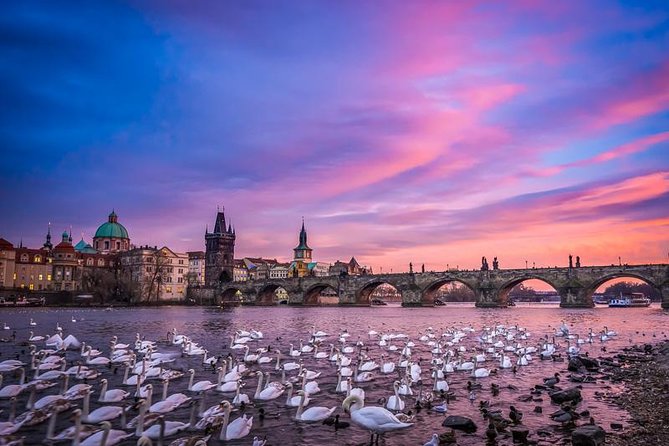
Starting at 5:00 pm is smart. In Prague, that’s when light starts shifting—street lamps warm up, skies can go dramatic, and shadows stretch along stone façades and bridges. Even if you’re using a phone, the change in light is exactly when photography advice pays off, because you can test settings right away.
This tour isn’t built like a checklist. It’s more like a guided photo lesson you can physically walk through: stop, shoot, adjust, then move. That matters because composition isn’t something you learn only in theory—you learn it by trying, failing a little, and getting corrected fast.
And since the group is capped at up to 3 travelers, your guide isn’t stuck repeating the same instructions for a big crowd. You’ll get feedback that matches what you’re pointing at, and you can keep shooting instead of waiting your turn.
You can also read our reviews of more tours and experiences in Prague.
Meeting at Powder Tower and walking with a pro (Jan Miracky)
You’ll meet at the Powder Tower (Nám. Republiky 5, Staré Město) and finish near the Old Town Bridge Tower on Karlův most. That end point is a nice touch: it keeps the walk connected to the river and gives you a strong closing view as you head back into the old center.
The guide for this experience is Jan Miracky, a professional photographer. Based on how people describe their time with him, the coaching style is patient and practical—more “try this” than “look at me doing it.” People also highlight that he can adapt to different skill levels, which is huge if your group includes someone who’s brand new versus someone who knows their way around manual settings.
Also, this is listed as near public transportation and uses a mobile ticket, so you’re not stuck figuring out paper tickets or complicated entry points before you even start.
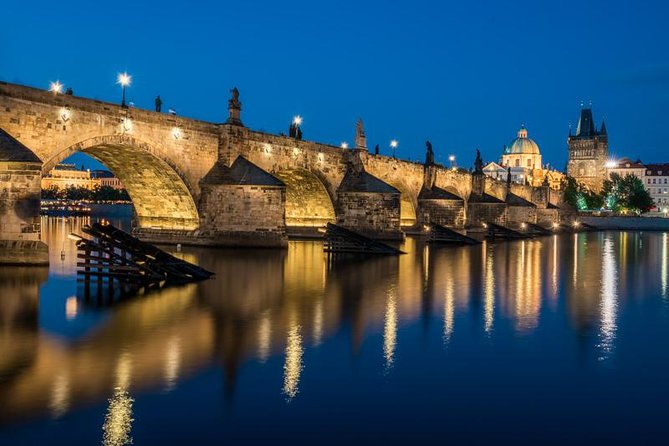
Charles Bridge: better angles in a tight 20 minutes
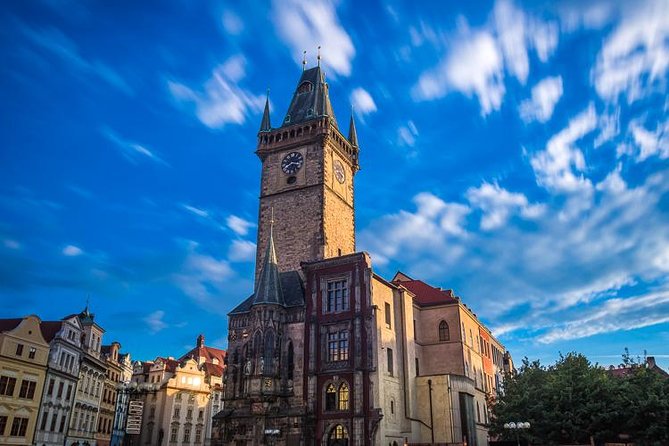
Charles Bridge can feel like it’s been photographed into sameness. The value here is that you’re not just marching onto the bridge and hoping for a good shot. You get a plan for lesser-known angles—ways to compress perspective, include leading lines, and use the bridge’s geometry instead of just shooting the obvious view.
You’ll have about 20 minutes here. That’s enough time to try a couple of different compositions: one wider framing for context, then a tighter crop that turns the scene into texture and repeating patterns. If you’re working with longer exposure times, the bridge and street traffic can also give you moving-light effects, and the guide’s exposure-time advice becomes immediately useful.
One practical note: Charles Bridge is still a public place with crowds around it. Don’t expect a deserted bridge—expect strategy. This is where learning composition helps you make something attractive even when the scene is busy.
Old Town Square with Týn Church and the Astronomical Clock
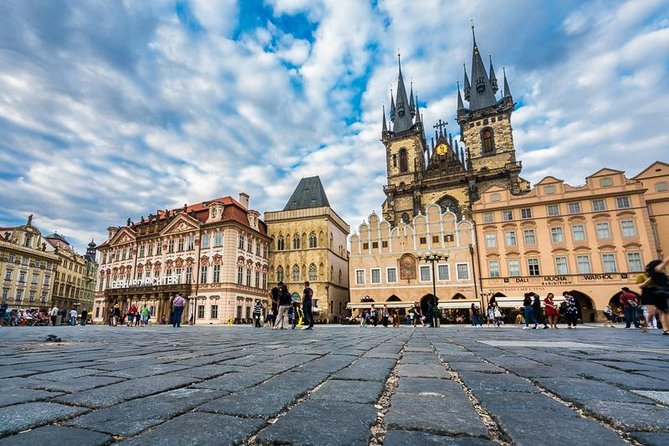
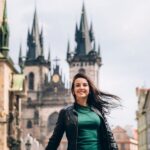
Then you move to Staroměstské náměstí (Old Town Square) for about 40 minutes. This is where Prague’s postcard landmarks start to blend into real photography opportunities: the Týn Church, views toward the Astronomical Clock, and even a spiral staircase nearby that can help you make stronger vertical lines and depth.
The key idea at this stop is to stop shooting only the biggest thing in the frame. The coaching focus tends to push you toward the “supporting details” that make a photo feel composed rather than accidental: how the church silhouette sits against the sky, how the clock area creates symmetry, and how nearby stair shapes can give you a strong, graphic element.
Admission is listed as free for the stop(s) here, which keeps the tour moving without turning it into a ticket hunt. Still, you’ll want to pay attention to crowd flow. This is a busy square, so you might need to work quickly with short repositioning—shoot a frame, adjust, shoot again.
If you like architecture photos, this is one of the best places to practice using lines. Prague has tons of edges—rooflines, church spires, and building corners—and the guide’s feedback can help you align them so the scene looks intentional.
Letná Park: viewpoint shots and Vltava bridge lines
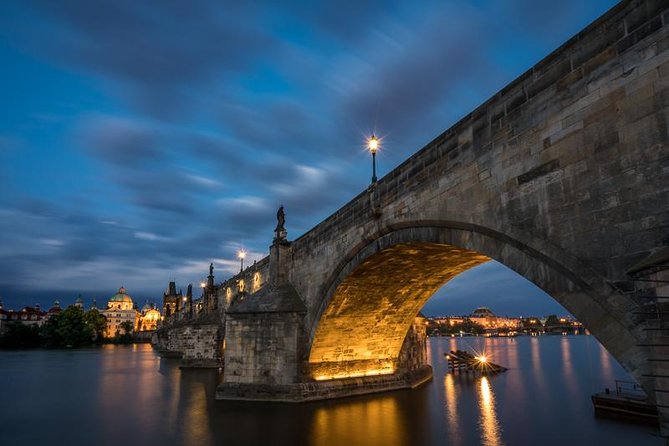
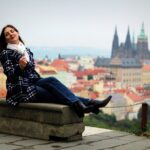
Next comes Letná Park for about 25 minutes. If you’ve ever photographed a big European city from above, you know the magic: buildings stop feeling like random blocks and start feeling like a pattern. Letná gives you that advantage, plus a view that includes Prague’s bridges over the Vltava River.
This stop is ideal for cityscapes with structure. You can work on wide establishing frames (show the river and bridges as context), then switch to tighter compositions that focus on a single bridge segment or the way the river curves through the city.
The guide’s exposure advice also matters here because it’s easy to overexpose bright areas when skies shift. You’ll likely spend at least part of the time testing settings and refining your shot for clarity and contrast.
Also, since this is a viewpoint stop, expect wind and uneven spots underfoot. I’d still count this as a casual walk, but it’s not a sit-and-stare photo moment.
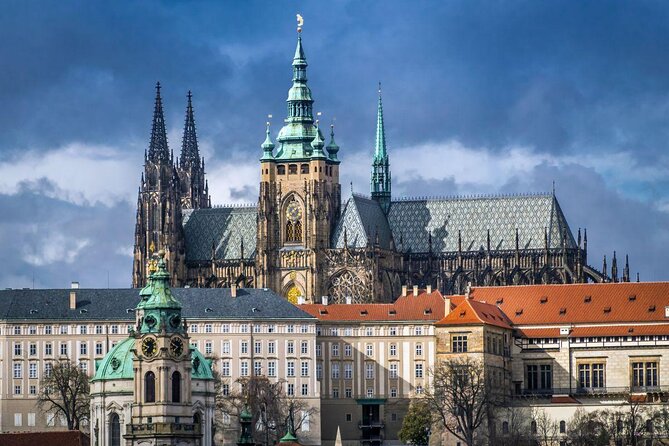
A daylight sequel worth considering: the castle district you shot from Letná deserves a walk-through, and the castle tour with a local guide and entry ticket included covers the courtyards and St. Vitus interiors your evening silhouettes only hint at.
Manes Bridge: architecture, abstract ideas, and riverside cityscapes
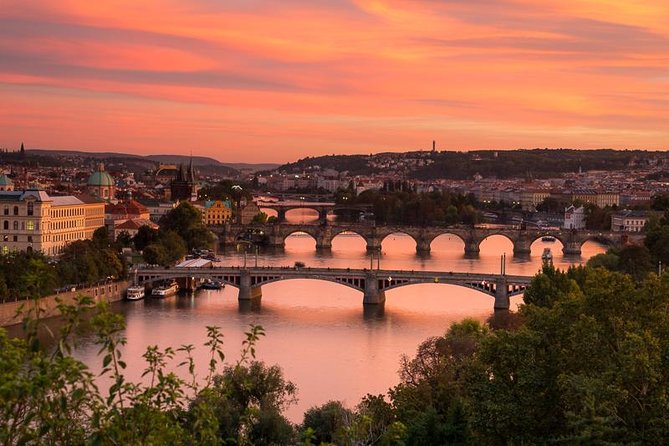
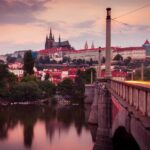
Manes Bridge takes you into a different mood: about 30 minutes focused on architecture, abstract photography, and riverside cityscapes. Bridges are perfect for abstract work because you get repeating elements—railings, supports, reflections—plus strong shapes that can turn into graphic compositions.
What I like about this stop is that it gives you permission to vary your style. You’re not stuck capturing only “the view.” You can experiment: a close-up that emphasizes lines, a mid-shot that includes river texture, or a wider shot that shows the relationship between bridge and city.
For exposure, bridges near water can be tricky in the evening. Reflections can tempt you into brighter frames than you want. That’s exactly where the guide’s practical coaching helps: small changes in settings can make reflections look clean instead of washed out.
And because the group size stays small, you can reposition without constantly negotiating where everyone stands. That’s often what separates a fun photo walk from a frustrating one.
Devil’s Channel: short stop, strong texture and mood
After the bridges, there’s a quick 15-minute stop at Devil’s Channel. This is one of those places where you can make something compelling without needing a huge composition. The time limit forces focus: look for lines, patterns, shadow shapes, and close-up textures that read well even if the scene is small.
Short stops are often where you learn fastest. You try fewer ideas, but you try them with intention. If you’re new to photography, this kind of stop helps you build confidence, because you can’t get lost in endless options.
Practical tip: treat this like a “shoot and reset” moment. Get a few frames early, then refine. If you wait too long, the stop will be over before you know it.
The final stretch toward the Castle area (and why it matters)
The itinerary includes a Castle stop at the end, though the specific timing details aren’t broken down in the information you provided. In Prague, the Castle area is a natural closer for an evening photo tour because it has tall silhouettes, dramatic lighting angles, and lots of viewpoints.
This final section is where you can apply what you’ve learned earlier in the walk. If the guide has been correcting your framing at earlier stops—lines, balance, exposure—use the Castle views to prove it to yourself. Try one shot as a wide “context” image, then one shot that isolates the geometry.
Since you’ll be ending near the Old Town Bridge Tower on Karlův most, the overall walk keeps pulling you back toward the river. That’s a good rhythm: you see the city from key perspectives, then finish connected to the classic river spine.
Price and value: what you’re paying for at $193 per person
At $193 per person for around 3 hours, this isn’t the cheapest way to “see Prague.” But it can be a strong value if your goal is to leave with better photos instead of just more photos.
Here’s why the math can work:
- You’re paying for a professional photographer guide, not a generic local host.
- The group is intentionally tiny, with a maximum of 3 travelers and limited to 3 photographers. That kind of ratio usually means faster feedback.
- The coaching is tied directly to multiple major photo areas, including bridges, squares, viewpoints, and a texture-focused stop.
Also, this tour tends to be booked about 61 days in advance on average. That’s a sign it’s not a last-minute-only plan. If you want the best shot at a spot, booking earlier is smart.
One more value angle: admission at the listed sights is free, so your budget isn’t eaten by ticket fees mid-walk. The tour is about photography guidance and positions, not entry tickets.
What to bring so you can actually use the coaching
The biggest practical advice is the obvious one: wear comfy shoes. This is an evening walk with stops at viewpoints and bridges, and you’ll want to move smoothly while you shoot.
Beyond footwear:
- Bring your camera and whatever you normally use (manual, shutter priority, or even basic settings). The guide’s guidance centers on composition and exposure time, so having control—even simple control—helps.
- Bring a plan for battery life. Evening light changes fast, and you’ll likely take more frames than usual while you test.
- Consider support gear. One person mentioned being able to rent a tripod from Jan. Don’t assume it’s always available, but it’s worth asking if that’s part of how you like to work.
And mentally, show up ready to adjust. This kind of photo tour is at its best when you treat it like a class: try a setting, check the result, then change course.
Who should book this Prague photo tour (and who might pass)
This tour is a great fit if you:
- Want to learn photography techniques tied to real Prague scenes, especially evening light.
- Prefer personal coaching over a crowded group experience.
- Like architectural frames, abstract compositions, and bridge-and-river city photos.
It may be less ideal if you:
- Want a food-focused evening. Food and drinks are not included.
- Have very limited mobility or hate stairs and uneven walking, since the tour lists a moderate physical fitness level.
If you’re traveling solo, the small-group format can feel reassuring. People specifically mention feeling comfortable and safe while shooting with Jan, which makes sense with a calm pace and a guide who gives clear direction.
FAQ
FAQ
What time does the small-group photo tour in Prague start?
It starts at 5:00 pm.
How long is the Prague photo tour?
The duration is about 3 hours.
Where do I meet the guide?
Meet at the Powder Tower, Nám. Republiky 5, Staré Město, 110 00 Praha 1.
Where does the tour end?
The tour ends at the Old Town Bridge Tower, Karlův most, 110 00 Praha 1.
How many people are in the group?
This experience has a maximum of 3 travelers (and it’s limited to 3 photographers).
Is the tour in English?
Yes, it’s offered in English.
Are admission tickets required for the stops?
The listed stops are marked as admission ticket free, so you won’t need to buy separate entry tickets for those specific moments.
Is food and drinks included?
No, food and drinks are not included.
Is free cancellation available?
Yes. You can cancel for a full refund if you cancel at least 24 hours before the experience start time.
Should you book this Prague photo tour?
If your top goal is better photos, this is a smart booking. The combination of a tiny group, a professional photographer guide (Jan Miracky), and on-location coaching on composition and exposure time makes it more like a practical photography lesson than a standard walk.
Book it especially if you want to shoot Prague’s bridges and viewpoints with a plan, not guesswork. Just go in with the right expectations: you’re investing in photography guidance, you’ll be doing evening walking, and you’ll need your comfy shoes to make it enjoyable.