REVIEW · YEREVAN
Photography tour in Yerevan (Yerevan city tour)
Book on Viator →Operated by Link to Armenia · Bookable on Viator
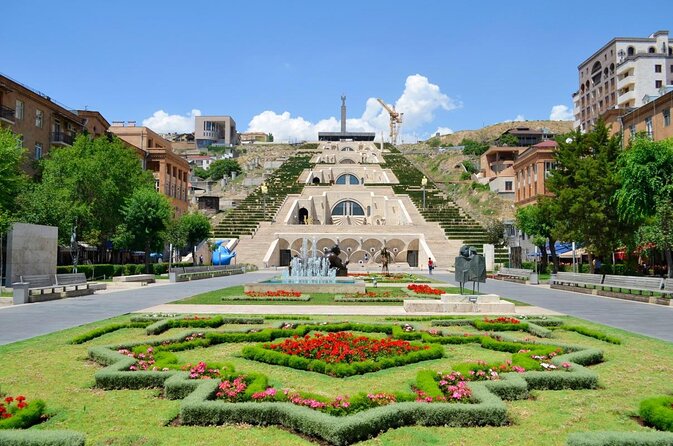
Yerevan looks different when you shoot it. This private Yerevan photography tour gives you a guided walk through the city center, plus a digital photography session so you’re not just sightseeing—you’re learning how to frame what you see at places like Republic Square and the Dancing Fountains. I like that it includes hassle-free pickup, and I like that your guide keeps the pace personal instead of herding you along.
One thing to keep in mind: the timing is tight. You’ll spend brief stops at many sights, so if you want long museum time, you may need extra independent time after the tour.
In This Review
- Key highlights you’ll actually use
- Why a photography tour beats “just walking” in Yerevan
- Pickup, pace, and what 3 hours really means
- Republic Square: your best starting point for clean, classic shots
- The Armenian Genocide Museum area: respectful subject matter, strong composition potential
- Cafesjian Center for the Arts: a practical pause for creative details
- Dancing Fountains and Tsitsernakaberd: timing your eye, not just your clock
- Vernissage Market and Parajanov Museum: texture, color, and portrait-friendly streets
- Victory Park and Mother Armenia: wide shots that still feel personal
- Opera House, Lovers’ Park, Smoking Woman, and Blue Mosque: the “variety pack” for your camera
- The digital photography session: why it matters even if you already know your camera
- What “private” means for your photos
- Is it worth paying $29.52? The value math
- Who should book, and who should consider another option
- Should you book the Yerevan photography tour with Link to Armenia?
- FAQ
- How long is the Yerevan photography tour?
- Is hotel pickup included?
- What sights are included during the walk?
- Is the tour private?
- Are admission tickets included?
- What if plans change? Is cancellation free?
Key highlights you’ll actually use
- Hotel pickup that saves your morning (or afternoon)
- A digital photography session that helps you work smarter with your camera/phone
- Real guidance on composition and story while you walk
- Most major central sights packed into 3 hours
- Private tour format so your group gets the attention
- Pro guide care shown in the way the guide worked around a baby and a senior in past groups
Why a photography tour beats “just walking” in Yerevan
A normal city tour helps you find the landmarks. A photography tour helps you see them—how the light hits, how a street corner frames a monument, and how to make a busy plaza look clean instead of chaotic.
That’s the core idea here: you move through Yerevan’s center with a guide, and the focus stays on your lens. With a digital photography session built in, you’re also getting feedback that can carry beyond the tour. You end up with photos that look like you planned them, even if you’re visiting for the first time.
For a city like Yerevan, where the mix of monumental, cultural, and everyday life happens right next to each other, this approach is practical. One block might give you strong symmetry; another might give you street texture or people-and-stone storytelling. A standard sightseeing route often misses that “why” behind the picture.
You can also read our reviews of more tours and experiences in Yerevan.

Pickup, pace, and what 3 hours really means
This is about 3 hours, give or take, and it’s designed for a smooth loop through central Yerevan. Hotel pickup is offered, which matters more than you might think. When you’re focused on photos, you don’t want to lose time hunting for the right meeting point or dodging traffic while you figure out where the best angle is.
The pace is also structured: you stop, shoot, and move on. Expect many brief looks rather than one long deep visit. That makes it ideal for:
- First-time visitors who want strong results fast
- People who want a guide’s help with framing and angles
- Travelers who don’t want to get bogged down in logistics
It can feel rushed if your priority is slow museum wandering or you want to linger for golden-hour photos at one single spot. The good news is you can use the tour photos as your “map”—then go back later to spend more time where you loved the vibe.
Republic Square: your best starting point for clean, classic shots
Republic Square is the obvious place to begin, and it’s also one of the easiest ways to get immediately better photos without extra gear. The space gives you strong architectural lines and a big sense of scale, so even a phone camera can look confident.
In your first stop, you’ll have about 30 minutes to work with the surroundings. Use that time to do two things:
- Pick one viewpoint and shoot variations (wide, medium, close details)
- Look for a stable backdrop before you move around
If your shots keep coming out “busy,” try this simple fix: shoot slightly wider, then add a deliberate subject—a person, a sign, a statue detail. Republic Square rewards that kind of planning because the buildings and open space give you a clear frame.
The Armenian Genocide Museum area: respectful subject matter, strong composition potential
Next comes the Armenian Genocide Museum area, with a short stop designed to help you get oriented and grab a few meaningful photos. You’re not here for a long indoor session as part of this specific experience, but even a quick visit can help you connect the city’s landmarks to Armenia’s story.
When you photograph places tied to history, I find two rules help:
- Don’t try to crowd the frame with too much information
- Concentrate on shapes, entrances, and meaningful sightlines
Even in a brief window, you can usually get at least one solid shot that feels intentional rather than accidental. If you want more time inside, plan to add it on your own after the tour, but don’t skip the quick photo stop—this area gives your gallery context.
Cafesjian Center for the Arts: a practical pause for creative details
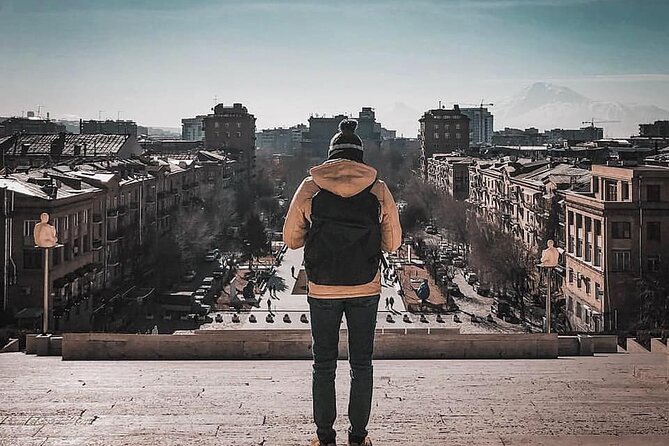
You’ll also pass by the Cafesjian Center for the Arts. The stop is brief, but it’s a good chance to shift from big architecture to detail-oriented images. Art spaces often create natural photo opportunities: texture, entrances, and sightlines that make your photos feel less generic.
In these kinds of stops, I suggest you change your mindset from “find the landmark” to “find the photo.” Look for:
- patterns and materials
- angles that compress distance
- small cues that add personality to the scene
Even if you don’t spend long here, your guide’s route helps you avoid wasting time doubling back later. That’s value, too.
Dancing Fountains and Tsitsernakaberd: timing your eye, not just your clock
The Dancing Fountains stop is short, about 15 minutes. That means you’ll need to be efficient. Think of it as a photo scouting window: get your angles, watch how the scene sits in the frame, then shoot fast.
Fountains can also create a common photography problem: light changes quickly, and people drift. So instead of waiting for perfect conditions, work for strong composition. A simple wide shot for context plus one tighter detail shot is often the best combo.
Tsitsernakaberd comes next as another quick stop. This is a place where your photos need to feel careful and composed. Even with limited time, you can aim for:
- clean monument framing
- strong horizon lines
- a subject that feels grounded rather than overly dramatic
In both locations, the benefit of a guide-led walk is that you’re not wandering to find the “right side.” You get shown the areas that usually work best for getting a usable photo in limited time.
Vernissage Market and Parajanov Museum: texture, color, and portrait-friendly streets
Vernissage Market is included as a possible add-on during the route. With a short stop (around 15 minutes), it’s not about shopping for hours. It’s about visual variety: handmade goods and market textures create perfect backdrops for storytelling images.
If you like street portraits, Vernissage-type scenes are helpful because you can build layers:
- subject in the foreground
- product or texture mid-frame
- strong architectural or street lines behind
Then comes the Parajanov Museum stop. Again, the time is brief, but the museum area helps you shift your gallery from outdoor architecture to cultural identity. In a short visit, focus on what you can capture quickly and clearly: entrances, nearby details, and the surrounding streetscape that gives the museum its atmosphere.
This pair of stops works well if you want your photos to feel like a full day in Yerevan, not only monumental landmarks.
Victory Park and Mother Armenia: wide shots that still feel personal
Victory Park and the Statue of Mother Armenia are a major visual moment, and you’ll have about 15 minutes here. This is your “wide and strong” segment, the part of your gallery that gives scale and emotional weight.
When you photograph large statues, it’s easy to overshoot—standing too far away and getting a tiny subject. Your goal is to frame the figure so it dominates the composition without losing context. Try a couple of approaches:
- one shot that includes surrounding space for context
- one shot that tightens the subject so it feels powerful
Even with short time, you can come away with a photo that looks like it took effort. The key is resisting the urge to chase every angle. Pick one or two good standpoints and shoot confidently.
Opera House, Lovers’ Park, Smoking Woman, and Blue Mosque: the “variety pack” for your camera
The route continues past several iconic central spots, each with a brief stop (about 15 minutes). This is where the tour earns its keep: you get a diverse set of scenes without having to plan a complex self-guided loop.
Here’s what these stops offer:
- Armenian National Academic Theater of Opera and Ballet named after Alexander Spendiaryan
Look for symmetry and facade details. Even quick stops work because the building is visually strong from many angles.
- Lovers’ Park
This stop is small but useful for softer, more human-feeling shots. Focus on framing that includes gentle foreground elements instead of just repeating the main landmark.
- Smoking Woman
This is one of those statues you either skip or you get the right shot of. Use it as a creative breather—something slightly playful or surreal helps balance a gallery heavy on monuments.
- Blue Mosque
A mosque exterior can be photographed quickly if you focus on geometry and color contrast. With only a short window, it’s worth getting one “signature” photo first, then one detail shot if time allows.
A quick note on the value here: this sequence gives your pictures contrast. Big stone and formal buildings sit next to quieter parks and distinctive statues. When you review your camera later, the set won’t feel flat or repetitive.
The digital photography session: why it matters even if you already know your camera
The tour includes a digital photography session, and that’s a big deal because it changes the tour from “look and shoot” to “shoot and improve.” The details of the session aren’t fully spelled out in the info you have, but the intent is clear: help you work on your photos with the guidance you’re getting during the walk.
Here’s what you can hope to get out of a session like this:
- clearer framing choices
- faster ways to correct common issues (like cluttered compositions)
- ideas you can apply immediately to the next stop
If you’re traveling with a phone or a camera, you still benefit. Composition and storytelling aren’t limited to one device. And if you’re the kind of person who takes lots of photos but ends up with a small number you love, this is the portion that can tip the balance.
What “private” means for your photos
This is a private activity, meaning only your group participates. That matters because photography benefits from flexibility. If your pace is slower, or you stop for an angle longer than expected, a private format usually gives your guide room to adjust rather than keeping the whole schedule rigid for strangers.
The review highlight that stands out here is how the guide, Arto, handled a group with a baby and a senior, staying patient and going the extra mile. That tells you the tour isn’t just about checking boxes. It’s about helping you get photos while keeping the experience workable for real people.
For families, small groups, or anyone who wants calmer attention instead of a crowd, that’s a strong signal.
Is it worth paying $29.52? The value math
At $29.52 per person for roughly 3 hours, this isn’t priced like a luxury photo workshop. It’s priced like guided help that gets you real results without soaking up half your day.
Here’s the value angle that makes sense:
- You get a guide for a focused route through top sights
- You get hotel pickup offered, which often saves more time than you expect
- You get a digital photography session, which can improve your final photo set
- Many stops come with admission tickets listed as free, so your out-of-pocket costs stay predictable
If you’re visiting and want a strong set of photos without hiring separate guides for each museum, this kind of bundled route can be a smart shortcut. If you’re the type who already knows exactly what you want and you’re happy self-guiding, you might feel “why pay.” But if you want someone to help you pick viewpoints and keep you moving efficiently, this price is reasonable.
Who should book, and who should consider another option
I’d strongly consider this tour if:
- you want a high-yield photography plan for first-timer Yerevan
- you like guided walks and want personalized attention
- you’re bringing family members and want the pace to be workable
You might want to think twice if:
- you want long stays inside museums or major indoor exhibits
- you dislike tight schedules and prefer unstructured wandering
If you’re somewhere in between, the tour still works well as a “photo foundation.” You’ll learn where to return later.
Should you book the Yerevan photography tour with Link to Armenia?
If you want a practical way to get better photos and understand central Yerevan faster, I think this is a good buy. The combination of pickup, guided walking, and a digital photography session is built for results, not just sightseeing.
Book it if you like the idea of moving through the city with a focus on framing and composition, and if you want a guide who’s been described as professional and patient—including when the group needed extra care.
FAQ
How long is the Yerevan photography tour?
It runs for about 3 hours.
Is hotel pickup included?
Pickup is offered.
What sights are included during the walk?
The tour includes stops around Republic Square, the Armenian Genocide Museum, the Cafesjian Center for the Arts, the Dancing Fountains, Tsitsernakaberd, Vernissage Market (optional), the Parajanov Museum, Victory Park and the Mother Armenia statue, the Alexander Spendiaryan Opera and Ballet Theater, Lovers’ Park, the Smoking Woman, and the Blue Mosque.
Is the tour private?
Yes. It’s a private tour/activity, and only your group participates.
Are admission tickets included?
Admission ticket fees are listed as free for the stops shown in the schedule.
What if plans change? Is cancellation free?
Cancellation is free up to 24 hours in advance for a full refund. Within 24 hours, no refund is offered.