REVIEW · SVOLVAER
Lofoten: Northern Lights Tour with Photographer
Book on GetYourGuide →Operated by Lofoten Lights · Bookable on GetYourGuide
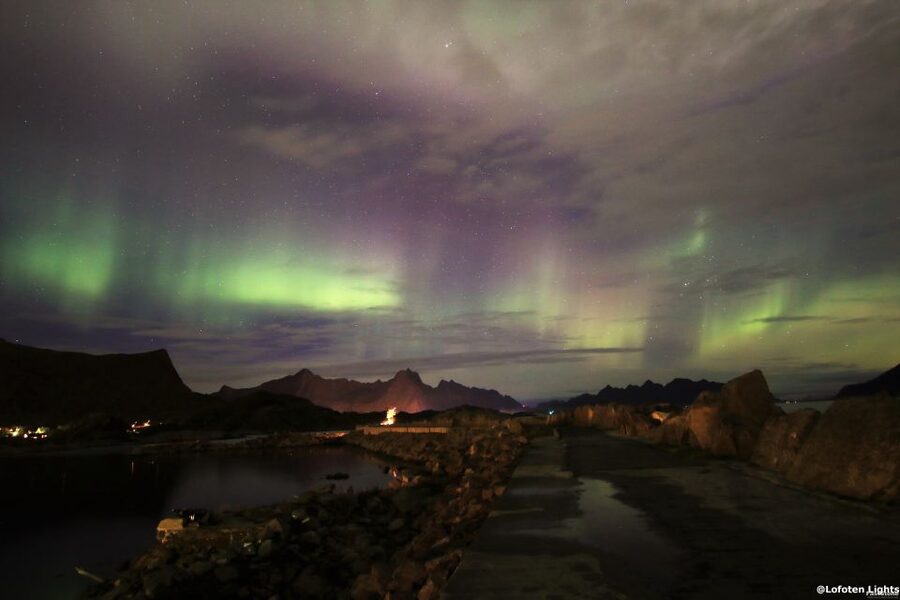
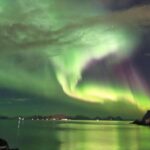
A clear sky hunting mission feels oddly thrilling. I like the small-group setup and the fact you’re in the field long enough to enjoy the show, not just rush past it. I also love that there’s a photographer with you, giving straightforward tips so you can photograph the aurora with a camera or your phone—not only watch it.
The one catch is the sky itself—aurora nights depend on cloud cover and weather—so the tour may be rescheduled or canceled if conditions don’t cooperate, even though your guide is actively searching for clearer skies.
In This Review
- Key highlights at a glance
- Why Lofoten’s winter darkness is perfect for aurora hunting
- Pickup timing and your small-group start at 8:15 PM / 8:30 PM
- Chasing the aurora: why you won’t go to the same spot twice
- Photographer coaching that helps you frame the lights (camera or phone)
- The real itinerary rhythm: drive, pause, shoot, and warm up
- Aurora stories in the dark: culture, science, and history on the move
- Getting comfortable: what to bring, and what not to do
- Vehicle size can change during peak season or rough weather
- Included vs not included: tripods and warm drinks, but no camera
- Price and value: $152 for four hours with a photographer
- Who this tour fits best (and who might want a different plan)
- Should you book this Lofoten northern lights tour?
- FAQ
- What is the duration of the tour?
- How many people are in the group?
- Where do pickups happen and what time?
- Is a camera included?
- Do I get help with photography if I only have a phone?
- Are warm drinks included?
- What should I bring?
- What happens if the weather is bad?
Key highlights at a glance
- Photographer-led aurora coaching for camera and phone basics, plus tripod use
- Weather-tracked routing so you don’t waste time at the same spot every night
- Small group in a minivan/minibus vibe for easier conversation and guidance
- Warm drinks on the chase so you can stay out and focused longer
- Aurora stories tied to local culture, science, and history as you’re on the move
Why Lofoten’s winter darkness is perfect for aurora hunting
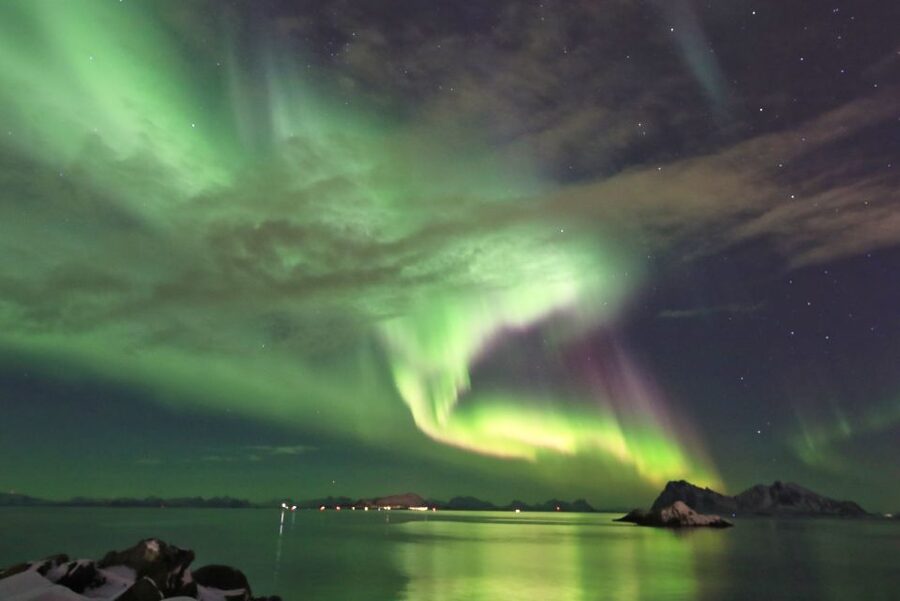
Lofoten is the kind of place where winter sky time really matters. When the night is long and the air is cold enough to keep you present, the aurora has a chance to show off in a way you can actually appreciate. The lights are one part physics and one part atmosphere—so a tour that’s built around “find the clearest window” gives you a real advantage.
What I like about this experience is that it doesn’t treat the northern lights as a lottery ticket you just hope for. You’re going out specifically to find darker, clearer conditions, and you’re learning how to capture what you see when it appears. That changes the whole trip from a passive viewpoint to a skill-building session outdoors.
You can also read our reviews of more tours and experiences in Svolvaer.
Pickup timing and your small-group start at 8:15 PM / 8:30 PM
Your night begins with a simple pickup routine: Svinøya Rorbuer at 8:15 PM, then Thon Hotel Lofoten at 8:30 PM. That matters because northern lights don’t run on your schedule. Starting consistently helps your guide plan the evening with enough flexibility to react to sky changes.
The group size is capped at 8 participants, which I genuinely appreciate for a photography-focused tour. In a smaller group, it’s easier to see what the photographer is showing and easier to get help if your camera settings or phone setup aren’t cooperating.
One practical thing: wear shoes you can stand in comfortably for a while. The tour includes warm drinks, but it still depends on you being physically comfortable outdoors when the lights decide to show up.
Chasing the aurora: why you won’t go to the same spot twice
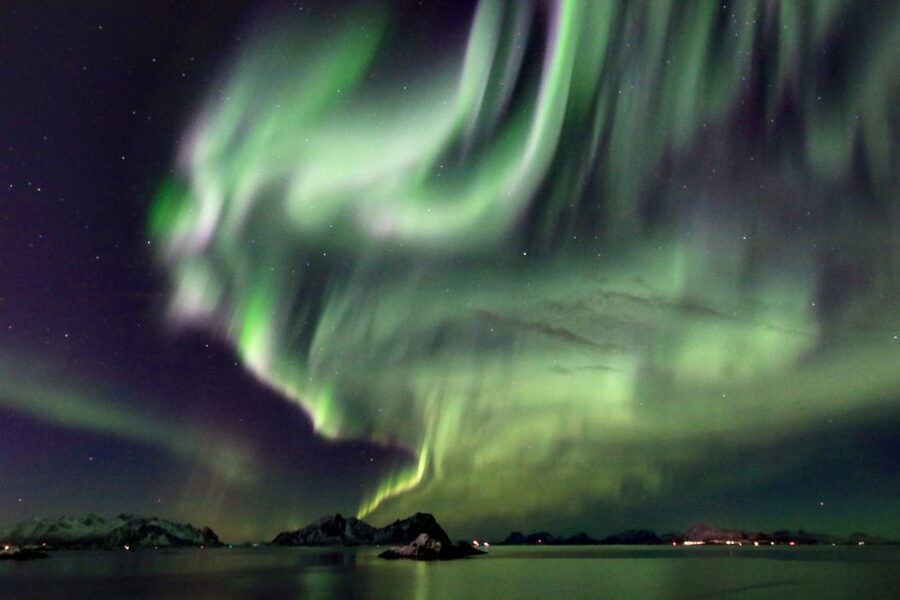
This tour’s core approach is smart: your guide doesn’t just drive to a fixed viewing point every night. Instead, they track weather during the evening and head toward the area with the best chance of clear skies. That means you’re not stuck watching clouds roll in while everyone waits the same amount of time.
Along the way, you’ll also hear stories about the northern lights—covering local culture, science, and history. That’s more than background noise. It gives you a reason to pay attention between the moments when the aurora is actually visible, and it helps you connect what you’re seeing to why the sky does what it does.
If you’re wondering whether this kind of “mobile spotting” is worth it: yes. Cloud cover can vary over short distances in northern Norway, and being willing to move increases your odds of seeing more than a brief flicker.
Photographer coaching that helps you frame the lights (camera or phone)
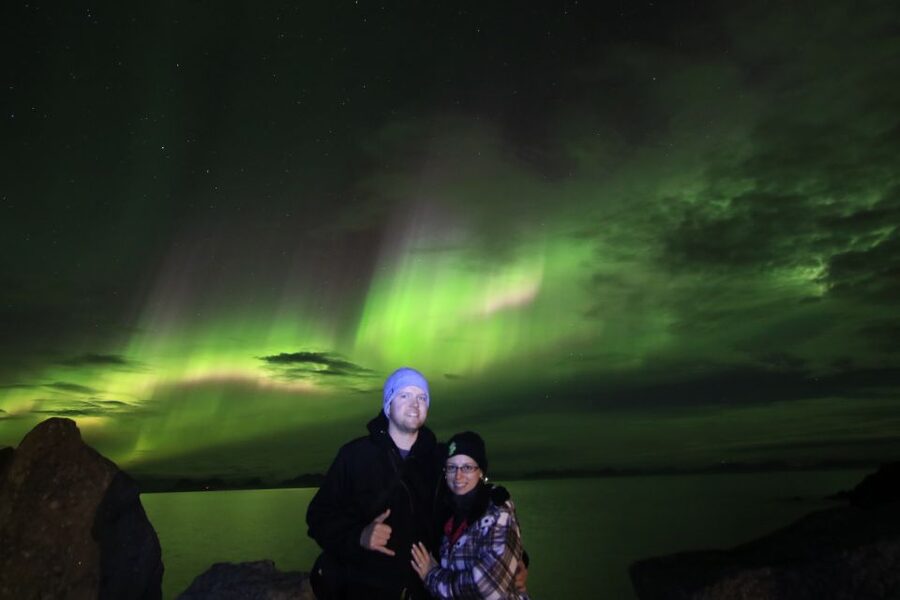
The biggest value in this tour is the hands-on instruction. A northern lights sky can look magical to the eye, but photos often come out underwhelming if you don’t use the right basics. This experience is built to close that gap.
A professional photographer joins you and covers the essentials, including:
- How to set up your camera and your mobile phone
- How to use your tripod
- How to frame the aurora so the scene looks intentional, not accidental
They’ll help you use whatever you brought. The tour explicitly supports both options, which is great if you don’t own a full camera rig. Even if you only have a phone, learning tripod and framing habits can make a big difference.
And yes—tripods are included. That’s not just a convenience. It means you can focus on composing and letting the camera capture more light instead of improvising with a backpack, a rock, or whatever you find at your stop.
The real itinerary rhythm: drive, pause, shoot, and warm up
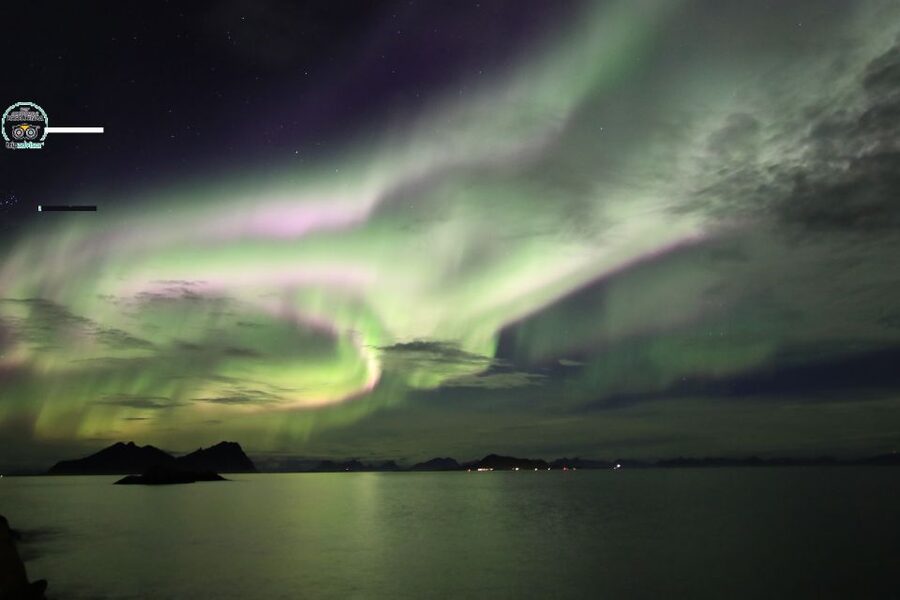
You won’t have a “checklist of named attractions” because the aurora is the attraction. Your evening follows a repeating rhythm that makes sense in the real world:
- Depart from pickup points and travel by minivan/minibus
- Arrive at a viewing area based on the guide’s sky/weather tracking
- Get photo guidance from the photographer while you’re there
- Wait for the aurora and adjust as needed
- Use warm drinks to stay steady while you watch
Even within a 4-hour window, you’ll likely spend time both setting up and reacting. That flexibility is important because the aurora can shift quickly—sometimes it’s dramatic, sometimes it’s subtle, and sometimes you catch it just long enough to get one solid set of shots.
One review detail that lines up with this approach: the hot chocolate and the simple fact that nature did its thing. Warm drinks feel like a small inclusion, but they help you stay outdoors without rushing back into the warmth too soon.
Aurora stories in the dark: culture, science, and history on the move
A lot of tours say they’ll share stories. This one actually ties stories to what you’re doing and what’s happening in the sky. Expect information that connects:
- Local cultural meaning of the aurora
- Science behind what you’re seeing
- Historical connections to the region
I like this because it makes the experience feel less like a technical workshop and more like learning with context. When you understand what causes the glow and why it behaves the way it does, your attention sharpens. You don’t just hope for lights; you watch for changes and learn how to react.
It also fills the waiting time. When you’re in a long winter night, you need the “in-between” to feel purposeful—not just cold silence until something happens.
Getting comfortable: what to bring, and what not to do
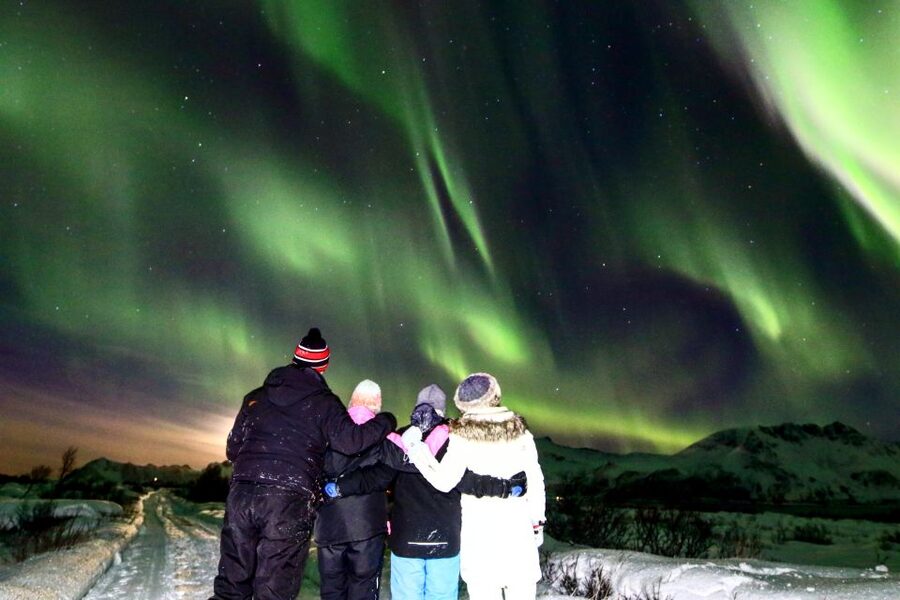
This tour is designed for winter, so plan for cold. What you should bring:
- Comfortable shoes
- Warm clothing
The operator provides warm drinks, which helps, but you still need layers. If you’re underdressed, your attention goes from the sky to your discomfort fast.
Also note what’s not allowed: pets, smoking, and alcohol and drugs. That keeps the group experience focused and helps everyone stay respectful in a cold, dark outdoor setting.
Vehicle size can change during peak season or rough weather
One practical detail to keep in mind: if the tour is rescheduled due to weather or during peak season, they may use a larger vehicle (minibus) with up to 15 people.
That doesn’t mean the tour becomes worse—it just changes the atmosphere. A bigger vehicle can mean less personal space and less time for one-on-one photo help during transitions. If you’re the type of person who really wants lots of individual attention, that’s worth considering when you book in the busiest times.
Included vs not included: tripods and warm drinks, but no camera
Here’s what you get:
- Professional photographer
- Tripod
- Warm drinks
Here’s what you don’t:
- Camera (you bring your own)
This is where the value math gets interesting. A tripod alone isn’t always cheap, and for aurora photos you generally want something stable. By including the tripod, the tour lowers the barrier if you don’t already own one. And since you can bring a phone, you’re not required to have expensive gear to participate.
If you do have a camera, the photographer guidance should help you use it more effectively for night conditions. If you don’t, you can still learn the basics for capturing aurora with your phone.
Price and value: $152 for four hours with a photographer
At $152 per person for 4 hours, this isn’t a budget “quick look” tour. It’s priced like a small, guided, equipment-supported experience. And that makes sense—there’s a professional photographer, a guide handling route decisions based on weather, a tripod provided, and warm drinks included.
Think of it as paying for three things at once:
- Transportation and time dedicated to finding clearer skies
- Photo instruction so you leave with usable images
- Comfort support so you can actually stay out and wait
If you’re serious about getting photos rather than just seeing lights, this is where the cost feels more justified. If you only care about a quick aurora glance, you might find cheaper options—but you’ll be giving up the photo coaching and tripod support that make this experience more “complete.”
Who this tour fits best (and who might want a different plan)
This tour is a strong match if:
- You want to see the northern lights and also learn to photograph them
- You’re traveling with a basic camera setup or a phone and want real guidance
- You like a small-group vibe where questions are actually possible
- You’re okay with weather-driven variability because the guide is actively searching
It may be less ideal if:
- You’re expecting guaranteed aurora visibility every night (no tour can promise that)
- You’d rather have a fixed “stay put” viewing experience without instruction
- You dislike the idea that vehicle size can increase in peak season
Should you book this Lofoten northern lights tour?
If you want a northern lights trip that’s more than just standing in the dark, I’d book it. The combination of weather-tracked searching, a professional photographer, and a tripod included is exactly what helps you turn luck into results.
You’re also not stuck guessing what to do once you arrive. You’ll get the basic setup and framing help for both camera and phone, and you’ll have warm drinks while you wait. Add the cultural and science stories, and the 4 hours feel like a real experience rather than a rushed photo stop.
If your main goal is photos you can actually keep, this one is worth the price tag.
FAQ
What is the duration of the tour?
The tour lasts 4 hours.
How many people are in the group?
It’s a small group limited to 8 participants. In peak season or if the tour is rescheduled due to weather, a larger minibus with up to 15 people may be used.
Where do pickups happen and what time?
Pickup is included at Svinøya Rorbuer at 8:15 PM and at Thon Hotel Lofoten at 8:30 PM.
Is a camera included?
No. The tripod is included, but you need to bring your own camera or use your phone.
Do I get help with photography if I only have a phone?
Yes. The photographer provides basic instructions for capturing the aurora using both a professional camera and a mobile phone.
Are warm drinks included?
Yes. Warm drinks are included.
What should I bring?
Bring comfortable shoes and warm clothing.
What happens if the weather is bad?
The operator reserves the right to reschedule or cancel due to bad weather, and a full refund is issued.