REVIEW · ROME
Vespa Scooter Tour in Rome with Professional Photographer
Book on Viator →Operated by JSPHOTOROME · Bookable on Viator
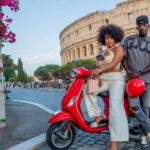
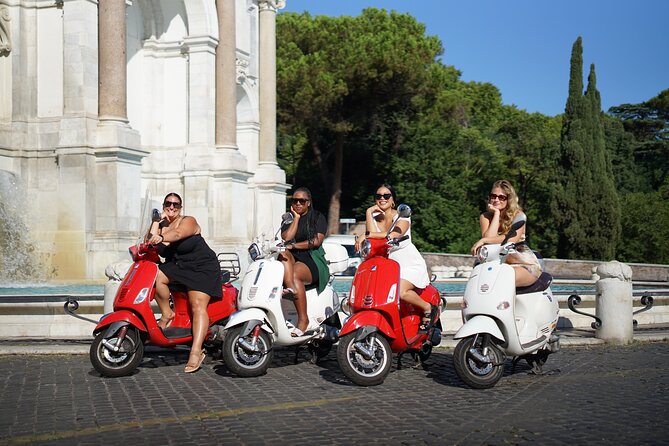
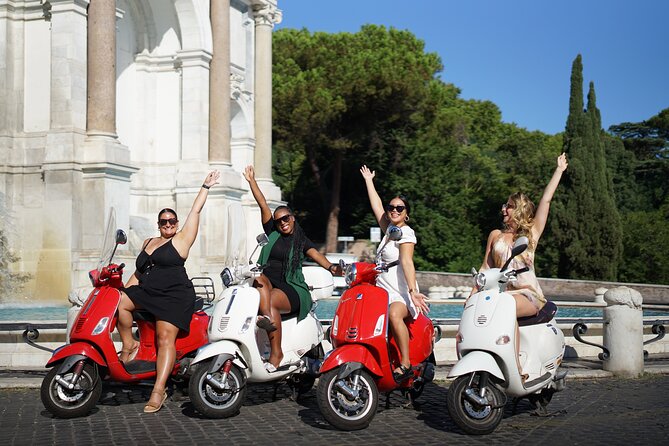
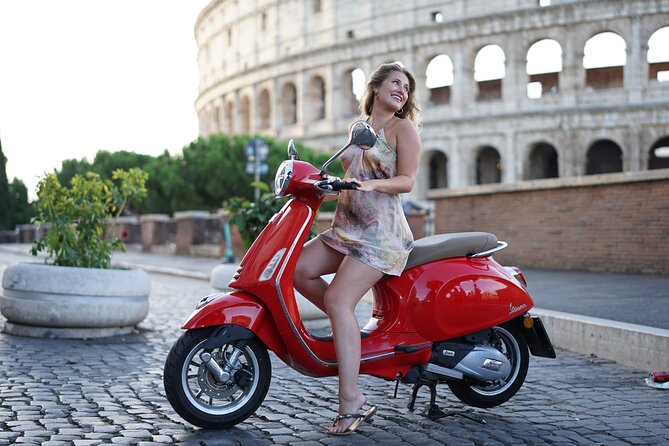
Rome looks better on a Vespa. This 1.5-hour ride lines up major sights like the Colosseum and the Pantheon, plus stops at places most first-timers miss. I love that you get professional photos from the trip after you’re done, and I also like the small-group setup (max 10) because you get more attention from the guide and drivers. A possible drawback: the stops are short, so if you want slow, spend-the-day museum time, this is not that kind of tour.
I’d treat this as a high-energy orientation to Rome. You start at Via del Colosseo, 31, and pickup is offered with the team recognizable by their Vespa scooters. The tour runs in English, and you’ll also use a mobile ticket—simple, modern, and geared to keep you moving at a city pace.
In This Review
- Key things you’ll notice on this Vespa tour
- The value of a 90-minute Vespa intro to Rome
- Where you start: Via del Colosseo and how pickup works
- Stop 1: Colosseum photo time with admission included
- Giardino degli Aranci: the orange garden view break
- Bocca della Verità: why this marble mask matters
- Piazza Venezia: Rome’s central power square
- The Pantheon: a short stop with huge impact
- Castel Sant’Angelo: from mausoleum to fortress
- Piazza Navona: the final photo-friendly square
- The professional photographer effect: what you should expect
- Small group size and safety: why max 10 matters
- Who this tour is best for (and who should skip it)
- Money-smart way to use this tour in your Rome plan
- Should you book the Vespa Scooter Tour with a Professional Photographer?
Key things you’ll notice on this Vespa tour
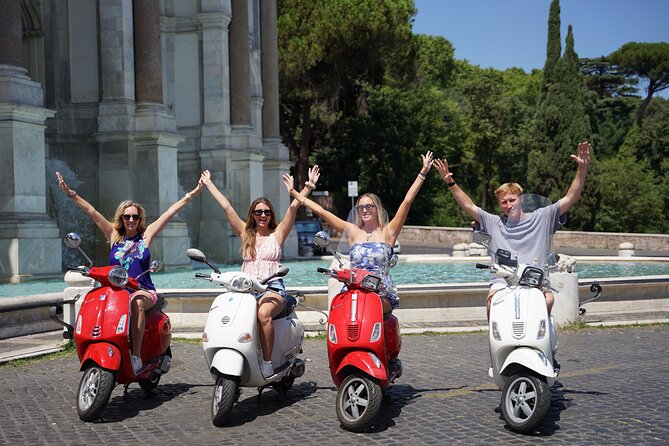
- Professional photo coverage at the biggest stops so you don’t have to rely on quick selfies.
- Max 10 people, which helps with safety, routing, and getting answers on the fly.
- A classic Rome highlight route built around landmarks like the Colosseum and Pantheon.
- A panoramic break at Giardino degli Aranci with views across the city.
- Ancient-to-renaissance stops in a tight loop including Bocca della Verità and Piazza Navona.
- Colosseum time includes admission, meaning less admin and more time seeing.
The value of a 90-minute Vespa intro to Rome
At $80.44 per person for about 1 hour 30 minutes, this tour isn’t about long sightseeing marathons. It’s about getting your bearings fast, seeing the headline sights without getting bogged down in transport planning, and leaving with photos that look like you actually know what you’re doing in Rome.
The biggest value is the pairing: Vespa + pro camera work. If you’ve ever tried to “just take pictures” at the Colosseum or Pantheon, you know the problem. You either stop and miss the flow, or you keep riding and your photos come out mid-breath. Here, the tour is designed so stops line up with photo moments—and the photographer does the heavy lifting.
I also like that the itinerary includes transit time in the total duration. That matters in Rome, where moving can eat up your day. Instead of wondering how long you’ll actually be out there, you can plan around a clean, set chunk of time.
You can also read our reviews of more tours and experiences in Rome.

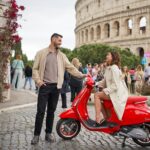
Where you start: Via del Colosseo and how pickup works
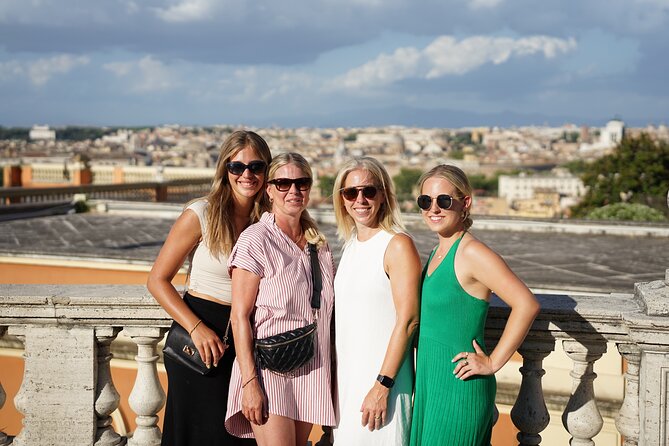
Your meeting point is Via del Colosseo, 31, 00184 Roma RM. The tour ends back at the meeting point, which is helpful because it prevents that annoying feeling of being stranded halfway across the city at the end.
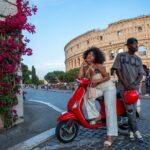
Pickup is offered, and you’ll recognize the team from their Vespa scooters. That’s the kind of detail that saves real stress—Rome is busy, and it’s easy to waste time scanning streets for a tour sign. If you’re aiming to meet smoothly, show up a few minutes early so you can park yourself near the right spot and catch the scooters as they arrive.
This is also listed as being offered in English, which is ideal if you want clear explanations without guessing. And because it’s a mobile ticket, you’re not juggling printed vouchers.
Stop 1: Colosseum photo time with admission included
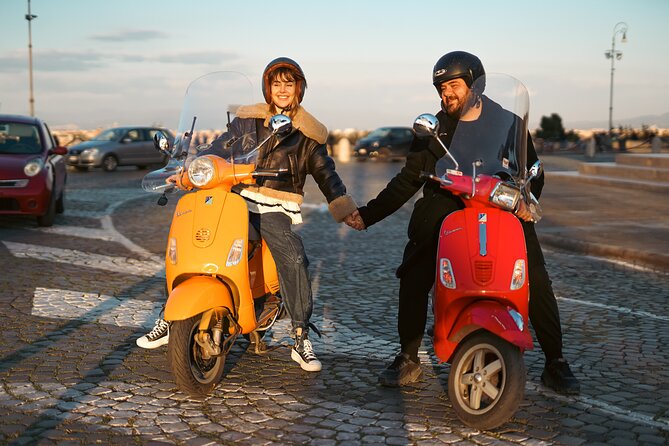
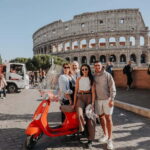
The Colosseum (Colosseo) is the obvious headliner, but what makes this stop work is the combination of admission ticket included plus professional photos by camera.
You get about 20 minutes here. That’s enough time to see the scale, find a good angle, and get a proper portrait moment. The admission part is key for value: it reduces the extra step of figuring out tickets while you’re already excited and moving.
One practical thought: 20 minutes at the Colosseum goes fast. Wear shoes you can walk in comfortably, and decide in advance how you want your photos framed—wide shot versus close-up. When the photographer is working, you’ll get better results if you’re ready rather than hunting your perfect pose.
Giardino degli Aranci: the orange garden view break
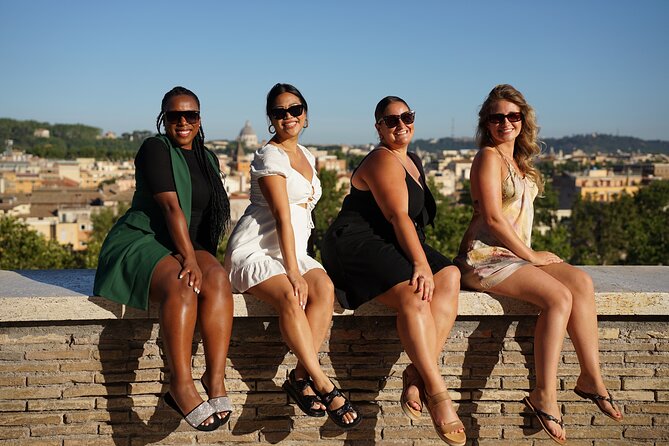
After the big-ticket ancient landmark energy, you get a quieter contrast at Giardino degli Aranci (the Orange Garden). It’s on the Aventine Hill and is known for its orange trees—specifically bitter orange trees—and for those classic panoramic views across Rome.
The tour gives you around 20 minutes, with a viewpoint that includes sights like the dome of St. Peter’s Basilica and the Tiber River. This is the kind of stop that makes the whole ride feel more than a checklist. It’s a breather where you can look around, reset your brain, and get a sense of how Rome sits in layers.
A consideration here: gardens are lovely, but they’re still outdoors. If you’re visiting in hot weather or harsh sun, bring water and something to protect your face and eyes, because the views are meant to be enjoyed without sprinting.
Bocca della Verità: why this marble mask matters
Next comes the Bocca della Verità, or Mouth of Truth—an ancient Roman marble mask housed in the portico of the Church of Santa Maria in Cosmedin. It’s located in the Piazza della Bocca della Verità near the Tiber.
This stop is especially good for travelers who like their Rome with a story. The mask is famous for its role in Roman folklore and pop culture, but it also connects you to the idea that Roman artifacts kept traveling through time—showing up in daily life long after the original era.
You won’t have a huge amount of time here, so treat it like a moment of focus: step in, look carefully at the stone, and let the guide’s context help you understand what you’re seeing beyond the famous name.




Piazza Venezia: Rome’s central power square
Piazza Venezia is one of the most prominent squares in Rome’s historic center. It’s known for its central location and its grandeur and architecture, and it functions like a dramatic hinge point between big sights.
Even with a quick stop, the payoff is in orientation. Squares in Rome aren’t just open space—they help you understand city scale and direction. When you’re bouncing between landmarks on a Vespa, the chance to pause at a major square helps you mentally map where you are.
If you like photography, Piazza Venezia can be a good place to get wide surroundings shots before you move on. Just remember: traffic and scooter timing are real. Keep your movements efficient so you don’t hold up the group.
The Pantheon: a short stop with huge impact
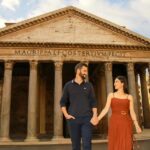
Then you hit the Pantheon—one of the best-preserved ancient Roman buildings in the city. This is the kind of monument that changes the vibe the moment you walk up to it.
What makes the Pantheon extra interesting on this tour is the built-in context: it was originally commissioned by Marcus Agrippa during Augustus’s reign (27 BC to 14 AD), then rebuilt by Emperor Hadrian around 126 AD after the original structure was damaged by fire. That timeline gives you more than a pretty building. It gives you a sense of Rome being remade over and over.
You’re not here for a long sit-down. It’s more like the tour gives you the essentials: get close, notice the scale, and let the guide point out what matters. For me, that’s one of the strengths of this style of tour. You leave with a few “aha” facts and a strong visual memory, without needing hours of museum stamina.
Castel Sant’Angelo: from mausoleum to fortress
Castel Sant’Angelo, also called the Mausoleum of Hadrian, sits on the banks of the Tiber River. The story is powerful: it was commissioned in the 2nd century AD as a mausoleum for Emperor Hadrian and his family. Later, it served multiple roles across history, including fortress, castle, and even prison.
This is a great stop for travelers who like architecture that evolved with time. You can look at it and think of it as a single shape, but the guide helps you see it as a long timeline of reuse. That makes it more than scenery from the road.
Because you’re moving around quickly on a scooter, you’ll want to be intentional here—look at the river frontage and then at the structure itself. Quick photos are fine, but take ten seconds to really register the building. It’s one of the more photogenic silhouettes in the area.
Piazza Navona: the final photo-friendly square
Piazza Navona rounds out the highlight sequence. It’s famous and picturesque, located in the historic center not far from the Pantheon and Campo de’ Fiori.
This is the right kind of ending spot for a Vespa tour because it’s open and lively without requiring you to sprint between narrow streets. You can pause, take in the square’s atmosphere, and get your final sense of Rome before you loop back.
Even if you’ve seen pictures of Piazza Navona a thousand times, seeing it in person feels different. It’s one of those places where the city looks like it’s built for postcards—and you don’t need long explanations to understand why.
The professional photographer effect: what you should expect
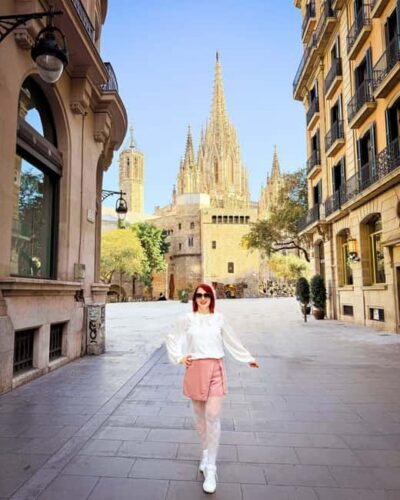
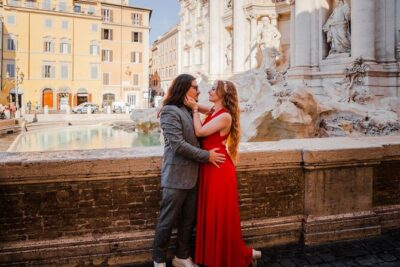
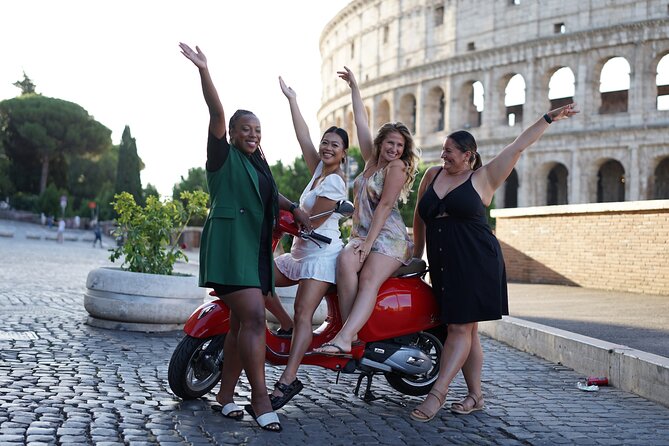
One of the loudest praises for this tour is the photography. The tour is set up so you don’t just ride past sights hoping the shot works out. At the Colosseum, you’ll take photos there with a professional camera, and the overall experience includes receiving photos from your adventure after the tour.
In plain terms, this reduces your effort and improves the result. You can focus on being present and following the guide’s cues, while someone else handles framing, timing, and the kind of angles that make a photo look real.
A small tip: if you have preferences—more skyline, more classic landmark, or more close-up portrait—think about it before the tour starts so you can align with the photographer’s rhythm.
Small group size and safety: why max 10 matters
Max 10 travelers might sound like a marketing number, but it actually changes the vibe. With a smaller group, it’s easier for the team to keep track of everyone and adjust on the fly. It also generally means less waiting around at stops.
This is a scooter tour, so there’s a basic consideration: you’ll be on the move and exposed to street sounds, wind, and speed. Most travelers can participate, but you’ll want to be honest with yourself about comfort on scooters. If you’re sensitive to motion or you’re not confident with street traffic, ask questions before booking.
The upside is that with a professional team and a small group size, you’re not doing this alone. The guide and drivers can manage pace, stops, and routing better than a random group ride.
Who this tour is best for (and who should skip it)
This is a great fit if you:
- Want a compact first-day Rome intro and don’t want to waste time planning routes
- Like seeing multiple headline sights without long lines and long walks
- Care about photos and want professional results, not just phone snapshots
- Prefer small-group attention over big-bus crowds
It may not be the best fit if you:
- Want deep, slow museum time or extended indoor visits
- Struggle with scooter riding or quick stops
- Are the type who needs 60–90 minutes at one monument to feel satisfied
Money-smart way to use this tour in your Rome plan
If you’re in Rome for only a few days, I’d use this early—right after arrival. You’ll get Colosseum, Pantheon, Piazza Navona, and major in-between landmarks, so the rest of your sightseeing day will feel easier. Once you’ve got the mental map, you can decide what deserves a second look.
It also pairs well with a more relaxed evening plan. After 90 minutes on a Vespa and a handful of major photo moments, you’ll often be ready to wander a nearby neighborhood at your own speed.
Should you book the Vespa Scooter Tour with a Professional Photographer?
I’d book it if you want a high-impact Rome highlight ride with photos that look like you traveled on purpose. The mix of major sights, a small group, and pro camera coverage makes the experience feel like value, not just transportation.
Skip it if your ideal Rome day is slow, quiet, and deeply indoors. This is designed for movement and snapshots with context, not long “sit and soak it in” museum sessions.
If you’re ready for a fun, safe-feeling way to see Rome’s top hits and come home with memorable photos, this Vespa tour is a strong choice.