REVIEW · MARRAKECH
Unique Photography Course in Marrakech
Book on Viator →Operated by Shooting travel tours · Bookable on Viator
Ocher walls deserve better photos. This private Marrakech photography lesson turns the medina’s landmarks into a real shooting plan, with step-by-step camera instruction and a guided route through iconic scenes. You’ll practice turning typical views into images with intent—proper exposure, white balance, and creative effects.
The one thing to watch is the setting: you’ll move through parts of the medina, including the “maze” alleys and arcades. If you have low mobility or strong discomfort with walking, plan for a slower pace and breaks.
In This Review
- Key highlights I’d bet on
- Why this Marrakech photo course works in the medina
- Setting off from Koutoubia: start with structure, not guesswork
- Koutoubia Mosque: turning a famous subject into your photo
- Kasbah district: framing layers without losing the subject
- The Mellah (Jewish quarter): photography with context and care
- Jemâa el Fna and the souks: motion, crowds, and color control
- Maze alleys and arcades: small spaces, strong patterns
- What you’ll learn technically (and why it matters)
- The instructor factor: Issam and full-attention coaching
- Price and value: $87.65 for 2.5 hours of real instruction
- Who this Marrakech course is for
- FAQ
- FAQ
- How long is the Marrakech photography course?
- Is this a private experience?
- Where does the tour start and end?
- What places will we photograph during the session?
- Will I learn camera settings if I’m a beginner?
- How do I use the ticket?
- Is free cancellation available?
- Should you book this Marrakech photography course?
Key highlights I’d bet on
- Private coaching with Issam’s full attention, so you’re not stuck copying what someone else does
- Camera settings taught to your level, including manual exposure and white balance
- A smart lineup of Marrakech photo subjects, from Koutoubia to the Mellah to the souks and Jemâa el Fna
- A finish aimed at portfolio-worthy images, not just a quick camera tour
- Beginner-friendly without talking down, with options for experienced photographers too
- You can share your Instagram gallery ahead of time, so the lesson can match your style
Why this Marrakech photo course works in the medina
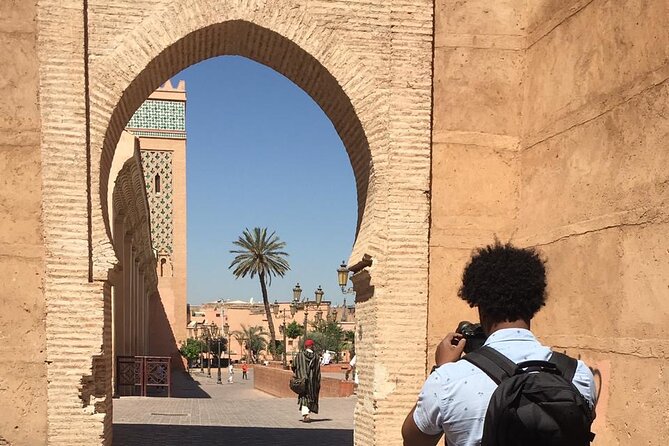
If you’ve ever tried to photograph Marrakech on your own, you already know the problem: the city is photogenic, yes—but it can also be chaotic. Bright sun, deep shadows, mixed light sources, crowds, and constant movement can make your photos look flat or inconsistent.
This course tackles that head-on with a simple promise: you learn the process step by step, then you apply it while you’re standing in front of the scenes people come to see. The payoff is practical. You’re not just collecting pictures; you’re learning how to control the camera so the scene looks the way you saw it.
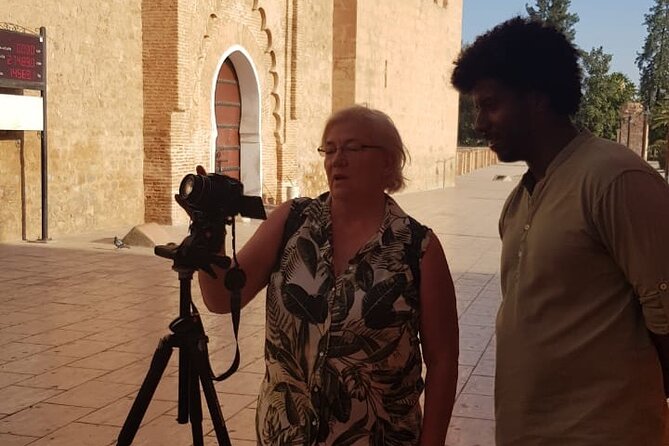
The best part for most people is that it’s private. Only your group participates, so you get time to ask questions and adjust settings without feeling rushed. That makes a big difference when you’re learning exposure basics or trying to avoid common “why is it blurry/dark/washed out?” problems.
You can also read our reviews of more tours and experiences in Marrakech.

Setting off from Koutoubia: start with structure, not guesswork
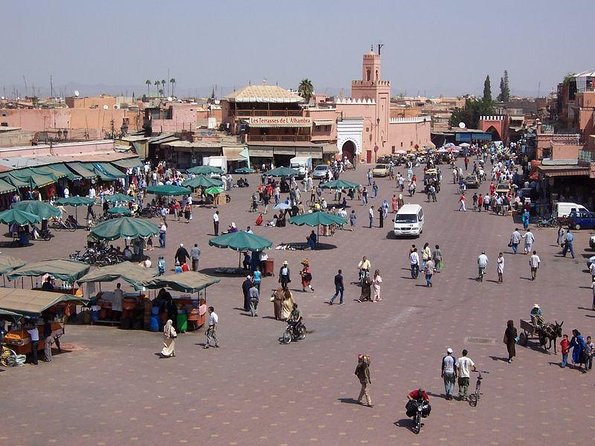
You meet at Koutoubia in Marrakech (40000) and the experience ends back at the same meeting point. The route is designed around classic medina stops, but what matters for you is the teaching rhythm: you’re coached through technique, then sent to test it immediately.
That approach matters because camera settings don’t click in theory. They click when you can see what changes between shots. In a 2 hours 30 minutes session, speed is part of the learning. You get enough time to practice, but not so much time that you lose focus.
And since the lesson is built for both complete beginners and people with experience, you can expect guidance that adapts. If you’re new, you’ll work through core controls. If you already shoot manually, you’ll still get specific tricks for creative effects instead of generic tips.
Koutoubia Mosque: turning a famous subject into your photo
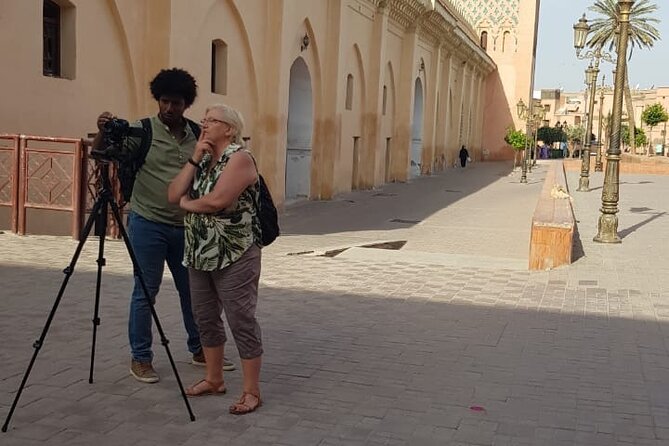
Koutoubia Mosque is one of those Marrakech icons that almost demands a camera shot. But icons can become cliché fast—same angle, same blown highlights, same flat “postcard” look.
During this stop, the focus is less about finding the one perfect photo spot and more about using settings to get a strong result under real light conditions. You’ll practice ways to manage:
- exposure so ochre tones don’t turn muddy or overexposed
- white balance so colors look intentional instead of tinted
Even if you don’t know the terms yet, the lesson’s structure is built for that. You’re walking into the scene with a task, not just a camera pointed around.
What I like here: this is a clean starting point. Big landmark, clear shapes, strong contrast—ideal for learning exposure and color quickly.
Watch out for: bright daylight can make sky and highlights tricky, so expect to experiment and adjust rather than settle for the first shot.
Kasbah district: framing layers without losing the subject
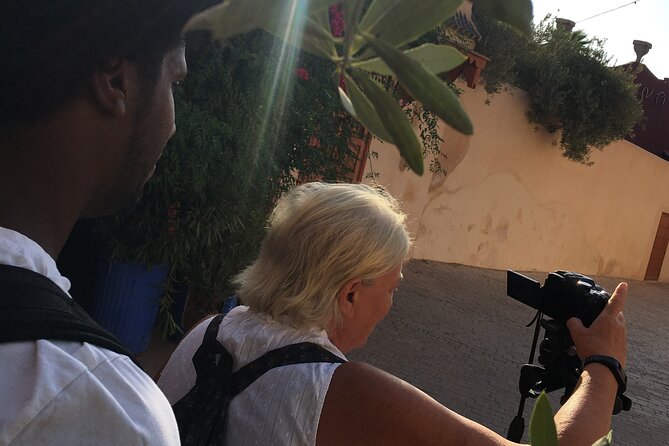
After Koutoubia, you head into the Kasbah district. This area is a natural playground for photographers because you’re dealing with structure: walls, courtyards, streets that slope, and lots of repeating visual elements.
This stop is where you’ll start applying what you learned in a more “real-life” way. Instead of photographing only a building, you’ll learn how to build a frame that keeps the subject clear while still showing the texture of the neighborhood.
If you’re aiming for images that feel like Marrakech but still look polished, you’ll want to think in layers:
- foreground texture (arches, passageways, edges)
- main subject (the area’s focal building or shape)
- background cues (what tells the viewer where they are)
That’s exactly the kind of creative effects you can get from basic controls—manual exposure and other camera settings—once you understand how they change the final look.
The Mellah (Jewish quarter): photography with context and care
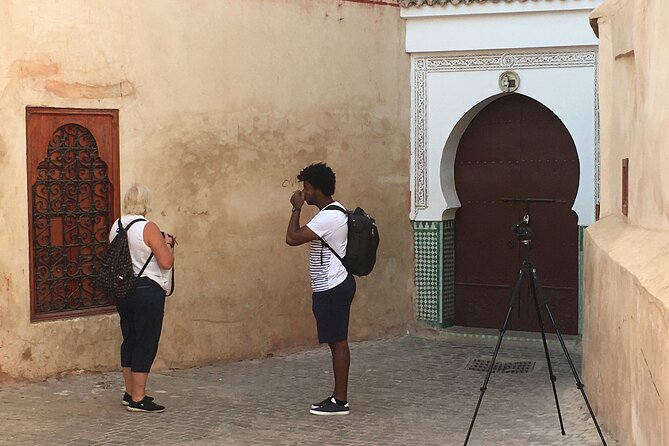
You’ll also visit the Jewish quarter, called the Mellah. This is an important area to photograph respectfully. You’re in a neighborhood, not a staged set.
The course’s value here is that it’s not just about taking photos; it’s about learning a way to see. You’ll be practicing how to photograph streets and details without turning people into props. Even if the session is focused on typical photo training, you’ll still benefit from being taught how to work at human pace—choosing angles and waiting for light and composition instead of rushing.
From a technique standpoint, the Mellah is useful because it often brings you mixed lighting: bright openings, shaded walls, and street-level contrast. That combination is perfect for learning why exposure and white balance matter more than megapixels.
Consideration: this part of Marrakech can feel less open than the main squares. If you’re sensitive to crowds or want lots of wide, clear compositions, plan to slow down and shoot with patience rather than force big perspectives.
Jemâa el Fna and the souks: motion, crowds, and color control
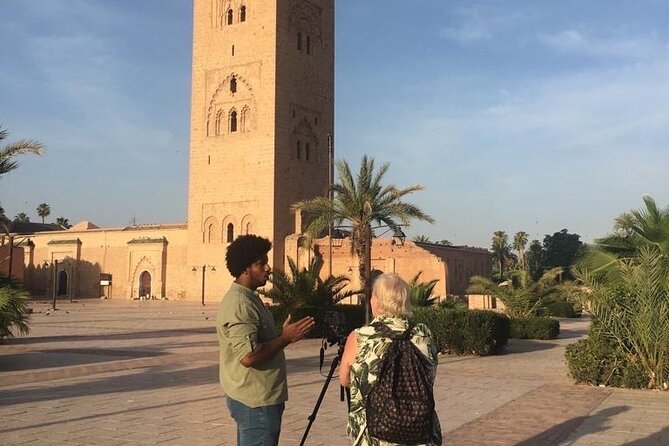
Next comes Place Jemâa el Fna and the souks. This is where Marrakech becomes kinetic—busy streets, changing light, and constant activity. If you’ve ever tried to photograph a square like this and got blurry subjects or inconsistent colors, you’ll appreciate why this stop is in the program.
The instructor’s step-by-step approach helps you translate learning into action. You can’t control the crowd, but you can control your camera decisions. That means learning how settings affect:
- sharpness on moving subjects
- brightness in high-contrast areas
- color consistency when lighting changes
This is also a good place to understand creative effects. Even simple techniques can create a stronger “story” look when you’re photographing everyday life and market scenes. You’re not just documenting; you’re learning how to shape the moment.
What I like: this stop makes the lesson feel useful immediately. The skills you practice here carry over to every future street-photo city you visit.
Maze alleys and arcades: small spaces, strong patterns
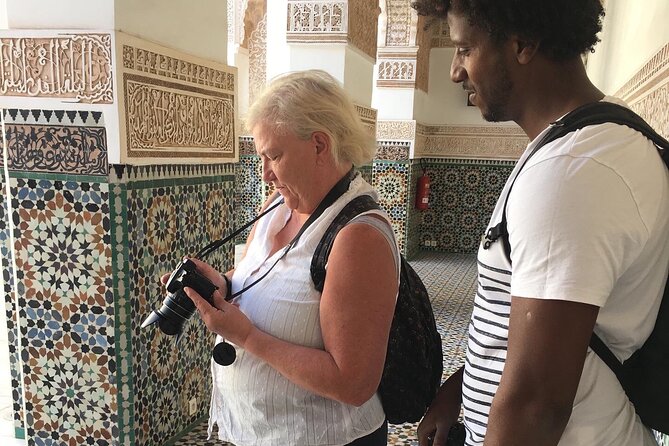
The route finishes with the “maze” alleys and arcades. This section can be a headache if you’re trying to shoot like you’re in a wide-open city—too tight, too many distractions, and easy to lose your framing.
That’s why it’s great for a teaching course. Tight spaces force you to master fundamentals:
- composition that works when you can’t back up
- exposure choices that keep your shadows usable
- white balance that prevents tinted highlights
Arcades also tend to offer natural frames: repeating lines, angled ceilings, shadow borders, and a sense of depth. If you like architectural photos or graphic patterns, this stop is likely to deliver the kind of images you can actually use in a portfolio.
Watch out for: medina walking is uneven and sometimes crowded, and the route can feel like a moving puzzle. Moderate physical fitness is recommended, so if you tire easily, build in slower pacing and shorter photo bursts.
What you’ll learn technically (and why it matters)
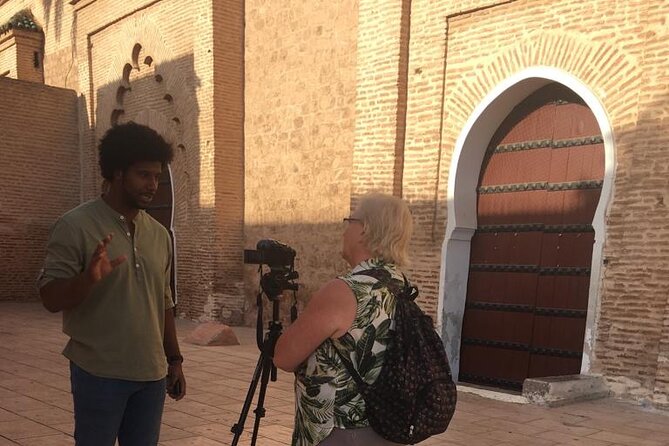
The teaching focus is clear: you’ll learn the full process step by step, tailored to your experience level. That includes:
- manual exposure
- white balance
- and other camera settings for creative effects
Here’s why those topics matter so much. In Marrakech, the light is rarely simple. You get harsh sun, deep shade, and areas lit differently in the same frame. If you rely on auto modes only, you’ll often end up with photos that look random—great one moment, off the next.
Learning manual exposure helps you choose how bright or dark the image should be, instead of letting the camera guess. White balance helps keep Marrakech’s colors from shifting from scene to scene. Together, they make your photos feel consistent—like you had a vision, not luck.
Also, there’s a smart extra layer: the instructor invites you to share your Instagram gallery ahead of time. That’s not just nice-to-have. It signals that your session can be shaped around your style, strengths, and what you want to improve.
If you arrive with 5–10 sample shots you like and 5 you don’t, you’ll probably get more value from the coaching time because you’ll be able to describe your goal fast.
The instructor factor: Issam and full-attention coaching
The course stands out because it’s built around individual attention. The session is private, and the teaching isn’t just “here’s a camera tip.” One of the standout points from past participants is how the instructor can energize a learner—turning curiosity into confidence.
There was even a specific success story: a 19-year-old with interest in photography worked with Issam, and the coaching helped spark real motivation and growth. That’s the kind of result you want from a lesson like this—someone who can explain in a way that clicks, not just someone who points you at landmarks.
If you’re a beginner, you’ll likely appreciate the way the instruction stays structured. If you’re more experienced, you’ll probably like the focus on practical tricks rather than generic advice.
Price and value: $87.65 for 2.5 hours of real instruction
At $87.65 per person for roughly 2 hours 30 minutes, this isn’t priced like a mass group bus tour. It’s priced like coaching time.
Here’s how I’d judge the value:
- You’re paying for a private experience, so you’re not competing for attention.
- You’re not just getting a walk; you’re learning manual exposure, white balance, and other settings.
- The time is long enough to practice, but short enough to stay efficient.
If you compare it to the cost of a private lesson that only teaches camera buttons in a quiet setting, this one has an extra advantage: you practice right where the visuals are challenging and rewarding. That’s when learning sticks.
And since it runs in Marrakech’s medina, you’re getting a guided route through several classic areas in one go: Koutoubia, Kasbah, Mellah, Jemâa el Fna and souks, then maze alleys and arcades. That saves you the guesswork of planning a photo itinerary while also learning technique.
Who this Marrakech course is for
This works for a wide range of photographers.
You’ll love it if:
- you’re a complete beginner and want step-by-step instruction
- you’ve tried auto modes and want consistent results
- you’re comfortable traveling and want your camera skills to improve quickly
- you want images you can share, not just casual snapshots
You might reconsider if:
- you strongly dislike walking through tight, crowded areas
- you need a fully accessible route with minimal movement (the guidance only notes moderate physical fitness)
- you expect a purely scenic sightseeing day with no focus on settings
The sweet spot is people who want structure, feedback, and better results in a place that tests your camera.
FAQ
FAQ
How long is the Marrakech photography course?
It’s approximately 2 hours 30 minutes.
Is this a private experience?
Yes. It’s private, and only your group participates.
Where does the tour start and end?
It starts at Koutoubia, Marrakech 40000, Morocco, and ends back at the same meeting point.
What places will we photograph during the session?
You’ll visit Koutoubia Mosque, the Kasbah district, the Jewish quarter called the Mellah, Place Jemâa el Fna and the souks, and the maze alleys and arcades.
Will I learn camera settings if I’m a beginner?
Yes. The lesson is designed for complete beginners and also for experienced photographers. You’ll learn about manual exposure, white balance, and other settings for creative effects.
How do I use the ticket?
You receive a mobile ticket.
Is free cancellation available?
Yes, free cancellation is offered. You can cancel up to 24 hours in advance for a full refund.
Should you book this Marrakech photography course?
If you want Marrakech photos that look deliberate—better color, stronger exposure choices, and more consistent results—this is an easy yes. You’re paying for a private, hands-on session that teaches the camera process you’ll use again and again, while you shoot iconic medina stops from Koutoubia to Jemâa el Fna and beyond.
Book it especially if you’re new to manual settings or you’ve struggled with mixed light in street scenes. The main decision point is the medina walking: if you’re comfortable with that and have moderate physical fitness, you’re set up for a very practical, confidence-building day with Issam.