REVIEW · ROME
Rome Street Photography Lesson
Book on Viator →Operated by Pollino Insider · Bookable on Viator
Rome makes you a better photographer fast. This private 3-hour street-photo lesson in Rome’s hip Trastevere area walks you past real city moments, with the professional eye of Luigi. You’ll get private attention and you’ll take photos while you’re still learning, not after the walk is over.
I also like how the route mixes classic Rome icons with day-to-day street life, from Santa Maria in Trastevere down toward Piazza Navona and Campo de’ Fiori. One thing to weigh: you’ll want to travel with your own camera, and admission tickets aren’t included for the basilica and Pantheon, so you may need separate entry time and cost for those stops.
In This Review
- Key points
- Why this Rome street-photo lesson feels practical
- Cost and value: is $138.91 worth 3 hours?
- What to bring (and how to set your expectations)
- Trastevere start: Santa Maria in Trastevere for light, mosaics, and mood
- Piazza Navona to Campo de’ Fiori: practice street timing, not just composition
- The Pantheon: use classic geometry without killing the street feel
- How Luigi’s coaching changes what you shoot
- Timing, walking rhythm, and making the most of 3 hours
- Photography mindset you can keep after the tour
- Who should book this?
- Should you book the Rome Street Photography Lesson?
- FAQ
- How long is the Rome Street Photography Lesson?
- Is this a private tour?
- Where does the tour meet and start?
- What’s included in the experience?
- Do I need to bring my own camera?
- Are entrance tickets included for the basilica and Pantheon?
- What time does the tour run?
- Is it okay if I travel with a service animal?
- What’s the cancellation policy?
Key points
- Private, coach-style guidance with photographer Luigi as you shoot around Trastevere and central sights
- Practice on the move: you learn by taking photos, then adjusting your approach on the next corner
- Street scenes plus big architecture: get both human moments and dramatic Roman geometry
- Campo de’ Fiori’s character for color, street energy, and story-rich details beyond postcard views
- Historic interiors for light and texture at Santa Maria in Trastevere and the Pantheon
Why this Rome street-photo lesson feels practical
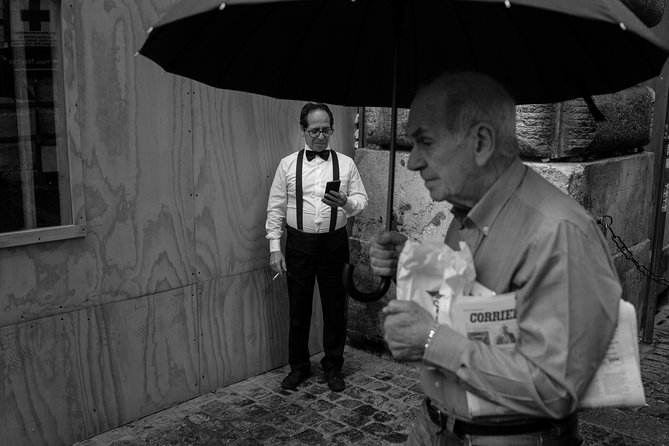
Rome street photography can be tricky. Too many people stand in the same place, hold the camera up, and hope magic happens. This tour flips that. Instead of treating the city like a backdrop, you treat it like a set of visual problems you can solve: light direction, subject separation, eye-level framing, and how to spot the moment before it disappears.
The private format matters. With Luigi, you’re not waiting for a group cue. If your photos are coming out flat or too busy, you can adjust right away. That fast feedback loop is what makes the time feel efficient for a 3-hour experience.
And the pacing supports learning. The route connects major landmarks with nearby street energy, so you’re not spending the whole time in lines. You get to move, reposition, and try again. In short: you come away with photos, not just theory.
You can also read our reviews of more tours and experiences in Rome.

Cost and value: is $138.91 worth 3 hours?
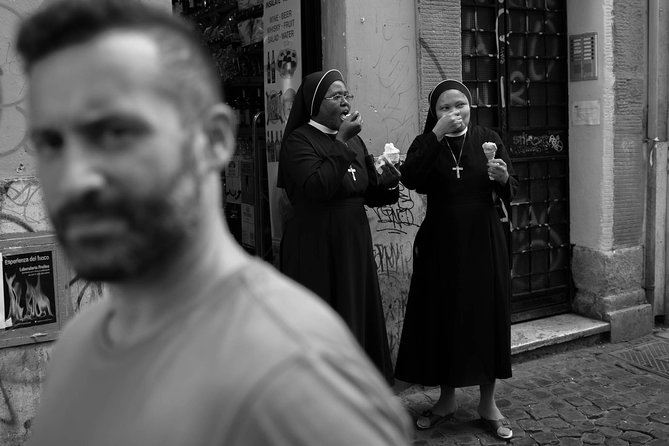
At $138.91 per person for about 3 hours, you’re paying for two things: (1) a pro photographer guide, and (2) your time spent shooting with coached feedback.
That price can be a bargain if you’re the type who wants to improve quickly. If you’ve got a camera already, the instruction is the big value. You’re not paying for a bus ride or a generic walkthrough where you listen most of the time. You’re paying to learn how to see, then practice.
It’s less of a fit if you’re already an advanced street photographer who mainly needs locations only. This is a coaching-and-practice experience, not a silent self-guided highlights loop. Also remember: entry for Santa Maria in Trastevere and the Pantheon isn’t included, so your final cost may rise depending on how you handle museum/church entry.
What to bring (and how to set your expectations)
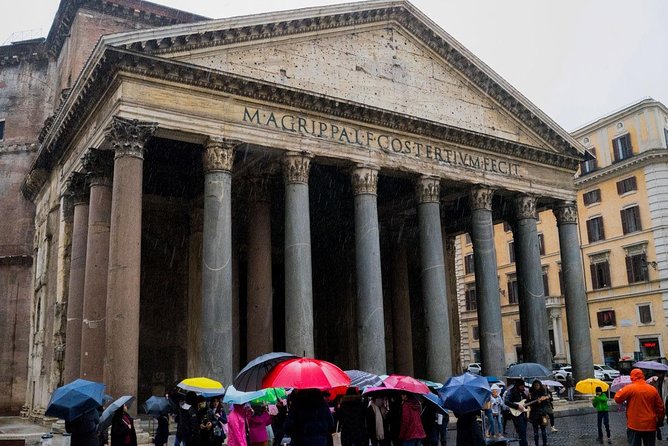
Bring your own camera. That’s not just an instruction detail; it shapes the whole experience. You’ll get the most out of it if you already know the basics of your gear and can change settings without freezing.
If you’re unsure where to start, plan to focus on these outcomes:
- You want better framing choices in real street conditions.
- You want to learn how to simplify busy scenes.
- You want techniques for motion, faces, reflections, and architecture lines.
Also, come ready to walk. Rome is not a sit-down classroom. You’ll be moving between areas like Trastevere and the Campo de’ Fiori zone, stopping for key sights while still practicing “street eye” skills.
Trastevere start: Santa Maria in Trastevere for light, mosaics, and mood
You’ll kick things off at Basilica di Santa Maria in Trastevere, one of Rome’s oldest churches. The bones of the place go way back: parts of the floor plan and wall structure date to the 340s, with much of the structure from 1140 to 1143. That kind of age matters for photography because you get layers of texture and surfaces that look good in natural light.
Here’s the practical benefit for your camera: churches can be visual gold for contrast and detail. You’ll see major mosaic work from the late 13th century by Pietro Cavallini. Even if you don’t photograph mosaics directly, you’ll learn how to read the space—how to aim so the image has depth instead of turning into a flat wall of stone.
Potential drawback: entry is not included, so budget time and be ready for church conditions (crowds and lighting can change as the day goes on). If you’re chasing a specific shot, be flexible. The biggest gains often come from adjusting your approach quickly.
Piazza Navona to Campo de’ Fiori: practice street timing, not just composition
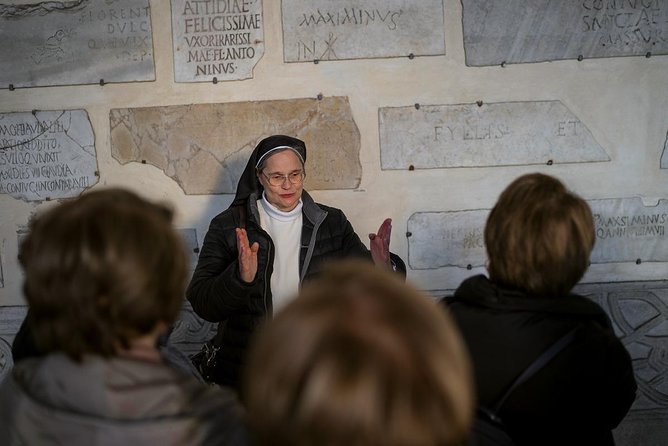
From central highlights around Piazza Navona toward Campo de’ Fiori, the lesson shifts from “look at Rome” to “look for Rome moments.” Campo de’ Fiori is more than a name on a map. The area’s name literally points to a field of flowers, tied to earlier meadow days, and the square later became known for a flourishing horse market held twice a week.
That history isn’t just trivia. It helps you understand why the area feels like it has a pulse. You’re photographing in a place that’s been a gathering point for a long time, so it naturally offers faces, movement, and everyday drama.
This is also where the “street photography tricks” part pays off. Instead of photographing the entire square, you’ll learn how to isolate one strong story: a person passing through light, a sign or shadow pattern, a corner where the architecture frames the scene.
The tour also includes a stop around Escape Room Campo dei Fiori & Beershop. I’d treat this as a breather and an additional chance to slow down and shoot differently—street photos aren’t only about distance and crowds. Sometimes a slightly calmer setting helps you practice details and human-scale scenes.



The Pantheon: use classic geometry without killing the street feel
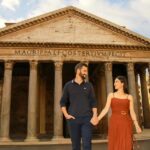
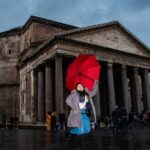
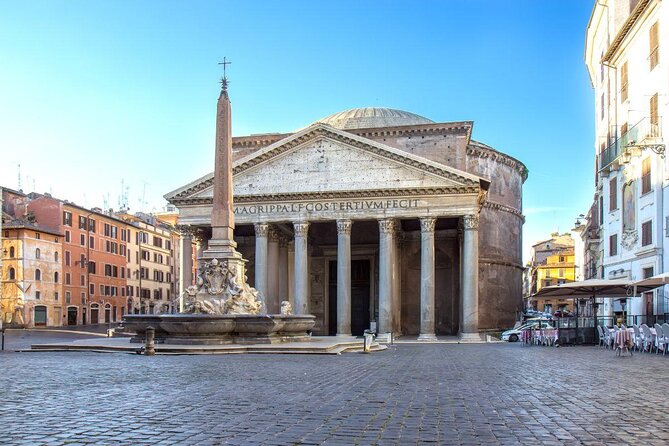
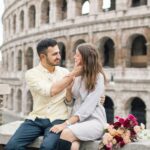
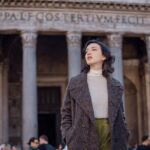
The Pantheon stop is a different kind of photography lesson. This is the former Roman temple site that later became the church dedicated to St. Mary and the Martyrs (Sancta Maria ad Martyres), informally known as Santa Maria Rotonda. It’s one of the best-preserved ancient Roman buildings largely because it has stayed in continuous use through history, including long-term church use since the 7th century.
For your photos, this stop is about structure. The Pantheon’s geometry can turn your images into clean, confident compositions if you learn how to balance lines and light. Here’s the key value: you’ll practice shifting from street timing to architectural discipline, then back again. That range makes your overall photography improve faster than sticking to one style for three straight hours.
Just plan for logistics you can’t dodge. Pantheon entry isn’t included, so factor in time for entry and access rules. Also, the Pantheon can be crowded, which can make “your perfect angle” tougher. That’s exactly why a pro guide helps: you don’t just chase an ideal spot—you learn how to work with what you get.
How Luigi’s coaching changes what you shoot

The most praised part of this experience is the guide himself. Luigi is described as a true professional and someone who makes the lesson fun while still teaching you real photography skills. That combo matters.
In practical terms, good street-photography coaching does two things:
- It helps you notice what the camera doesn’t automatically “see.”
- It gives you quick ways to fix common problems.
So if your photos look too busy, Luigi can steer you toward simpler framing choices. If your shots feel flat, you’ll learn how to use direction of light and subject separation. If you freeze when people pass by, you’ll pick up a method for capturing motion and expressions without turning every shot into a blur-and-hope roll of the dice.
And because it’s private, the feedback feels personal. You can ask questions mid-walk, and the guide can adjust what you try next based on the photos you’re getting.
Timing, walking rhythm, and making the most of 3 hours

This is about 3 hours total, and the itinerary includes multiple major stops, each given time to actually shoot. That length is ideal for learning because it’s long enough to practice repeatedly, but short enough that you won’t grow tired and stop paying attention.
The tour runs in a mid-morning window on weekdays (Monday to Friday, 10:30 AM to 12:00 PM). If you’re booking around plans that day, this matters. Mid-morning light can be decent for street scenes, but Rome can still surprise you with shadows from buildings. A good guide is your safety net—you learn how to adapt when the light flips.
Because you’ll be walking between areas like Trastevere and the city-center sights, wear shoes that can handle uneven pavement. Nothing kills photo momentum like sore feet.
Photography mindset you can keep after the tour
A great street lesson doesn’t only produce great pictures today. It gives you a way to keep improving tomorrow. Here’s what you can carry forward from a coached street approach like this:
- Look for a single subject first, then decide what to include around it.
- Use architecture as framing, not as a distraction.
- Treat each stop as practice for one skill (light, timing, faces, texture) instead of trying to shoot everything.
- Take the shot, then move. In street photography, your next best frame is often a few steps away.
If you leave this tour thinking about choices instead of settings, you’ll notice you improve faster on your own.
Who should book this?
This tour fits best if you want:
- a private lesson with a photographer guide,
- practical street photography coaching,
- a route that combines classic Rome sights and colorful street scenes.
It’s also a strong choice if you’re traveling with friends or a partner and want shared learning without the pressure of a large group.
It may not be ideal if you only want broad sightseeing or if you already know street photography techniques and mostly just need a route to follow.
Should you book the Rome Street Photography Lesson?
I’d book it if you want Rome photos that feel like real moments, not generic landmark shots. The private coaching with Luigi, plus the mix of Trastevere church texture, lively Campo de’ Fiori energy, and Pantheon architecture, makes the 3-hour format feel focused.
Do it with a clear goal: bring your camera, be willing to try a few different approaches, and accept that you’ll learn by doing. If you’re okay planning for separate entry at Santa Maria in Trastevere and the Pantheon, this becomes a smart value purchase for serious photo improvement.
FAQ
How long is the Rome Street Photography Lesson?
The experience lasts about 3 hours.
Is this a private tour?
Yes. Only your group participates.
Where does the tour meet and start?
It starts in the Trastevere area of Rome, with the meeting point listed as Province of Rome, Province of Rome, Lazio.
What’s included in the experience?
You’ll have a professional photographer guide for a street photography lesson, visit key local highlights, and practice taking numerous photos as you go. You’ll also use a mobile ticket.
Do I need to bring my own camera?
Yes. The tour asks you to bring your own camera along.
Are entrance tickets included for the basilica and Pantheon?
No. Admission tickets are not included for Basilica di Santa Maria in Trastevere and the Pantheon.
What time does the tour run?
On weekdays, it runs Monday through Friday from 10:30 AM to 12:00 PM.
Is it okay if I travel with a service animal?
Yes. Service animals are allowed.
What’s the cancellation policy?
You can cancel for free up to 24 hours in advance for a full refund. If you cancel less than 24 hours before the start time, the amount paid is not refunded.