Morning light makes NYC feel custom. This 4-hour photo walk in Brooklyn and Manhattan is built around recognizable landmarks, with quick, guided photo sessions at each stop. I like that it starts early in DUMBO, so you’re more likely to get cleaner shots with fewer people in your background.
I also love how the shoot is kept friendly and practical: you get help settling in, moving between spots, and feeling comfortable in front of the camera. One past booking highlighted that the photographer (Anna) even helped with personal items so you could keep your hands free. The main drawback to consider is simple: the route moves fast and each location gets limited time, so it’s best if you’re happy with walking and quick photo windows.
In This Review
- Key Points You’ll Care About Before You Go
- Morning Photo Walk: What You’re Really Getting in 4 Hours
- Finding the Meet Point in DUMBO (and Why the Early Start Matters)
- DUMBO Manhattan Bridge View: Your First Big “Wow” Frame
- Brooklyn Bridge Park: Waterfront Calm for Lower Manhattan Views
- Brooklyn Bridge: Classic Architecture Photos with a Real Walking Moment
- Chinatown: Color, Motion, and Quick Candid Energy
- Little Italy: Italian Streets for Warm, Human-Scale Photos
- SoHo: Cast-Iron Streets and Art-Forward Details
- Washington Square Park and the Audio Tour Moment
- Greenwich Village Brownstones: Tree-Lined Streets, Softer Portraits
- Flatiron Building Finish: A Strong Ending Frame
- How the Photographer Keeps You Looking Natural
- Group Size, Pace, and What to Wear
- Value: Why This Photo Tour Can Be Worth It
- Should You Book This Photoshoot Tour in NYC?
- FAQ
- How long is the Photoshoot Tour in New York City?
- Where does the tour start and where does it end?
- What time does the tour begin?
- What locations are included during the tour?
- Is the tour offered in English?
- Is there a weather requirement?
Key Points You’ll Care About Before You Go
- 8:00 am start in DUMBO: Early timing helps with crowds at one of NYC’s most photographed spots
- Small group size (max 10): Easier pacing and more attention during each landmark stop
- Iconic mix in one half-day: Bridges, waterfront views, Chinatown, Little Italy, SoHo, and Greenwich Village
- Stop windows are short: About 20–30 minutes per area, so you’ll be moving often
- Good-weather dependent: If conditions are off, you may be offered a different date or a refund
- Finish near Empire State Building: Your last photos wrap up in Midtown territory
Morning Photo Walk: What You’re Really Getting in 4 Hours
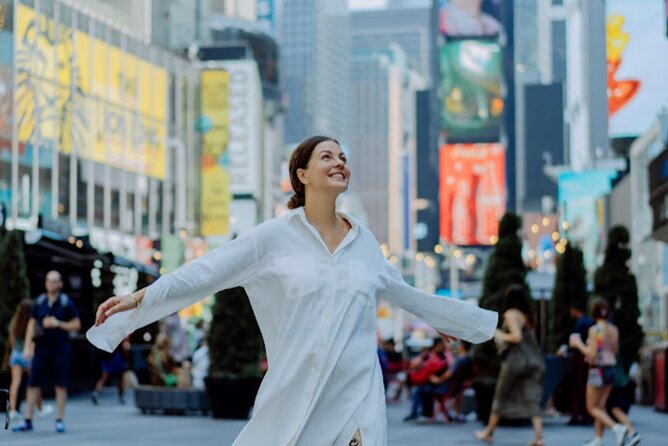
This is not a slow sightseeing stroll. It’s a structured photoshoot tour that treats NYC like your backdrop studio. You’ll spend a little over half a workday hopping between neighborhoods and viewpoints, with a photographer helping you get the shots you came for.
What makes it feel worth your time is the variety. You’ll go from the framed Manhattan Bridge view in DUMBO to the waterfront of Brooklyn Bridge Park, then onto the Brooklyn Bridge itself. After that, you shift into street-level neighborhood vibes—Chinatown, Little Italy, and SoHo—before heading into Greenwich Village and the Flatiron area.
If you’re hoping to do deep dives into one neighborhood, this won’t be that. Think of it as an efficient best-of photo route, where you trade a little time in each place for getting photos across many NYC styles.
You can also read our reviews of more tours and experiences in Brooklyn.
Finding the Meet Point in DUMBO (and Why the Early Start Matters)
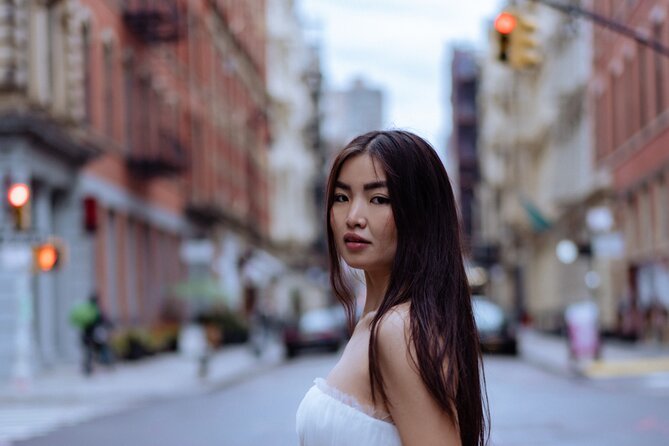
Your tour meets at Water St. & Washington St. in DUMBO, near the 39-21 Washington St, Brooklyn, NY 11201 area. The photographer is there about 15 minutes before the start, which helps you get situated without standing around in the cold (or heat).
Here’s why the early start is smart. DUMBO’s Manhattan Bridge overlook is one of those spots that constantly attracts cameras. Starting at 8:00 am doesn’t magically make it empty, but it usually means fewer people are competing for the same angles. That matters because your photos will look cleaner when the background isn’t packed with random silhouettes.
Bring your energy for walking. The route has a lot of crossing and momentum, and DUMBO is a great first stop because it gives you a strong “opening scene” shot right away.
DUMBO Manhattan Bridge View: Your First Big “Wow” Frame
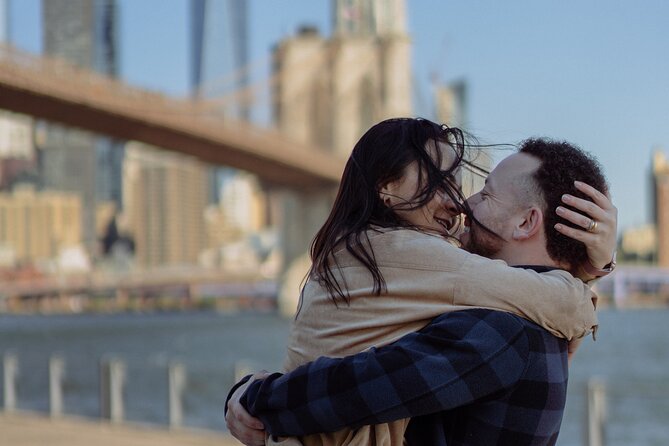
Stop one is the DUMBO Manhattan Bridge View area. You’ll get roughly 20 minutes here, with the photographer capturing you against the iconic bridge framing and skyline background.
This stop works well for a few reasons:
- The setting gives you a built-in composition. The Manhattan Bridge naturally forms a strong visual line.
- The area is known, so you’re basically collecting a classic NYC image without needing to hunt for angles.
- The earlier you arrive, the more likely you are to get photos where your subject isn’t swallowed by the crowd.
One practical tip: treat this like your warm-up. After you get a couple of initial poses out of the way, you’re usually looser for the rest of the shoot. That’s when photos start to look more like you and less like you’re trying to remember what to do with your hands.
Brooklyn Bridge Park: Waterfront Calm for Lower Manhattan Views
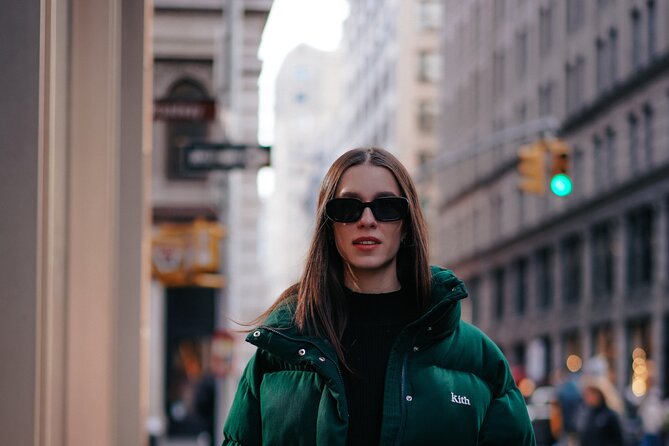
Next up is Brooklyn Bridge Park, about 30 minutes. This is where the pace shifts a bit. Instead of the bridge-on-the-rise vibe, you get a waterfront setting with wide views toward Lower Manhattan.
This stop is valuable because it adds variety to your final photo set. After DUMBO’s famous structure, Brooklyn Bridge Park gives you greenery, open sky, and a softer feel. It’s also a good moment to breathe before you step onto the Brooklyn Bridge, where you’ll be moving through more “classic New York” scenery.
Possible drawback: waterfronts can be windy. If you’re sensitive to cold air (or heat blowing off the water), dress for it. Short sessions here still move quickly, so comfort helps you stay focused.
Brooklyn Bridge: Classic Architecture Photos with a Real Walking Moment
Stop three is the Brooklyn Bridge, with 30 minutes to work the structure. Walking across the bridge is one of NYC’s most iconic experiences, and this stop is designed to turn that moment into a photo sequence.
What makes it work for photos is the geometry. The bridge’s cables and architecture create strong lines and depth. You also get lots of natural “moving background” opportunities—great for photos that don’t feel like everyone’s standing still.
The consideration here is crowd flow. Even with the early timing from the start, the bridge can still be busy. If you want very clean backgrounds, you’ll benefit from trusting the photographer’s timing and stepping slightly when needed.
Chinatown: Color, Motion, and Quick Candid Energy
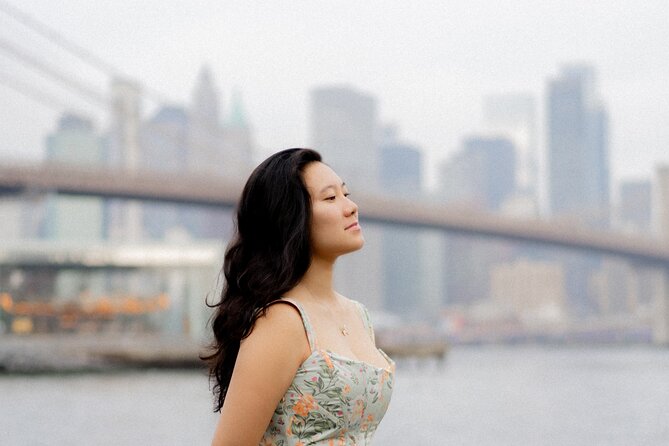
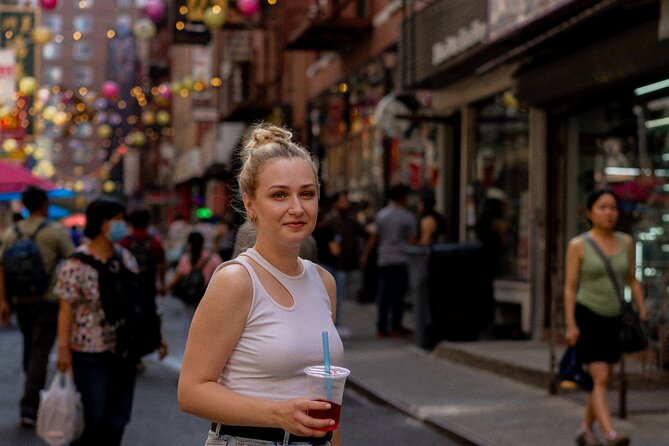
Then you switch gears to Chinatown, about 20 minutes. This stop focuses on the street atmosphere—busy blocks, vivid visuals, and candid-feeling shots.
This is where a photoshoot tour is better than trying to DIY it. You’re not just taking pictures. You’re making images that feel like they belong to the place. Chinatown gives you that sense of movement through signs, doorways, and everyday street scenes.
What to watch: Chinatown photos tend to be fast because there’s always something happening. If you get easily distracted, try to stay in the photographer’s rhythm. The best results usually come from following simple directions rather than overthinking each frame.
Little Italy: Italian Streets for Warm, Human-Scale Photos
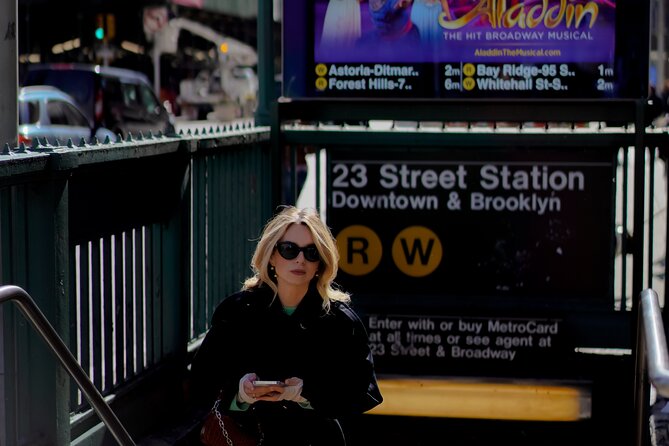
Stop five is Little Italy, about 20 minutes. This area is known for Italian heritage and food culture, and the photo style here leans toward neighborhood charm.
In practice, Little Italy is a good “tone shift.” After Chinatown’s dense visuals, you get a slightly different streetscape feel—still colorful, but often with more straightforward scenes for portrait-style photos. It’s also a helpful pace break before you hit SoHo’s design-and-shopping energy.
Small caution: if the streets are packed, the photographer may steer you toward spots that keep your background readable. You’ll get better images by being flexible than by insisting on one exact corner.
SoHo: Cast-Iron Streets and Art-Forward Details
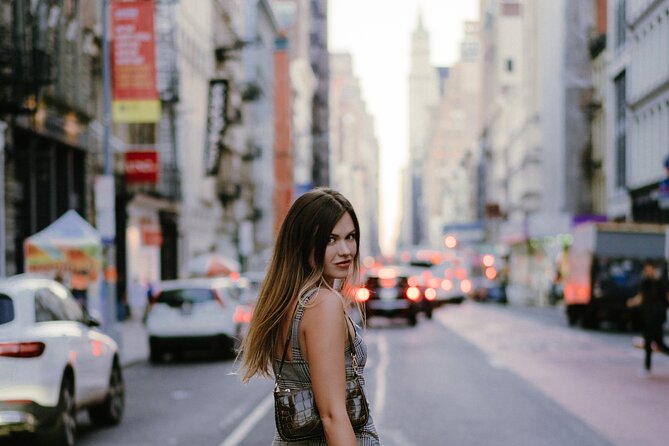
Next comes SoHo, with about 30 minutes. SoHo is famous for cast-iron architecture and an art-meets-commerce feel, and that shows up in photos.
This is one of my favorite parts of the route because SoHo gives you choices. You can go for:
- storefront and street-level detail shots
- portrait shots that use buildings as frames
- “walk and look” moments that feel candid
The photos come out looking different than your bridge shots, which is the big point of this whole tour. You’re building a varied set of images across distinct NYC styles, not repeating the same look over and over.
Consideration: SoHo streets can be crowded and busy, especially later in the morning. You’ll probably get your best results by trusting the photographer to select angles quickly and keep you moving.
Washington Square Park and the Audio Tour Moment
Stop seven is Washington Square Park, labeled as an audio tour stop, with about 20 minutes. This is one of the calmer breaks in the schedule. It also gives you a chance to step away from streets and use the park setting for more relaxed portrait-style images.
A key value here is pacing. After blocks and architecture, parks let your photos breathe. You also get natural “pause” energy, which often makes portraits look more natural.
Since the audio part is included as part of this stop, it’s a bonus if you enjoy learning while you take photos. Just keep one thing in mind: audio means you’ll be listening, not posing for every second. That’s fine. It’s designed to add to the experience, not replace the photos.
Greenwich Village Brownstones: Tree-Lined Streets, Softer Portraits
Stop eight is Greenwich Village, again about 20 minutes. This neighborhood is known for tree-lined streets and historic brownstones, and that translates into photos that feel more classic and less touristy.
Village photos often come out looking warm and human-scale. The streets give you texture without needing big landmarks in the frame. If you want variety in your final gallery, Village is a smart bridge between SoHo and Midtown.
The main thing to do here is slow down mentally. Even if you’re walking, aim for relaxed posture and natural expressions. A photoshoot works best when you look like you’re enjoying where you are—not just performing the pose.
Flatiron Building Finish: A Strong Ending Frame
Stop nine is the Flatiron Building, about 20 minutes. You’ll be able to get up close to its distinctive triangular shape, which makes a bold final backdrop.
This is a strong last-photo choice because the Flatiron area reads as unmistakably NYC, even if you don’t know the exact building details. It also gives you a clean architectural look that balances the bridge and neighborhood street scenes earlier in the tour.
Your tour ends at Empire State Building, 20 W 34th St., New York, NY 10001. So by the time you’re in the Flatiron area, you’re already heading into Midtown territory to wrap up.
How the Photographer Keeps You Looking Natural
A photoshoot tour lives or dies by the photographer’s ability to guide you without making it feel like a robot photo booth. The structure here helps: you’re at a landmark with a defined setting, and you get a timed window to work it.
A real highlight from a past experience with Anna was that she was kind, helpful, and made people comfortable during a longer session. She even helped with personal items so the client had free hands and could focus on the pose and the moment. That kind of practical support matters more than people expect. When you’re not juggling bags or worrying about awkwardness, your body language looks better.
What you should aim to do: show up ready to be coached. If the photographer tells you to shift your stance, turn slightly, or step at a specific moment, go with it. Those small moves are usually what separate a good photo from a great one in NYC.
Group Size, Pace, and What to Wear
This tour caps at 10 travelers, which is a big deal. Smaller groups tend to move more smoothly, and your photo moments feel less rushed. It also helps the photographer keep everyone lined up as you move between stops.
The pace is still active. You’re moving through several neighborhoods with 20–30 minute windows at each place. That means comfortable shoes aren’t optional. If you’re carrying bags, keep it simple; you’ll have an easier time when your hands and posture stay relaxed.
Weather matters here, too. The experience requires good weather, and if it’s canceled due to poor conditions, you’ll be offered another date or a full refund. Translation: you’re photographing an outdoor city, so dress like the forecast is real.
Value: Why This Photo Tour Can Be Worth It
Even without knowing the exact price of your booking, you can judge the value by what you’re getting for your time. You’re not paying for one location. You’re buying a photographer’s time across multiple iconic scenes, plus a route that already clusters neighborhoods with distinct visuals.
Here’s the math that matters:
- You get a guided pro who helps you pose and plan your shots
- You cover several NYC styles—bridge, waterfront, architecture, and street neighborhoods
- The stops are scheduled, so you’re not spending your limited vacation hours figuring out angles and crowd timing
If you’re the type of traveler who loves photos but hates the stress of planning, this kind of tour can be a great shortcut. And if you’re celebrating something (birthday, engagement, family visit), the guided structure helps make it feel intentional rather than random.
Should You Book This Photoshoot Tour in NYC?
Yes, if you want a fast, guided way to get strong NYC portraits across several neighborhoods in one morning. It’s especially appealing if you like classic landmark backdrops plus street-style variety, and you’re okay with limited time at each stop.
Maybe skip it if you want lots of free time for wandering, shopping, or sitting down for long meals. This route is built for momentum and photo windows, not slow neighborhood immersion.
If you do book, show up ready for early-day walking and trust the photographer’s guidance. That’s how you end up with images that look natural and varied, not just a checklist of places.
FAQ
How long is the Photoshoot Tour in New York City?
The tour is listed as about 4 hours.
Where does the tour start and where does it end?
It starts at 39-21 Washington St, Brooklyn, NY 11201 (DUMBO Manhattan Bridge View area) and ends near the Empire State Building at 20 W 34th St, New York, NY 10001.
What time does the tour begin?
The start time is 8:00 am.
What locations are included during the tour?
The tour includes DUMBO Manhattan Bridge View, Brooklyn Bridge Park, the Brooklyn Bridge, Chinatown, Little Italy, SoHo, Washington Square Park (audio tour), Greenwich Village, and the Flatiron Building.
Is the tour offered in English?
Yes. The tour is offered in English.
Is there a weather requirement?
Yes. The experience requires good weather. If it’s canceled due to poor weather, you’ll be offered a different date or a full refund.