REVIEW · ADDIS ABABA
Photography Expeditions to Omo Valley
Book on Viator →Operated by Ethiopian Photography Tours · Bookable on Viator
Tribes, paint, and camera time in Ethiopia. This Omo River Valley trip is built around photographing people who have lived with deep cultural continuity for generations, right in the thick of southern Ethiopia’s ethnolinguistic diversity. Expect a photo-forward route through places like Jinka, Turmi, and Arba Minch, plus wildlife time on Lake Chamo.
I especially like two things. First, the plan mixes culture and nature without wasting the whole day in transit—so you get actual moments to shoot. Second, the package includes village entrance and photography fees, along with meals, so you’re not constantly doing extra payments in the field.
One drawback to weigh: it’s a tight, early-start schedule. Some days run long with driving, so if you want slow travel and lots of free downtime, this one may feel intense.
In This Review
- Key highlights you’ll actually feel on the ground
- Why this Omo Valley trip works for photographers
- Day 1 in Addis Ababa: market or museum, then Jinka and Ari village
- Jinka to Turmi via Mago National Park: Mursi lip plates and highland access
- Turmi’s portrait days: Karo body painting and bull-jumping rehearsals
- The Omo River crossing to Dassanech: canoe time and ornate hair buns
- Arba Minch and Lake Chamo: crocodiles, hippos, and bird photography
- Dorze and Chencha near Guge Mountains: weaving, beehive houses, and small gardens
- Price and value: what $3,312.83 per group really buys
- Ethiopian Photography Tours and the guides: execution is the hidden luxury
- Practical photo tips for the Omo Valley (without slowing you down)
- Should you book this Omo Valley photography expedition?
- FAQ
- How long is the Omo Valley photography expedition?
- Is this a private tour, and how big is the group?
- Are meals included in the price?
- What photo-related costs are covered?
- Do you get pickup in Addis Ababa, and where does the tour start and end?
- Is the visa fee included?
- Can I cancel and get a full refund?
Key highlights you’ll actually feel on the ground
- Private group up to 7 with an air-conditioned vehicle for the long road days
- Photo time is the point: stops are chosen for recognizable visual traditions and portrait opportunities
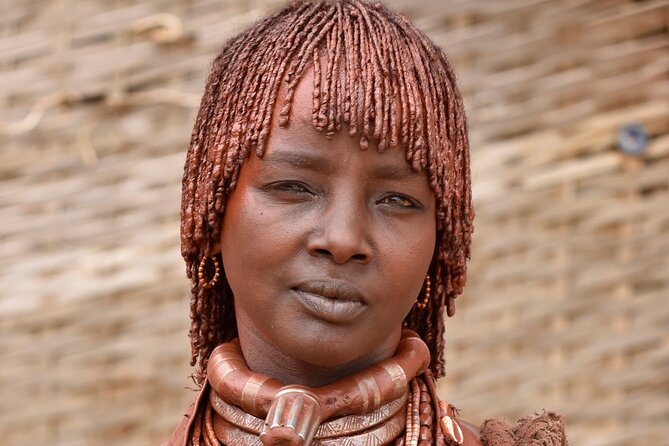
- Mursi, Hamer, Karo, Dassanech are all built into the cultural route across the Omo region
- Lake Chamo boat ride after 3 pm for crocodiles, hippos, and waterbirds
- Dorze and Chencha weaving plus beehive-shaped houses with organic construction
- Guides focused on execution, including support in the weeks leading up to departure
Why this Omo Valley trip works for photographers
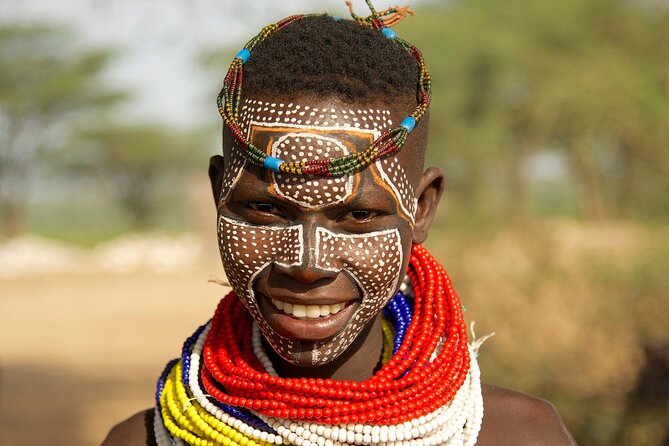
The Omo Valley isn’t just famous. It’s visual—faces, adornment, pigments, hair styling, everyday building styles, and animal life close to water. This tour is designed around that reality. You’re not bouncing between random “checkpoints.” You’re moving through a sequence of stops where the chances of getting meaningful images are high.
I also like that the experience is private (your group only). With up to 7 people, you can keep conversations, pacing, and photo timing more controlled than on big multi-group tours. That matters when you’re trying to line up portraits, understand how a moment is unfolding, and still keep the day on track.
You can also read our reviews of more tours and experiences in Addis Ababa.
Day 1 in Addis Ababa: market or museum, then Jinka and Ari village
You start in Addis Ababa (Bole), with pickup after arrival. On the first day you get an option: the National Museum or the open-air energy of Merkato, the city’s famed market. If you want a grounding first taste of Ethiopia’s collections and history, the museum option makes sense. If you want sensory overload and everyday life, Merkato is your path.
Later, you fly to Jinka, then meet the driver and head out toward Ari village. The itinerary doesn’t oversell this stop with extra promises; it’s simply your arrival-day way to start meeting the region’s culture quickly, instead of spending the whole day just getting there.
What you’ll need to know: the day is about setup. You’re not here for one perfect photo moment yet. You’re here to reset your timing and get positioned for the culture-heavy days that follow.
Jinka to Turmi via Mago National Park: Mursi lip plates and highland access
Morning drive time takes you to Mago National Park, then onward into the Mursi highlands. The Mursi are internationally known for the lip plates worn by some Mursi women. This tour treats it the way photographers need it treated: as a tradition you can photograph respectfully and clearly, not as a caricature.
In the afternoon, you head back through the Omo region toward Turmi, stopping via Dimeka and visiting the Hamer. There’s also a market stop at Alduba market before Hamer. Markets can be gold for street-style images—people interacting, colors moving, and life happening without much posing.
One practical note: this is the kind of day where the light can shift fast as you drive and then arrive. If you’re serious about photography, build your mental rhythm around it—plan to shoot when you arrive, then don’t hesitate to shoot again as the day’s activity changes.
Turmi’s portrait days: Karo body painting and bull-jumping rehearsals
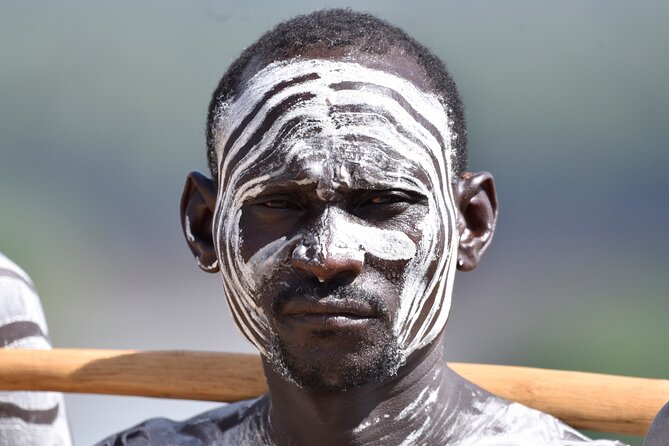
This is the day that feels like straight-up art. You drive to the Karo group in the morning, focusing on body painting done with clay and locally available vegetable pigments. The tour description matters here: these designs are made for fun and aesthetic effect, and you’ll see artists trying to outdo each other. That competition can make portraits more dynamic, because people are actively responding to what others are doing.
You’ll also notice how Karo men sculpt and shave their hair into extravagant shapes, with ochre caps that often include ostrich feathers. Those details are exactly why this is a strong photography route. Even if you’re not planning formal portraits, you’ll still be able to shoot tight close-ups—paint texture, hair styling, and accessories.
Back in Turmi, you may get a chance to photograph bull jumping rehearsal or a ceremony. This is one of those “timing” moments. If it’s happening, you’ll be in the right place; if not, you still have the village and town life as fallback photo material. Either way, keep your expectations grounded: you’re there for cultural documentation, not a guaranteed performance schedule.
The Omo River crossing to Dassanech: canoe time and ornate hair buns
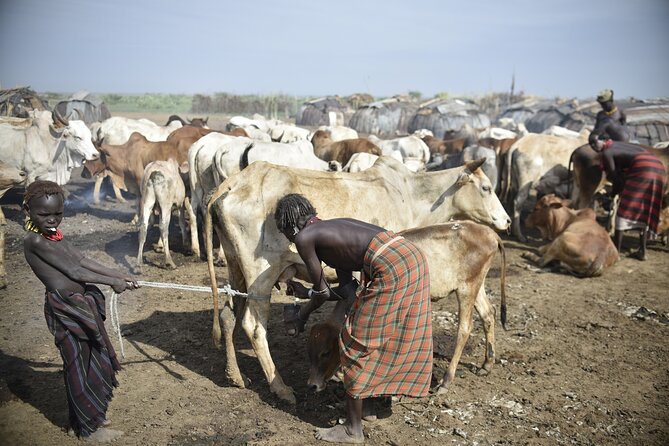
A great cultural photography day needs one thing: a sense of place. That’s what the Omo River edge delivers. You rise early, drive to the river, then cross by canoe to visit the Dassanech.
The Dassanech are described as semi-nomadic, with clans stretching across Sudan, Kenya, and southern Ethiopia. You’re not just photographing one moment; you’re meeting a people whose traditions reflect long movement patterns across the region. The tour also highlights their ornate hair buns, which are visually distinctive and work well in both wider portraits and close frames.
After photographing the village, you drive back to Turmi. The afternoon is more flexible: you can relax or photograph Turmi town. I like this kind of built-in breathing room. It’s smart for photographers because it gives you time to review what you captured, adjust settings, and reset your expectations before the wildlife day.
Arba Minch and Lake Chamo: crocodiles, hippos, and bird photography
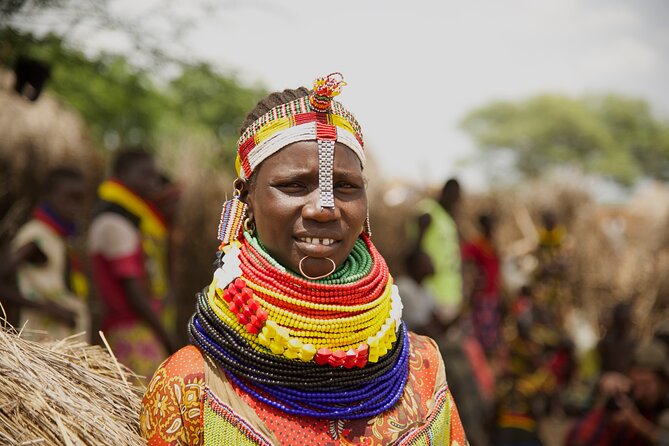
Next you shift from people-focused portrait time to wildlife. You drive to Arba Minch in the morning, then go for a boat trip on Lake Chamo after 3 pm.
This timing is practical. Later-day light often makes animal photography easier, and the descriptions focus on what you’re likely to see: crocodiles lounging near the northern shores, plus hippos and waterbirds. The list of birds includes African fish eagle, flamingos, herons, storks, and kingfishers. Even if you don’t photograph every species, this is the kind of lake where you can keep shooting as different animals surface.
If you’re a wildlife photographer, here’s the value: you’re not just “going to a viewpoint.” You’re on the water where animals are close enough to matter visually. And because the schedule anchors the boat ride to a specific window, you’re not spending your day guessing when the wildlife will be most active.
For everyone: bring patience. Wildlife is wildlife. Sometimes animals are cooperative. Sometimes they are stubbornly still. The good part is that the tour’s plan expects that reality and doesn’t pretend it can control it.
Dorze and Chencha near Guge Mountains: weaving, beehive houses, and small gardens
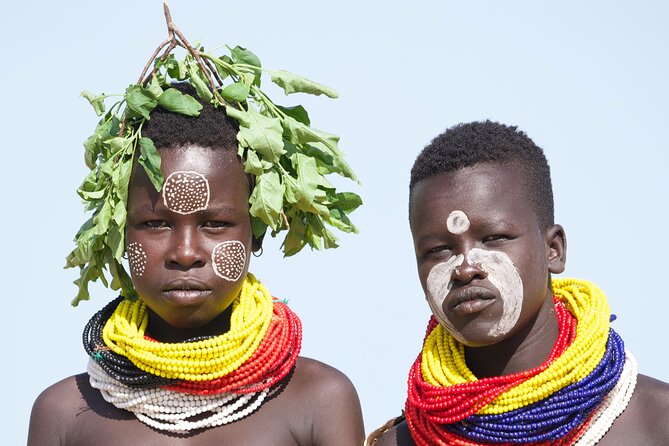
The final culture stop shifts to Ethiopia’s craft side. You travel about 40 km northwest of Arba Minch toward the Guge Mountains to visit Dorze and Chencha villages.
The Dorze are known for farming and weaving. The tour description even underlines the craft reputation of the Dorze name associated with well-woven cotton cloth. If you like photographing texture and workmanship, this is where you’ll find it—fibers, patterns, and the daily rhythm of making.
Housing is another standout. Dorze beehive-shaped houses are described as constructed from organic material, and each house includes a small garden with spices, cabbage, and tobacco. That garden detail is important because it ties architecture to daily life, not just a “wow” photo.
After lunch, you transfer to Arba Minch Airport and fly back to Addis Ababa, arriving late afternoon. The plan includes a day-use room for washing and changing, which is one of those small logistics wins that makes the end of a long, photo-heavy trip feel less messy.
Price and value: what $3,312.83 per group really buys
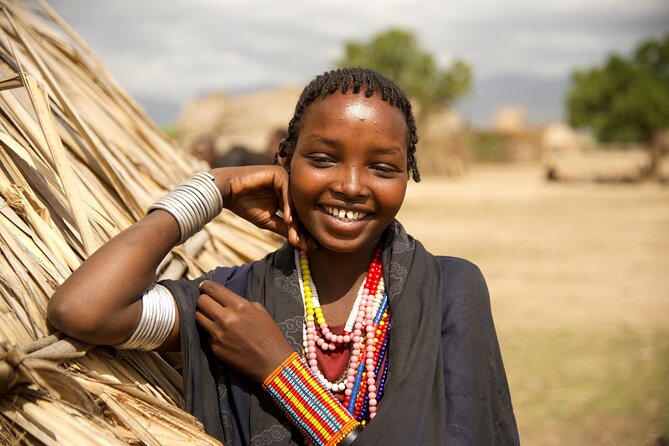
The price is $3,312.83 per group (up to 7 people) for about 6 days. If the group fills all 7 seats, that works out to roughly $475 per person. If fewer people join, your per-person cost rises, since it’s priced per group, not per person.
Where the value shows up is in what’s included:
- Air-conditioned vehicle for the driving-heavy route
- Village entrance and photography fee
- 5 breakfasts, 5 lunches, 5 dinners
- Lunch is clearly accounted for across the days, plus dinners and breakfasts as listed
What’s not included is also clearly stated: visa fee, international flight, personal expenses, tips, and alcohol. That’s a normal split for Ethiopia tours, but it matters because it shapes your budget. If you’re comparing tours, don’t just compare the headline price. Compare what you won’t have to pay onsite for entry and photography permission.
Bottom line: this looks like a solid value when you want a focused photo route with fewer surprise costs, and when you can share the group price.
Ethiopian Photography Tours and the guides: execution is the hidden luxury
This kind of itinerary lives or dies by coordination. When a tour handles flights, transfers, timing, and access, your day runs smoother and your photos improve. The feedback style associated with Ethiopian Photography Tours points to serious attention to planning, with named support like Mulugeta and guidance described as coming from Mulu and a Captain.
I also like that logistical problems are treated as solvable. The experience is described as pivoting when challenges appeared without losing the trip’s momentum. That doesn’t mean everything will be perfect—Omo Valley days can be unpredictable. It means you’re less likely to end up stuck with a “sorry, too bad” moment.
Practical photo tips for the Omo Valley (without slowing you down)
You’ll photograph people, places, and rituals that may not fit your idea of a typical “tourist photo.” Here’s how I’d set yourself up for better results:
- Plan for close and wide shots. Lip plates, paint textures, and hair styling benefit from close framing. Village scenes and markets need wider angles.
- Use a respectful approach first. You’ll get better cooperation when people feel safe and treated like humans, not subjects.
- Expect light shifts and dust. Drive days mean changing conditions. Bring cloth for gear and extra cleaning wipes.
- Keep your batteries and storage ready. You’ll likely shoot more than you think once you hit Karo and Dassanech and then switch to wildlife.
- Shoot in sequences, not single clicks. With body paint, hair accessories, and ritual moments, action changes over time.
This is also a tour where you’ll likely be tempted to chase the next shot. Build in moments to stop, observe, and decide what you truly want. That makes your final images stronger than just firing continuously.
Should you book this Omo Valley photography expedition?
If you’re a photographer, or you want your camera to be part of how you understand southern Ethiopia, I think this trip is a strong match. It’s built for clear visual targets—Mursi lip plates, Karo body painting, Dassanech hair buns, and wildlife on Lake Chamo—all organized inside a workable 6-day rhythm.
Book it if:
- you want a private group and a schedule that stays focused
- you value having photography fees and village entrance handled
- you’re comfortable with early starts and long road days
Skip it (or at least rethink) if:
- you need lots of downtime and an ultra-slow pace
- you’re not interested in cultural photography and want mostly scenery
- you’re on a tight budget once you factor in visa and international flights
FAQ
How long is the Omo Valley photography expedition?
It runs for about 6 days.
Is this a private tour, and how big is the group?
Yes. It’s a private tour/activity where only your group will participate, and the group size can be up to 7 people.
Are meals included in the price?
Yes. The package lists 5 breakfasts, 5 lunches, and 5 dinners included.
What photo-related costs are covered?
The inclusions list village entrance and a photography fee.
Do you get pickup in Addis Ababa, and where does the tour start and end?
The tour starts in Bole, Addis Ababa, with pickup offered, and it ends back at the same meeting point.
Is the visa fee included?
No. The visa fee is not included.
Can I cancel and get a full refund?
Yes. It offers free cancellation, with full refund if you cancel up to 24 hours in advance of the experience start time.