REVIEW · PARIS
Learn the art of street photography in the heart of Montmartre!
Book on Viator →Operated by Learn and practice the art of street photography with Clara dans la rue in the heart of Montmartre! · Bookable on Viator
Montmartre teaches your camera to pay attention. On this private 2-hour walk with Clara dans la rue, I loved the composition and storytelling coaching, and I also liked how the route pushes you past the easy postcards toward rooftops and cemetery-area scenes. The main consideration is simple: you’ll walk hills for two hours, so comfortable shoes are non-negotiable.
You begin at Place des Abbesses in Paris 18, and it runs in daytime unless you request a night session. Bring whatever camera you have (even a phone), and you can talk gear ideas before you meet—because the best settings in the world don’t help if you don’t know what you’re looking for.
In This Review
- Key Takeaways Before You Go
- Why Montmartre Works So Well for Street Photos
- Meeting at Place des Abbesses and Getting Your Eye Ready
- The 2-Hour Walk: Daytime Practice With a Real Pace
- What Clara Teaches: Composition and Storytelling You Can Use Immediately
- Working the Streets: How to Find Photos Beyond the Obvious Shots
- Rooftop Views and Cemetery-Area Quiet: Changing Your Photo Mood
- Smartphone and iPhone Tips That Make You Faster
- The Parting Gift: A Small Keepsake With Big Reminder Value
- Price and Value: Is $165.49 Worth It?
- Who This Tour Suits Best (and Who Might Want a Different Option)
- Should You Book Clara’s Montmartre Street Photography Walk?
- FAQ
- How long is the street photography walk?
- Where does the tour start and end?
- Is the tour in English?
- Is it a private tour?
- Is it daytime or can it be at night?
- Do I need to bring my own camera?
- Will the guide help if I’m using a smartphone?
- What should I bring for the 2-hour walk?
- What happens if weather is bad?
Key Takeaways Before You Go
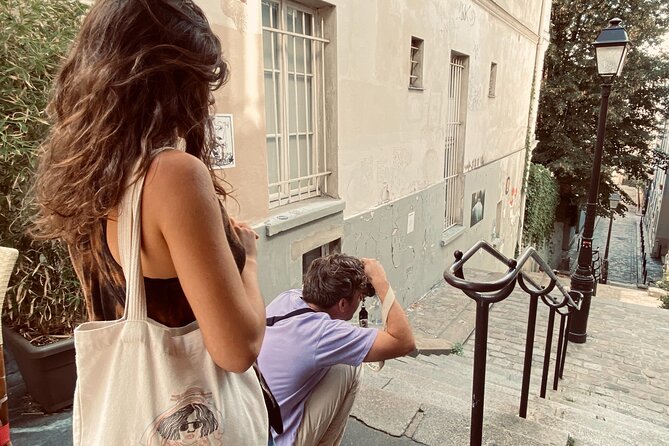
- Private guidance with Clara means you get feedback tailored to how you shoot.
- Composition + storytelling are taught as practical skills, not vague theory.
- Montmartre’s texture shows up in rooftops, cobblestoned hills, and cemetery-area streets.
- You can shoot any camera, and Clara is happy to work with smartphone users too.
- It’s a real walking session—you’ll cover a lot of ground in two hours, so plan for comfort.
Why Montmartre Works So Well for Street Photos
Montmartre is made for street photography. You get narrow lanes, sudden viewpoints, peeling textures, and people moving at every pace. It’s not just pretty. It’s chaotic in a usable way—perfect for practicing the skill of seeing before you press the shutter.
On this walk, you don’t just wander with a camera in your hand. You practice how to frame what you notice. That coaching is the difference between random shots and photos with intention.
And there’s another big reason this area is great: it gives you variety in a short time. In two hours you can work on street interactions, then shift to rooftops and quieter corners, and finish around recognizable Montmartre landmarks. That change keeps your eye fresh instead of repeating the same shot.
You can also read our reviews of more tours and experiences in Paris.

Meeting at Place des Abbesses and Getting Your Eye Ready
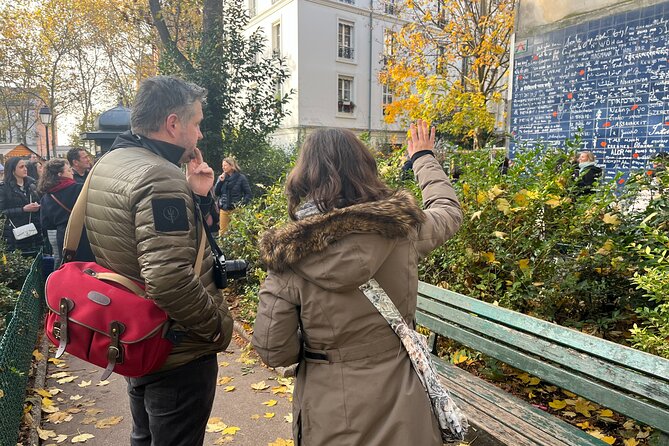
You start at Place des Abbesses and end back at the same meeting point. This matters more than it sounds. You don’t lose energy figuring out logistics, so you can focus on building a photo habit: look first, then plan, then shoot.
Before you head out, you can bring whatever kit you’re using. The tour is set up so you don’t feel locked into one camera style. If you’re carrying a traditional camera, you’ll talk about lenses and shooting needs. If you’re using a smartphone, you’ll still get guidance aimed at getting stronger frames.
I also like that the tour runs in English. When you’re learning a visual skill, small wording differences matter. Clear instruction helps you correct mistakes fast.
One more practical note: the tour is designed for daytime, but you can request a night time session. That option matters if you’re chasing different light, shadows, and street mood.
The 2-Hour Walk: Daytime Practice With a Real Pace
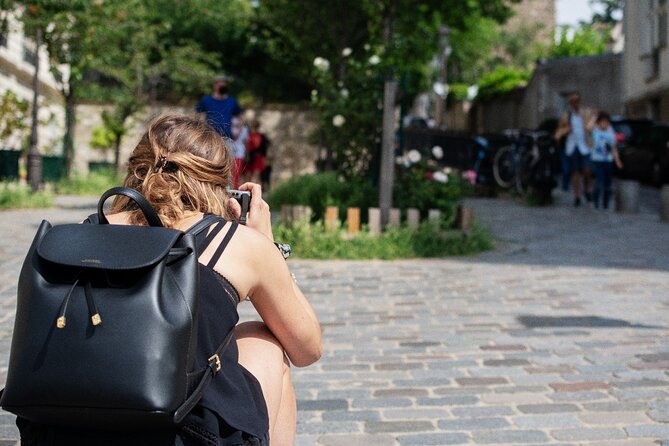
This is a walking session of about two hours. It’s not a quick “pose here, snap now” tour. The pace is active, and you’ll likely move up and down Montmartre’s cobblestoned hills.
That’s both the charm and the challenge. The charm: you get more angles and more background variety than you’d get in a static photo spot. The challenge: you can’t fake it if your shoes are wrong.
If you want to improve fast, arrive ready to walk and ready to pause. Street photography isn’t only about cameras; it’s about patience. Clara’s teaching style leans into slowing down enough to make choices you can explain in your photos.
You might even consider a tripod if that’s your style. The tour encourages you to be prepared for the equipment you might want to use, and the group discussion helps you decide what makes sense for your kit.
What Clara Teaches: Composition and Storytelling You Can Use Immediately
The headline skills are composition and storytelling. That pairing is smart. Composition helps you frame the moment. Storytelling helps you decide what the moment is.
Here’s how it typically translates on the street:
- You learn to pay attention to lines, edges, and shapes so your photo has structure.
- You learn to think about the scene as a sequence, not a single frame.
- You learn to slow down enough to make a choice: what’s the main subject, and what’s support?
One of the best parts of this style of instruction is that it pushes you to shoot with intent. Instead of getting stuck at the first interesting detail, you practice moving through a scene and making deliberate decisions.
This also helps beginners. If you’re new to street photography, it can feel like everyone else is doing something magical you’re not. A coach breaks the magic into steps. Suddenly your shots start looking like you meant them.
And it helps experienced photographers too. Even if you already know the basics, guided feedback can sharpen your habits—especially around timing, framing, and choosing the moment that tells the story.
Working the Streets: How to Find Photos Beyond the Obvious Shots
Montmartre’s streets are full of angles. You’ll be shown how to use them. The tour focuses on capturing what’s happening around you—people, gestures, and everyday scenes—while keeping your composition clean and your narrative readable.
I like that you’re also guided to take your time. That’s a real difference from tours that move fast and treat photos as a checkbox. Here, you’re encouraged to think about what you’re photographing and why.
In practical terms, that means you’ll spend part of the walk learning how to:
- spot a good photo moment quickly, then
- wait just long enough for it to become the right shot.
It also means you’ll end up with photos that feel connected to the place. You’re not just collecting images. You’re building a mini story of Montmartre as you experience it.
There’s a bonus effect too: when you learn how to choose what to shoot, every street looks like it has possibilities. That’s the kind of skill you take home.




Rooftop Views and Cemetery-Area Quiet: Changing Your Photo Mood
A great street photography tour doesn’t keep you stuck in one style. This one explicitly includes time for rooftops, a cemetery area, and landmarks. That variety matters because it trains your eye to shift moods.
When you’re near rooftops, you can play with:
- layered buildings,
- diagonals created by streets and edges,
- and the way rooftops frame the sky and light.
When you move toward the cemetery-area streets, the vibe changes. Even if you don’t treat it as a solemn place, you’ll naturally find calmer compositions. It’s useful practice because street photography isn’t only about crowds. Sometimes it’s about stillness, texture, and the quiet drama of everyday scenes.
Then you reconnect with landmark moments. Those are useful for a different reason: landmarks help you anchor your story. You can include them as context rather than the whole point—so your final set of images feels grounded in Montmartre instead of looking like generic city street shots.
If you’re the type who gets frustrated outdoors—too many possibilities—this route helps. It gives you different “assignments” so your photos don’t become random.
Smartphone and iPhone Tips That Make You Faster
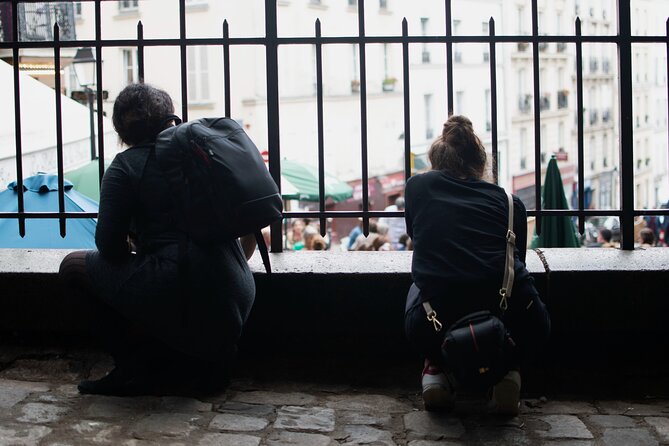
One review stood out for this: Clara helped a visitor learn a few things about their iPhone. That’s a big deal if you’re traveling light or you don’t want to carry a full camera setup.
The key idea is the same whether it’s an iPhone or a camera with interchangeable lenses: you still need composition, timing, and storytelling. The tools differ, but the thinking doesn’t.
So if you’re worried that you need fancy equipment, don’t. Bring your phone. Use the tour to improve how you frame, how you choose subjects, and how you respond when light or a moment changes.
Also, smartphone users have an advantage here: street photography rewards quick experimentation. You can take several frames, adjust fast, and learn what works without overthinking settings.
Clara’s approach seems to make room for that reality. You don’t have to pretend you’re shooting like a professional. You just have to learn what your device can do and how to aim it well.
The Parting Gift: A Small Keepsake With Big Reminder Value
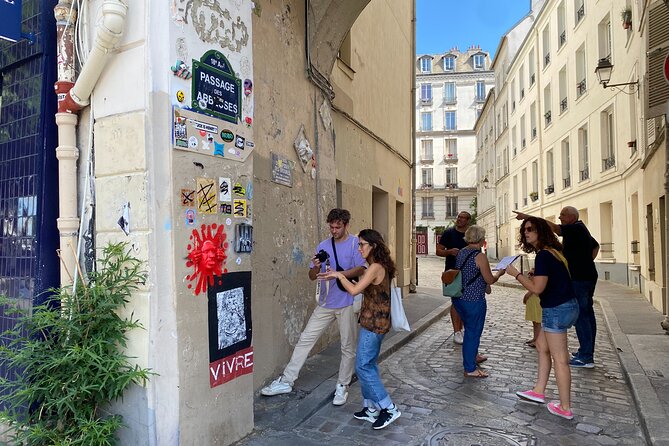
This experience includes a parting little gift. It’s not a huge “souvenir factory” thing. It’s the kind of reminder that makes the skills feel tangible after you leave.
The gift matters because street photography improvement is partly emotional. You need motivation to keep shooting after the tour ends. A physical reminder helps, especially if you want to keep practicing back home.
More important though: you’ll likely leave with photos you want to look at again. When your images start telling a story, you’ll understand the whole point of learning technique in the first place.
Price and Value: Is $165.49 Worth It?
At $165.49 per person for about two hours, the price might look steep if you’re comparing it to self-guided wandering. But street photography instruction isn’t a sightseeing lecture. It’s hands-on coaching in a place where you can actually practice.
Here’s what you’re paying for, in real terms:
- Private, group-only experience, so you aren’t competing for attention.
- A guide who can correct how you shoot as you walk.
- Time spent in Montmartre’s specific photo zones—streets, rooftops, cemetery-area corners, and landmark moments—rather than just one viewpoint.
If you’re traveling with limited time in Paris, this format can be great value. Two hours is long enough to learn and shoot multiple variations, but short enough to fit into a day of sightseeing.
If you’re on a strict budget, consider whether you’ll actually use the skills afterward. If you’re willing to put in the patience and experimentation on the walk, the coaching can pay off quickly.
If you just want scenic photos with no learning component, you might prefer a different kind of tour. This one is for improving your photos, not collecting passive views.
Who This Tour Suits Best (and Who Might Want a Different Option)
This tour is a great match if you:
- want to learn street photography basics (composition and storytelling),
- like walking and exploring at street level,
- want a guide who can tailor help to your equipment,
- or you’re a smartphone shooter who wants better results fast.
It might feel less ideal if:
- you hate walking hills for two hours,
- you only want landmark sightseeing without practicing photography,
- or you’re expecting a slow sit-down class. This is a moving, shooting session.
The best fit is a curious traveler who’s willing to pause, think, and take a few shots that might not be perfect at first. That mindset turns the tour into real progress.
Should You Book Clara’s Montmartre Street Photography Walk?
I’d book it if you want a practical way to see Montmartre and improve your photos at the same time. The combination of private coaching, a clear focus on composition and storytelling, and real time in rooftops, cemetery-area streets, and landmarks is a strong mix for a short Paris window.
Book it especially if:
- you want instruction that works for your own camera or phone,
- you value friendly, patient guidance,
- and you’re okay with two hours of walking.
I’d skip it if you’re mainly after a sit-and-watch tour, or if hills are a dealbreaker. Otherwise, this is the kind of experience that teaches you how to keep shooting after you’ve gone home.
FAQ
How long is the street photography walk?
It lasts about 2 hours on foot.
Where does the tour start and end?
It starts at Place des Abbesses (Pl. des Abbesses, 75018 Paris, France) and ends back at the meeting point.
Is the tour in English?
Yes. The tour is offered in English.
Is it a private tour?
Yes. It’s private, so only your group participates.
Is it daytime or can it be at night?
It’s daytime unless you request a night time session.
Do I need to bring my own camera?
Camera is not included, so you’ll want to bring your own equipment. You can bring whatever camera you have.
Will the guide help if I’m using a smartphone?
You can bring any kind of camera, and the experience includes guidance that can help smartphone shooters improve, including iPhone tips.
What should I bring for the 2-hour walk?
Wear comfortable shoes. Bring a good jacket for cold times and a water bottle. If you use one, you may also want to bring a tripod.
What happens if weather is bad?
This experience requires good weather. If it’s canceled due to poor weather, you’ll be offered a different date or a full refund.