REVIEW · DHAKA
Dhaka Popular Street Photography Tour
Book on Viator →Operated by Travel Trips · Bookable on Viator
Dhaka moves fast, and your camera can keep up. I love the street photography coaching that turns crowded lanes into clear shots, and the river-rowboat access for real-life angles on Old Dhaka; just know the ride is bumpy and close-quarters, especially on rickshaws and horse carts.
The tour runs about 4 to 5 hours starting at 11:00 am, with hotel pickup and drop-off, plus transport that strings together markets, landmarks, and river views. If you get the guide Mahib, you’ll benefit from the kind of on-the-ground explanations that make what you see in Dhaka instantly make sense.
At $82 per person, the value comes from doing a lot of different photo settings in one go, including traditional cuisine lunch and stops where entry fees are listed as free.
In This Review
- Key highlights you’ll feel in your camera roll
- Start at 11:00 am with pickup and a smart photography flow
- Kawran Bazar: photographing Dhaka’s wholesale marketplace scale
- Shahbagh Flower Market: turning colors into street-level portraits
- Dhaka University area and Shahid Minar: the meaning behind the shots
- Dhaka University area
- Shahid Minar (Language Martyrs Monument)
- Nilkhet Book Market: photographing the page-turning culture
- Gausia Saree Market: fabric, bargaining energy, and community detail
- Religious Dhaka in one route: Dhakeshwari Temple, Star Mosque, and Armenian Church
- Dhakeshwari Temple (national Hindu temple)
- Star Mosque (Tara Masjid)
- Armenian Church of the Holy Resurrection
- Shankhari Bazar Road: artisan lanes, kite makers, and the real Old Dhaka texture
- Ahsan Manzil and the Buriganga edge: Pink Palace outside views and river context
- Sadarghat River Port: the best chaos for street photography, plus a real reality check
- Lunch and the ride lineup: how the day fits together
- Is $82 worth it for 4 to 5 hours of street photos and rides?
- Should you book this Dhaka Popular Street Photography Tour?
- FAQ
- What is the duration of the Dhaka Popular Street Photography Tour?
- What time does the tour start?
- Is hotel pickup and drop-off included?
- How much does the tour cost?
- What rides and transport are included?
- Is lunch included?
- Are entrance fees included?
- Are there dress or entry rules for Star Mosque?
Key highlights you’ll feel in your camera roll
- Kawran Bazar’s wholesale power with vegetables, fish, meat, and FMCG trading, plus the sheer scale of merchants
- Shahbagh Flower Market color where morning commerce turns into photo-friendly color blocks
- Shahid Minar on 21 February with the Language Movement story behind the monument’s emotional weight
- Nilkhet Book Market browsing lanes full of small shops and serious student shopping energy
- Dhaka’s religious mix in one day at Dhakeshwari Temple, Star Mosque, and the Armenian Church
- Sadarghat Launch Terminal by the Buriganga with constant motion, launches, and overloaded ferry scenes
Start at 11:00 am with pickup and a smart photography flow
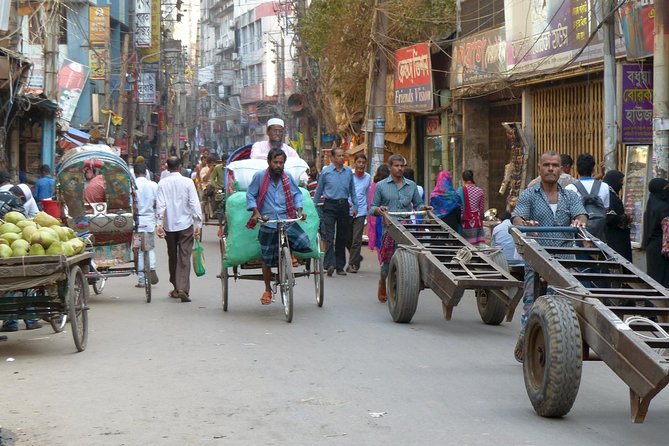
This is built for street photography, not museum time. You start at 11:00 am and get hotel pickup and drop-off, which matters in Dhaka because the city’s pace can eat up your energy fast. Once you’re moving with the group, you spend less time figuring out where to go and more time watching and photographing what’s actually happening.
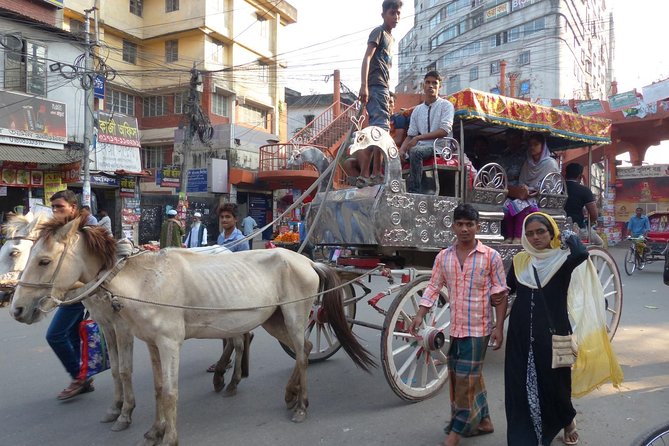
The tour also keeps the day varied. You’re not just walking; you’ll use local communal vehicles and then switch to traditional rickshaw, horse cart, and a wooden rowboat ride with locals. That mix changes your angle automatically. On a street, you’re at face level. On the water, you’re higher than the crowds and able to frame storefronts, river activity, and boats in the same shot.
Because it’s described as private—your group only—you’re less likely to feel rushed by strangers blocking your view. Still, plan like it’s a moving street day: you’ll need to keep your gear secure and your attention flexible.
You can also read our reviews of more tours and experiences in Dhaka.

Kawran Bazar: photographing Dhaka’s wholesale marketplace scale
Kawran Bazar is the first big sensory hit: one of the largest commodity markets in Dhaka, handling vegetables, river and sea fish, meats, and FMCG wholesale. The scale is hard to overstate—your info here is half a million merchants buying and selling every day, and it’s described as among the biggest wholesale marketplaces in South Asia.
From a photographer’s point of view, this stop is about layers:
- Close-up details: crates, bundled items, hands passing goods
- Working faces: sellers, buyers, and helpers doing the job fast
- Motion: people moving products and money through tight space
You’ll have about 45 minutes here, so don’t try to cover everything. I’d focus on a simple goal: one set of tight shots (texture and product), one set of mid shots (people working), and one wide shot that shows the market’s density.
Practical note: marketplaces like this can be loud and busy, and the tour is time-managed. Keep your camera ready but don’t run. In these lanes, walking steadily gets you cleaner photos than pushing ahead.
Shahbagh Flower Market: turning colors into street-level portraits
Right after Kawran Bazar comes Shahbagh, centered on the Shahbagh Flower Market. It’s described as the largest wholesale flower market in Dhaka, where people gather for occasions like wedding ceremonies. The thing you’ll notice immediately is color—flowers in every shade, hawkers working fast, and shoppers collecting bunches for the day’s events.
You only have about 30 minutes, but that can be enough if you’re selective. I’d photograph:
- The bright exchanges: someone buying, someone packing, someone calling out
- Vendor hands: arranging and tying bouquets
- Background context: market stalls showing the bigger scene
A small tip for street photography here: try shooting from slightly lower than eye level. It helps keep the focus on flowers and faces without losing the sense of crowd movement behind them.
This is also where you can get very “Dhaka” images without needing a landmark in frame. The story is in the buying, the delivery, and the color patterns made by the goods.
Dhaka University area and Shahid Minar: the meaning behind the shots
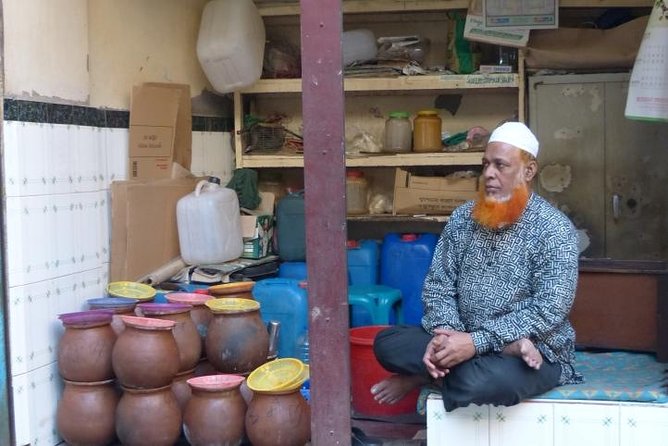
Two of the most meaningful stops are connected by theme: language, identity, and the role of education in modern Bangladesh.
Dhaka University area
The University of Dhaka is described as the oldest modern university in Bangladesh, established during the British Raj in 1921. It earned early recognition as the “Oxford of the East” and later became a focal point for democratic movements and Bengali nationalism. Even if you’re not doing an in-depth visit, the area is a powerful backdrop for street photography because it’s a place where youth energy mixes with history.
Shahid Minar (Language Martyrs Monument)
Then you reach Shahid Minar, commemorating the martyrs of the Language Movement of 1952. This monument matters because it isn’t just architecture—it’s a focal point for public remembrance. The description notes that on 21 February, hundreds of thousands gather with floral wreaths and bouquets in a solemn atmosphere. It also notes celebrations begin at the zero hour of midnight and that the UN declared 21 February as International Mother Language Day in 1999.
You’ll spend about 15 minutes, so treat it like a quick photographic read:
- Capture the monument itself, but also
- capture the people’s ritual behavior—flowers, faces, and quiet moments
One consideration: emotions run strong around this topic, so don’t block views for a perfect angle. If your goal is documentary-style street photography, you’ll get better shots by moving gently and waiting for natural moments.
Nilkhet Book Market: photographing the page-turning culture
Nilkhet Book Market is the kind of stop that makes a street tour feel human. You’re told there are over one thousand small book shops with millions of books, and students and people from across the country come specifically to buy and collect books.
You have about 40 minutes, which is ideal for photos that feel personal:
- Book stacks and covers (even partial framing works)
- People browsing with concentration
- Shopfront signs and narrow interiors
If you like street photography that shows daily life rather than monuments, this is a standout. You’ll get texture—paper, shelves, writing, and the “almost library” feel mixed with street commerce.
A useful approach: shoot wider first to establish location, then go tighter on hands and faces. Book markets are visual, but the human detail is what makes your shots memorable later.
Gausia Saree Market: fabric, bargaining energy, and community detail
From books to clothing: Gausia Saree Market is described as one of the largest wholesale markets for sarees for Bengali women. The tour notes that thousands of women come to collect sarees, and that sarees are one of the most traditional clothing items in the region.
You have about 1 hour, and there’s a lot to photograph because it’s not just one market lane. The description adds that the adjacent Dhaka municipal community market has over two thousand shops on both sides, plus hundreds of street shops for domestic consumer products. It even gives a huge crowd figure: around one million people joining the buying and selling each day.
What to focus on with limited time:
- Colorful fabrics and patterns (saree bundles make great photo subjects)
- Portraits in motion (women carrying, sellers sorting, helpers tying bundles)
- Context shots showing lanes and crowd flow
This is also a good place to practice respectful photography. People are busy, so keep your movement calm and avoid overly aggressive filming/photographing close to faces. You’ll get better results by asking your body to be patient rather than your camera to be fast.
Religious Dhaka in one route: Dhakeshwari Temple, Star Mosque, and Armenian Church
One of the most interesting parts of this day is how it moves through different faith spaces without turning it into a lecture. You get a real snapshot of Dhaka’s religious mix.
Dhakeshwari Temple (national Hindu temple)
Dhakeshwari Temple is described as Bangladesh’s national Hindu temple, state-owned, and known as the Goddess of Dhaka. The description says it was built in the 12th century during the Sena Dynasty by King Ballal Sen. It also notes that the current architectural style can’t be dated precisely to that period because of many repairs over time, and mentions that researchers say the city was named after the temple.
You’ll spend about 35 minutes. For photos, I’d focus on:
- The temple as architecture, even if you’re shooting from outside angles
- People’s movement and ritual behavior nearby
- Any contrast between visitors and the surrounding lanes
Star Mosque (Tara Masjid)
Star Mosque is Mughal-era white marble with engraved floral and star patterns. The description notes there’s no inscription mentioning the founding year, but trustees say it was built in 1711. It also adds a very practical visiting note:
- Don’t visit during prayer times
- Women must cover their head and wear modest clothing
- Shorts aren’t allowed for entry for men or women
You’ll have about 25 minutes. This stop is more than a pretty building. It’s also a lesson in how rules shape photography. Be ready with modest clothing, and plan your shots around respectful observation rather than rushing for angles.
Armenian Church of the Holy Resurrection
Then you head to the Armenian Church of the Holy Resurrection, described as an abandoned church from the 18th century, and one of the most beautiful abandoned church in South Asia.
You’ll spend about 25 minutes. This is your chance for moodier, quieter photography compared to the market-heavy portions of the day. Abandoned or semi-quiet historic buildings can make stronger compositions if you keep your framing clean and don’t chase distractions.
Shankhari Bazar Road: artisan lanes, kite makers, and the real Old Dhaka texture
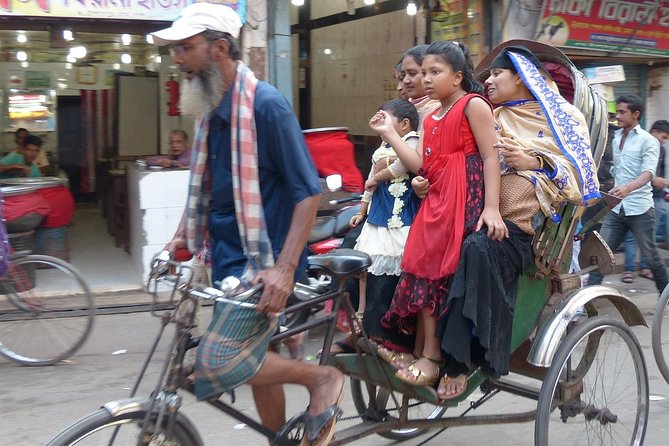
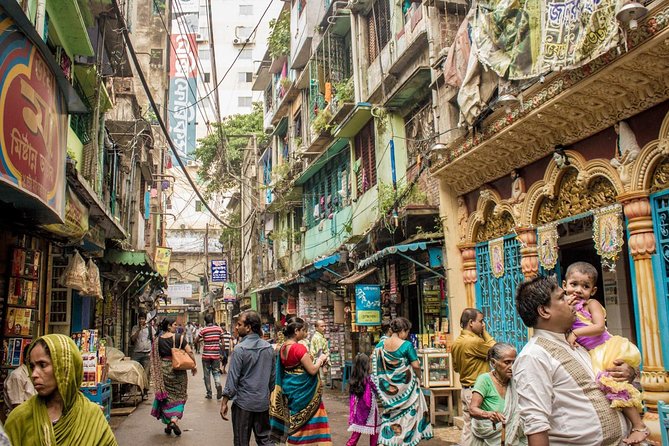
After the mosque and church, the tour turns into walking lanes in Old Dhaka around Shakhari Bazar. You’ll walk about 40 minutes through narrow streets and alleyways filled with tiny workshops.
The description says the area is over 400 years old, centered on the Hindu community, and it’s packed with artisans making everything from kites to jewelry. It also notes that many of today’s workers are descendants of original Hindu residents of the area.
This stop is gold for street photography because:
- You can get tight frames without leaving the sidewalk
- You’ll find repeated craft gestures (hands, tools, small materials)
- Narrow streets naturally create leading lines
One drawback to note for your comfort: walking in these lanes can be slow and crowded, and your photo pace needs to match your feet and your safety. I’d wear comfortable shoes and keep your camera strap shorter than you think, just to stay ready when people pass close by.
Ahsan Manzil and the Buriganga edge: Pink Palace outside views and river context
The tour also includes key sights tied to the Buriganga River. You get a look at Ahsan Manzil, often called the Pink Palace, located beside the Buriganga. The description says the building reflects the lavish lifestyle of the Nawab dynasty, and it later became a trading house for French traders. After the English-French struggle in the 18th century, it became the house of Khwaja Abdullah, and renovations make it popular in the present day.
While this is listed as an outside experience in the overall landmark set, the point for you is the context: you’re photographing a river city with layered history along the same waterline. Even without going inside, the structure gives you an easy anchor shot—then the river activity fills in the story around it.
Sadarghat River Port: the best chaos for street photography, plus a real reality check
Now for the big one: Sadarghat Central River Port on the Buriganga. The description calls it one of the most dynamic places in Dhaka. It also gives hard numbers that help you understand what you’re stepping into:
- Around 200 large and small passenger launches depart and arrive every day
- About 30,000 people use the terminal daily on average
The vibe here is intense. The description notes it can feel like pandemonium, and you’ll see what you can’t easily see inland: ferries overloaded with people, boats coming and going, and river activity you’d otherwise have to travel to.
You have about 1 hour here, and your best shots come from timing:
- Shoot launch arrivals and departures (people reacting to movement)
- Capture river textures: water, boats, rope lines, and packed decks
- Get one or two “breathing space” wide shots so your sequence doesn’t become only close-ups
One reality note you should respect: the description says the Buriganga is smelly and muddy. Bring sensible expectations. Your camera will love the grit, but your nose might not.
Lunch and the ride lineup: how the day fits together
This tour includes lunch—described as delicious traditional cuisine. In a street photo day, lunch isn’t only food. It’s where you reset before the heavier visual segments like religious sites and Sadarghat. You’ll also be grateful for a scheduled break because markets and lanes can keep your focus locked for hours.
Between stops, you’ll ride in local communal vehicles and also switch to animal-powered transport:
- Traditional pulling rickshaw
- Horse cart rides
- Traditional wooden rowboat ride with locals
This is where the reviews’ caution makes sense. Old Dhaka lanes can be tight, and some rides can feel rough or nerve-wracking. If you don’t like bumps, plan to hold steady, keep your camera secure, and let the guide handle the timing.
Also, this is one of those tours where group speed is a factor. You’ll want to be ready to move when your guide says move—because in Dhaka, the best moments don’t wait politely.
Is $82 worth it for 4 to 5 hours of street photos and rides?
For $82 per person, you’re paying for three things at once:
- Local guide interpretation so you’re not just photographing random streets
- Multiple transport types (rickshaw, horse cart, rowboat) that you might not organize easily on your own
- A structured route across markets and landmarks, plus lunch
The strong value part: many stops are listed with admission free, which helps keep the day from turning into an expensive ticket hunt. Sadarghat is listed as admission ticket included, so you don’t need to budget separately for that.
What makes it worth it for the right traveler is the photo variety. You get wholesale markets (Kawran Bazar), color commerce (Shahbagh), reading culture (Nilkhet), fabric and clothing trade (Gausia), sacred spaces (Dhakeshwari Temple and Star Mosque), historic architecture (Armenian Church and Pink Palace outside views), and then river-port intensity (Sadarghat).
Who should book?
- You like documentary-style photography where daily life is the subject
- You want guided context for places tied to language, learning, and community
- You’re comfortable with crowds, narrow lanes, and a mix of transport
Who should think twice?
- You get motion sick or dislike bumpy rides
- You prefer slow, calm sightseeing over fast-changing street scenes
Should you book this Dhaka Popular Street Photography Tour?
If your goal is to return with photos that feel like real Dhaka—markets, river work, community crafts, and meaningful monuments—this tour is a strong match. The route is built around variety, and the day includes rides that place you inside the city’s rhythms rather than outside them.
I’d book it if you’re the type who enjoys being out where life happens, and you’re ready for a slightly tough day physically because the pay-off is in the angles and the stories. If you’re unsure, choose it only if you can handle close-quarters movement and respect the practical visiting rules at places like the Star Mosque.
FAQ
What is the duration of the Dhaka Popular Street Photography Tour?
The tour lasts about 4 to 5 hours.
What time does the tour start?
The start time is 11:00 am.
Is hotel pickup and drop-off included?
Yes. Hotel pickup and drop-off are included.
How much does the tour cost?
The price is $82.00 per person.
What rides and transport are included?
You’ll use local communal vehicles plus a traditional pulling rickshaw ride, horse cart rides, and a traditional wooden rowboat ride with locals. There’s also a walking tour through Old Dhaka streets.
Is lunch included?
Yes. The tour includes lunch with delicious traditional cuisine.
Are entrance fees included?
Most listed stops show admission ticket free, and Sadarghat has admission ticket included.
Are there dress or entry rules for Star Mosque?
Yes. You should avoid prayer times. Women need to cover their head and wear modest clothing. Shorts aren’t allowed for entry for either men or women.