REVIEW · DA NANG
Danang On the Waterfront Photo Tour
Book on Viator →Operated by Vietnam in Focus - Day Tours · Bookable on Viator
Da Nang wakes up early, and you photograph it. I love how hotel pickup makes that 5:30am start feel manageable, and I love the documentary-style coaching that helps you turn real working scenes into stronger photos. The main drawback is simple: it’s early, and food and drinks aren’t included, so you’ll want water and a quick snack plan before pickup.
This tour focuses on the waterfront the way locals see it: fishermen bringing in overnight catch, docks coming alive, workers loading ice, and then views across Da Nang’s skyline. You’ll also get time to review your photos with your guide, so you’re not just collecting images—you’re learning how to think like a photographer.
It’s priced at $122.06 per person for about four hours with a professional photographer guide and pickup/drop-off. For the cost, you’re really paying for guided teaching plus hands-on feedback, not a long sightseeing route. Also, it runs on good weather—when conditions fail, you’ll get a different date or a full refund.
In This Review
- Key things to know before you go
- Why the 5:30am start feels like cheating (in a good way)
- City Beach at dawn: coracle boats, overnight catch, and first-light market scenes
- Harbour walk and coffee break: learning, shooting again, and fixing what doesn’t work
- The Doc’s and ice-loading work: making a story out of people’s jobs
- From docks to water and up toward the Da Nang skyline
- The photo review moments that actually change how you shoot
- Price and logistics: is $122.06 worth it?
- What to pack for docks, early light, and quick scene changes
- Who should book this (and who should skip it)
- Should you book the Danang On the Waterfront photo tour?
- FAQ
- What time does the tour start?
- How long is the Danang on the Waterfront photo tour?
- Is hotel pickup and drop-off included?
- Is this a private tour?
- Where will I photograph during the tour?
- Are food and drinks included?
- Are there health restrictions?
- Will I receive a mobile ticket?
- What happens if weather is poor?
- What is the cancellation policy?
Key things to know before you go
- 5:30am start with hotel pickup means you’ll catch the waterfront before most people even wake up
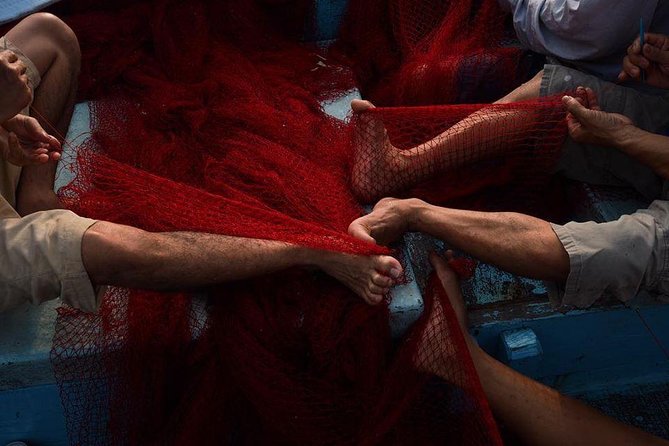
- Documentary coaching on real working scenes (not staged landmarks)
- Docks, harbor, and water-based moments plus skyline views for variety
- Coffee break + mid-route photo feedback so you can adjust while the light is still changing
- Photo review time with your guide helps you turn a good grab into a better set
- Private tour format keeps questions and feedback focused on your group
Why the 5:30am start feels like cheating (in a good way)
The waterfront looks different before sunrise. At first light, you get softer contrast, a cleaner color mood, and fewer people in the frame. That matters because documentary photography is about timing: you’re trying to catch hands working, boats moving, and faces telling a story.
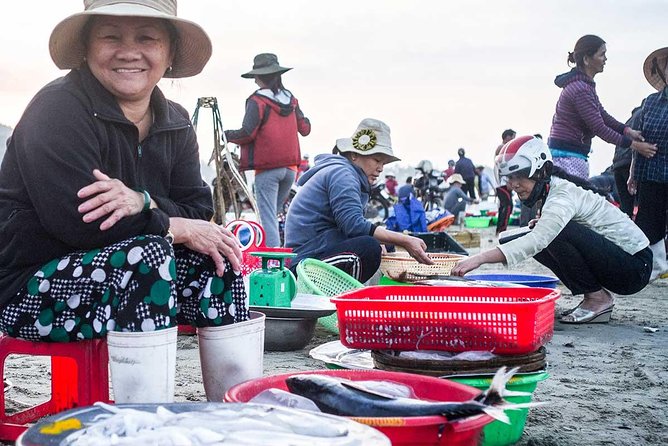
Starting at 5:30am also changes what you’re able to photograph. You’re there while fishermen are rowing tiny coracle boats across the tide and while the market is already underway, with traders sorting and selling the haul. Later in the day, those moments are harder to find—or they’ve moved on.
The trade-off is obvious. You will be up early. If that’s a dealbreaker for you, this probably won’t feel fun. But if you can handle a short night and a long camera morning, you’ll get images you can’t easily recreate on your own.
You can also read our reviews of more tours and experiences in Da Nang.

City Beach at dawn: coracle boats, overnight catch, and first-light market scenes
Your morning begins at Da Nang City Beach, where fishermen bring in the overnight catch from the East Sea. You’ll see tiny coracle boats out on the water and get right into the rhythm of work: rowing through the tide, beach activity, and traders organizing the haul.
This stop is special because it’s your introduction to the whole style of the tour: documentary photography with a focus on how to see. You’re not hunting for perfect poses. You’re photographing real motion and real routines.
What to watch for while you shoot:
- Fast movement: boats crossing the water and people shifting positions quickly
- Telling details: hands sorting fish, baskets, and the small tools people use
- Changing light: early morning light keeps shifting as the sun rises
A potential downside here is also the nature of early light: it can be dim at first. If you’re using a phone, you’ll likely need steady support and accept some blur. If you’re using a camera, it’s a great time to experiment with shutter speed and framing, but you’ll want to be awake enough to concentrate.
Harbour walk and coffee break: learning, shooting again, and fixing what doesn’t work
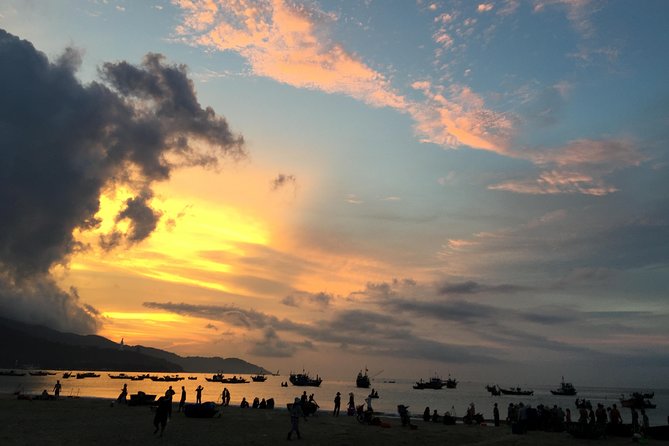
Next, you head toward the harbour through waking streets. This portion is about momentum—moving from beach routines to harbour routines—while your guide helps you build a photo approach you can actually use on the fly.
There’s a quick coffee stop built in, and you’ll use that break to review what you’ve learned so far. Then you’ll get feedback on shots you’ve taken, which is a big deal. Instead of waiting until the end to find out what worked, you can adjust your composition, camera settings, or framing before the next scenes.
Why this “reset and feedback” moment is valuable:
- You can correct mistakes while the conditions are still similar
- You learn what to emphasize in documentary scenes (people’s work, not just boats)
- You get a chance to re-shoot when your first attempts miss the story
One consideration: since food and drinks aren’t listed as included, the coffee stop may be on your own. I’d budget for a small drink cost and keep your focus on learning, not spending energy on logistics.
The Doc’s and ice-loading work: making a story out of people’s jobs
Now you’re in the harbour area known as The Doc’s, where workers shuttle and load ice for the boats. This is the stop that tends to turn “I took photos” into “I understand what I photographed.”
The guide spends more time on creating a story around people’s work. That sounds abstract, but it usually shows up as practical coaching: how to frame the relationships between people and objects, how to use composition to guide the eye, and how to keep your image from becoming just a snapshot.
What makes The Doc’s scenes so photogenic:
- Work is the subject, not scenery
- Ice loading creates repetitive action and visual rhythm
- You can find layers: foreground tools, mid-ground workers, and background boats
A possible drawback is that harbours can be visually busy and physically cramped. If you dislike walking and maneuvering around people and gear, bring a calm mindset and wear comfortable shoes. You’ll likely be photographing at close range, so be ready to move your stance quickly.
From docks to water and up toward the Da Nang skyline
The tour doesn’t stay locked to one type of view. You’ll photograph scenes on the docks, out on the water, and across the Da Nang skyline. That variety is a smart teaching tool because it forces you to solve different problems with the camera.
On docks, your challenge is usually composition and position—how to keep the story clear when everything looks important. Out on the water, the challenge becomes movement and angle: you want action without losing the subject. Skyline shots ask for timing and balance—how to include context without turning the frame into a flat postcard.
If you want to get the most out of these segments, think about a simple goal for each one:
- Docks: focus on work details and human interaction
- Water: track motion and shoot with intention, not just for coverage
- Skyline: include enough space to show place, but keep the subject meaningful
You’ll also learn how to work with the early-morning look. Even if conditions don’t cooperate perfectly, the guide’s job is to help you keep making images and refine what you’re seeing.
The photo review moments that actually change how you shoot
One of the strongest features here is that you don’t just end with a walk and a goodbye. You’ll take time to review your photos with your guide—both during the route (feedback on selected shots) and at the end (more structured review).
This is where the tour earns its price. Anyone can point a camera at a waterfront. The difference comes from seeing your images with a teacher in the same light and the same timeframe. You learn why some frames work and what to do next time.
From past experiences on this tour, guides like Thomas have focused on adapting to hard conditions, including teaching black and white and low-light approaches. Others have helped participants sharpen their shooting by staying close and offering practical advice as you go—one guide named Cristian Sorega stands out for that hands-on support.
If you’re the type who wants to improve quickly, this structure is a great fit. You’ll leave with more than photos—you’ll leave with a clearer sense of storytelling and exposure choices.
Price and logistics: is $122.06 worth it?
At $122.06 per person for about four hours, you’re paying for a professional photographer guide plus hotel pickup and drop-off. You’re also getting a learning format that includes feedback during the tour and a photo review after.
Here’s the value equation I’d use:
- If you want a waterfront morning but also want coaching that changes your results, the guide cost makes sense.
- If you mainly want photos and would rather wander alone, it might feel pricey—because the “teaching time” is the product.
What helps justify the price is that it’s not only about locations. You’re photographing docks, the harbour, and water scenes with a focus on documentary technique—plus you get feedback when it counts.
Two more practical points:
- It’s a private tour/activity, so it’s only your group.
- There are group discounts listed, which can lower the per-person cost if you travel with friends.
Also, this is a tour people plan ahead for. The average booking lead time is about 76 days, which is a good hint to reserve early if your dates are fixed.
What to pack for docks, early light, and quick scene changes
Because this is a working waterfront photo tour, you’ll be moving around and dealing with changing conditions. Even with good weather, docks don’t behave like a museum floor.
Bring:
- Comfortable shoes you can stand in and walk on (moderate physical fitness level is listed)
- A camera strap and a plan for steady shooting
- Extra battery if you’re using a camera (early mornings drain power)
- A small lens cloth or wipes for spray and dust
- A light layer you can handle at dawn
If rain shows up, don’t panic. The guide approach is designed around real light and real conditions, and you’ll have coaching to keep shooting when the scene changes.
And don’t forget the basic human needs part: since food and drinks aren’t included, I’d plan water and a snack before you start. You’ll likely want energy for the full morning flow.
Who should book this (and who should skip it)
This tour fits best if:
- You want documentary photography skills, not just scenic pictures
- You’re interested in working life scenes: fishermen, traders, harbour workers, loading ice
- You like early mornings when the world is still quiet enough to concentrate
- You want hands-on feedback and a guided photo review
You might skip it if:
- You hate very early starts and won’t enjoy the 5:30am rhythm
- You’re not interested in learning and prefer independent wandering
- You want food included as part of the experience (it’s not listed)
It’s also a good choice for anyone who feels stuck in “tourist mode” and wants a stronger approach to people, motion, and story.
Should you book the Danang On the Waterfront photo tour?
If you care about improving your photography and you enjoy the idea of photographing real work at sunrise, I think this is a smart booking. The best part isn’t the views alone—it’s the way you get feedback during the morning and a photo review afterward.
Book it if you’re ready to wake up early and you want your camera skills to level up fast. Skip it if you’re strictly after a casual stroll and don’t want to learn. For the right mindset, this tour turns Da Nang’s waterfront into a classroom with great real-life subject matter.
FAQ
What time does the tour start?
The tour starts at 5:30am.
How long is the Danang on the Waterfront photo tour?
It runs for about 4 hours.
Is hotel pickup and drop-off included?
Yes. Hotel pickup and drop-off are included.
Is this a private tour?
Yes. Only your group participates.
Where will I photograph during the tour?
You’ll photograph scenes on the docks, out on the water, and across the Da Nang skyline. Stops include Da Nang City Beach, Da Nang Harbour, and The Doc’s.
Are food and drinks included?
No. Food and drinks are not included.
Are there health restrictions?
No health restrictions are listed. Travelers should have a moderate physical fitness level.
Will I receive a mobile ticket?
Yes. A mobile ticket is listed as a feature, and confirmation is received at the time of booking.
What happens if weather is poor?
This experience requires good weather. If it’s canceled due to poor weather, you’ll be offered a different date or a full refund.
What is the cancellation policy?
You can cancel for a full refund up to 24 hours in advance. Within 24 hours of the start time, the amount paid is not refunded.