REVIEW · PLAYA DEL CARMEN
Underwater Photo Shoot Experience in Cenote
Book on Viator →Operated by DriftCurrent photography & adventures · Bookable on Viator
A cenote photo shoot can feel like a movie set. This private 2.5-hour session turns Playa del Carmen cenotes into a calm studio, with coaching so you can get great shots near the water’s surface. You’ll be working through different scenes between Cenote Cristalino and the Cristal/Escondido area, guided by scuba instructors and fashion-stylist style advice.
What I like most is the way they make it easy to participate: you get breath-holding and relaxation techniques and posing guidance matched to your comfort level, and most photos are taken close to the surface. I also love the human touch people highlight, like the patient support from Esther and Eleonora, which makes an underwater experience feel controlled instead of intimidating.
One consideration: you’re relying on good weather and you’ll be in the water, plus the listing says clothes for the photoshoot and make-up aren’t included—so plan to sort your wardrobe and beauty needs ahead of time.
In This Review
- Key Highlights You’ll Feel Right Away
- What This Cenote Underwater Shoot Actually Is (And What It Isn’t)
- Cenote Cristalino Start: How the 2.5-Hour Session Flows
- Breathwork, Relaxation, and Posing Coaching That Keeps It Comfortable
- Cenote Cristalino Stop: First Scene, Soft Light, and Getting Camera-Ready
- Cenote Cristal & Escondido Stop: More Variety Without Changing the Comfort Rules
- Outfit and Styling: Light Fabrics, Theme Advice, and What You Should Plan
- The Photo Results: Professional Editing Plus Video Clips
- Who Should Book This Cenote Underwater Photo Shoot
- Weather, Timing, and Quick Practical Tips
- Should You Book DriftCurrent’s Cenote Underwater Photo Shoot?
- FAQ
- How long is the underwater photo shoot experience in the cenotes?
- Is this tour private or shared?
- What language is the experience offered in?
- Do I need advanced swimming skills or to hold my breath for a long time?
- What happens during the start of the session?
- Which cenotes are included?
- Are photos and video included?
- Is cenote entrance fees included?
- What is the cancellation policy and what if weather is poor?
- Where does the experience start and end?
Key Highlights You’ll Feel Right Away
- Near-surface photography means you don’t need advanced swimming or long breath-holds.
- Scuba instructor coaching includes preparation, relaxation, and breathwork so you feel steady.
- Pose guidance matched to your underwater skill level takes guesswork out of modeling.
- Two cenote scenes (Cenote Cristalino, then Cristal & Escondido) give you variety without rushing.
- Styling support includes outfit/theme consultation and light-colored fabrics to help your look photograph well.
- Professional editing plus video clips add real value beyond just a handful of shots.
What This Cenote Underwater Shoot Actually Is (And What It Isn’t)
This is not a speed-run photo tour. It’s an underwater photo shoot experience built around comfort and control, with a mix of underwater coaching and fashion-style direction. You’re essentially getting a small, guided creative session in a cenote, where the environment does half the work for you—soft light, dark water contrast, and that still, hushed feeling.
You’ll also notice the tone they set: connect with nature, slow down, and feel your body underwater. That mindset matters because it’s what helps people relax enough to pose and breathe in a way the camera can capture.
The other thing to know: the activity is not for commercial purposes. If you’re thinking of using the images for business branding or paid campaigns, you’ll need to discuss that with the photographer personally.
You can also read our reviews of more tours and experiences in Playa del Carmen.

Cenote Cristalino Start: How the 2.5-Hour Session Flows
Your experience starts at Cenote Cristalino (77734 San José, Q.R., Mexico). From there, you’ll move through a structured flow designed to keep you safe and help you get multiple looks during the same session.
Plan for a total duration of about 2 hours 30 minutes. It’s private, so it’s just your group, which makes the pacing feel personal rather than like you’re waiting your turn. And since the ticket is described as mobile, you’ll want your confirmation ready on your phone.
The overall rhythm usually looks like this:
1) preparation and briefing,
2) relaxation and breath-holding techniques,
3) posing practice and guided shooting,
4) shooting in separate cenote scenes.
That structure is valuable because you’re not just being handed a camera underwater. You’re being coached through the parts that make underwater portraits work.
Breathwork, Relaxation, and Posing Coaching That Keeps It Comfortable
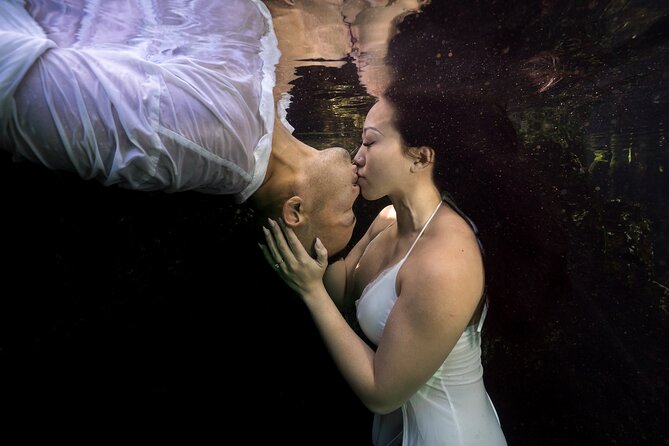
This experience leans hard into “easy mode” underwater. The goal is to help you feel safe and comfortable, not to test your fitness. You’ll start with an initial briefing and breath-holding techniques, led by instructors used to teaching people how to manage their breathing and presence underwater.
Here’s why that’s a big deal for most people: underwater photos look calm, but the water environment is physical. If you’re tense, your movements get jerky and your face tends to tighten. By focusing on relaxation and breathwork first, you have a better chance of looking natural in the frames.
On the posing side, they teach you how to pose underwater according to your underwater skills. That means your session shouldn’t feel like you need to already know how to model underwater. The instruction is practical: where to place your body, how to angle yourself, and how to keep your movements smooth so you don’t fight the water.
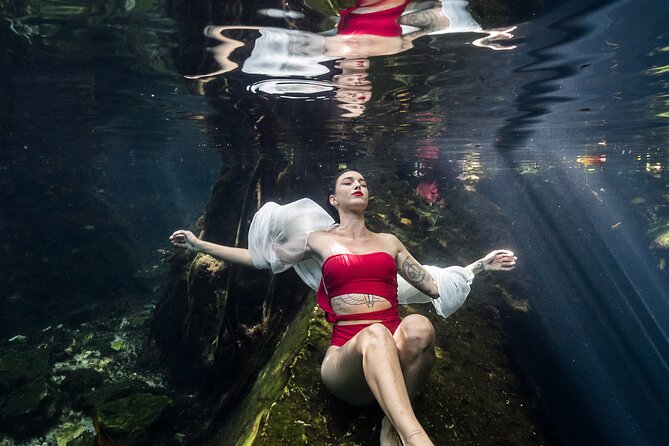
And remember the key promise: you don’t need particular swimming skills or to hold your breath for a long time. Most of the photos are taken next to the surface. That keeps the session realistic for a wide range of people, including those who are curious but not confident swimmers.
Cenote Cristalino Stop: First Scene, Soft Light, and Getting Camera-Ready
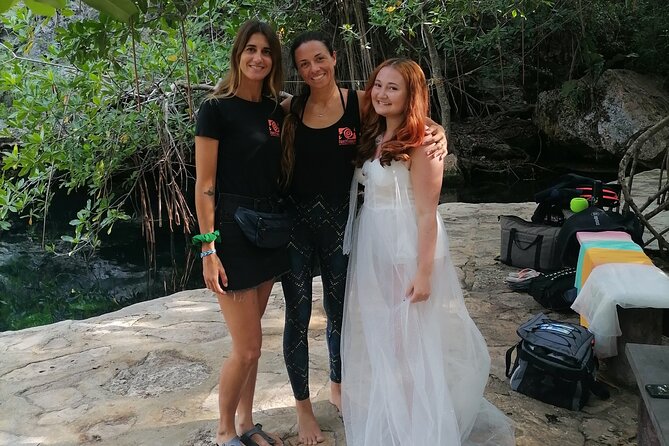
Cenote Cristalino is your first stop. Think of this as the scene where you warm up, build comfort, and get your first set of shots.
This part matters because it’s where most people start to trust the process. After the briefing and breathwork, you’ll likely feel more settled once you’re in the water with a clear sense of what to do. Since the photography is designed for near-surface results, you’re not constantly disappearing underwater—so you can focus on posing and breathing rather than panic-managing depth or time.
Also, cenotes tend to create dramatic light patterns: lighter areas in the water and stone can help your outfit show up well in photos. That’s where the stylist support comes into play too—more on outfits soon—but in short, the setting helps, and the team helps you use it.
Potential drawback at this stage: if you’re very uncomfortable in water, the “next to the surface” concept still involves being wet and breathing underwater. It’s eased by coaching, but it’s not a dry land session.
Cenote Cristal & Escondido Stop: More Variety Without Changing the Comfort Rules
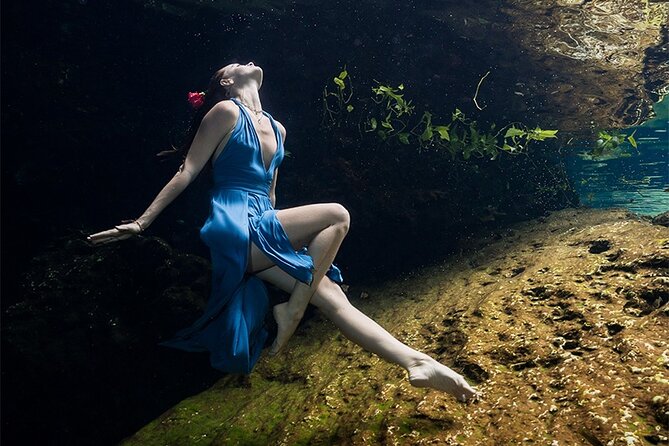
Your second stop moves you to Cenote Cristal & Escondido. The benefit of the second location is simple: you get new scenery and scene options without adding complexity to the whole shoot. The team adapts the photography based on your wishes, so you’re not stuck with one look.
This is where you can often get the most contrast between images: different background tones, different light angles, and different mood. The session is still guided, still built around safety and comfort, and still designed around near-surface photography for most shots.
If you’re the type who worries about whether you’ll get enough images, the two-stop structure helps. You’re essentially building a mini portfolio across two cenote atmospheres.
Another small consideration: since this is weather-dependent, conditions like wind or reduced clarity can affect how the scene looks. The good news is the team is built to work with the environment rather than ignoring it—so expect adjustments in angles and timing.
Outfit and Styling: Light Fabrics, Theme Advice, and What You Should Plan
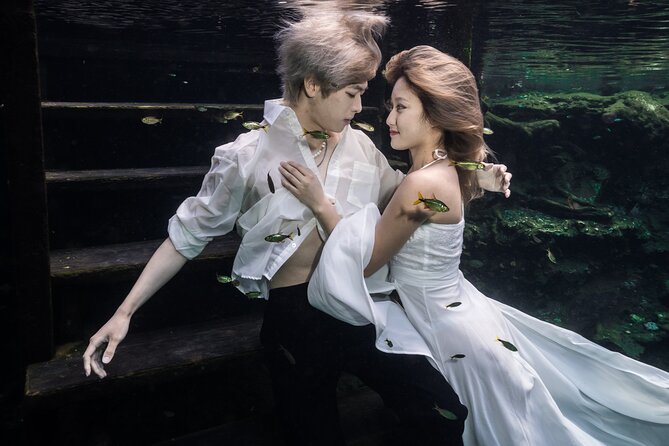
One of the most “this is a real concept” parts of the experience is the styling support. You’re not just told to show up; you get outfit and theme consultation via email. If you already have ideas—favorite colors, a vibe like soft and floaty, or a specific theme—you’ll be able to align your look with what photographs well in a cenote.
You’ll also get modeling tips, which connect directly to styling. A good outfit looks better when your pose matches the fabric flow and your movement stays smooth.
The experience mentions that beautiful light-colored fabrics are available to match your outfits. That can be a huge advantage underwater because lighter fabrics can stand out against darker water and shadow. Still, the listing also says clothes for the photoshoot and make-up aren’t included, so you should treat this as: they’ll help you plan and may offer matching fabric options, but don’t assume full wardrobe and beauty service. If you care about specific outfits, confirm what’s provided for your session before you arrive.
Practical takeaway: pack or plan for a look that you’re comfortable wearing in water, and coordinate your colors with the theme consult. Cenote photos tend to reward simple, flowing choices.
The Photo Results: Professional Editing Plus Video Clips
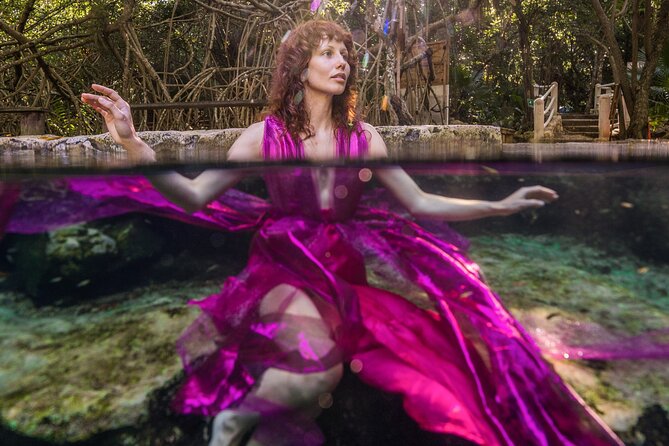
This is where the value becomes clear. You get professional photos with post editing, plus video clips. That combination matters because underwater still images can be stunning, but motion video adds extra emotional context—what the light looked like as you moved, the calm pace, and your expressions.
Post editing is particularly important in water photography. Light refracts, tones shift, and backgrounds can go from stunning to messy fast. Editing helps the final output feel intentional rather than accidental.
Also, you aren’t paying only for a photographer holding a camera. You’re paying for instruction, scene time, and the production work after you leave. That’s why people rate it so highly: it’s not just fun in the moment; it’s fun with deliverables.
Who Should Book This Cenote Underwater Photo Shoot
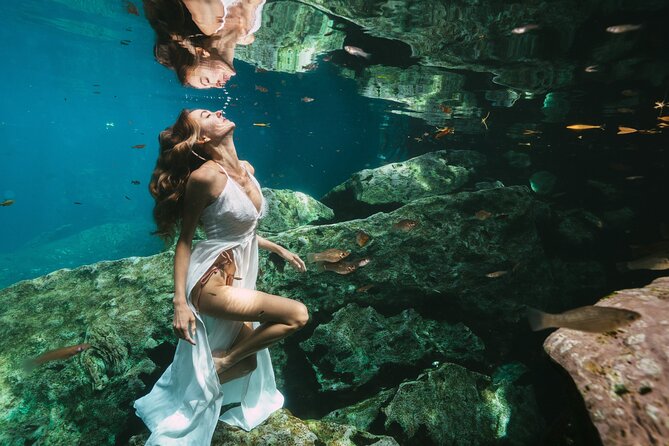
This works well for you if:
- you want a memorable, photo-focused experience that still feels calm and grounded,
- you like the idea of underwater shots but don’t want a technical training course,
- you’re curious about posing with coaching rather than improvising,
- you’re traveling with a partner or friends and want private attention.
It’s especially good if you’re not a confident swimmer. The experience explicitly frames itself around accessibility: most travelers can participate, and most photos are taken near the surface. The team’s scuba instruction and breathwork coaching are there to help you keep things comfortable.
It may be less suitable if:
- you dislike being in water at all, even shallow,
- you’re expecting a purely recreational swim with zero coaching (this is a guided photo session),
- you’re planning commercial use of the photos without discussing it first.
Weather, Timing, and Quick Practical Tips
The big external factor is weather. The experience requires good weather, and if it’s canceled due to poor conditions, you’ll be offered a different date or a full refund. That means it’s smart to book this when you have at least a little flexibility in your Playa del Carmen schedule.
Since transportation isn’t included, plan how you’ll get to Cenote Cristalino. The meeting point is near public transportation, but you’ll still want to budget time to arrive a bit early so you can get briefed without stress.
What to bring is also a mindset, not a checklist. Because clothes and make-up aren’t included, you should be ready with your own basics for getting camera-ready. If you want specific fabrics or colors, send them your outfit/theme direction ahead of time so you’re not trying to solve wardrobe decisions on the day.
Also, if you tend to get anxious in new environments, lean into the breathwork and relaxation guidance. The session is built around calm and body awareness, and that’s the fastest way to get good results.
Should You Book DriftCurrent’s Cenote Underwater Photo Shoot?
If you want underwater photos that look natural, not forced, this is a strong bet. The combination of breathwork coaching, pose instruction that matches your skill, and editorial-level editing is exactly what turns a fun idea into real keepsakes. Add the two cenote scenes for variety, and the experience feels like more than a one-shot novelty.
I’d book it if you’re excited by the idea of being guided in a serene setting, and you’d rather have comfort and direction than self-guided improvisation. Just don’t forget the practical parts: plan around good weather, and make sure your wardrobe and make-up plan is sorted since those aren’t included.
FAQ
How long is the underwater photo shoot experience in the cenotes?
It lasts about 2 hours 30 minutes. You’ll spend time on preparation and briefing, breathwork and relaxation, and then the guided photo sessions in multiple cenote stops.
Is this tour private or shared?
It’s private. Only your group participates.
What language is the experience offered in?
The tour is offered in English.
Do I need advanced swimming skills or to hold my breath for a long time?
No. The experience is designed so most photos are taken next to the surface, and you do not need particular swimming skills or to hold your breath for a long time.
What happens during the start of the session?
You’ll begin with preparation and an initial briefing. Then you’ll do relaxation and breath-holding techniques, with instruction focused on how to feel safe and comfortable underwater.
Which cenotes are included?
You visit Cenote Cristalino for the first stop, then Cenote Cristal & Escondido for the second stop.
Are photos and video included?
Yes. You receive professional photos with post editing, plus video clips.
Is cenote entrance fees included?
Yes, cenote entrance fees are included.
What is the cancellation policy and what if weather is poor?
You can cancel for free up to 24 hours in advance for a full refund. The experience requires good weather; if it’s canceled due to poor weather, you’ll be offered a different date or a full refund.
Where does the experience start and end?
It starts at Cenote Cristalino (77734 San José, Q.R., Mexico). The activity ends back at the meeting point.