REVIEW · ROME
Rome: All In One Day by Vespa
Book on GetYourGuide →Operated by Vespasito · Bookable on GetYourGuide
One scooter ride and Rome feels personal. I like the tailored Vespa tour approach, where you’re not stuck in one long line of buses and walking groups, plus I really love the photo-and-story rhythm at big sights like the Colosseum and Trevi Fountain. A key consideration: you’ll ride as a passenger, since the guide drives the Vespa for you.
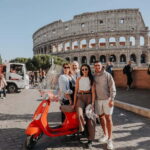
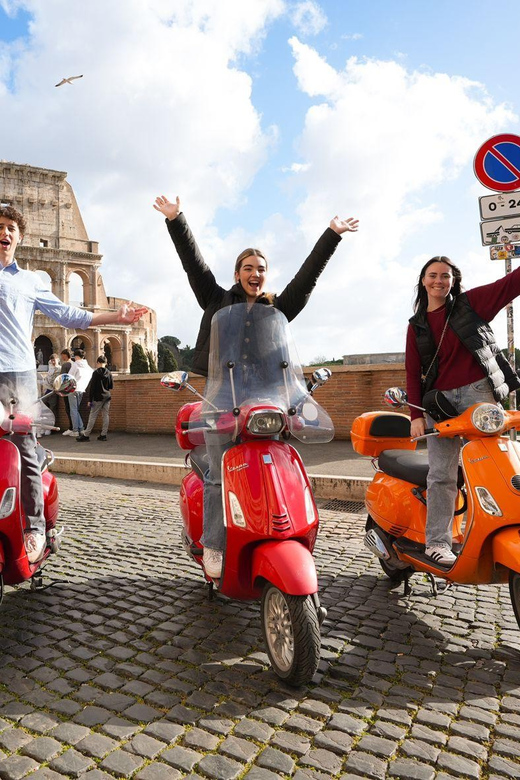
You start at Via del Colosseo 31 (look for the red Vespa across from Caffe Roma), and the day ends back at the same spot. It’s set up as a private group for about 6 hours, with helmets and safety gear, and guide explanations in English, Russian, or Turkish.
In This Review
- Key highlights you’ll feel right away
- Getting started at Via del Colosseo: what you’re signing up for
- Colosseum photo stop: seeing Ancient Rome at street level
- Circus Maximus to Aventine Hill: where the city slows down
- Orange Garden and Gianicolo Hill views: the best orientation trick
- Riding toward the Vatican: passing St. Peter’s and the Vatican City mood
- Piazza del Popolo to Piazza della Repubblica: the elegant gate of Rome
- Trevi Fountain, Vittoriano, and the Pantheon: walking through the legends
- Piazza Navona: fountains, artists, and a real Roman street pulse
- Trastevere pasta finale: the meal that makes the day feel complete
- Price and value: is $385.17 per person a good deal?
- Who should book this one-day Vespa plan
- Should you book Rome All In One Day by Vespa?
- FAQ
- FAQ
- How long is the Rome All In One Day Vespa tour?
- Where do I meet for the tour?
- Where does the tour end?
- Is this a private group tour?
- Will I drive the Vespa or ride as a passenger?
- What’s included with the Vespa?
- Is lunch included?
- What languages are available for the guide?
- Is there a weight limit?
- What is the cancellation window?
Key highlights you’ll feel right away
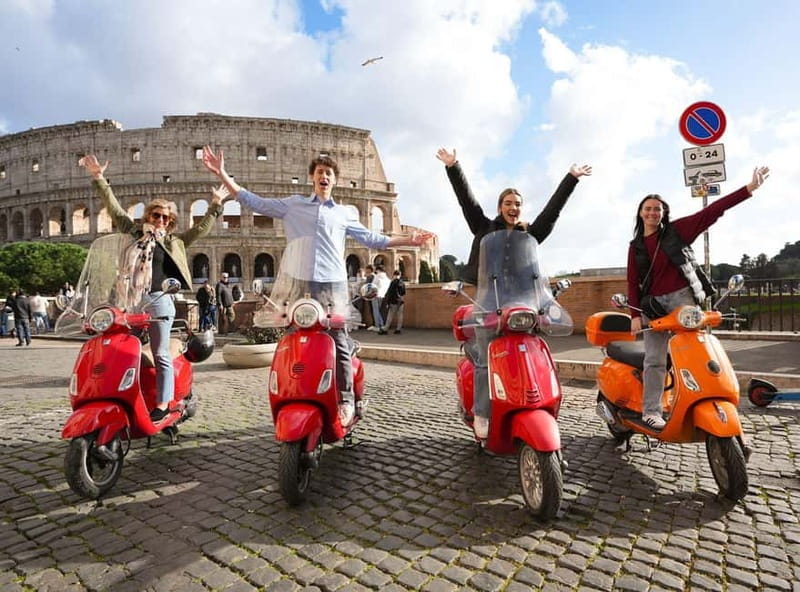
- A true one-day route that strings together the Colosseum, Vatican area, and central Rome without you planning a thing
- Orange Garden + Gianicolo Hill views, the kind that make you instantly understand Rome’s layout
- Aventine Hill keyhole moment, a clever, quiet stop that’s easy to miss on your own
- Photo stops with stories, so landmarks make sense fast instead of feeling like checkboxes
- Trastevere pasta finale, a sit-down local meal to close the loop the right way
Getting started at Via del Colosseo: what you’re signing up for
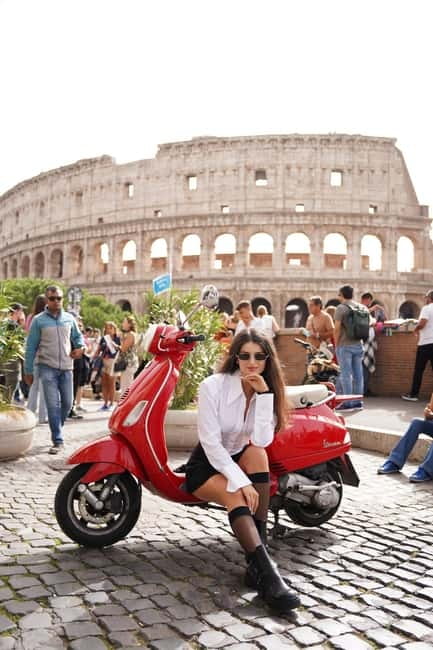
This tour is built around a simple idea: you see more of Rome with less stress by riding a classic Vespa through the streets while your local guide handles the driving. You meet at Via del Colosseo 31, directly across from Caffe Roma, and you should spot a red Vespa parked nearby. Then you head out for a full day that’s designed to move, stop, and explain.
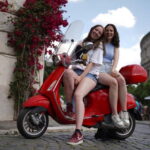
You’ll get helmets and safety gear, which matters because Rome traffic can be unpredictable. Also, this is not a self-drive lesson. You ride as the passenger, and that shapes the whole experience: you get to look around and enjoy the ride without concentrating on scooters, mirrors, or narrow turns.
Because it’s a private group, the pacing can feel more human than standard group tours. And with English, Russian, or Turkish options, you’re more likely to catch the details that make each stop click.
You can also read our reviews of more tours and experiences in Rome.

Colosseum photo stop: seeing Ancient Rome at street level

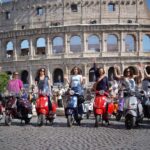
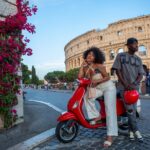
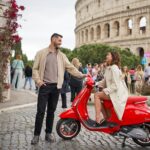
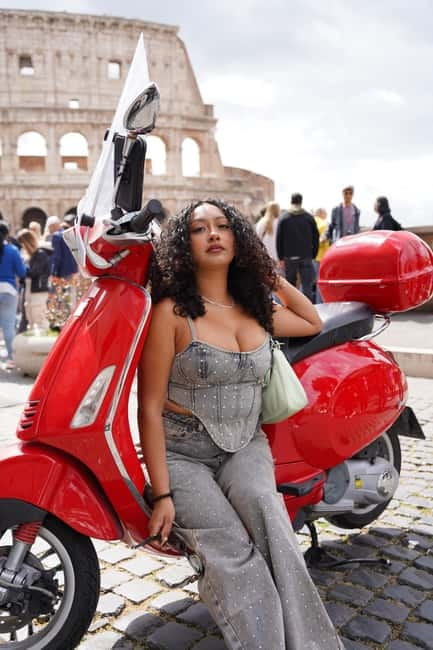
The day’s early rhythm helps you get oriented quickly. You make a major stop for photos at the Colosseum, and the best part is that it’s not just a photo opportunity. You get the stories and context that connect what you’re seeing to what it meant in its time.
Even if the Colosseum has been on your must-see list for years, it can still feel abstract when you visit alone. Having a guide means you can ask questions in the moment, and you’re less likely to miss the details that explain why people built it there and what it represented.
Practical note: you’ll be on and off the scooter as you go. If you’re sensitive to long standing periods, treat the early stops like quick “check in and look, then move” moments. The tour structure keeps you from spending all your energy in one place.
Circus Maximus to Aventine Hill: where the city slows down

After the Colosseum area, you shift to sites that feel calmer but still land hard. You’ll pass Circus Maximus, the old arena area tied to chariot races. It’s a stretch of space that can look strangely open for such a famous location, and that’s exactly why it’s worth seeing from the road. From a scooter, you get that sense of scale.
Then you climb up to Aventine Hill, a spot known for serenity. Here you get the signature Keyhole viewpoint, a small, quirky Roman obsession that always draws attention because it works like a mini secret window into the city.
Why I like this portion of the day: it breaks the “big monument, big crowds, big noise” pattern. Aventine Hill is a reset. You stop, breathe, and get a different kind of perspective on Rome—more layered, less checklist-y.
Orange Garden and Gianicolo Hill views: the best orientation trick
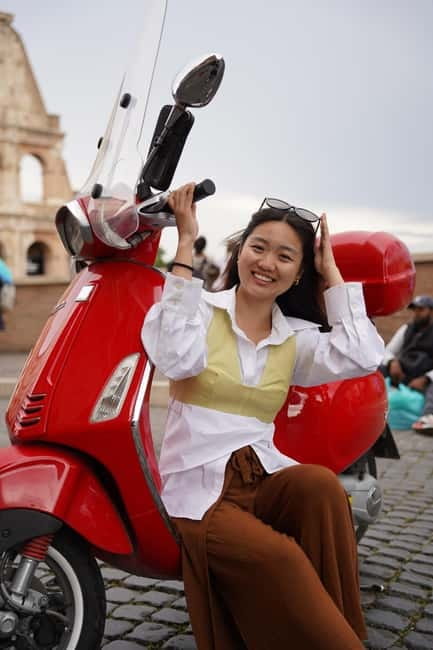
Rome is easier to enjoy when you understand where the hills and rivers place everything. This tour builds that understanding for you with viewpoint stops.
You’ll visit Orange Garden for scenic views. It’s especially good if you’re a first-time visitor because it gives you a wide-angle sense of the city’s shapes and distances. You’ll also make time for panoramic scenery from Gianicolo Hill, another high point where the city spreads out in a way that’s hard to replicate from street level.
These views aren’t just for photos (though you’ll probably want them). They help you connect the later landmarks you’ll see—Vatican area, central squares, and the route back toward the historic center. When Rome finally “makes sense” in your head, you feel it during the ride back down.
Riding toward the Vatican: passing St. Peter’s and the Vatican City mood
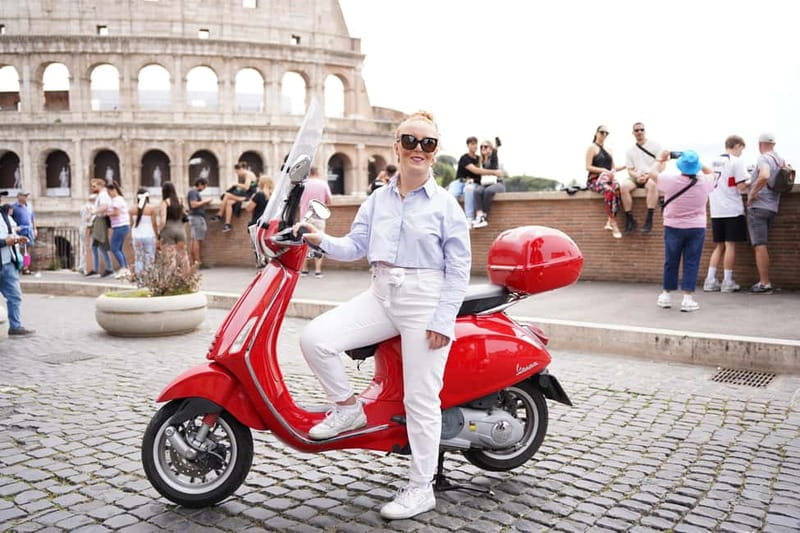
From Aventine and the hill zones, the route turns toward the Vatican area. You’ll ride along the river and then toward the Vatican, with stops and photo moments that focus on key sights.
You’ll pass St. Peter’s Basilica, and you’ll also get to admire the grandeur of the world’s smallest country—Vatican City. What’s useful here is that you’re not only looking at one building. You’re seeing how the Vatican fits into the city around it, including the feel of the streets and the approach roads that funnel you toward major landmarks.
One caution: the Vatican area can feel crowded on foot. The Vespa route helps you keep moving while still getting those “I’m really here” moments. You also tend to get a better sense of the overall geography because the ride itself acts like a moving map.




Piazza del Popolo to Piazza della Repubblica: the elegant gate of Rome
After the Vatican-side sights, you cruise across town and land near major civic spaces. You’ll stop at Piazza del Popolo, described as an elegant northern gate of Rome. This is a classic “Roman postcard” square, but the tour value is how it’s used as a waypoint—another point on the route that helps you track how the city transitions from one character to another.
Then you continue to Piazza della Repubblica, where ancient meets modern in a way that feels very Roman: old stone and big-city motion in the same frame.
This section works well if you like architecture and city structure. You get pauses to look around while still keeping the energy up for the next stops.
Trevi Fountain, Vittoriano, and the Pantheon: walking through the legends
Next comes the kind of central Rome run that most people squeeze into one long walk. Here, the scooter ride does some of the heavy lifting so you can enjoy the scenery while the guide keeps the timeline together.
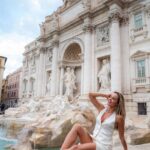
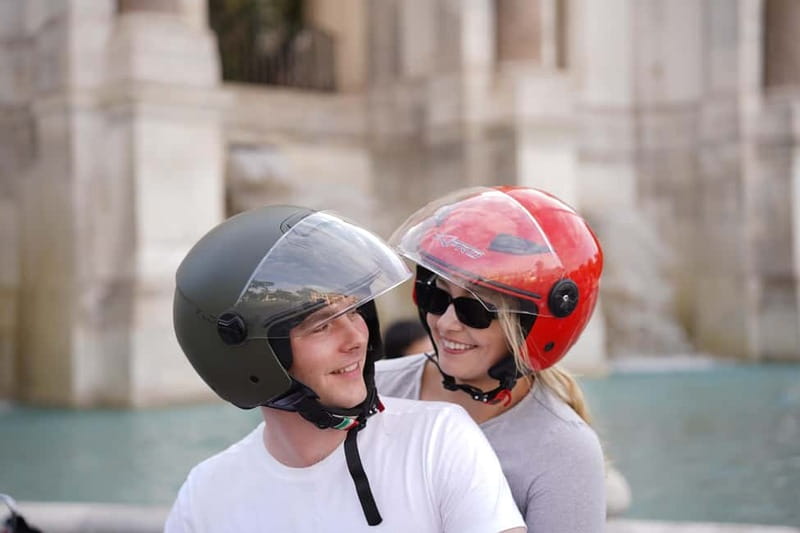
You’ll reach Trevi Fountain, and you’ll toss a coin into the fountain—one of those rituals that’s touristy only because it’s so iconic. The difference on this tour is that you’re not just doing the ritual. You get the surrounding context and you’re moving through the area with less wandering.
Then you’ll see Piazza Venezia and the Vittoriano Monument, a striking presence that changes the look of the skyline. After that, you’ll walk through the Pantheon pillars. That moment can be surprisingly powerful because the scale hits you differently when you’re not thinking about where to stand and where to take photos. The guide’s pacing helps you experience it in a more natural way.
If you’re prone to museum fatigue, this is still a good section. It’s a lot of famous names in one day, but the stops are spaced out enough that it doesn’t feel like one endless, crowded crowd-fest.
Piazza Navona: fountains, artists, and a real Roman street pulse
After the classic monuments, you spend time in Piazza Navona. You’ll get the atmosphere: fountains, artists, and a street-life vibe that makes it feel like Rome is operating on rhythm instead of on a schedule.
This is a great stop for lingering. You can look at the open space, watch the motion, and just enjoy the fact that you’re in one of those plazas where Rome’s public culture shows up on the surface.
Also, because this tour includes storytelling and photo breaks, you’re not left to interpret everything yourself. That’s a big deal for a place like Navona, where the “Roman charm” can turn into noise if you don’t have a little direction.
Trastevere pasta finale: the meal that makes the day feel complete
The final act happens in Trastevere, one of Rome’s most authentic-feeling neighborhoods in terms of color and everyday character. You finish back in the Trastevere area for a sit-down meal at a local trattoria.
The lunch is traditional Roman pasta, and it’s set up as a proper ending: you’ll have time to eat without rushing back out immediately. The tour also includes a toast, which turns the meal from a random restaurant stop into a day-closure moment.
There’s a useful detail here for your planning: at the restaurant, the set menu can be up to €30 per person. That matters because it keeps the lunch feeling included and predictable, while still giving you enough structure for a good sit-down break.
And since the tour ends back at the meeting point, you’re not trying to figure out transit at the end of a long day. You’re done, you eat, and you head home.
Price and value: is $385.17 per person a good deal?
At $385.17 per person for a 6-hour, private-group Vespa day, this isn’t a budget option. But you’re not just paying for a vehicle. You’re paying for a guide who coordinates the route, provides storytelling stops, and handles the scooter driving, plus the Vespa scooter rental with helmets and safety gear.
Here’s how I’d judge the value if you’re weighing it against alternatives:
- You save mental energy. Instead of planning a tight route through Rome’s traffic and pedestrian bottlenecks, you follow a system.
- You get time efficiency. A Vespa day helps you cover major sights without spending your whole day navigating between them on foot.
- You get structured “understanding,” not just sightseeing. Stops are built around context and photo breaks.
- Lunch is included up to €30, which softens the total day cost compared with buying everything separately.
The main value downside is the passenger setup. If you want to be in full control of the Vespa yourself, this format won’t meet that desire. If you’re happy being the lookout and letting the guide drive, the experience can feel worth the premium because it removes friction.
Who should book this one-day Vespa plan
This tour fits best if you’re:
- A first-time visitor who wants to see big Rome and some calmer angles in the same day
- Someone who likes photo moments but also wants stories that make the stops feel connected
- A traveler who’d rather ride through Rome than battle transit and walking distances for hours
- In a situation where a private group pacing makes your day easier
I’d think twice if:
- You’re over 220 lbs (100 kg), since it’s not suitable
- You specifically want to drive the scooter yourself (you ride as a passenger)
Also, if you’re extremely tight on timing or hate road noise, a scooter tour might not feel relaxing. But if you like moving through the city and seeing the route as part of the experience, you’ll likely enjoy it.
Should you book Rome All In One Day by Vespa?
Yes, I’d book it if your goal is simple: see a lot of Rome in one day with a guide, get viewpoint time, and end with real food in Trastevere. The route covers the obvious icons—Colosseum, Trevi, Pantheon, and Vatican area—while still building in quieter, smarter moments like Aventine’s Keyhole and the Orange Garden viewpoints.
The other big selling point is comfort. The tour description and ratings point to guides who keep explanations accessible and make you feel at ease from the start. When the guide is relaxed and clear, the whole scooter day feels smoother.
If you’re choosing between this and a pure walking tour, pick this when you want efficiency and views. Pick a walking-only plan when you want total control of pacing and maximum time lingering in one neighborhood.
FAQ
FAQ
How long is the Rome All In One Day Vespa tour?
It lasts 6 hours.
Where do I meet for the tour?
Meet at Via del Colosseo 31, across from Caffe Roma. Look for the red Vespa parked nearby.
Where does the tour end?
It ends back at the meeting point (Via del Colosseo 31).
Is this a private group tour?
Yes, it’s listed as a private group.
Will I drive the Vespa or ride as a passenger?
You ride as a passenger; your guide drives the Vespa.
What’s included with the Vespa?
Classic Vespa scooter rental is included, along with helmets and safety gear.
Is lunch included?
Yes. The tour includes a traditional Roman pasta meal at a local trattoria, with a set menu up to €30 per person.
What languages are available for the guide?
The live guide is offered in English, Russian, and Turkish.
Is there a weight limit?
Yes. It’s not suitable for people over 220 lbs (100 kg).
What is the cancellation window?
Free cancellation is available up to 24 hours in advance for a full refund.