REVIEW · KATHMANDU
Evening Photography Tour of Kathmandu
Book on Viator →Operated by Third Rock Adventures · Bookable on Viator
Night photography in Kathmandu feels like prayer. This private, half-day shoot takes you to Boudhanath and Pashupatinath right when the light turns dramatic, and your guide helps you aim for the moments that actually mean something.
What I like most is how practical the tour feels. You’re not just dropped at famous sites, you’re guided to the right spots to photograph butter lamps, monks, devotees, and the fire-and-chant energy of an evening Hindu aarti. I also like the human side: the guide adds context so your photos (and your understanding) aren’t random.
One consideration: this is weather-dependent and runs on a tight 3–4 hour window. If you’re hoping for a long, unhurried stroll or you’ve got limited flexibility, plan with that in mind.
In This Review
- Key things to know before you go
- Why Boudhanath and Pashupatinath at night works for photos
- Pickup, private transport, and how the 3–4 hour plan plays out
- Stop 1: Boudhanath Stupa and the art of butter-lamp light
- Stop 2: Pashupatinath aarti on the Bagmati riverbanks
- The guide’s role: context that turns photos into stories
- Photo moments to prioritize at each stop
- Value and price: what $102 really buys you
- What to pack and how to plan around evening rituals
- Who this tour is best for
- Should you book this evening photography tour?
Key things to know before you go
- Two landmark stops, one smooth route: Boudhanath first, then Pashupatinath for evening rituals.
- A guide who helps you find the shot: You get context and timing, not just directions.
- Real spiritual scenes at night: Butter lamps, circumambulation, chanting, singing, and fire rituals.
- Private transport from central Kathmandu: Pickup offered, and you travel as your group.
- Admission fees included: You don’t have to budget extra for entry to the key sites.
- All you need is your camera: The experience is built around what you capture in low light.
Why Boudhanath and Pashupatinath at night works for photos
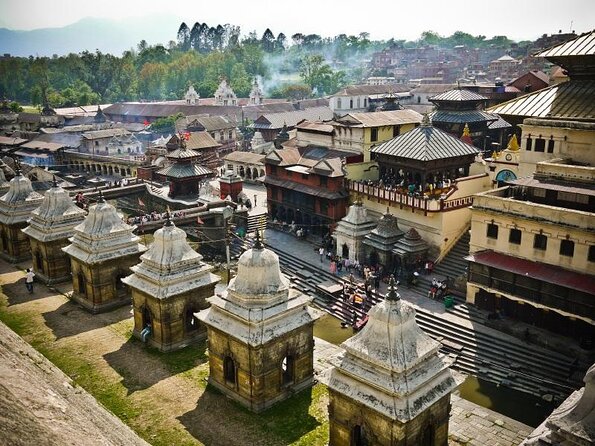
Kathmandu is photogenic in daylight, sure. But evenings are a different story. The light changes the mood fast, and the religious life here gets louder, brighter, and more expressive—exactly what you want for compelling photography.
At Boudhanath Stupa, the night routine is built around devotion. You’ll see people doing parikrama (circumambulation) around the white-domed stupa while butter lamps glow like small fireflies in the dark. That mix of faces, motion, and warm lamp light gives you both storytelling frames and classic compositions.
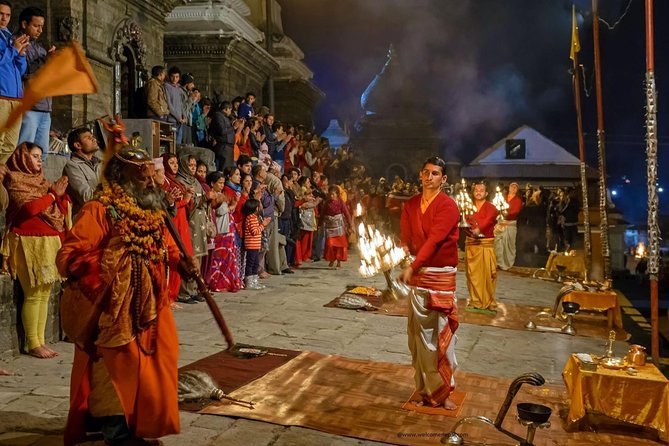
At Pashupatinath Temple, the atmosphere shifts again. Evening aarti means chanting, singing, and priests offering a flame ritual to the gods. If you’re photographing from a respectful distance, you’ll still get close enough energy: firelight, body language, and the trance-like movement that can happen among devotees during the ceremony.
The bigger value here is that this isn’t just about photographing landmarks. It’s about photographing rituals—which means you’ll spend time on what’s happening, not just what looks good.
Pickup, private transport, and how the 3–4 hour plan plays out
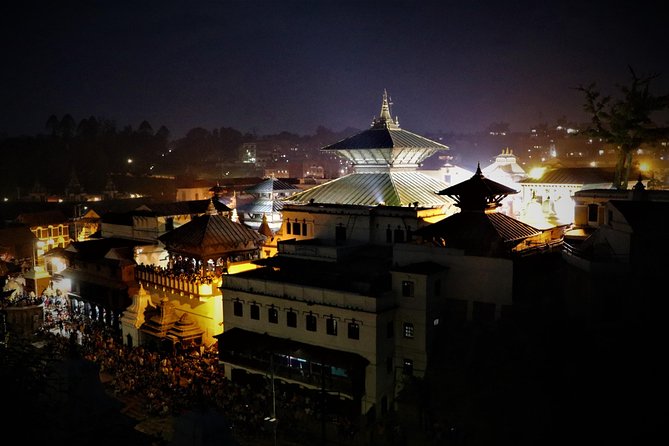
This is a private evening tour with pickup offered from central Kathmandu. That matters more than it sounds. Late-day traffic and timing can be unpredictable in any big city, and religious ceremonies don’t wait around while you hunt for a bus stop.
You’ll have private transportation between the two stops, so your focus stays on the people and the light, not logistics. The tour is designed as a half-day experience (about 3–4 hours), which keeps it efficient: you get the best evening moments at both locations without turning it into an all-night grind.
Also, because it’s private, you’re not stuck photographing at the pace of a large group. Your guide can adjust where you stand and how you move based on what’s unfolding at the stupa or temple. For photography, that flexibility is huge.
One small thing to consider: because the tour is tight, you won’t have time for long detours. If you like to linger, you may want to use your own time after the tour for extra wandering.
Stop 1: Boudhanath Stupa and the art of butter-lamp light
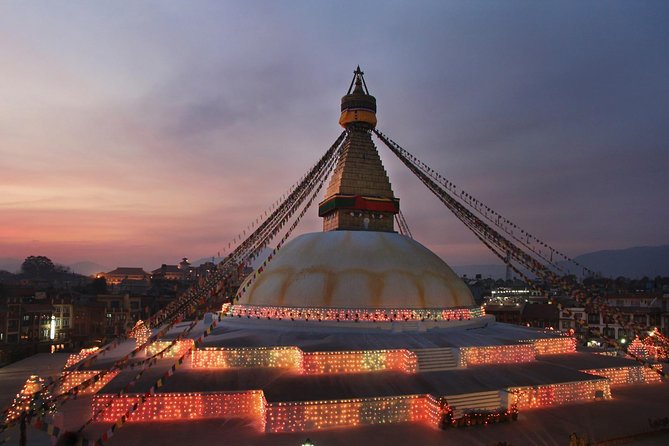
Boudhanath Stupa is a major pilgrimage center for Tibetan Buddhism, and evenings bring out the devotional rhythm that makes the place feel alive. You’ll spend about one hour here, enough time to watch parikrama in motion and catch the best lamp glow as conditions change.
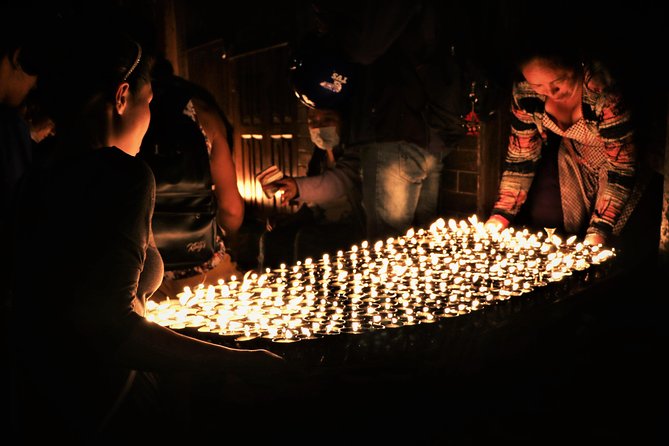
What’s special isn’t only the stupa’s iconic shape. It’s what people do around it. Devotees and monks light butter lamps and pray for well-being and world peace. As you watch, you start to notice patterns: where people cluster, how the line of movement wraps the stupa, and how lamp light creates warm highlights against cooler night tones.
Photography-wise, this is a gift. Butter lamps give you natural, meaningful points of light. You can photograph faces close-up, hands offering flame, the arc of movement around the stupa, or the way the stupa looks when it’s lit and decorated for the evening flow.
Practical note: this stop includes an admission ticket, so you’re not stuck managing extra costs or logistics mid-tour. The hour is also long enough to let you get comfortable with the scene and reposition once or twice, instead of feeling rushed.
Stop 2: Pashupatinath aarti on the Bagmati riverbanks
After Boudhanath, the mood moves from steady lamp-lit devotion to something more intense and dramatic. Pashupatinath Temple is one of the most important Hindu shrines dedicated to Lord Shiva. The name itself connects to the idea of protector of living beings, and the evening ceremonies reflect that sacred seriousness.
You’ll have another one-hour stop for the aarti ritual. Evening here means sacred Vedic shlokas and hymns, plus the flame ceremony offered by priests. Devotees may dance in trance-like devotion, and the firelight makes movement and expressions stand out immediately in photos.
One detail you’ll notice on the ground is the setting along the Bagmati River area, where evening fire rituals can feel especially atmospheric. If you’re photographing, that riverfront context gives you layered scenes: flames in the foreground, people and movement in the midground, and temple surroundings setting the frame.
Aarti is also one of those ceremonies where timing matters. The guide’s job is to help you understand when the ritual peaks—so you can photograph the moment rather than just the location. This is the part many people underestimate: knowing what to watch for helps your photos look intentional, not accidental.
As with Boudhanath, the admission ticket is included for this stop.
The guide’s role: context that turns photos into stories
A good photography tour doesn’t just point. It explains. And this one is built around that idea.
You’ll get a guide who adds context for both traditions: Tibetan Buddhist practice at Boudhanath and Hindu aarti at Pashupatinath. That context changes how you look through the lens. Instead of photographing random religious activity, you’ll understand what you’re seeing—like parikrama as circumambulation, or aarti as the flame-offering ritual with chanting and singing.
It also helps with composition. Your guide can show you just where to go to find the settings and moments worth capturing on film (or in a camera). In other words, you’re not stuck figuring it out while everyone else is doing their own thing.
The guide experience matters, too. Past guests have praised guides such as Mr Bikash and Deepa for being professional and for having strong knowledge of Kathmandu and its heritage sites. That kind of know-how shows up in the tour flow: you spend more time seeing and less time guessing.
Photo moments to prioritize at each stop
If you want your photos to feel like a real Kathmandu evening—not just pictures of two famous places—aim for moments that have action and meaning.
At Boudhanath, prioritize:
- Parikrama motion around the stupa, especially when people are actively moving as a group.
- Butter lamps being lit, since the flame creates instant focus.
- Monks and devotees interacting with the stupa’s prayer rhythm.
- The stupa itself when it’s decorated and illuminated for the evening flow.
At Pashupatinath, prioritize:
- The priest offering the flame during aarti.
- Chanting and hymn moments, when faces and gestures show intensity.
- Firelight scenes where flames reflect on nearby faces and hands.
- Any trance-like dancing or devotional movement that happens during the ceremony.
The key is that the tour is designed around these kinds of moments. If you plan to shoot like a tourist, you’ll end up with tourist frames. If you shoot like you’re documenting a living ritual, you’ll get photos that have emotional weight.
Value and price: what $102 really buys you
At $102 per person, this isn’t a bargain in the way a free public walking tour can be. But it’s priced like something more focused: two major sites, private transport from central Kathmandu, and a licensed English-speaking city guide.
Here’s what you’re getting that supports the price:
- Private transportation included between stops, which saves you time and stress.
- Admission tickets are included for both locations.
- The guide isn’t optional extras; the tour is built around guided timing and context for photography.
- You only travel with your group, so the experience doesn’t get diluted.
If you already know your way around Kathmandu and can arrange your own transport, you might spend less. But you’d still be paying for the hardest part: finding the right angles at the right times during ceremonies. That’s what you’re really paying for.
Also, because this is evening-focused, it’s easy to waste time if you DIY the route. A guided plan keeps you pointed at the moments that tend to matter most after dark.
What to pack and how to plan around evening rituals
The tour description is simple: you mostly just need your camera. Still, evening photography comes with its own practical reality—light is lower, scenes are active, and ceremonies don’t pause for your shot.
So plan your personal checklist like a photographer:
- Bring your camera gear that works well in low light.
- Keep your attention on what the ceremony is doing, not only on framing.
- If you use multiple lenses or settings, be ready to adjust quickly because moments at aarti can change fast.
Since bottled water and dinner are not included, decide what you’ll do with food and hydration around the tour. Many people prefer to eat before the tour and use the time focused on photography without stopping mid-ritual.
Finally, the experience requires good weather. If Kathmandu evening skies decide to misbehave, the tour may be adjusted (you’ll either get another date or a refund, depending on how it’s handled). Either way, don’t treat your schedule like a guaranteed “same time, every time” event.
Who this tour is best for
This works especially well if you:
- Care about religious and cultural context, not just sightseeing.
- Want to photograph spiritual traditions with guidance.
- Like a compact evening plan that’s more efficient than independent travel.
It’s also a strong choice if you’ve visited Kathmandu before in daylight and now want something different. One guest noted they had already been to many spots in daytime, but the evening version delivered something they would have missed on their own.
On the flip side, this may feel short if you want a slower pace or extra time to linger at each site. It’s also not built as a general cultural tour; it’s built around photography and the ceremonies that create great frames.
Should you book this evening photography tour?
Yes, if you want your Kathmandu photos to mean something. The combination of Boudhanath devotion and Pashupatinath aarti gives you two of the city’s most powerful spiritual backdrops in the same half-day window. And the guided focus on where to stand and what’s happening is exactly how you avoid ending up with decent-but-forgettable shots.
Skip it if you need lots of daytime freedom, or if your schedule can’t handle the weather dependency that comes with evening shoots. Also, if you’re expecting a laid-back photo walk with no intensity around ceremonies, this is more structured than that.
If you’re the kind of traveler who likes to understand what you’re seeing while you photograph it, this one is a smart bet.