Street photography starts with seeing, not snapping.
This Downtown Photo Tour in São Paulo turns you into a more intentional photographer as you walk the Centro Histórico, mixing street scenes with portraits and architecture. I especially like the way Victor keeps the group small and focused, and how you work with natural light instead of relying on luck. One thing to consider: there’s no hotel pickup, so you’ll want to get to Café Girondino at the start time.
You’ll get a practical mix of photo coaching and city curiosity—think composition, patience, and real camera basics like aperture, ISO, and exposure while you explore. You also get something small but nice to break the walk up: coffee and/or tea included.
The tour runs about 3 hours 30 minutes, it’s capped at 8 travelers, and it’s best if you’re comfortable with a moderate walking pace. You’re near public transportation, and the route is weather-dependent, since good light matters.
In This Review
- Key highlights you’ll actually feel on the walk
- Finding Café Girondino and Getting Set for a 3.5-Hour Photo Walk
- Street, Portrait, and Architecture: What You’ll Practice While You Walk
- Natural Light in São Paulo: How to Read the Scene for Better Photos
- Camera Basics That Actually Help: Aperture, ISO, and Exposure
- Patience Pays Off: Waiting Without Losing the Shot
- São Paulo Details You’ll Notice After the Walk
- Price and Value for a $150 Downtown Session
- Who Should Book This Photo Tour (and Who Might Pass)
- Should You Book the Downtown Photo Tour?
- FAQ
- How much does the Downtown Photo Tour cost?
- How long is the tour?
- Where does the tour start?
- Where does the tour end?
- What’s included in the price?
- Do I need my own camera or smartphone?
- Is hotel pickup or drop-off included?
- How many people are in the group?
- What if the weather is bad?
- Is there anything about how fit you need to be?
Key highlights you’ll actually feel on the walk
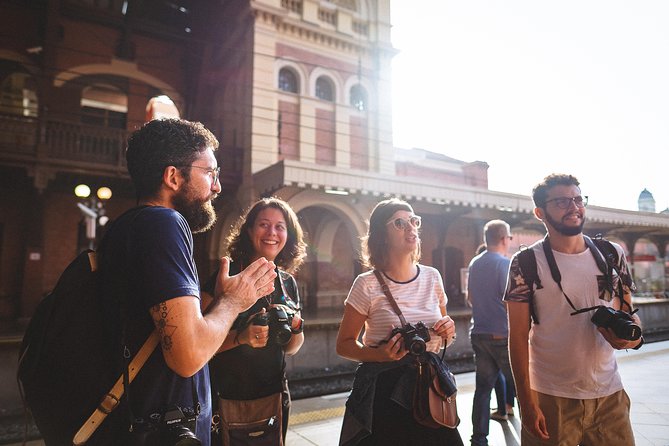
- Small group (max 8) means you’re not just following along
- Street, portrait, and architecture all in one session, so you don’t get stuck in one style
- Natural light coaching for different situations across the Centro area
- Camera settings made practical: aperture, ISO, exposure, used on the street
- Victor’s patience for waiting out the right moment and angle
- Coffee and/or tea included to start off relaxed
Finding Café Girondino and Getting Set for a 3.5-Hour Photo Walk
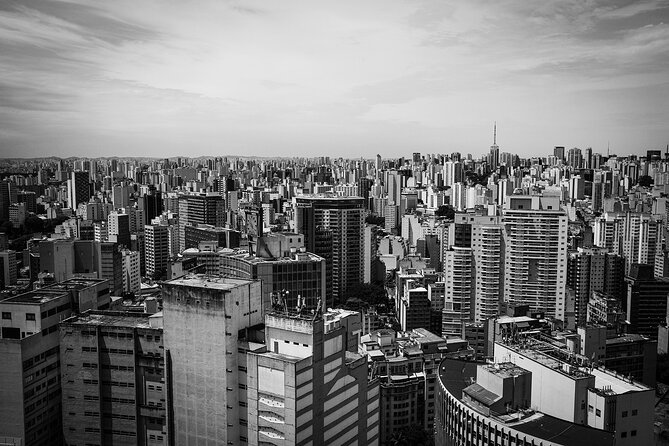
The tour starts at Café Girondino, R. Boa Vista, 365, in the Centro Histórico area. It’s an easy meeting point to plan around, and since it’s near public transportation, you’re not forced into a long taxi hop just to get started.
You’ll begin with a calm, grounded vibe. Even though you’re there to shoot photos, the format is more like a guided photo lesson in motion than a sprint from one photo postcard to another. Expect the group to move at a pace that lets you stop, look, reframe, and try again.
This is one of those São Paulo experiences where the city itself keeps offering up material. A delivery truck rolls by, the light shifts between buildings, someone pauses in the right spot, and suddenly your photo opportunity changes. The best part of a guided walk is that you don’t have to worry about timing the whole thing. You can focus on getting the shot you came for.
Also, no hotel pickup or drop-off. You’ll be responsible for getting there and getting back to the meeting point at the end. The upside: you’re starting right in the Centro flow, not assembling as a group in some far-away hotel zone.
Street, Portrait, and Architecture: What You’ll Practice While You Walk
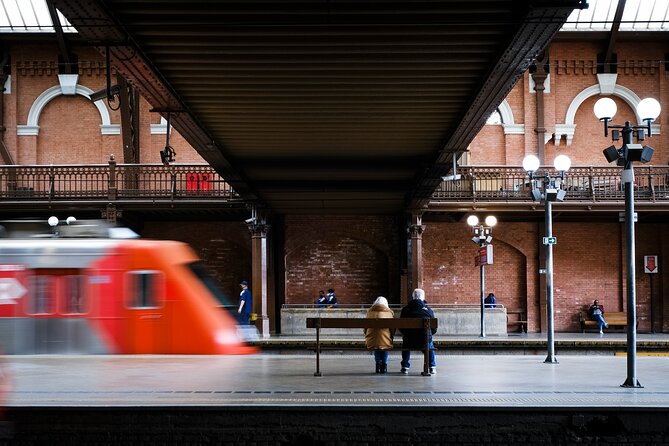
This tour is built around three photo themes you can use right away: street photography, portraits, and architecture. That mix matters because it trains your eye to switch modes. Street scenes teach you to anticipate. Portraits teach you to notice people and light. Architecture teaches you to see lines, geometry, and detail.
Here’s how it tends to feel in practice:
- For street shots, you’ll learn to frame everyday São Paulo life so it looks intentional, not accidental. Think angle choice, background control, and timing.
- For portraits, you’ll work on how to compose a person within the environment, using the city as context rather than letting it steal attention.
- For architecture, you’ll look for patterns and structure. Even if you’re not “into buildings,” you’ll start seeing how window grids, street levels, and facades can create strong compositions.
Victor isn’t acting like a chaperone. The coaching approach feels photographer-first: he’s paying attention to angles and light while also teaching you what to do with your camera (or phone). That makes the experience more effective for beginners, because you’re getting direction tied to what you’re seeing, not generic tips you have to translate later.
One small but important consideration: because the tour covers multiple styles, you might want to come with at least one goal. For example: street motion and mood, or portraits with natural light, or architecture lines. That way you can take the techniques and apply them to the type of photos you actually want to keep.
Natural Light in São Paulo: How to Read the Scene for Better Photos
Natural light is the core of this tour. You’re not just told that light matters—you’re coached to recognize how it changes as you move through downtown blocks.
São Paulo downtown has a lot of light challenges: shifting shade from tall structures, bright surfaces that can blow out highlights, and times when the light looks good but the shadows get dramatic fast. This tour helps you work with those realities instead of avoiding them.
You’ll practice the kind of decision-making that separates random photos from stronger ones:
- When to shoot in shade vs. when to use direct light
- How to position yourself so your subject has more flattering light
- How to keep exposure under control when the background is brighter than your subject
- How to use the environment to create depth, using light to separate foreground and background
If you’re a beginner, this is especially valuable. Most new photographers get stuck trying to “capture good light” like it’s a lottery. Here, you learn that you can change your result just by moving a few steps, changing your angle, or adjusting your exposure settings.
This also explains why the tour is weather-dependent. The tour requires good weather because the teaching relies on seeing real light conditions and working through them, not just photographing in flat, grey conditions.
Camera Basics That Actually Help: Aperture, ISO, and Exposure
The tour focuses on creativity using the basic functions of your camera: aperture, ISO and exposure. The best part is that those aren’t taught as abstract concepts. You learn what each setting does, then you can test it as you walk—so the lesson sticks.
Here’s why this format works:
- Aperture helps you control depth of field. On a street or portrait stop, that means you can separate a person from a busy background.
- ISO helps you deal with darker shade or interior-like light created by buildings. You’ll learn what happens when ISO goes up and how to avoid messy noise.
- Exposure is the master lever. It’s how you keep the image from being too dark or too bright when the background is tricking your camera.
If you’re using a smartphone, you’ll still benefit. The names might differ in your app, but the underlying idea is the same: you need to understand brightness and contrast, and you need to learn how your device reacts in changing light.
A personal coaching style you’ll appreciate here is the patience component. If the right light or subject timing takes a minute, Victor waits. That matters because street photography is often about timing—if you rush, you miss the moment you wanted.
Patience Pays Off: Waiting Without Losing the Shot
One of the most praised parts of this tour is how much room there is for patience. Instead of constantly moving on to the next spot, you get the sense that Victor will stop, watch, and choose the right time.
That doesn’t mean the tour drags. It means your photos improve because you’re practicing a real skill: staying in place long enough to get the best version of the shot.
In street work, that might be waiting for someone to step into your frame. In portraits, it can mean waiting for light to align with the angle you’re using. In architecture, patience can mean watching for shadows to shift or for foot traffic to clear enough for a clean composition.
This tour is also designed for free-flowing city moments—things will come up as you walk, and the goal isn’t strict clock pressure. The focus stays on taking good photos and exploring photography topics that can vary depending on your experience level.
So if you’re a true beginner, you’ll likely feel supported. If you’re more experienced, you’ll still benefit from having someone point your attention to angles, light decisions, and simple setting changes you can test quickly.
São Paulo Details You’ll Notice After the Walk
Beyond camera skills, you’ll come away with a different way of noticing São Paulo downtown.
The tour includes historical facts and curiosities as you shoot. That’s not just trivia padding. When you understand a place a little, it changes how you frame it. Architecture stops being random shapes and starts being context. Street life stops being only background and starts being part of a larger story.
You’ll probably find yourself looking for small cues too: the relationship between people and buildings, the way streets funnel views, how surfaces reflect and absorb light, and how the city’s rhythm shows up in photos.
And because the tour is built around multiple photography types, your eye gets trained in three directions at once:
- People as subjects
- Buildings as structure
- Streets as storytelling spaces
By the end, it’s not just about having a set of images. It’s about having a method you can reuse the next day when you’re on your own.
Price and Value for a $150 Downtown Session
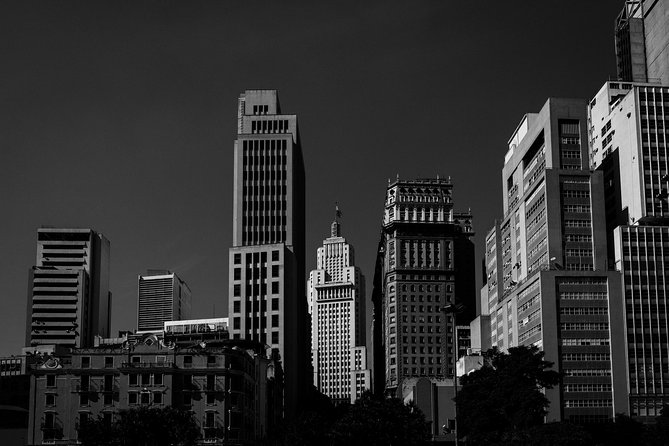
At $150 per person for about 3 hours 30 minutes, this tour isn’t a bargain-basement deal. But it can be strong value if you care about taking better photos rather than just collecting a few travel snaps.
What you’re paying for:
- A small group max of 8 travelers, which helps you get real attention
- Coaching tied to street, portrait, and architecture
- Hands-on practice with aperture, ISO, and exposure
- A guide who’s a photographer first—he looks for angles and light, not just “the route”
Also, coffee and/or tea is included, which keeps the start of the experience comfortable. And since it runs in the Centro area, you’re in a practical part of town for walking and learning.
Where it might feel less worth it:
- If you want a heavily structured checklist with exact landmarks and step-by-step schedules, this tour’s learning style is more flexible and photo-driven.
- If you’re only interested in a single subject type (only portraits, for example), the mix may be a little broad—though it still gives you variety and skills.
Who Should Book This Photo Tour (and Who Might Pass)
I think this tour is a great fit if you want to level up quickly, especially in a real-world setting. It’s especially suitable for:
- Beginners who feel stuck on the basics and want camera settings explained in a way that makes sense on the street
- People who want a photography-led walk rather than a standard sightseeing outing
- Travelers who enjoy street life photography and want to learn how to work with natural light
It may be less ideal if:
- You don’t like walking (there’s a moderate physical fitness expectation)
- You’re expecting hotel pickup. There isn’t any included.
- You’re only comfortable shooting at night or in controlled indoor environments. This one is built around natural daylight conditions and good weather.
If you’re the type who likes to learn by doing—shoot, adjust, shoot again—this is the kind of tour that can make a difference fast.
Should You Book the Downtown Photo Tour?
If your goal is better photos in less time, I’d lean toward booking. This tour has a clear payoff: you get guidance that connects camera settings to what you’re actually photographing, plus coaching that values patience and good angles.
Book it if you:
- Want to practice street, portrait, and architecture skills in one session
- Appreciate natural light lessons and want practical tips you can reuse
- Like the idea of a small group with a guide who takes photography seriously
Skip it if you:
- Need hotel pickup, or you strongly prefer a fully scheduled checklist
- Don’t want to walk for a few hours, even at a moderate pace
If you do book, come with one intention: decide what kind of photos you want most. Then use the rest of the session to build the skills that make those photos look intentional, not accidental. And yes, you’ll still get plenty of moments where São Paulo hands you a scene on a silver platter—you just learn how to grab it.
FAQ
How much does the Downtown Photo Tour cost?
The tour costs $150.00 per person.
How long is the tour?
The duration is about 3 hours 30 minutes.
Where does the tour start?
It starts at Café Girondino, R. Boa Vista, 365 – Centro Histórico de São Paulo, São Paulo – SP, 01014-001, Brazil.
Where does the tour end?
The tour ends back at the meeting point.
What’s included in the price?
Coffee and/or tea are included.
Do I need my own camera or smartphone?
Yes. Your photography equipment (camera or smartphone) is not included, so you’ll bring your own device.
Is hotel pickup or drop-off included?
No. Hotel pick up / drop of is not included.
How many people are in the group?
This activity has a maximum of 8 travelers.
What if the weather is bad?
The tour requires good weather. If it’s canceled due to poor weather, you’ll be offered a different date or a full refund.
Is there anything about how fit you need to be?
Yes. Travelers should have a moderate physical fitness level.